Michigan ORV Trail Crowding on Holiday Weekends
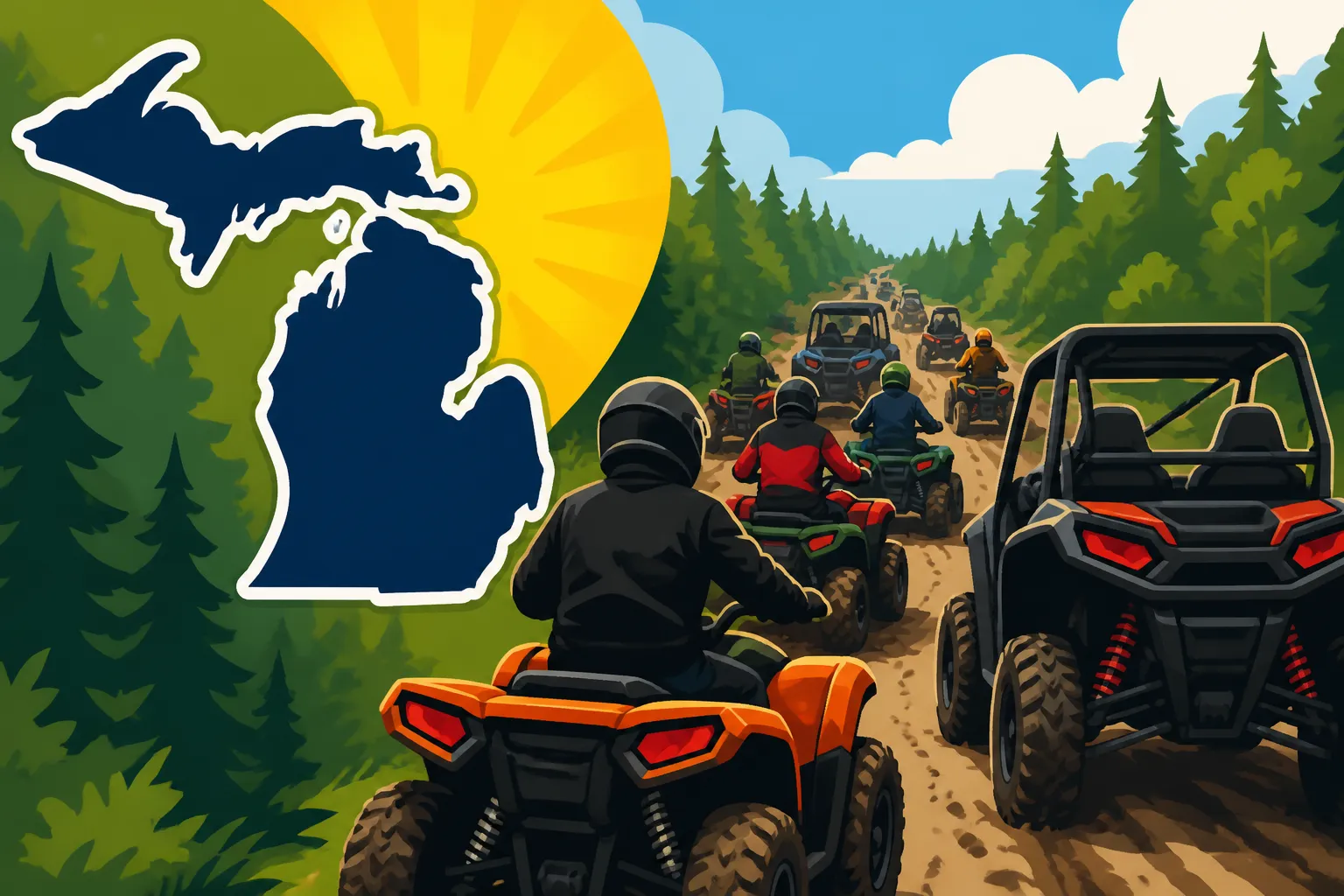
A holiday weekend can turn a quiet Michigan ORV trailhead into a slow-moving line of trucks, trailers, and riders trying to find parking. The best fix is usually a plan B, not a last-minute scramble. This guide explains when and where crowding tends to build, how to prepare, and how to ride more comfortably when trails are busy.
Why Michigan ORV trails get crowded on holiday weekends
Travel patterns bring riders to the same places
Holiday weekends make it easier for families and groups to plan a longer trip, so popular riding areas can draw people from across Michigan and neighboring states. Memorial Day, the Fourth of July, and Labor Day often overlap with vacation travel, campground stays, and other outdoor plans. That can concentrate riders at well-known trail systems and access points.
The crowding is not always spread evenly across a whole region. A busy staging area, fuel stop, or trail junction can feel packed while a less familiar route nearby is relatively calm. Silver Lake, Drummond Island, St. Helen, and the Little O and Big O trail areas are examples of well-known destinations where riders may encounter heavier activity during peak travel periods. Conditions can differ from one weekend to the next, so a place that was quiet on your last visit is not guaranteed to be quiet on a holiday.
Crowds can also build at predictable pinch points: narrow trail sections, intersections, bridges, popular overlooks, and places where riders stop to check a map. If your group is new to the area or traveling with young riders, allow extra time for those slowdowns. Rushing to keep up with a schedule can lead to missed turns, poor decisions, or unnecessary tension between riders.
Busy trailheads affect the day before you reach the trail
A crowded ride can begin in the parking lot. Trailers take up space, vehicles need room to maneuver, and riders may be unloading machines while other people are looking for a place to park. At a small or unfamiliar lot, arriving without a backup plan can leave you circling, waiting, or trying to squeeze into a spot that is not suitable for your trailer.
Before setting out, review Michigan ORV Trailhead Parking Rules and check any signs posted at the lot. Do not assume that an empty-looking roadside area is legal or safe parking. Avoid blocking gates, access roads, trail entrances, or space needed by emergency and maintenance vehicles. If you expect to leave a trailer overnight, check the rules for that specific location rather than relying on what was allowed somewhere else; Overnight Trailer Parking at Trailheads covers the issue in more detail.
It is also worth planning the practical parts of the day around possible lines. Fuel stops, food breaks, and bathroom stops may take longer when the area is busy. If the group waits until a machine is nearly out of fuel or everyone is hungry before making a stop, a small delay can become a frustrating one. Check likely services before you leave, and make sure every machine has enough fuel for the planned ride with a sensible reserve.
How to plan a less stressful holiday ride
Choose timing and a backup riding area
If your schedule allows, ride early in the day or choose a weekday near the holiday instead of the busiest weekend hours. An early start can make parking easier and give your group more daylight to adjust if a route is slower than expected. It does not guarantee an empty trail, but it can help you avoid some of the late-morning rush that builds as campers and day riders head out.
A backup destination is especially useful if your first-choice trailhead is full. Identify a second riding area before leaving home, and make sure it fits your group’s machine types, experience, and available riding time. Do not simply drive to the nearest trail sign: access rules, trail widths, seasonal restrictions, and nearby road connections can vary. Use Michigan ORV Trail Maps and What the Signs Mean to understand the map and signage before you commit to a route.
You can use onX Offroad to help review riding areas and map a possible alternative, but treat any app as one planning tool rather than the final authority. Check official trail information and follow signs at the trailhead. If a route is closed, restricted, or marked differently on the ground than it appears on your screen, follow the posted direction and adjust your plan.
| Planning choice | Why it helps on a busy weekend | What to check |
|---|---|---|
| Start early | Can make parking and the first part of the ride less hectic | Lot access, daylight, and your group’s readiness |
| Ride on a nearby weekday | May avoid the heaviest holiday traffic | Work schedules, local access rules, and trail conditions |
| Pick a backup area | Gives you somewhere else to go if your first lot is full | Machine width, route access, permits, and closures |
| Keep the route flexible | Makes it easier to adapt to slow sections or crowded junctions | Fuel range, turnaround options, and group ability |
| Check maps before leaving | Reduces confusion at intersections and trailheads | Current official notices and posted signs |
Prepare for slow travel and route changes
A route that looks short on a map can take longer when the trail is busy. Riders may need to slow down behind another group, wait at a junction, or pause while someone checks directions. Avoid building a tight schedule around a particular mileage estimate. Agree in advance that the group can shorten or change the ride if traffic, weather, or fatigue makes that the better choice.
Check for closures and seasonal information before the trip using Michigan ORV Trail Closures and Seasonal Dates. Conditions can change, and a familiar route may not be available in the same way on every visit. Keep your map available offline if you expect weak cell service, and make sure more than one person knows the planned route. onX Offroad can help with offline route planning, but download the information ahead of time and still pay attention to local signs.
Match the route to the least experienced rider and the machine with the most limitations. A group may include a wide side-by-side, a newer operator, a young rider, or someone who needs more frequent breaks. Check Michigan ORV Trail Difficulty Ratings and confirm that the route is suitable for the machines in your group. The easiest way to avoid a stressful ride is not to choose a route that pushes someone beyond their comfort level.
How to ride courteously when trails are busy
Keep the group organized and predictable
Before unloading, choose a leader and a sweep rider, then agree on what the group will do if it gets separated. Use clear meeting points rather than relying on everyone to stop at the same time. If someone misses a turn, the rest of the group should not keep riding farther ahead while that person tries to catch up alone.
At junctions, move out of the way before stopping to check a map or discuss the route. A group spread across the trail can block other riders and make a busy intersection more confusing. If you use onX Offroad to follow a route, let one person handle navigation when possible; having several riders stop in the middle of a narrow path to compare screens creates avoidable congestion.
Keep a pace that leaves room to react. Dust, limited sightlines, and other riders appearing around bends can make a familiar route feel different when it is crowded. Leave space between machines, avoid tailgating, and do not pass where visibility or trail width makes it unsafe. For more on sharing a route, see Trail Etiquette on Shared Routes.
Make breaks without blocking the trail
If the group needs to stop, pull completely off the travel path where it is safe and permitted. Avoid stopping just beyond a blind corner, at the top of a hill, or in a narrow section where approaching riders cannot see you in time. Keep children and passengers close to the parked machines, and make sure no one wanders into the trail while looking for a dropped item.
A short stop can become a bottleneck if a large group blocks a junction or gathers around a machine in the middle of the route. Move to a safe clearing or other suitable stopping place before troubleshooting. If a machine needs help, send someone to alert the group behind you when it is safe to do so, rather than leaving it unattended in a spot that could surprise approaching riders.
Being patient matters both ways. You may catch up to a slower group, or another rider may be waiting behind yours. Give people room to make a safe move, and avoid pressuring them with close following or impatient gestures. Holiday weekends bring a mix of experienced riders, first-timers, families, and people operating unfamiliar machines. A little courtesy can keep a brief delay from becoming a tense encounter.
A practical checklist for a holiday weekend ride
Before leaving home
Start with the essentials: confirm that the area is open to the machines in your group, review permits and access requirements, and check the latest official notices. Look at the map together so everyone recognizes the trailhead, intended route, and backup option. Save the route for offline use if you rely on a navigation app, and tell someone outside the group where you expect to ride and when you plan to return.
Prepare the machines for a longer day than expected. Check fuel, tires, lights, brakes, and basic recovery gear. Bring water, food, weather-appropriate clothing, a first-aid kit, and a way to communicate if the group becomes separated. If the area has limited services, identify fuel options before you arrive; Fuel Stops Along Michigan ORV Trails can help you think through that part of the plan.
For many riders, the simplest crowd-avoidance strategy is choosing a different day. Weekday Riding to Avoid Trail Traffic is worth considering if your dates are flexible. If they are not, make the day easier by starting early, keeping the route manageable, and accepting that a busy trail may require a slower pace.
At the trailhead and on the ride
When you arrive, follow parking directions and posted notices. If the lot is full, do not improvise by blocking an entrance or parking where it narrows the road. Use your backup plan or wait only where parking and access are allowed. Before riding, check that everyone knows the route, the meeting points, and what to do if the group separates.
During the ride, leave room for other users, stop only in safe places, and adjust the plan when conditions call for it. If a trail feels too congested or difficult for someone in the group, turn around or choose a more suitable route rather than pushing on just to complete the original plan. A relaxed ride with fewer miles is often better than a long, stressful one.
Afterward, take a moment to secure the machines and trailer without blocking others who are still arriving or leaving. Pack out your trash, check that no equipment has been left behind, and make a note of what worked for next time. If an early start, a different trailhead, or a weekday visit made the day smoother, keep that information with your route plan.
Crowds are part of riding popular Michigan destinations during major travel weekends, but they do not have to define the whole trip. A flexible schedule, a suitable backup area, good trail manners, and realistic expectations can make even a busy day feel manageable. And if the parking lot is already overflowing when you arrive, changing plans is a sensible riding decision—not a failed trip.
Disclaimer
This article is for general informational purposes only and does not constitute professional advice. Laws, prices and regulations vary by location and change over time. Consult a qualified professional for guidance on your specific situation.