Weekday Riding to Avoid Trail Traffic
A Saturday ride can turn into a slow parade of dust, bottlenecks, and trailers circling a full staging lot. Riding on a weekday often means quieter trails and easier logistics, but it still takes planning: access can vary by location, conditions change, and a route that looks open on a map may have restrictions. This guide helps you plan a smoother Michigan ATV or UTV weekday ride.
Why weekday riding can feel different in Michigan
Less trail traffic, but no guarantee of an empty route
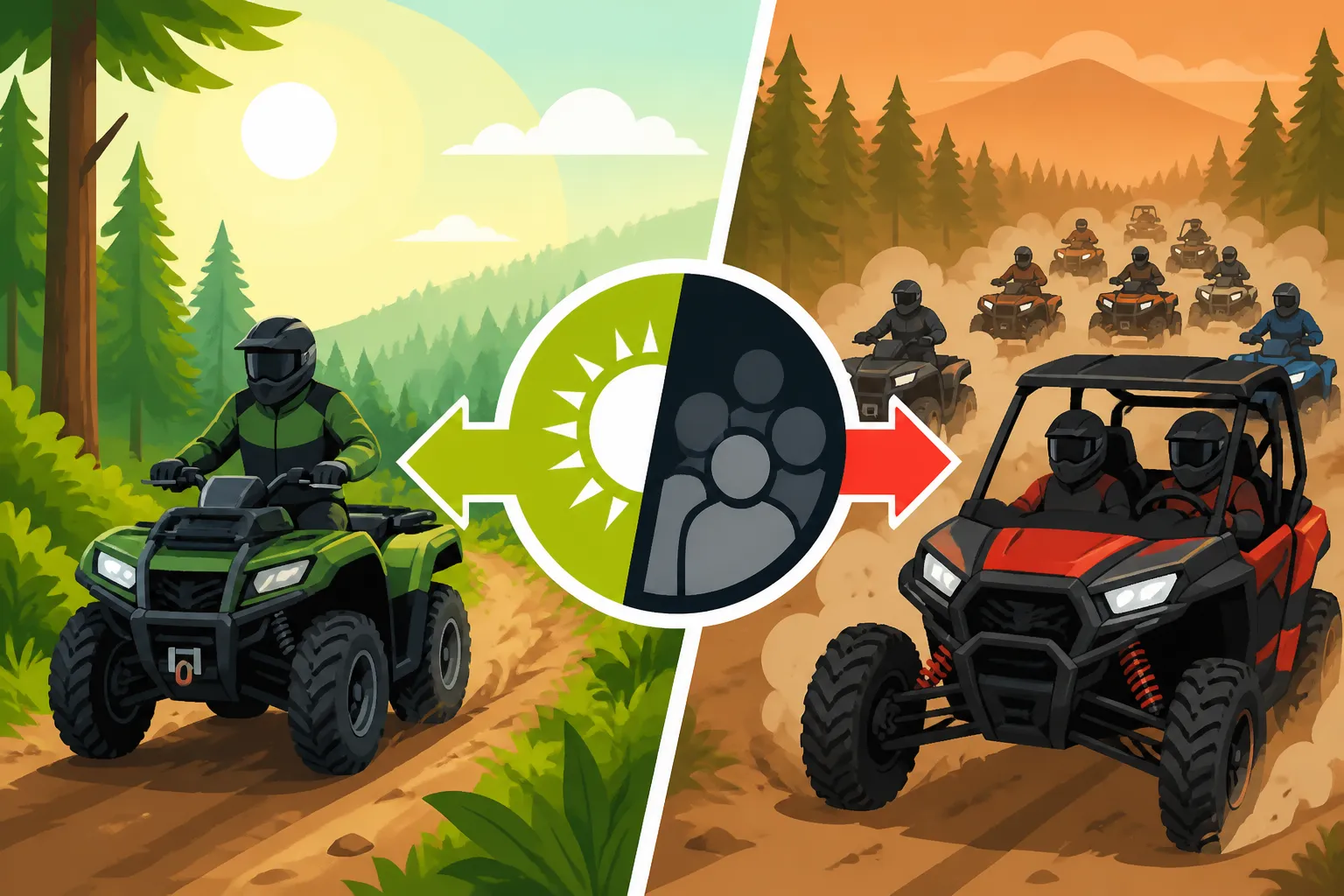
Weekdays often bring fewer recreational riders than holiday weekends, especially on popular routes and at well-known staging areas. That can mean fewer stops to let oncoming machines pass, less waiting behind a group, and a calmer pace for riders who are still getting comfortable. But “weekday” does not automatically mean “quiet.” School breaks, local events, seasonal conditions, and the popularity of a particular area can all affect how busy it feels.
Some destinations draw riders throughout the week. A route near a busy town, a popular trailhead, or a well-known riding area may see steady use even when nearby trails feel quieter. Silver Lake, for example, has a distinct mix of dune visitors and nearby recreation, so weekday timing alone is no substitute for checking the area’s rules and access details. For a closer look at one of Michigan’s busiest riding settings, see Silver Lake Dune Riding for First-Timers.
It also helps to separate crowding from trail difficulty. A technical section can feel stressful when several machines are close behind, while a broad, familiar route can remain manageable with occasional traffic. If you are choosing a route specifically to avoid pressure, look at the terrain and expected riding pace as well as the likely number of riders. Michigan ORV Trail Difficulty Ratings can help you think through that match.
Workday patterns can shift traffic through the day
A weekday trail may feel quiet early, then pick up around lunch or after the workday. Nearby residents may ride for a short outing, while visitors arriving from farther away may start later after driving north. The pattern differs between areas, so treat timing as a useful tactic rather than a promise.
Starting early can give you a calmer first stretch and more flexibility if you need to stop, adjust gear, or check a junction. It can also mean cooler temperatures in warm weather and better daylight margin if the ride takes longer than expected. The tradeoff is that you should not assume every shop, fuel stop, or service will be open early. Plan your essentials before leaving home or your lodging.
A late-afternoon start can work for a short local loop, but it leaves less room for delays, wrong turns, or a mechanical problem. In the Upper Peninsula or around forested trail systems, a route that looks brief on paper may take longer because of surface conditions, stops, and riding pace. Choose a turnaround time before you start, and keep enough daylight to return without rushing.
Holidays and special dates still matter
A weekday attached to a holiday can behave more like a weekend. The same may be true during school breaks, local events, or a popular fall color period. If your schedule is flexible, an ordinary Tuesday or Wednesday may offer a better chance of a lower-traffic ride than a Friday before a long weekend.
Even with a weekday plan, check the location’s current access information before loading the trailer. Seasonal restrictions, weather-related closures, maintenance work, and local rules can affect where you can ride. The overview in Michigan ORV Trail Closures and Seasonal Dates is a useful reminder that access can depend on more than the day of the week. For contrast, Michigan ORV Trail Crowding on Holiday Weekends explains why a quieter weekday strategy can be especially appealing around peak travel periods.
How to pick a quieter weekday route
Choose the riding area before choosing the exact loop
Start with the kind of ride you want: a short beginner-friendly outing, a half-day of trail riding, a route with nearby services, or a more remote day where you are mostly self-sufficient. Then narrow your choice to an area that fits your machine, group, and available time. A ride based near St. Helen, Cadillac, or the western Upper Peninsula can involve very different trail surfaces, distances between services, and access arrangements.
Do not assume every route is open to every machine. Trail width, posted restrictions, and local connections matter, particularly if your group includes a wider side-by-side and smaller ATVs. Study the signs and route designations before heading out. Michigan ORV Trail Maps and What the Signs Mean is helpful when you are sorting out how mapped trails connect and what markers indicate.
A map app can make route planning easier, but use it as one part of your research rather than the final word on access. onX Offroad can be useful for reviewing route options and building a sense of the surrounding area before a ride. Compare that view with official information and signs on the ground, especially when you see a closure notice, a changed trail connection, or a restriction that affects your machine.
Look beyond the headline trail
The most famous route in an area is not necessarily the best choice for a relaxed weekday outing. Consider whether there are nearby loops, less prominent trail segments, or legal connections that spread riders out. A quieter alternative may be a better fit if your group wants to stop for photos, help a newer rider, or avoid feeling rushed.
That does not mean wandering onto a side road or an unmarked track. Stay on routes open to ORV use, obey signs, and confirm that any connector is legal for your machine. In Michigan, access can vary across public land, private property, and local road systems. A route that appears physically connected on a map may not provide permission to ride through every segment.
Use onX Offroad or another mapping tool to review the broad layout, then verify specific access details against the relevant official map and local notices. If a route crosses near a community or road network, check whether an ordinance or posted rule affects that stretch. How to Find Your Michigan County’s ORV Ordinance is a sensible resource when your planned ride includes county-road access.
Match the route to your group’s pace
A quieter trail can make a ride more enjoyable, but only if the route fits the slowest or least experienced rider in your group. If one person is new to trail riding, choose a route with manageable terrain and places to regroup. Avoid building the day around a tight mileage target; terrain, dust, mud, and frequent stops can change the pace considerably.
Before you set out, agree on basic group habits. Decide who leads, who rides last, where you will stop, and what everyone should do if the group gets separated. For mixed-experience groups, have the lead rider wait at confusing junctions rather than assuming everyone can keep up. That small change prevents the familiar frustration of one rider racing ahead while another is trying to interpret a trail marker.
| Planning choice | Why it helps on a weekday | What to confirm |
|---|---|---|
| Start early | Gives you more daylight and a quieter first stretch | Access, weather, and fuel plans |
| Pick a less-famous loop | May spread you away from the busiest trailhead | Legal access and machine-width limits |
| Ride a shorter route | Leaves time for breaks or unexpected delays | Turnaround points and return route |
| Avoid a holiday-adjacent date | May reduce weekend-style visitor traffic | Local events and seasonal conditions |
| Use a map app as a supplement | Helps visualize route options before arrival | Official maps, closures, and signs |
Plan the day so a quiet trail stays low-stress
Check permits, maps, and access before you leave
A weekday ride still needs the right permits and equipment. Check what applies to your machine and destination, and do not assume that one permit covers every type of riding or location. Michigan ORV License and Trail Permit Explained can help clarify the distinction and what to check before setting out.
Review the route shortly before the ride, not only when you first plan it. A closure or access change can make yesterday’s route unsuitable today. Look at official trail information, local notices, and any posted signs at the staging area. Keep a backup route in mind in case your preferred trail is closed or too muddy for responsible riding.
For extra preparation, onX Offroad can help you look at route options and orient yourself to the surrounding area. Download or save what you need before losing cell service, and do not count on a phone connection in remote parts of the Upper Peninsula or forest areas. A paper map or another backup navigation method can be reassuring if your phone battery dies or the route is harder to follow than expected.
Arrive prepared for a remote or quiet trailhead
A quieter location may also have fewer nearby services. Before leaving town, check your fuel plan, bring water and basic tools, and make sure your machine is ready for the route. Let someone know where you expect to ride and when you plan to check in, especially if the route is remote or your group is small.
At the staging area, park only where permitted and keep the access lane clear for other riders and emergency vehicles. Unload carefully, secure your trailer, and take a moment to confirm your group’s route before starting. Michigan ORV Staging Areas and Parking offers more guidance on choosing and using trailhead parking areas.
Fuel planning deserves particular attention on a quieter weekday. A business that serves riders may have limited hours, or the nearest convenient stop may be farther away than expected. Use Fuel Stops Along Michigan ORV Trails as a planning prompt, then confirm the options that make sense for your route. Start with enough fuel for the ride you intend to do, plus a reasonable margin for detours or slow conditions.
Adjust for weather and trail conditions
Rain can change a route quickly. Soft ground, standing water, and mud can slow a group and increase the chance of getting stuck or damaging the trail. A quiet weekday is not a reason to push through a section that is unsafe or visibly deteriorating. If conditions are poor, shorten the ride or choose a different legal route.
Dry weather brings its own challenges. Dust can reduce visibility, especially when several machines are traveling together, so leave space and slow down when you cannot see clearly. On shared routes, be ready for riders traveling in the opposite direction and make room safely. Trail Etiquette on Shared Routes covers the courteous habits that make a ride better for everyone, whether the trail is busy or nearly empty.
Use common sense when the route looks different from what you expected. Stop somewhere safe to check your position instead of trying to read a phone while moving. If a trail is blocked or marked closed, turn around rather than attempting an informal detour. onX Offroad may help you understand where you are relative to a broader route, but signs and lawful access restrictions take priority.
A practical weekday ride routine
The evening before
Check the forecast, access information, and the route you plan to use. Confirm that the intended trail allows your machine and that any connectors are legal. Make a backup plan nearby rather than improvising if the primary route is unavailable.
Charge your phone and any navigation device, save the maps you may need, and share your plan with someone who is not riding with you. Pack water, food, basic repair supplies, and any protective gear your group needs. If you are traveling to a trail system near Cadillac, St. Helen, or a more remote Upper Peninsula destination, think through fuel and travel time before bed rather than while unloading in the morning.
At the trailhead
Take a minute to read posted notices and compare them with your plan. A trailhead sign may provide important details that did not appear in your earlier planning. Check that your machine is ready, everyone understands the route, and your group agrees on a pace and regrouping points.
If the parking area is already busier than expected, do not feel obliged to follow the original plan. You can choose a different legal route, wait for a gap, or make the day shorter. Flexibility is one of the biggest advantages of weekday riding: you may have more room to adapt without trying to squeeze a full itinerary into a crowded holiday schedule.
During and after the ride
Leave space between machines, especially in dust or around blind corners. Pause only in safe places where you are not blocking the trail. If you meet another group, slow down and communicate clearly. A quieter ride can still include unexpected traffic, and good etiquette helps prevent a low-stress day from becoming a close call.
After the ride, note which sections felt busy, where you found reliable services, and how long the route actually took. Those observations make your next weekday outing easier to plan. If a trail was closed, muddy, or difficult to navigate, record the detail and check again before your next visit rather than assuming conditions will be the same.
Disclaimer
This article is for general informational purposes only and does not constitute professional advice. Laws, prices and regulations vary by location and change over time. Consult a qualified professional for guidance on your specific situation.