Riding an ORV to a Boat Launch
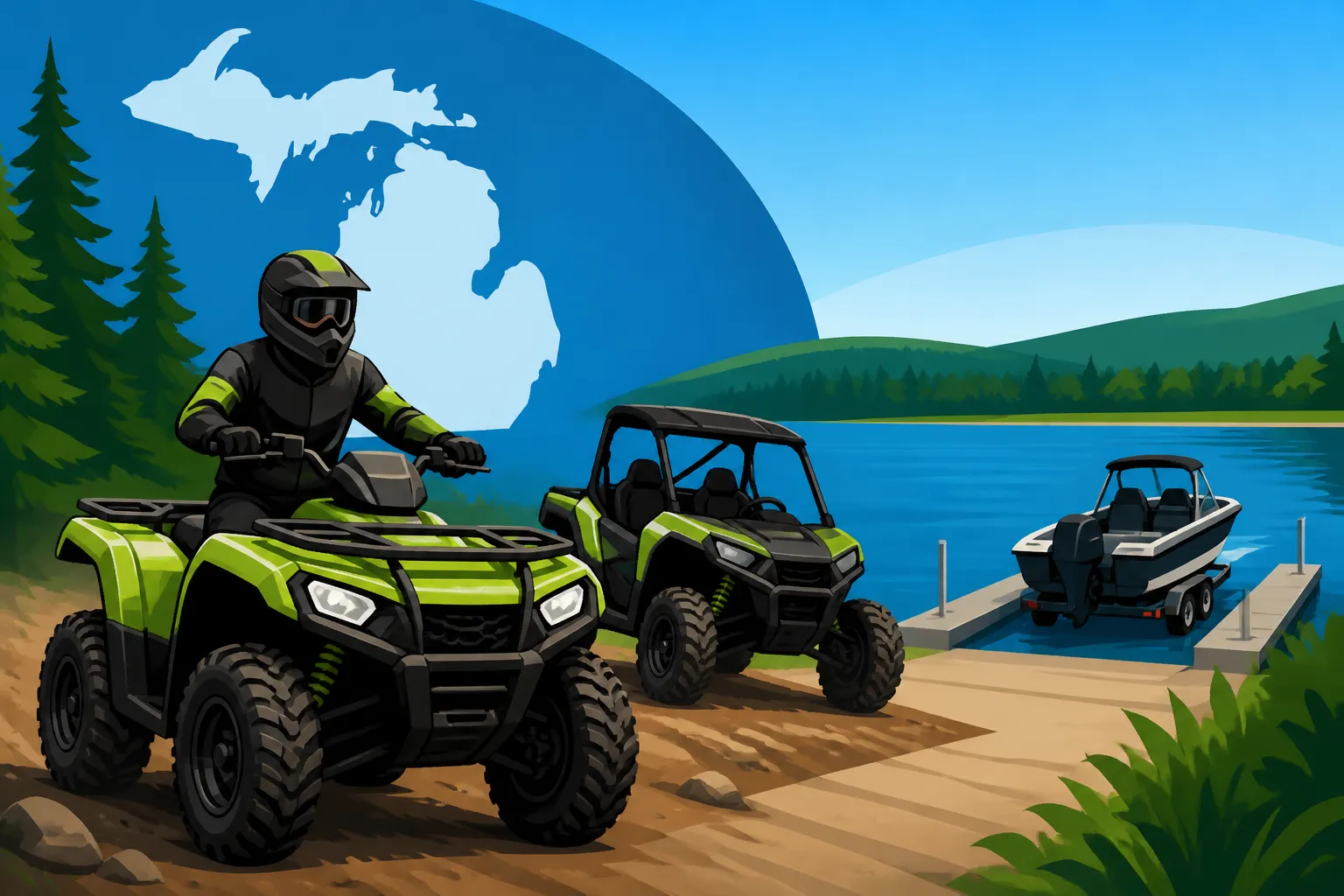
There's nothing quite like the freedom of an off-road vehicle in Michigan's beautiful natural settings, especially when it comes to accessing lakes and rivers. Many of us dream of the convenience of hopping on our ATV or UTV and making a quick run down a back road to the local boat launch. But before you fire up that engine, it's crucial to understand Michigan's sometimes-tricky rules about where your ORV can and can't go on pavement, especially when you're just trying to get your watercraft launched. This guide is here to help you navigate those rules so you can enjoy the water safely and legally.
The Basics: When Can Your ORV Even Touch Pavement in Michigan?
Let's face it, Michigan's ORV laws can feel like a tangled fishing line sometimes. You want to use your machine to its fullest, and for many, that includes getting to the water. But the primary rule of thumb is that ORVs are generally designed for off-road use, and riding them on public roads, particularly paved ones, is often restricted. This isn't just about fun; it's about safety and maintaining the character of our roads.
Understanding Michigan's ORV Road Rules
Michigan law generally prohibits ORVs from being operated on the "maintained portion" of public roads, especially state and federal highways. This means those nice paved roads, the ones you take your truck and trailer on, are typically off-limits for direct ORV travel. It can be frustrating when you just need to cover a quarter-mile stretch of asphalt to get to the boat ramp you can practically see from your driveway.
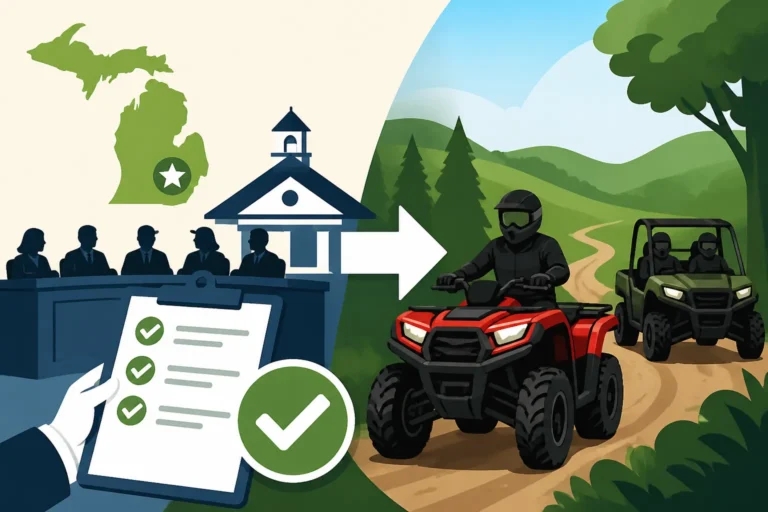
However, there's a big exception that comes into play: county ordinances. Michigan gives individual counties, and sometimes even townships and cities, the power to open certain public roads or shoulders to ORV use. This means that what's legal in Houghton County might be completely illegal in Calhoun County, and vice versa. It’s not a one-size-fits-all situation, which can be the source of so much confusion for riders just trying to do the right thing. When a county does open roads, they often come with specific rules, like a 25 mph speed limit, even if the posted limit for cars is higher. You also typically have to ride on the far right of the maintained portion, or on the shoulder if allowed, traveling single file. It’s all about minimizing conflict with other vehicles and keeping everyone safe.
The "Maintained Portion" vs. Shoulder: Where You Can Legally Ride
The distinction between the "maintained portion" of a road and the shoulder is absolutely critical in Michigan ORV law. When a county opens roads to ORV use, they often specify where on that road you're allowed to ride. The "maintained portion" generally refers to the part of the road that is regularly graded or paved for vehicle travel. The shoulder, on the other hand, is the area adjacent to the main travel lane, often unpaved or less structured, typically used for emergencies or parking.
Most county ordinances permitting ORV use on roads will direct riders to the far right of the maintained portion or onto the shoulder if it's safe and designated for ORV travel. Why does this matter for getting to a boat launch? Because if you're riding your ORV directly on the paved driving lane to cover that short distance, and the local ordinance doesn't specifically allow it, you could be cited. It’s a nuance that many riders miss, leading to unnecessary tickets. Always assume you need to stick to the extreme right or the shoulder, and only if the specific road is opened for ORV use by local ordinance. This helps reduce the risk of collisions with cars and trucks, which are much larger and faster. For more on this, check out [Michigan's Maintained Portion of the Road, Defined].
Specifics for Boat Launch Access: Navigating to the Water
So, you've got your ORV, your boat, and a burning desire to combine the two. Let's dig into the nitty-gritty of getting your ORV to that boat launch without running afoul of the law. It's often not as simple as just "getting there."
Public vs. Private Boat Launches
The type of boat launch you're aiming for significantly impacts the rules.
Public Boat Launches: These are often managed by the Michigan Department of Natural Resources (DNR), county park systems, or local municipalities. DNR-managed boat launches, for example, are usually part of a larger state park, state forest, or recreation area. These sites often have very clear signage regarding ORV access. If the launch is within an area that has designated ORV trails or routes, then riding your ORV to the launch might be permitted, assuming you stick to those designated routes. However, if the launch is just a standalone public access point on a main road, and there are no specific ORV routes leading to it, then you're back to relying on the county's road ordinances. You cannot just ride your ORV from a main road across a public parking lot to the water unless it's explicitly allowed. Always look for signs; "no ORVs" signs are common in many public park areas that aren't designated ORV zones.
Private Boat Launches: Think resorts, private campgrounds, or launches on private lakefront properties. If you own the property with the launch, or you have explicit permission from the owner, then you generally have more leeway. Private property, private rules. However, even if the launch itself is on private land, you still have to get there. If that journey involves traversing public roads, even for a short distance, you're still subject to Michigan's ORV road laws and any local ordinances. You can't just cross public land or roads without permission, even if your ultimate destination is private. Always, always confirm permission and legal road access for the journey itself.
The Shortest Route Exception and Crossing Rules
Michigan law does acknowledge the need for ORV riders to sometimes briefly use roads to connect trails or access essential services, like fuel or food. This "shortest practical route" concept often comes into play when trying to reach a boat launch. The idea is that if the boat launch is just a short hop off an established ORV trail or a legally opened county road, you might be allowed to use the shortest possible road section to get there.
However, this isn't a free pass to just ride on any road. It must be a road opened by local ordinance, and you must adhere to all accompanying rules, like the 25 mph speed limit and riding on the far right. What about crossing busier roads, like state highways? Michigan law specifically addresses [Michigan State Highway ORV Crossing Rules]. Generally, ORVs can cross state highways at a right angle after coming to a complete stop, ensuring safety, and only if the road directly opposite is also an opened ORV route or destination. You cannot ride along a state highway. This is crucial for boat launches that might be on the opposite side of a busy state route from your staging area. Plan your route carefully, identify legal crossings, and always prioritize safety.
Trailer Requirements and ORV-Specific Hauling
While the core of "Riding an ORV to a Boat Launch" implies the ORV is your mode of transport, sometimes you might use an ORV to move a small boat trailer within a very limited area, perhaps from a parking spot to the launch ramp. This is a different scenario from towing a boat trailer down a public road. If you're using your ORV to maneuver a boat trailer exclusively on private property, or within a public boat launch area that explicitly permits it, then you're generally fine. However, taking an ORV to tow a boat trailer on any public road, even one opened to ORVs, is usually a no-go. ORVs aren't typically designed or legally equipped for towing on public roads. Their braking systems, lighting, and suspension are not meant for highway-speed towing loads.
If your ORV isn't street-legal or otherwise permitted on the road you need to take to the boat launch, the safest and most legal option is to trailer your ORV to the launch area itself. Park your truck and trailer, then unload your ORV once you're on site, if allowed. This completely avoids any ambiguity about road legality. Remember, the goal is to get to the water and enjoy your day, not to get a ticket or, worse, cause an accident.
Practicalities and Safety Considerations for ORV Boat Launch Access
Even if you're only riding a short distance to a boat launch, safety and legal compliance are paramount. It's not just about avoiding a ticket; it's about protecting yourself and others.
Equipment You'll Need for Road Riding (Even Short Distances)
When you take your ORV onto any public road, even for a short trip to a boat launch, you are generally expected to meet certain equipment requirements designed for road safety. These aren't just suggestions; they are often legal mandates.
- Lights: Michigan law requires ORVs to have a lighted headlight and taillight when operating on roads, even during daylight hours in some areas. This dramatically increases your visibility to other motorists. Imagine a car coming around a bend; a bright headlight makes your ORV much easier to spot. If your stock lights aren't cutting it, or you want extra visibility, consider aftermarket lighting. Companies like SuperATV offer a range of robust LED light bars and auxiliary lights that can make a huge difference in how well you're seen. Always ensure they're wired correctly and don't blind oncoming traffic. For more specifics, check out [Michigan ORV Lighting Rules During Daylight].
- Mirrors: Side mirrors are typically required for any road-legal vehicle, and many county ordinances extending ORV access to roads will also require them. They are essential for knowing what's behind you, especially if you need to pull over or make a turn. Many ORVs don't come stock with mirrors, so this is often an aftermarket addition.
- Eye Protection: Goggles or a helmet with a face shield are usually required. Kicking up dust or debris from the road can quickly impair your vision, and a direct hit to the eye can cause serious injury.
- Helmet: While Michigan has some helmet exemptions for street-legal UTVs with certain features, for most ATVs and non-street-legal UTVs operating on roads, a DOT-approved helmet is required. Even if you're only going a short distance at low speed, a helmet is your most important piece of safety gear in a crash.
- Horn/Warning Device: Many road-riding ordinances require an audible warning device, like a horn, to alert other vehicles or pedestrians.
Before you even leave your property, do a quick safety check. Are all your lights working? Do you have your helmet and eye protection on? Better safe than sorry, especially when you're sharing the road with cars.
Local Ordinances: Your Best Friend (or Foe) for Access
I cannot stress this enough: CHECK LOCAL ORDINANCES. This is the single most important step you can take. Michigan's system of allowing counties to open roads for ORV use means that rules can literally change from one county line to the next, and even within different townships or cities in the same county. What's perfectly fine on a gravel road in Roscommon County might land you a hefty fine just a few miles down the road in another jurisdiction.
Before planning any ORV trip to a boat launch that involves public roads, call the county sheriff's department, the local DNR office for that specific area, or the township/city clerk's office. Many counties now publish their ORV ordinances online. It might take a little digging, but it's far better than getting pulled over by a deputy who knows the local rules inside and out. Remember, "I didn't know" is rarely an acceptable excuse. Look up [How to Find Your Michigan County's ORV Ordinance] for guidance on where to search. These ordinances will tell you which roads are open, what the speed limits are, what equipment is required, and any other specific conditions for ORV use.
Potential Pitfalls and Enforcement
Ignoring Michigan's ORV road rules, even for a quick jaunt to the boat launch, can lead to several unpleasant outcomes.
- Tickets and Fines: Operating an ORV on an unauthorized road can result in a civil infraction, carrying fines that can easily negate any convenience you gained. These tickets aren't just a slap on the wrist; they can be costly.
- Machine Impoundment: In more serious cases, or for repeat offenses, law enforcement has the authority to impound your ORV. Imagine your ORV getting towed while your boat is still tied up at the launch. Talk about ruining a day!
- Accidents and Liability: This is the most serious risk. ORVs are not designed for the speed, weight, or braking demands of road traffic. A collision with a car can have devastating consequences for the ORV operator, passengers, and other motorists. If you're involved in an accident while operating illegally, your insurance company might deny coverage, leaving you personally responsible for damages and medical bills. Understanding your liability is crucial, and you can learn more by looking at [Michigan ORV Accident Reporting Requirements].
- Bad Reputation: Illegal ORV use gives all riders a bad name and can lead to increased restrictions. Local communities are more likely to close roads to ORVs if they experience problems with illegal or unsafe operation. We all have a responsibility to ride respectfully and legally to preserve access for everyone.
Law enforcement, including DNR Conservation Officers and local Sheriff's deputies, are well-versed in ORV regulations. They are out there patrolling, especially around popular recreation spots like boat launches. Assume you will be seen, and make sure you're operating within the law.
Necessary Paperwork and Legalities
Even for short trips to the boat launch, the proper documentation for your ORV is non-negotiable in Michigan. Just like with a car, having your paperwork in order is key to a hassle-free experience.
ORV License, Trail Permit, and Recreation Passport
In Michigan, almost all ORV operation, whether on designated trails, forest roads, or legally opened county roads, requires specific permits. This includes those brief moments you might be on a road heading to a boat launch.
- Michigan ORV License: This is a sticker that goes on your machine, signifying that it's registered for use in Michigan. It's a fundamental requirement for almost all ORV operation off private land.
- Michigan ORV Trail Permit: This is an additional sticker, and it's specifically required if you operate your ORV on designated state-managed ORV trails, routes, or scramble areas. If your route to the boat launch involves any portion of a designated ORV trail or route, then you absolutely need this.
- Michigan Recreation Passport: If the boat launch is located within a Michigan State Park or Recreation Area, or a State Forest Campground (which many boat launches are), you'll also need a Recreation Passport for your tow vehicle. This is typically purchased when you renew your license plate. While it's not directly for the ORV, it's essential for accessing the public land where many launches are located.
These permits fund the maintenance of our trails and access points, so they're important. Don't be caught without them. You can learn more about these requirements and where to get them by reading [Michigan ORV License and Trail Permit Explained]. Often, you can purchase these online through the DNR eLicense system or at a local sporting goods store. Keep the physical permits on your machine and carry proof of purchase, just in case.
Insurance and Liability
This is a big one. While Michigan law doesn't always mandate specific ORV liability insurance for all situations, if you're operating your ORV on a public road, even for a short trip to a boat launch, having adequate insurance is incredibly important.
Consider this: If you're riding your ORV on a county road that's been opened to ORVs, and you get into an accident with a car, who pays for the damages? While your ORV might not have a full no-fault policy like your car, your personal liability could be enormous. Some homeowner's policies might offer limited coverage, but often with significant exclusions for vehicles operated on public roads. Many dedicated ORV insurance policies offer liability, collision, and comprehensive coverage, giving you peace of mind.
Even if you're operating perfectly legally, accidents happen. A deer could jump out, or another driver could be distracted. Having proper insurance protects your assets and ensures that you can cover potential damages or injuries to others. Consult with your insurance agent to ensure your ORV is adequately covered, especially if you plan to operate it on any public roads. Don't risk losing everything for a quick trip to the boat launch. More details on this can be found in [Michigan ORV Liability Insurance Minimums].
ORV Road Riding Checklist for Boat Launch Access
To make sure you're ready for that boat launch trip, here's a quick checklist to guide you:
| Item | Status Check | Notes |
|---|---|---|
| Local Ordinances | Checked & Confirmed | Is the specific road to the boat launch legally open for ORV use by county/township ordinance? What are the conditions (speed, shoulder, time of day)? |
| ORV License | Current & Displayed | Sticker on machine, proof of purchase handy. |
| ORV Trail Permit | Current & Displayed | Needed if any part of your route is a designated ORV trail/route. |
| Recreation Passport | Current (for tow vehicle) | If the boat launch is in a State Park/Recreation Area. |
| Helmet | Worn (DOT-approved) | Required for most ATVs; often required for UTVs unless fully street-legal with specific exemptions. |
| Eye Protection | Worn (goggles/face shield) | Essential for safety and visibility. |
| Headlight/Taillight | Working & On | Required for visibility, even in daylight on roads. Consider upgrading with SuperATV lighting for better visibility. |
| Mirrors | Installed & Adjusted | Typically required for road operation; essential for seeing traffic behind you. |
| Horn/Warning Device | Working | Often required for road use to alert others. |
| Insurance | Adequate Coverage | Confirm your policy covers ORV operation on public roads and addresses liability. |
| Route Planning | Shortest, Safest, Legal | Plan to use the shortest, safest, and legally authorized route. Avoid state highways except for legal crossings. |
| Safety Check | Pre-Ride Done | Check tires, brakes, fluids, and all operational aspects before hitting the road. |
By taking the time to understand and adhere to Michigan's specific ORV laws, checking local ordinances, and ensuring your machine and gear are up to par, you can safely and legally use your ORV to get to that boat launch. It's all about responsible riding so we can continue to enjoy our beautiful state's land and water for years to come.
Disclaimer
This article is for general informational purposes only and does not constitute professional advice. Laws, prices and regulations vary by location and change over time. Consult a qualified professional for guidance on your specific situation.