Street-Legal UTV Kit Prices
The dream of taking your UTV from the trail straight onto a Michigan county road is incredibly appealing, offering unmatched convenience and expanding your riding possibilities beyond measure. However, turning that dream into a reality often comes with a significant question mark: what exactly will it cost to make your side-by-side street-legal, especially when you're looking at various kits? This guide will walk you through the often-confusing landscape of street-legal UTV kit prices, helping you understand the factors involved and how to budget for your Michigan road-legal adventure.
Understanding What Goes Into a Street-Legal UTV Kit
When you decide to make your UTV street-legal in Michigan, you're essentially modifying it to meet the same safety standards as traditional automobiles for road use. It's not just about slapping on a license plate; it's about ensuring your machine can communicate its intentions to other drivers and is safe for shared roadways. A "kit" can mean different things to different people, from a bare-bones collection of necessary parts to a comprehensive package that covers almost everything.
Core Components Required by Michigan Law
Michigan has specific requirements that your UTV must meet to be considered street-legal. These aren't suggestions; they're non-negotiable items that will be checked during your [Michigan Street-Legal UTV Inspection at the Secretary of State]. Failing to have any one of these can send you back to the drawing board, wasting time and money. Think of these as the absolute foundation of any street-legal conversion.
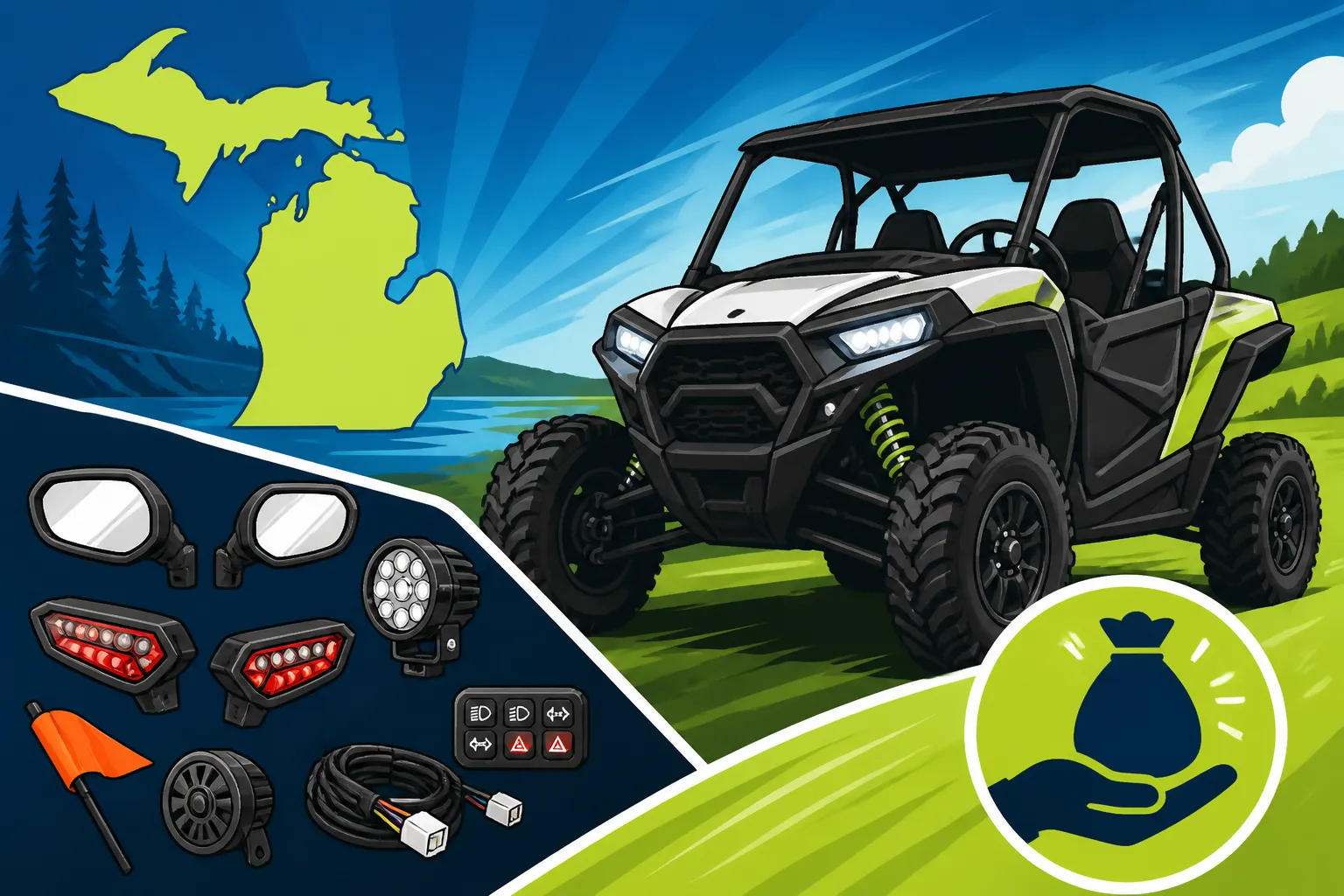
At a minimum, you'll need a proper lighting system that includes headlights (high and low beam), taillights, brake lights, and crucially, turn signals for both front and rear. Your UTV also needs a horn or another audible warning device, a rearview mirror (and often a side mirror on each side), and a windshield made of safety glass. [Safety Glass, Mirrors and Horns: Michigan's Street-Legal List] goes into detail about each of these. Often, your UTV will also need DOT-approved tires, which are different from the knobby off-road tires designed purely for mud and rocks. These components, individually or as part of a basic kit, form the baseline cost of your project.
The Spectrum of "Kits": Basic to Comprehensive
The term "kit" is where the price variations truly begin to surface. A "basic" kit might literally only include turn signal components, a horn, and perhaps a mirror or two. These are often designed for UTVs that already have decent headlights and taillights and just need the bare minimum additions. Such kits tend to be on the lower end of the cost spectrum, appealing to DIY enthusiasts who want to source other parts separately or upgrade existing ones.
On the other hand, a "comprehensive" kit, such as those offered by companies like SuperATV, can include almost everything you need in one package. This could mean a full DOT-approved safety glass windshield, a complete turn signal and horn wiring harness, multiple mirrors, and even specific license plate mounting brackets with illumination. These all-in-one solutions offer convenience and peace of mind, knowing that most of the compliance heavy lifting is handled. Naturally, these more extensive kits come with a higher price tag, reflecting the number of components and the engineering that goes into making them compatible with various UTV models.
Breaking Down the Costs: What Influences Kit Prices?
It's easy to look at a price tag and feel overwhelmed, but understanding why certain kits cost more than others can help you make an informed decision. Several factors play a significant role in determining the final price of a street-legal UTV kit.
Brand Reputation and Quality of Components
Just like with any other purchase, the brand behind the kit and the quality of the individual components make a huge difference. Established brands with a reputation for durability, fitment, and customer support often command higher prices. This isn't always about name recognition; it's often about the quality of materials used, the precision of manufacturing, and the reliability of the electronics. For example, a turn signal kit from a lesser-known brand might use thinner wiring or less robust switches than one from a company like SuperATV, which focuses on heavy-duty applications.
Higher-quality components might feature brighter, more durable LED lights, thicker gauge wiring that's less prone to corrosion, and switches designed to withstand repeated use and exposure to the elements. While the upfront cost might be higher, investing in a reputable brand and better components can save you headaches and replacement costs down the road. Imagine going through the hassle of an inspection only to have a cheap turn signal switch fail a month later – that's a frustration many riders want to avoid.
Specific UTV Model Compatibility and Complexity
Not all UTVs are created equal, and neither are their street-legal conversion kits. A kit designed for a widely popular model, like a Polaris Ranger or a Can-Am Defender, might be more readily available and sometimes even more affordable due to economies of scale in manufacturing. These machines often have dedicated wiring harnesses and mounting points that make installation smoother.
However, if you own a less common UTV model, an older machine, or one with unique factory configurations, the kit might be more specialized and therefore more expensive. The engineering required to develop a perfect-fit kit for a niche model is greater, and that cost is reflected in the price. Sometimes, a "universal" kit might be an option, but these often require more fabrication or creative problem-solving during installation, which adds to the labor time if you're paying someone else, or your own time if you're doing it yourself.
Inclusions: Windshields, Mirrors, and Other Accessories
Many street-legal kits come with a variety of inclusions, and these significantly impact the overall price. The most prominent example is the windshield. A DOT-approved safety glass windshield is often the most expensive single component in a street-legal conversion. If a kit includes one, expect the price to be considerably higher than a kit that only provides lighting and horn components. [Safety Glass Windshield Cost for a Side-by-Side] is a good resource to understand this particular expense.
Beyond the windshield, kits can include various mirrors, from basic side mirrors to more elaborate rearview mirror setups. Some kits might also integrate a license plate bracket with LED illumination, specialized wiring looms, or even smaller accessories like reflective tape or specific mounting hardware. Each additional inclusion adds value and convenience but also contributes to the kit's price. When comparing prices, always check the detailed list of what's actually in the box to ensure you're doing an apples-to-apples comparison. It’s not uncommon to find a cheaper kit that appears to be a great deal, only to realize it doesn't include the mirrors or windshield you still need to purchase separately.
DIY vs. Professional Installation: Hidden Costs and Savings
While the kit price itself is a major factor, the cost of getting it installed can dramatically shift your overall budget. Many riders choose the DIY route to save money, but it's important to be realistic about your skills and the potential for unforeseen expenses.
The Appeal and Pitfalls of Doing It Yourself
Taking on the installation yourself is often the most appealing option for budget-conscious riders. The primary benefit is saving on labor costs, which can be substantial for a complex conversion. With a good set of tools, some mechanical aptitude, and detailed instructions (many kits, especially from reputable brands, come with excellent guides), many riders can successfully install a street-legal kit. There’s a certain satisfaction that comes with wrenching on your own machine, too.
However, the DIY route isn't without its pitfalls. If you're not experienced with automotive wiring or modifications, you might encounter unexpected challenges. Incorrect wiring can lead to electrical issues, blown fuses, or even non-functional components, potentially requiring professional help anyway. You might also need specialized tools you don't own, adding to the cost. The time commitment can be significant, and if you make mistakes, you might need to purchase replacement parts. It’s crucial to be honest about your skill level and how much time you can realistically dedicate to the project. Sometimes, a "saving" on labor turns into a greater expense due to mistakes or prolonged frustration.
When to Consider Professional Installation
For those who are less mechanically inclined, short on time, or simply want the peace of mind that comes with expert work, professional installation is a valuable option. Many UTV dealerships or aftermarket accessory shops offer street-legal conversion services. While this adds a labor cost to your budget, it ensures the job is done correctly, often comes with a warranty on the installation, and saves you the frustration of troubleshooting complex wiring or tricky component placements.
Professional installers are familiar with the various kits and Michigan's specific requirements, reducing the risk of your UTV failing its inspection due to an installation error. They can also advise on the best kit for your specific UTV and riding style. If you're feeling overwhelmed by the thought of wiring turn signals or properly mounting a safety glass windshield, a professional installation might be the smarter long-term investment. Just remember to factor these labor costs into your overall budget, as they can easily add several hundred dollars or more to the final price.
Finding the Right Kit for Your Michigan Rides
Navigating the options for street-legal UTV kits in Michigan means balancing compliance with your budget and personal preferences. It’s not just about the cheapest kit; it’s about the best value for your specific needs and machine.
Comparing Kit Features and Value for Money
When you're shopping for a kit, don't just look at the headline price. Dive into the details of what each kit offers. Does it include DOT-approved components, or will you need to verify that yourself? How comprehensive is the wiring harness? Are the switches and relays high-quality, or do they feel flimsy? For instance, a SuperATV kit might be priced higher, but if it includes a robust plug-and-play wiring harness and durable, sealed switches, the value for money could be excellent in terms of longevity and ease of installation.
Consider the long-term. A cheaper kit might use standard incandescent bulbs that burn out quickly, whereas an LED kit, while more expensive upfront, offers greater durability and lower power draw. Think about the overall fit and finish. A kit that integrates seamlessly with your UTV's existing controls and bodywork will offer a much better experience than one that looks like an afterthought. Ultimately, "value" means getting the necessary compliance along with reliability and user satisfaction.
Here's a simplified look at typical kit component types and their general cost implications (remember, actual costs vary wildly by brand, quality, and inclusions):
| Component Category | Typical Inclusions | Cost Implication (Relative) |
|---|---|---|
| Basic Lighting | Turn signals (LED/incandescent), horn, switches | Lower end. Assumes existing head/taillights are sufficient. |
| Windshield | DOT-approved safety glass windshield | Significant added cost. Can be highest single item. |
| Mirrors | Side mirrors, rearview mirror, mounting hardware | Moderate added cost. Quality and design impact price. |
| Complete Wiring | Plug-and-play harnesses, relays, fuses | Moderate to high. Adds convenience, reduces install time. |
| License Plate Kit | Illuminated bracket, mounting hardware | Lower end. Often included in more comprehensive kits. |
| DOT Tires | Set of four street-legal tires | Substantial added cost. Often purchased separately, not in kits. |
Budgeting for the Unexpected and Additional Costs
Even with a comprehensive kit, there are often additional costs that riders overlook. First, remember your [Michigan ORV Sales Tax at a Secretary of State Branch] when you title your machine. While not part of the kit, it's a necessary expense for your street-legal journey. Then there's the [Michigan ORV Title Application Form and What It Costs]. You'll pay a fee to get your street-legal UTV titled.
Beyond that, you might need new DOT-approved tires, which are rarely included in street-legal conversion kits. [DOT Tires on a Street-Legal Side-by-Side] explains why these are critical. There could be minor wiring connectors, zip ties, or other small hardware items not included in a kit. If your UTV is older, you might uncover other maintenance issues during the conversion that need addressing. And don't forget the cost of [Michigan ORV Insurance and When You Actually Need It], especially for road use, which will be an ongoing expense. It’s always wise to add a contingency fund—say, 10-15% of your estimated costs—to your budget for those inevitable surprises.
The Long-Term Value of a Street-Legal UTV
While the upfront cost of a street-legal UTV kit and its installation might seem daunting, it's worth considering the long-term value. Having a street-legal UTV significantly expands where you can ride in Michigan, opening up countless miles of county roads and connecting trails that were previously inaccessible. This freedom can make your UTV a more versatile and enjoyable machine, increasing its utility for everything from exploring new areas to running errands in town. [Which Michigan Roads Allow ORVs] is a great resource to understand these expanded opportunities.
Furthermore, a properly converted, street-legal UTV can sometimes hold its resale value better than a strictly off-road machine, appealing to a broader range of potential buyers if you ever decide to sell it. The investment in a quality kit and professional installation can pay dividends in terms of enhanced enjoyment, convenience, and potentially, future resale.
Disclaimer
This article is for general informational purposes only and does not constitute professional advice. Laws, prices and regulations vary by location and change over time. Consult a qualified professional for guidance on your specific situation.