Parts List for a Street-Legal Conversion
Navigating the world of off-road vehicles in Michigan is exhilarating, but the idea of making your beloved ATV or UTV truly street legal can feel like stepping into a bureaucratic maze. Many riders feel frustrated by the seemingly endless rules and the uncertainty of what exactly they need to add to their machine to be compliant. You want to enjoy the convenience of riding from your driveway to the local gas station or connecting trail segments without fearing a ticket, and this guide is here to demystify the essential parts list you'll need for a successful street-legal conversion in the Wolverine State.
What Michigan Requires for Street-Legal ORVs
Before you start bolting on new parts, it's crucial to understand the foundation of Michigan's approach to allowing off-road vehicles on public roads. It's not just about adding a few lights; it's about meeting a specific set of safety and equipment standards that transform your ORV into what the state recognizes as an "assembled vehicle" or a vehicle generally suitable for road use, often falling under the broader category of a Low-Speed Vehicle (LSV) or specially constructed vehicle for certain roads, depending on the municipality's ordinances. This pathway is designed to ensure that these vehicles, which weren't originally manufactured for highway use, can safely share the road with traditional cars and trucks.
The good news is that Michigan has created a pathway for this transformation, but it requires diligent attention to detail. Many riders get tripped up by thinking a simple ORV license and trail permit are enough for road riding, but that's only for specific, limited circumstances on certain designated routes. For true street legality, allowing you to venture beyond those very specific local ordinances or designated routes (where 25 mph limits and other restrictions apply), you're aiming for a more robust conversion that aligns with conventional vehicle standards. This means preparing for an inspection that covers everything from your lights to your tires. It's a significant undertaking, but the freedom it offers is well worth the effort.
Understanding the Assembled Vehicle Application
Making your UTV or ATV street legal in Michigan typically involves going through the process for an "assembled vehicle." This isn't just a casual term; it's a specific classification from the Michigan Secretary of State for vehicles that are either built from scratch or significantly modified from their original factory state to meet road-going standards. This classification ensures that even though your machine started life as an off-road beast, it now has the safety features necessary to operate on county roads where ORVs are permitted. The application process requires you to submit detailed information about your vehicle and the components you've added or modified.
When you prepare for this, think of it as bringing your ORV up to a minimum standard for safety on public roads. It's not about turning it into a car, but rather equipping it with the essential features that allow other drivers to see you, understand your intentions, and for you to safely operate in traffic. This process often begins with completing the [Michigan Assembled Vehicle Title Application] and ensuring all your paperwork, including receipts for major components, is in order. It’s a thorough check, but it’s what gives you the legal green light.
Key Categories of Required Equipment
Michigan's requirements for street-legal ORVs can be broadly broken down into several categories: lighting, mirrors, a horn, a windshield, proper tires, and a speedometer. Each category addresses a critical aspect of road safety. For instance, adequate lighting ensures you're visible and can signal your movements, while mirrors allow you to monitor traffic around you. Without these fundamental elements, your ORV simply isn't equipped to operate safely among other vehicles, leading to potential hazards and legal issues.
The frustration often stems from knowing what to get, and where to get it. Many standard ORV parts simply aren't up to snuff for street legal applications. For example, your factory headlights might be great for the trail, but they might not provide the specific beam pattern or intensity required for road use, or they might lack high/low beam functionality. This means you’ll often be replacing or adding components specifically designed and certified for highway use. It's about ensuring your machine is not just functionally equipped, but legally equipped, and ready for that [Michigan Street-Legal UTV Inspection Checklist].
Essential Lighting Components for Road Readiness
When you consider making your UTV or ATV street legal, lighting is often the first thing that comes to mind, and for good reason. On public roads, communication and visibility are paramount. Your off-road lights might be incredibly bright, perfect for illuminating a dark trail, but street-legal lighting has specific requirements for beam pattern, color, and functionality. It’s not just about having a light; it's about having the right kind of light in the right places, all working reliably.
The conversion often means upgrading or adding a significant number of components. Think about driving a car: you have headlights, taillights, turn signals, brake lights, and even a light for your license plate. Your ORV needs to replicate this functionality to the greatest extent possible to be understood and seen by other drivers. This ensures that whether you're making a turn, slowing down, or driving after dark, you're communicating your intentions clearly and are highly visible to everyone else on the road.
Headlights and Taillights: Seeing and Being Seen
For your ORV to be street legal, you'll need functional headlights and taillights that meet specific requirements for visibility and color. This means headlights that emit white light and are capable of both high and low beams, allowing you to adjust for oncoming traffic just like in a car. They must illuminate the road ahead for a specified distance, ensuring you can see obstacles and react in time. For the rear, you'll need red taillights that are visible from a substantial distance, especially after dark.
Many factory ORV headlights are single-beam setups, designed for off-road visibility rather than road-legal distinction. You might need to install an aftermarket set or a conversion kit that provides the required dual-beam functionality. Similarly, your taillights need to be consistently on when your vehicle is running to serve as a constant presence indicator for vehicles behind you. Companies like SuperATV offer a range of lighting solutions, including LED headlights and taillights that are often designed with street-legal requirements in mind, providing both durability for the trail and compliance for the road.
Turn Signals and Hazard Lights: Communicating Your Intent
Perhaps one of the most critical additions for road safety is a complete set of turn signals and hazard lights. On Michigan's county roads, where you might be sharing space with cars, trucks, and even farm equipment, indicating your turns is not just courteous, it's a legal necessity. Your turn signals must be visible from both the front (amber or white) and the rear (amber or red) and operate independently for left and right turns. They also need to have a clear, distinct flash rate.
Beyond indicating turns, a hazard light function is equally important. In situations where you need to stop on the side of the road, or if you're experiencing a mechanical issue, flashing all four turn signals simultaneously alerts other drivers to your stationary or slow-moving presence, significantly reducing the risk of a rear-end collision. Integrating these into your ORV's electrical system can sometimes be the trickiest part of the conversion, but there are numerous [Wiring Turn Signals on a Polaris Ranger] guides and kits available to simplify the process. Look for comprehensive [Street-Legal Light Kit for a Can-Am Defender] options that bundle these components together.
Brake Lights: The Crucial Warning Signal
A functioning brake light system is non-negotiable for street legality. When you press the brake pedal, red lights at the rear of your ORV must illuminate instantly and brightly, signaling to drivers behind you that you are slowing down or stopping. These lights need to be clearly visible in all lighting conditions, from bright sunshine to dusk, and from a safe following distance. Relying on hand signals isn't sufficient for road use, especially at night or in heavy traffic.
Most modern UTVs and ATVs already come equipped with some form of brake lights, but it's essential to verify their brightness, positioning, and reliability for road use. They should activate automatically with the application of the brake. If your current setup is dim, or if you're building a custom machine, you'll need to install high-quality, bright red LED brake lights. This is a simple but vital part of your street-legal kit, as it directly impacts collision avoidance for anyone following you.
License Plate Illumination
It's a small detail that often gets overlooked, but a working license plate light is a mandatory requirement for any street-legal vehicle, including your converted ORV. This light, typically white, must illuminate your rear license plate when your headlights are on, making your plate visible and legible after dark. Without it, you could face a quick ticket from law enforcement, even if all your other lighting is perfectly compliant.
This is usually a small, dedicated LED light that mounts above or beside your license plate bracket and wires into your taillight circuit. It's a relatively inexpensive and easy addition, but critical for full compliance. Don't let this minor detail be the reason your otherwise perfectly legal machine gets pulled over.
Safety and Visibility Gear Beyond Lighting
While lighting is paramount for communication and visibility, Michigan's street-legal requirements extend to other vital safety components that ensure you can operate your ORV safely and effectively on public roads. These parts address fundamental aspects of driving, from maintaining situational awareness to protecting occupants and maintaining control of your vehicle. Ignoring these aspects not only jeopardizes your safety but also guarantees you won't pass an inspection.
Think about the environment you're entering: roads with cars, trucks, and varying speed limits. Your ORV needs to be equipped to handle these conditions, which means more than just being seen. It means being able to see, hear, and react to everything around you, as well as ensure the machine itself is up to the task of regular road use. This is where components like mirrors, horns, and proper tires come into play, forming a comprehensive safety net.
Mirrors: All-Around Awareness
Michigan law requires specific mirrors for street-legal vehicles, allowing you to see traffic approaching from behind and to the sides. Typically, this means at least one rearview mirror, and often two external side mirrors, providing you with a comprehensive view of your surroundings without having to constantly turn your head. This is incredibly important for lane changes, turns, and simply being aware of your position relative to other vehicles.
For most ATVs, adding a single rearview mirror mounted to the handlebars or windshield frame is a common approach. For UTVs, you'll generally need both a central rearview mirror and two side mirrors. These need to be securely mounted and provide a clear, unobstructed view. Many aftermarket options, including those from SuperATV, are designed to be durable for off-road abuse while providing the necessary field of view for street use. Proper mirror placement is crucial for safety and compliance, so make sure they're adjustable and give you a good sightline.
Horn: Making Your Presence Known
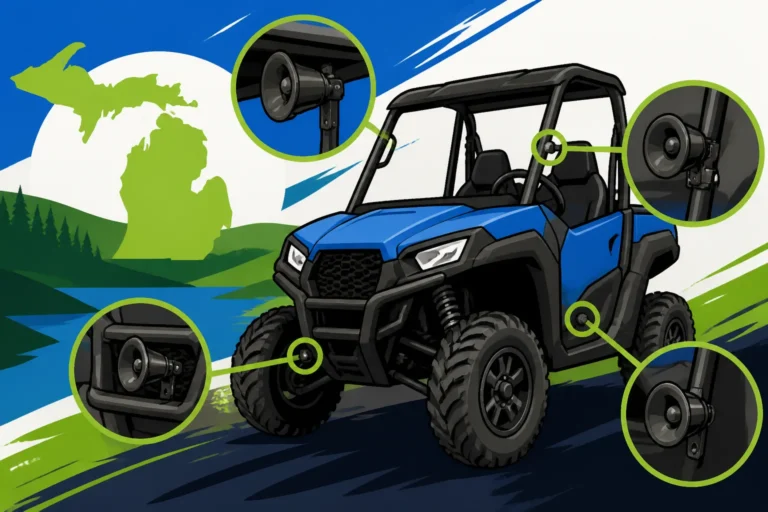
Just like any other road-legal vehicle, your ORV needs an audible warning device – a horn. This isn't just for expressing frustration; it's a vital safety tool to alert pedestrians, cyclists, or other drivers to your presence in an emergency situation. Whether someone is backing out of a driveway without looking or a pedestrian is stepping into the road, a quick, clear blast of your horn can prevent an accident.
The horn must be loud enough to be heard from a significant distance, typically around 200 feet, and produce a distinct, consistent sound. Small bicycle bells or weak factory "beep" horns on some older ATVs won't cut it. You'll need an electric horn that is easily accessible to the driver, usually mounted on the handlebars for ATVs or the dash for UTVs. Installing one is usually a straightforward electrical connection, ensuring you have this crucial piece of [Safety Glass, Mirrors and Horns: Michigan's Street-Legal List] in place.
Windshield and Wipers: Clear Vision in All Conditions
While Michigan has some specific rules regarding eye protection (like [Windshield or Goggles: Michigan's Eye Protection Rule]), a properly installed windshield is a common requirement for many street-legal ORV conversions, especially for UTVs. A windshield not only protects occupants from wind, bugs, and road debris but also helps to keep you comfortable during longer rides on pavement. If your vehicle is equipped with a windshield, it generally needs to be made of safety glass or a shatter-resistant material.
Furthermore, if your windshield is permanently fixed and required for compliance, you'll also need operational windshield wipers to ensure clear visibility in rain, snow, or muddy conditions. This is a detail often missed by those converting their UTVs. While not all ORV street-legal setups mandate a full windshield and wipers, it's a wise addition for practical use and comfort, and highly recommended if you plan to drive in varying weather. If you opt for a full enclosure, these components become even more critical for safe operation.
DOT-Approved Tires: Road Grip and Longevity
Your off-road tires, with their aggressive tread patterns, are fantastic for mud, rocks, and dirt. However, they are generally not designed for sustained highway speeds or optimal grip on pavement. Michigan's street-legal requirements often specify that your ORV must be equipped with Department of Transportation (DOT) approved tires. These tires are designed and tested to meet certain safety standards for road use, including factors like load rating, speed rating, and tread wear.
Using non-DOT tires on pavement can be dangerous, as they may overheat, wear out prematurely, or provide insufficient traction, especially when braking or cornering. Swapping to [DOT Tires on a Street-Legal Side-by-Side] is a significant and often necessary upgrade. While it might feel counterintuitive to put less aggressive tires on your ORV, the safety benefits and legal compliance on the road are undeniable. This ensures your vehicle handles predictably and safely when mingling with street traffic.
Beyond the Basics: Other Considerations and Setup Tips
Beyond the immediately obvious safety components, there are several other parts and considerations that contribute to a fully compliant and enjoyable street-legal ORV experience in Michigan. These elements often enhance safety, provide essential information to the driver, or simply ensure your vehicle fits seamlessly into the flow of road traffic without drawing unwanted attention. Addressing these details makes your conversion truly complete and hassle-free.
The goal isn't just to pass an inspection, but to create a machine that you can confidently and safely operate on public roads day in and day out. This means thinking about how you'll monitor your speed, ensure your passengers are secure, and keep your vehicle tidy enough not to fling mud onto other road users. Paying attention to these often-overlooked details can prevent future headaches and enhance your overall riding experience.
Speedometer: Keeping an Eye on the Limit
When riding on public roads, adhering to posted speed limits is absolutely essential. Michigan has strict speed limits for ORVs on county roads, often capped at [Michigan's 25 mph Limit on County Roads], so a functional and accurate speedometer is a must-have for your street-legal ORV. It provides you with real-time information about your speed, allowing you to stay within legal limits and adjust your driving for road conditions and traffic flow. Without one, you're essentially guessing your speed, which is a recipe for a ticket.
Many factory ORVs don't come with a speedometer, or if they do, it might be integrated into a digital display that isn't easily visible or accurate enough for precise road use. You'll need to install a reliable aftermarket [Speedometers on a Street-Legal UTV] that is calibrated correctly for your tire size. This ensures you're always aware of your speed and can comply with local ordinances. It's a simple instrument, but its importance on the road cannot be overstated.
Safety Belts and Occupant Protection
While not always explicitly listed as an "added part" for some ATV conversions, for UTVs, safety belts are a critical component for occupant protection, and they must be functional and in good condition. Just like in a car, these restraints are designed to keep you and your passengers secure in the event of a sudden stop or collision. Michigan law requires passengers in side-by-sides to wear seatbelts, and for street-legal use, these need to meet safety standards.
Inspect your existing safety belts for any fraying, tears, or damage to the buckles. If your ORV doesn't have them, or if they're not up to par, you'll need to install three-point harnesses for all seating positions. This ensures that everyone in your street-legal UTV is safely restrained, providing peace of mind and meeting an unspoken expectation of road vehicles.
Fenders and Mud Guards: Keeping the Mess Contained
While perhaps not a primary safety device, fenders and mud guards play an important role in road etiquette and cleanliness. When you're driving your ORV on paved roads, especially after a rain shower or a dusty trail ride, those aggressive tires can kick up a lot of debris, water, or mud. Fenders and mud guards help to contain this spray, preventing it from hitting other vehicles, pedestrians, or even your own machine's occupants.
Michigan laws typically require vehicles to prevent excessive spray, and having proper fenders that adequately cover your tires is key to meeting this. If your ORV's factory fenders don't offer enough coverage, especially if you've installed wider tires, you might need to add fender flares or extended mud guards. This shows consideration for other road users and can help you avoid unnecessary attention from law enforcement for creating a hazard.
The VIN and Its Importance
Every street-legal vehicle needs a clear and legible Vehicle Identification Number (VIN) that is permanently affixed to the frame. This 17-digit code is your vehicle's unique identifier and is crucial for registration, titling, and proving ownership. For an assembled vehicle, the VIN is paramount for the state to officially recognize and title your machine for road use. Without a clear VIN, you won't be able to title your vehicle or get it inspected.
Before starting your conversion, locate your ORV's VIN and ensure it's not damaged, obscured, or illegible. If you're building a homemade UTV or if the original VIN is compromised, you might need to go through a special inspection process to have a new VIN assigned. This is a foundational element for all street-legal machines, linking your specific vehicle to its official documentation.
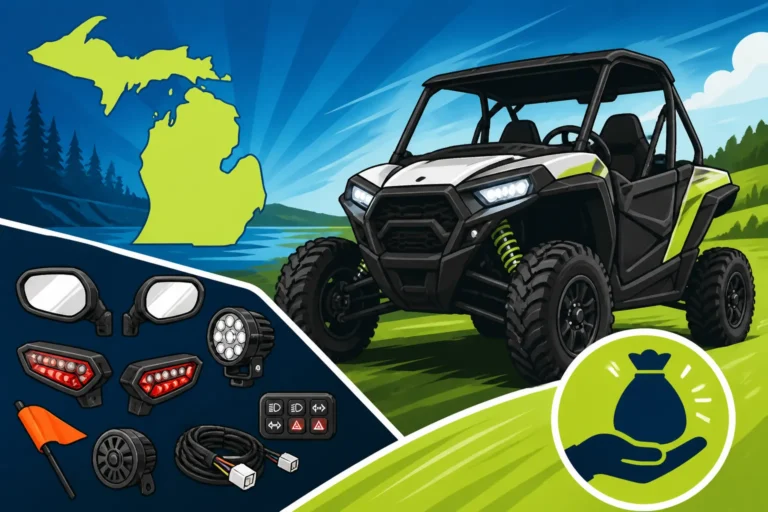
Here's a quick reference for the essential components:
| Component Category | Specific Part | Michigan Requirement | Why It Matters for Street Legal |
|---|---|---|---|
| Lighting | Headlights (High/Low) | White light, DOT compliant, adequate illumination | Visibility for driver, signaling other drivers, legal operation at night. |
| Taillights | Red light, visible from specified distance | Constant rear visibility to other vehicles. | |
| Brake Lights | Red light, activate with brake, bright & visible | Crucial for warning following traffic of deceleration or stop. | |
| Turn Signals (Front) | Amber or white, visible, distinct flash | Clearly communicate turning intentions to oncoming and adjacent traffic. | |
| Turn Signals (Rear) | Amber or red, visible, distinct flash | Clearly communicate turning intentions to following traffic. | |
| Hazard Lights | Simultaneously flashing turn signals | Emergency signaling, warning other drivers of stationary or slow vehicle. | |
| License Plate Light | White light, illuminates plate when headlights on | Ensures legal identification of vehicle after dark. | |
| Visibility | Rearview Mirror | Required, clear view of traffic behind | Situational awareness, safe lane changes, checking for following traffic. |
| Side Mirrors (2) | Required for UTVs, clear view to sides | Enhanced situational awareness, blind spot reduction, especially for wider UTVs. | |
| Horn | Audible from 200 ft, distinctive sound | Audible warning device for safety alerts. | |
| Windshield | Safety glass/shatter-resistant (if installed) | Protection from debris, comfort; if present, often requires wipers. | |
| Windshield Wipers | Functional (if windshield is present/required) | Clear visibility in inclement weather. | |
| Tires & Other | DOT-Approved Tires | Meet DOT safety standards | Safe handling, traction, and durability on paved roads at speed. |
| Speedometer | Functional and accurate | Adherence to speed limits, safe operation on public roads. | |
| Safety Belts | Functional, secure for all occupants (UTV) | Occupant safety, injury prevention in event of sudden stop or collision. | |
| Fenders/Mud Guards | Adequate coverage to prevent excessive spray | Prevents debris/water spray onto other vehicles, keeps machine cleaner. | |
| VIN | Clearly legible and affixed | Legal identification of the vehicle for title, registration, and ownership. |
Disclaimer
This article is for general informational purposes only and does not constitute professional advice. Laws, prices and regulations vary by location and change over time. Consult a qualified professional for guidance on your specific situation.