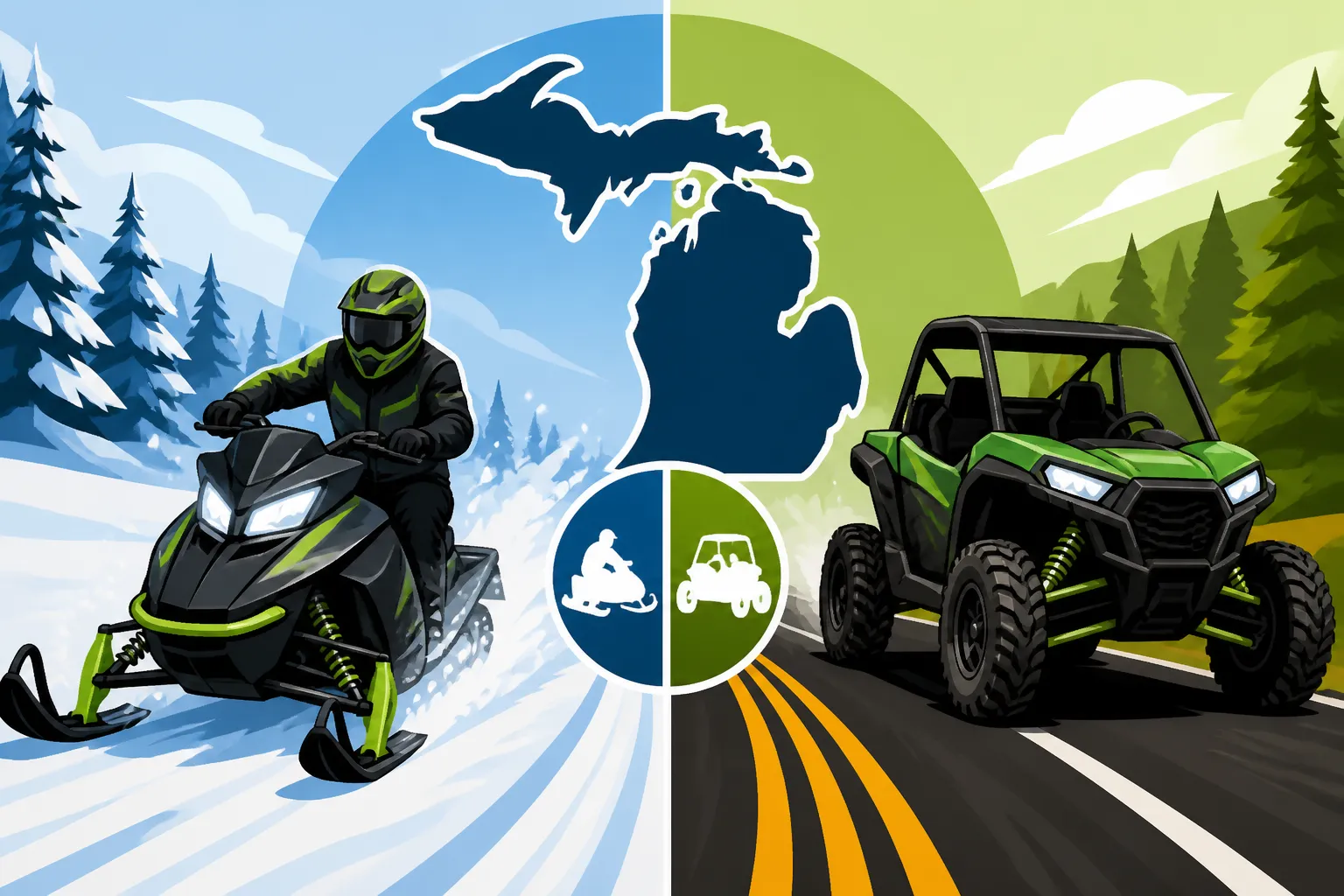
Michigan Snowmobile Season and Shared Road Corridors
The crisp Michigan air, the shimmering snow, and the urge to explore can make winter riding incredibly appealing. But for many ATV and UTV owners, the sight of shared roadways—sometimes groomed for snowmobiles—can bring a chill of confusion colder than the January wind. It often feels like you're caught between two worlds, wondering if your machine is even allowed, let alone how to share the space safely. This guide will clear up the rules and best practices for using your ATV or UTV on Michigan's shared road corridors during the snowmobile season, ensuring your winter adventures are both enjoyable and compliant.
Understanding Michigan's ORV and Snowmobile Laws
Michigan has a remarkable network of trails and routes, but it also has very specific rules about what kind of machine can go where, and when. The line between an ORV (Off-Road Vehicle, which includes ATVs and UTVs) and a snowmobile, especially during winter, can get blurry for many riders, leading to unnecessary tickets or unsafe situations.
The Distinct Legal Frameworks for ORVs and Snowmobiles
It's crucial to understand that in Michigan, an ORV and a snowmobile are considered distinct types of vehicles, each governed by its own set of laws, regulations, and even permit requirements. While both are types of recreational vehicles designed for off-pavement use, their operating seasons, trail access, and rules for road use often differ significantly. Snowmobiles generally have a dedicated season and trail system, often managed by different rules than the year-round ORV trail network. For example, a snowmobile trail may be specifically groomed for snowmobiles, and an ORV operating on it could cause damage or pose a safety hazard to other users. Ignoring these distinctions can lead to fines, particularly if you're riding an ORV on a snowmobile-only trail or a groomed path that isn't designated for mixed use.
These legal frameworks are designed to protect both the riders and the integrity of the trails themselves. A snowmobile's lightweight design and track system are perfectly suited for snow, while an ORV's tires are not. The state goes to great lengths to manage these separate systems, recognizing that different machines have different impacts and operating characteristics. Always double-check local ordinances and signage to avoid inadvertently breaking rules that are in place for good reason.
Where ORVs and Snowmobiles Can Legally Operate
Michigan's diverse landscape offers various types of areas where ORVs and snowmobiles can legally operate, but these are rarely interchangeable without specific designation. Snowmobiles primarily operate on designated snowmobile trails, which are often groomed, or on frozen public waters. They can also use the far right of the improved portion of a public road, or the shoulder, under certain conditions, and on specific county roads or highways designated as snowmobile routes. Michigan Snowmobile Season and Shared Road Corridors outlines these seasonal nuances.
ORVs, on the other hand, have their own extensive trail and route system, which is generally open year-round, weather permitting. When it comes to road use, ORVs can operate on the far right of the unpaved portion of a public road or shoulder, or on specific county roads designated as ORV routes, provided they meet certain requirements like speed limits (often 25 mph) and display the necessary permits. [Michigan's 25 mph Limit on County Roads] further details these restrictions. The key takeaway is that just because a road is open to one type of recreational vehicle doesn't automatically mean it's open to the other, especially during the winter months. Always consult current maps and local signage to ensure you're in a permissible zone for your specific machine.
Identifying Shared Road Corridors and Their Regulations
One of the trickiest aspects of winter riding in Michigan is figuring out which roads, if any, are truly shared corridors. It’s not always obvious, and what might be a permissible ORV route in the summer could become a snowmobile-priority route in the winter, or vice-versa. This can lead to serious headaches if you're not paying close attention.
What Constitutes a "Shared Corridor" in Michigan
In Michigan, a "shared corridor" typically refers to a public road or shoulder area where both ORVs and snowmobiles might legally operate, often at different times or with distinct rules. These aren't necessarily dedicated trails side-by-side but rather common thoroughfares where both types of machines have specific permissions. For instance, many rural county roads that are designated ORV routes during the warmer months might also become snowmobile routes during the winter, or ORVs might be allowed on the far right of the shoulder while snowmobiles use the main portion of the road. It’s critical to distinguish between roads that allow ORV use and those that are designated snowmobile trails. A road that is simply plowed for vehicular traffic might still have a snowmobile route running parallel to it, or even directly on it, under specific ordinances.
The defining characteristic of a shared corridor is that the local jurisdiction (county, township, or the DNR) has specifically allowed both types of vehicles, albeit often with different rules for each. You’ll typically see signage indicating these multi-use areas, though sometimes the lack of signage can be misleading. Always err on the side of caution and assume that if you're on a snow-covered road that looks like a snowmobile trail, it likely is a snowmobile trail, and your ORV might not be welcome unless explicitly stated. [Michigan Trail Maps and What the Signs Mean] can be incredibly helpful for deciphering these nuances.
Specific Rules for ORV Use on Shared Snowmobile Routes
When an ORV is allowed to share a route with snowmobiles in Michigan, there are usually very specific conditions that riders must adhere to. The primary rule is almost always that snowmobiles have the right-of-way, and ORV riders are expected to yield to them. This is largely due to the differences in speed, maneuverability, and the groomed conditions often required for snowmobiles. ORVs operating on such corridors are typically required to stay on the extreme right-hand side of the roadway, off the main track if possible, and definitely not on any groomed snowmobile trail. You are prohibited from operating an ORV on a groomed snowmobile trail unless that trail is explicitly designated for multi-use and you have the proper ORV trail permit. Attempting to ride your ATV or UTV on a freshly groomed snowmobile trail can ruin the surface for snowmobilers and result in fines.
Furthermore, ORVs must comply with the general ORV road rules, which include displaying a valid [Michigan ORV License and Trail Permit Explained], adhering to posted speed limits (which might be as low as 25 mph even if the snowmobile speed limit is higher), and having appropriate lighting. Winter conditions demand even greater visibility, so ensuring your headlights, taillights, and any additional running lights are fully functional is not just a recommendation but a safety imperative. Many riders opt for aftermarket LED light bars or auxiliary lights from reputable brands like SuperATV to enhance their visibility in low-light conditions or heavy snowfall, a wise investment when sharing roads.
Snowmobile Priority and ORV Courtesy
On any shared road corridor, especially during the designated snowmobile season, there's an unwritten (and often legally enforced) understanding that snowmobiles typically have priority. This isn't about one machine being "better" than the other; it's about optimizing safety and maintaining the specific conditions snowmobilers rely on. Snowmobile trails, for instance, are meticulously groomed, and the ruts and tracks left by ATV or UTV tires can quickly degrade that surface, making it rough and unsafe for snowmobiles. Therefore, if you are operating your ORV on a road that is also a snowmobile route, always assume that you are the guest, and yield to oncoming or overtaking snowmobiles.
This courtesy extends beyond just yielding. It means giving snowmobiles ample space, not kicking up excessive snow or slush where they might be riding, and being mindful of your speed and exhaust noise. If you encounter a group of snowmobilers, slow down, pull to the far right, and allow them to pass safely. It's about respecting the different user groups and ensuring everyone can enjoy Michigan's winter landscape without conflict. A little common sense and mutual respect go a long way in fostering a positive shared-use environment, preventing potential issues that could lead to stricter regulations in the future.
Safety Considerations for Winter Road Riding
Riding your ATV or UTV in winter, especially on public roads that might also see snowmobile traffic, adds several layers of safety considerations that aren't typically present in warmer months. The cold, the reduced visibility, and the unpredictable traction demand extra vigilance and preparation.
Visibility is Key: Lighting, Flags, and Reflective Gear
When you're out on your ORV in Michigan's winter, particularly on shared road corridors, being seen is paramount. The days are shorter, the weather can be fickle with sudden snow squalls, and the contrast of a dark machine against a white background can make you surprisingly hard to spot for other road users, including snowmobilers and automobiles. Your machine must have functional headlights and taillights, and these should be on at all times, even during the day. [Michigan ORV Lighting Rules During Daylight] are a good baseline, but winter conditions often warrant more.
Many riders enhance their visibility with additional lighting, such as LED light bars or auxiliary floodlights, which can be easily sourced from companies like SuperATV. Reflective tape on your helmet, clothing, and the machine itself can make a significant difference, particularly when [Riding an ORV on the Road After Dark]. Consider a brightly colored flag, especially if you're riding in areas with rolling terrain or limited sightlines, although these are more commonly associated with dune riding. The goal is to make yourself as conspicuous as possible from all directions, reducing the risk of being overlooked in challenging conditions.
Traction and Handling Challenges on Snow and Ice
Riding an ATV or UTV on snow and ice is a completely different beast than navigating dirt trails. Traction becomes unpredictable, stopping distances increase dramatically, and steering can feel less responsive. Standard ATV tires, while designed for off-road grip, can be quite slick on compacted snow or ice. This is where tire choice and riding technique become critical. Many riders opt for specialized winter tires with deeper, more aggressive treads, or even studded tires for improved grip on icy surfaces. [Studded Tires on an ORV] can provide a noticeable advantage, but they also change the handling characteristics of your machine.
Regardless of your tire setup, slow and deliberate movements are crucial. Avoid sudden acceleration, hard braking, or sharp turns, as these can easily lead to a loss of control. Give yourself plenty of stopping distance, anticipate turns well in advance, and always be aware of potential black ice, especially in shaded areas or on bridges. [Michigan ORV Rules on Bridges and Causeways] are particularly important in winter. Practicing gentle throttle and brake control in a safe, open area before hitting the roads can help you get a feel for how your machine will react in these challenging conditions.
Dress for the Conditions: Hypothermia Prevention and Layering
Michigan winters are no joke, and riding an ORV exposes you to the elements in a way that driving a car does not. Hypothermia is a real risk, and frostbite can occur quickly if you're not properly dressed. Layering is your best friend: start with a moisture-wicking base layer, add insulating middle layers (fleece or down), and top it off with a waterproof and windproof outer shell. Your hands, feet, and head are particularly vulnerable to cold, so investing in quality insulated gloves or mittens, warm socks, waterproof boots, and a warm helmet (many come with cold-weather liners or options for electric visors) is essential.
Beyond just staying warm, consider the safety gear. A DOT-approved helmet is always required, and goggles or a face shield are critical for protecting your eyes from wind, snow, and debris. A balaclava or neck gaiter can prevent windburn and keep your core warm. Even if you're only planning a short ride, pack an emergency kit with extra layers, hand warmers, a small shovel, a tow strap, and some high-energy snacks and water. Breaking down or getting stuck in cold weather can quickly turn a fun outing into a dangerous situation, so being prepared is key for [Winter Road Riding on an ORV].
Navigating Local Ordinances and Signage
One of the biggest frustrations for ORV riders in Michigan is the patchwork quilt of rules that can change from one county or township line to the next. What's perfectly legal in one area might get you a hefty fine just a few miles down the road. This is especially true when snow and ice cover the ground, potentially altering road designations.
County and Township Specific Rules
While the Michigan DNR sets statewide regulations for ORVs, counties and townships often have the authority to implement their own ordinances regarding ORV use on local roads. This means that a road that is an open ORV route in one county might be completely closed to ORVs in the adjacent county, or it might have different restrictions during snowmobile season. Some townships might specifically prohibit ORVs from using their roads altogether, while others might allow it with strict hours or speed limits. This can be incredibly frustrating for riders planning a long loop or touring trip, as it requires meticulous research of each jurisdiction's specific rules.
Before you head out, especially to a new area, it's vital to check the local county sheriff's department website, the township clerk's office, or even the DNR's regional office for information on ORV road ordinances. Don't rely solely on what you think you remember or what a friend told you. These rules can change, and ignorance is rarely accepted as an excuse if you're pulled over. Always carry a copy of any relevant permits and [Michigan ORV Paperwork During a DNR Stop] to prove your compliance.
Decoding Trail and Route Markers
Michigan uses a system of signage and markers to designate ORV trails, routes, and specific use areas. During winter, these signs become even more critical, especially when roads might be obscured by snow. ORV routes typically use specific color-coded markers or symbols to indicate permissible use, while snowmobile trails have their own distinct signage. It's common to see green markers for routes and yellow for trails, but always pay attention to the specific text and symbols. A sign that says "ORV Route" in the summer might have an overlay or an additional sign stating "Snowmobile Only" during the winter months, or vice-versa for mixed-use roads.
Never assume. If a road is completely covered in snow and looks like a groomed trail, and you don't see clear ORV route markers, assume it's a snowmobile-only trail until you can verify otherwise. Sometimes, a snowmobile trail might run alongside a public road, but not on it, and mistakenly entering the groomed path could lead to issues. Familiarize yourself with all common ORV and snowmobile signage before you ride. [Michigan Trail Maps and What the Signs Mean] can be an invaluable resource, often available online from the DNR or at local sporting goods stores.
Enforcement and Penalties for Non-Compliance
Michigan law enforcement, including DNR Conservation Officers and local sheriff deputies, takes ORV and snowmobile regulations seriously, especially concerning road use and shared corridors. Operating your ORV illegally on a snowmobile trail, on a closed road, or without the proper permits can result in significant penalties. These can range from monetary fines, which can quickly add up, to impoundment of your machine, and even points on your driver's license in some cases. [Michigan ORV Tickets and Points on Your License] explains some of the consequences.
Beyond the legal penalties, there's also the responsibility to other riders. Using your ORV on a groomed snowmobile trail can damage the surface, making it rough and dangerous for snowmobilers. This not only creates animosity between user groups but can also lead to calls for stricter regulations against ORV use. Law enforcement officers are often quite knowledgeable about local ordinances, and they patrol these areas regularly, especially during peak seasons. The best way to avoid a ticket and maintain good relations with other outdoor enthusiasts is to know the rules, respect the signage, and always ride legally and responsibly.
Preparing Your ATV or UTV for Winter Road Use
Before you even think about hitting those snowy roads, your ATV or UTV needs some special attention. Winter conditions are brutal on machines, and a breakdown in the cold can quickly become more than just an inconvenience. Proper preparation isn't just about comfort; it's about safety and ensuring your machine can handle the demands of cold-weather operation.
Essential Maintenance Checks
Winter riding puts extra strain on every component of your ATV or UTV. Before the snow flies, take the time for a thorough maintenance check. Start with the battery: cold temperatures drastically reduce battery efficiency, so ensure yours is fully charged and in good condition. Consider a trickle charger if your machine sits for extended periods. Check all fluid levels – engine oil, coolant, brake fluid – and ensure they are appropriate for cold weather. Engine oil with a lower viscosity rating (like 0W or 5W) will flow better in the cold. Inspect your tires for proper inflation and any signs of wear; aggressive, deeply lugged tires are crucial for traction, and for winter roads, you might even consider specific winter ORV tires or studs.
Brakes should be checked for wear and proper function, as stopping distances increase on slippery surfaces. Lubricate all moving parts, including cables and suspension components, to prevent freezing and ensure smooth operation. Check your spark plugs and air filter; a clean air filter is especially important if you'll be riding in dusty conditions (even frozen dust) or around snow kicked up by other vehicles. Lastly, make sure all lights – headlights, taillights, brake lights, and any auxiliary lighting – are functioning perfectly. Winter's low light and potential for whiteouts make visibility absolutely critical.
Necessary Accessories for Cold Weather Riding
While your machine might be mechanically sound, winter riding demands more than just basic functionality. Several accessories can significantly enhance your comfort, safety, and capability on Michigan's cold, snowy roads. A good quality windshield for your UTV or ATV can deflect wind and snow, dramatically reducing rider fatigue and the risk of frostbite. For ATVs, handguards and heated grips or thumb warmers are game-changers, keeping your hands functional and comfortable even on long rides. Many riders install a full cab enclosure on their UTVs, turning a breezy ride into a much warmer experience. Brands like SuperATV offer a wide array of durable windshields, enclosures, and heating accessories designed to withstand harsh winter conditions.
If you plan on doing any work or simply need to clear a path, a plow attachment for your UTV can be incredibly useful. Make sure it's properly mounted and rated for your machine. For extreme cold, even a small engine block heater can make starting easier. Always carry a small emergency kit with basic tools, a tow strap, a first-aid kit, and a fully charged cell phone. Remember, on frozen roads, an ORV often operates like any other vehicle, and being prepared for common issues like a dead battery or getting stuck is paramount.
Carrying Proper Documentation and Safety Gear
Hitting the roads, even shared corridors, with your ORV in Michigan requires more than just a well-maintained machine. You need to have your ducks in a row when it comes to paperwork and personal safety gear. Always carry proof of ownership (title or registration), a valid [Michigan ORV License and Trail Permit Explained], and if you're under 16, a valid [Michigan ORV Safety Certificate Requirements]. Law enforcement officers are vigilant, and forgetting these documents can lead to fines and a ruined day. Having them readily accessible, perhaps in a waterproof pouch, is a smart move.
Beyond documentation, personal safety gear is non-negotiable. A DOT-approved helmet is legally required and essential for head protection. Goggles or a face shield will protect your eyes from snow, wind, and debris. Warm, waterproof clothing, insulated gloves, and sturdy boots are crucial for preventing hypothermia and frostbite. Consider a reflective vest or bright outerwear to increase your visibility to other vehicles and snowmobiles. Finally, always let someone know your riding plan, including your route and estimated return time, especially if you're venturing into more remote areas. Getting stranded in winter without anyone knowing your whereabouts is a serious hazard.
Michigan ORV vs. Snowmobile: Winter Road Rules at a Glance
Navigating Michigan's winter landscape with your ORV can be confusing when snowmobiles are also out. Here's a quick comparison of general rules for road use during the snowmobile season:
| Feature | ORV (ATV/UTV) General Road Rules (Winter) | Snowmobile General Road Rules (Winter) |
|---|---|---|
| Operating Season | Year-round (subject to local ordinance, snow depth, specific routes) | Typically Dec 1 to March 31 (variable by weather & local designation) |
| Where on Road | Far right of unpaved shoulder or improved portion (if permitted) | Far right of improved portion or shoulder (if permitted) |
| Dedicated Trails | Designated ORV trails (generally not groomed snowmobile trails) | Designated snowmobile trails (often groomed) |
| Right-of-Way on Roads | Yield to snowmobiles and other traffic | Often have priority on designated snowmobile routes |
| Speed Limit | Typically 25 mph on designated ORV routes/shoulders | Often higher on designated snowmobile trails/routes |
| Permits Required | Michigan ORV License & ORV Trail Permit (if on designated route/trail) | Michigan Snowmobile Registration & Snowmobile Trail Permit |
| Visibility | Headlights, taillights, reflective gear required. Extra visibility crucial. | Headlights, taillights required. Extra visibility crucial. |
| Tires/Traction | Aggressive off-road tires, studded tires recommended for ice/snow | Track system for snow |
| Impact on Grooming | Prohibited on groomed snowmobile trails (causes damage) | Designed for groomed snow surface |
Note: This table provides general guidance. Always consult specific local ordinances and current DNR maps for the most accurate and up-to-date rules for your riding location.
Disclaimer
This article is for general informational purposes only and does not constitute professional advice. Laws, prices and regulations vary by location and change over time. Consult a qualified professional for guidance on your specific situation.