Michigan Assembled Vehicle Title Application
Dreaming of taking your UTV from Michigan's trails to the open roads can feel like a regulatory maze. Many riders want to expand their machine's use beyond just off-roading, but hitting the pavement legally is a challenge. This guide demystifies the Michigan Assembled Vehicle Title Application process, walking you through the steps to transform your side-by-side into a fully legal, road-worthy machine.
The Road to Legality: What is a Michigan Assembled Vehicle Title?
For many Michiganders, a UTV is more than just a toy; it's a workhorse for the property, a hunting companion, or a fantastic way to explore the vast trail systems. The idea of using that same machine to run errands in town, grab groceries, or simply connect trails via county roads is incredibly appealing. However, simply bolting on a few accessories doesn't magically make your off-road vehicle street legal. Michigan has a specific pathway for these conversions, and it involves the "assembled vehicle" title. This isn't just about getting a license plate; it's about fundamentally changing how the state recognizes your machine.
Defining "Assembled Vehicle" in Michigan
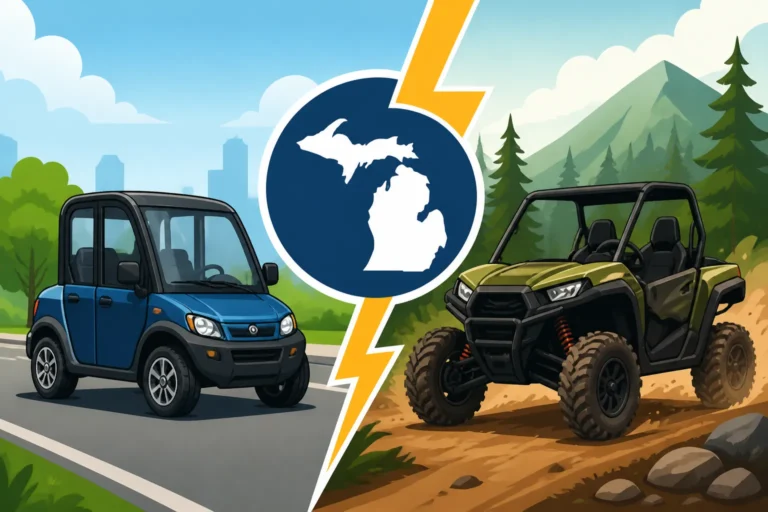
An "assembled vehicle" in Michigan refers to a vehicle that has been constructed or assembled from new or used parts, often without a traditional manufacturer's certificate of origin for the completed unit. This category can include everything from custom-built hot rods to kit cars, and, yes, even UTVs that have been modified to meet specific highway safety standards. When you take a factory-built off-road utility terrain vehicle and add all the necessary components to make it compliant with road-use laws, you're essentially transforming it into an assembled vehicle in the eyes of the Michigan Secretary of State. It's a recognition that your machine is no longer just an ORV, but something different altogether, capable of dual-purpose operation.
The key distinction here is that you're not just registering an ORV; you're getting a title that signifies it's now road-legal. This is a crucial step for anyone wanting to ride [Michigan's Assembled Vehicle Route for a UTV]. Without this specific title, even with all the right parts installed, you're still operating an off-road vehicle on public roads illegally.
Why the Assembled Vehicle Path for UTVs?
You might wonder why there isn't a simpler way, like a special registration for UTVs. The reality is that traditional ORVs, as manufactured, don't meet the rigorous safety and equipment standards required for highway travel. They lack essential features like DOT-approved glass, proper lighting, and braking systems designed for paved roads, among other things. The assembled vehicle path exists precisely to allow for the legal incorporation of these features into a machine that wasn't originally intended for road use. It's Michigan's way of ensuring that any vehicle sharing the road with cars and trucks meets a baseline level of safety and visibility.
This process offers a legitimate way to expand the utility of your side-by-side. Imagine being able to ride from your cabin directly to the general store without having to trailer your machine, or connecting seamlessly between different segments of a trail system that are separated by short stretches of paved county road. For many, this flexibility is a game-changer, making their UTV an even more indispensable part of their lifestyle.
The Core Goal: Road-Legal Riding
Ultimately, the goal of pursuing a Michigan assembled vehicle title is to achieve legal, worry-free road riding. This means having the ability to traverse specified public roads, often county roads or those designated by local ordinances, without fear of a citation. It opens up new possibilities for exploration, convenience, and practical use of your UTV. However, achieving this goal requires diligence. It's not just about getting the title; it's about ensuring your machine consistently meets the requirements and that you understand the specific road rules that apply to [How to Make a Side-by-Side Street Legal in Michigan].
Keep in mind that while your UTV will be road-legal with this title, it's not the same as a car or truck. There will still be specific rules governing where you can ride, speed limits, and other operational considerations that you'll need to be aware of. The title is the gateway, but understanding the ongoing regulations is equally important for a positive experience.
Essential Components for Your Street-Legal UTV Conversion
Converting your UTV into a street-legal machine under Michigan's assembled vehicle guidelines involves more than just a quick trip to the parts store. You'll need to systematically address several key areas, ensuring each component meets specific standards. This often means investing in quality aftermarket parts designed for this purpose. Many riders find comprehensive kits available from reputable suppliers.
Lighting Up the Road: Signals and Visibility
When you're sharing the road with other vehicles, being seen and communicating your intentions is paramount. Your UTV, as an assembled vehicle, will need a full suite of lighting equipment. This includes DOT-compliant headlights that offer both high and low beams, just like a car. You'll also need tail lights that illuminate when your headlights are on, and distinct brake lights that activate when you press the brake pedal. Crucially, turn signals are required at all four corners – front and rear, left and right – to indicate turns. Many UTVs don't come stock with these, so adding a robust [Turn Signals and Hazard Lights on a Street-Legal Build] kit is essential.
Additionally, a working horn is non-negotiable for an audible warning device. This isn't just a courtesy; it's a safety feature and a legal requirement. When selecting lighting components, always look for products that explicitly state "DOT compliant" or meet similar federal motor vehicle safety standards. Compromising on lighting quality can not only lead to failed inspections but also dangerous situations on the road.
Safety First: Windshields, Mirrors, and Restraints
Beyond lighting, passenger and driver safety are key. Michigan requires a safety glass windshield for assembled vehicles that offer a full enclosure, just like a car. This isn't your average polycarbonate ATV windshield; it needs to be made of automotive-grade safety glass that won't shatter into dangerous shards upon impact. If you're building an open-air machine without a full windshield, you or your passengers may still need to adhere to eye protection rules. You'll also need a rearview mirror mounted to provide a clear view of the road behind you, and typically, at least one side-view mirror. Many side-by-sides only come with one, so adding a second is often necessary.
Your UTV must also have seatbelts for all occupants, and these must be securely mounted and in good working order. These are typically already present in modern UTVs, but ensuring their condition and proper attachment is part of the inspection. Components like full hard cabs, DOT-approved safety glass windshields, and appropriate mirrors are critical, and companies like SuperATV offer a wide range of conversion kits and individual parts, from complete turn signal systems to full glass windshields, to help meet these requirements.
Tires, Speed, and Sound: Mechanical Requirements
Other mechanical considerations also come into play for a street-legal conversion. Your tires, for example, need to be DOT-approved, meaning they are designed for highway speeds and conditions, not just off-road traction. While knobby off-road tires might be great in mud, they wear quickly and perform poorly on pavement. A speedometer is also a must-have, allowing you to monitor your speed and adhere to posted limits. Many UTVs have a factory speedometer, but ensuring it's accurate is important.
Additionally, your UTV's exhaust system must meet noise regulations. While off-road exhausts can be quite loud, road-legal vehicles have decibel limits. You'll also need a functioning parking brake to keep the vehicle stationary when parked. Finally, the vehicle identification number (VIN) must be clearly visible and match all your documentation. The state will verify this during the inspection process. If you're building a truly custom rig or performing extensive modifications, understanding [Titling a Rebuilt or Homemade UTV in Michigan] will be critical.
Where Do You Get These Parts?
Once you have a clear understanding of Michigan's requirements, the next step is sourcing the right components. Many aftermarket companies specialize in street-legal conversion kits that bundle common items like turn signals, horns, and sometimes even mirrors or windshields. These kits are a convenient way to get most of what you need. Online retailers and dedicated off-road accessory shops are excellent resources. For instance, SuperATV is a well-known name in the industry, offering a comprehensive selection of parts, from durable glass windshields to plug-and-play turn signal kits and DOT-approved tires, specifically designed to help UTV owners achieve street legality. Before purchasing, it's always wise to double-check that the specific product you're considering meets Michigan's precise requirements for an assembled vehicle. This due diligence can save you time and frustration during the inspection phase.
Navigating the Michigan Secretary of State Application Process
Once your UTV is fully equipped and ready for the road, the real paperwork begins. The Michigan Secretary of State (SOS) is the agency that handles vehicle titles and registrations, and their process for assembled vehicles is thorough. It requires meticulous documentation and an in-person inspection to verify compliance. This isn't a process you can rush, so be prepared to gather everything carefully.
Documenting Your Build: The Paper Trail
The first, and arguably most critical, step is compiling all the necessary paperwork that tells the story of your UTV's transformation. This means having original bills of sale for the UTV itself, showing proof of ownership. Then, you'll need receipts for all the major components you've added to make it street legal. Think about every headlight, turn signal, mirror, windshield, and DOT-approved tire you purchased. The state wants to see where these parts came from, confirming legitimate sourcing and ownership. If you used salvaged parts, you might need additional documentation on those as well.
You'll also need to complete specific forms, most notably the "Application for Michigan Vehicle Title" (Form TR-11L) and potentially an "Assembled Vehicle Inspection Request" (Form TR-54). Photos of your converted UTV, showing the installed safety equipment, can also be helpful, though the in-person inspection is the definitive verification. Think of this as building a legal narrative for your UTV's journey from off-road machine to assembled road-worthy vehicle. Don't forget proof of insurance; even though it's an ORV at heart, for road use, it needs proper [Insurance a Michigan Street-Legal UTV Needs].
The All-Important Vehicle Inspection
After you've gathered your documents and submitted your inspection request, the state will schedule a physical inspection of your UTV. This inspection is mandatory and conducted by a qualified law enforcement officer, often from the Michigan State Police, or a designated Secretary of State inspector. Their job is to verify that your UTV actually has all the required safety equipment installed and that it functions correctly. They'll check your lights, horn, windshield, mirrors, seatbelts, tires, and ensure the VIN is correct and matches your paperwork.
This isn't a quick once-over; it's a detailed examination. The inspector will ensure that your turn signals flash appropriately, your brake lights illuminate, your horn sounds, and that your safety glass windshield provides proper visibility. They're looking for full compliance with the [Michigan Street-Legal UTV Inspection at the Secretary of State] checklist. If anything is missing, non-compliant, or non-functional, your UTV will fail the inspection, and you'll have to correct the issues and reschedule. This is why it's so important to be absolutely sure everything is installed correctly and meets standards before the inspection date.
Filing the Application: Step-by-Step
Once your UTV has passed inspection and you have all your verified documentation, the final step is to submit your complete application package to the Michigan Secretary of State. This usually involves an in-person visit to an SOS branch office. You'll bring your completed application forms, all your bills of sale and receipts, the inspection certificate, and proof of identity. The staff will review everything, calculate any applicable sales tax (if it hasn't been paid), and collect the titling and registration fees.
Be prepared for questions and bring all original documents, not just copies. The SOS agents are very thorough, especially with unique titling situations like assembled vehicles. It's often a good idea to make an appointment if your local branch allows it, to minimize wait times. Once approved, you'll receive a temporary registration, and your new Michigan Assembled Vehicle Title will be mailed to you within a few weeks. Remember, securing the title is only one part; you'll also need to register the vehicle and obtain a license plate for road use. You can find all the necessary forms and detailed instructions by searching for [Michigan Assembled Vehicle Forms and Where to File] on the state's official website.
Common Pitfalls and How to Avoid Them
Converting a UTV to be street-legal in Michigan can be a rewarding project, but it's not without its challenges. Many individuals run into snags during the process, often due to overlooked details or misunderstandings of the requirements. Being aware of these common pitfalls beforehand can save you a lot of time, money, and frustration.
Preparing for the Inspection: What They Look For
One of the biggest hurdles is the actual inspection. Riders sometimes assume that a "good enough" installation will pass, but inspectors are meticulous. They are trained to look for specific compliance. For example, a common issue is the windshield not being DOT-approved safety glass. Plexiglass or standard off-road polycarbonate windshields will almost certainly fail. Another frequent problem is incorrectly wired turn signals or brake lights that don't illuminate brightly enough. Inspectors will also check that your horn is loud enough to be heard in traffic and that your mirrors provide adequate visibility.
To avoid failing, go through the [Michigan Street-Legal UTV Inspection Checklist] yourself with a critical eye, or even better, have a friend who understands the requirements review your build. Ensure every light, every switch, and every piece of safety equipment works exactly as it should and meets the specific standard. Don't assume anything; verify everything. Remember, the goal isn't just to pass; it's to ensure your vehicle is genuinely safe for road use.
Failing the Inspection: Common Issues and Rectifying Problems
It's not uncommon for an assembled vehicle to fail its initial inspection. This isn't the end of the world, but it means going back to the drawing board. Common reasons for failure include:
- Non-DOT Compliant Parts: Windshields, tires, or lights that don't have the appropriate federal certification.
- Malfunctioning Equipment: A turn signal that doesn't blink, a horn that doesn't sound, or a brake light that's out.
- Improper Installation: Equipment that's loose, poorly wired, or mounted in a way that obstructs vision or isn't secure.
- Missing Equipment: Forgetting a side-view mirror, not having a parking brake, or lacking a speedometer.
If you fail, the inspector will provide a detailed report outlining the deficiencies. Take this report seriously. Correct all the issues, no matter how small, and then schedule a re-inspection. Don't try to argue; simply fix what's wrong. You'll likely need to pay another inspection fee for the re-check. Understanding [What Fails a Michigan Assembled Vehicle Inspection] will help you preemptively address potential problems.
Understanding Michigan's Road Rules for ORVs
Even after your UTV has an assembled vehicle title and a license plate, you can't just drive it anywhere a car can go. Michigan has specific rules for ORVs on roads, even street-legal ones. Generally, this means you're typically limited to county roads, and often specifically designated ORV routes. You usually can't ride on state highways (M, US, or I routes) or within the limits of many cities and villages unless they have specific ordinances allowing it. There are also specific speed limits, often 25 mph on county roads, and rules about riding on the shoulder versus the main travel lane.
Ignorance of these rules can lead to tickets, even with a valid title. Always research the specific ordinances in the counties and townships where you plan to ride. Carry your title, registration, and proof of insurance with you, as well as your ORV trail permit if you're connecting to trails. Knowing [Which Michigan Roads Allow ORVs] is just as important as having the correct title.
The Investment: Costs and Timelines for Street-Legal UTVs
Embarking on the journey to make your UTV street-legal is an investment, both in terms of money and time. It's crucial to budget realistically for parts, fees, and potential unexpected costs, and to understand that this isn't a same-day process. Planning ahead will help manage expectations and avoid financial surprises.
Estimating Conversion Costs: Parts and Labor
The cost of converting your UTV varies wildly depending on its make and model, and how much equipment it already has that meets street-legal standards. If your UTV is brand new and designed with some road-friendly features, your costs might be lower. However, if you're starting with a basic off-road model, you'll need to purchase many components.
Consider these categories for your budget:
- Lighting Kit: Turn signals, horn, potentially new headlights/tail lights (a kit can range from a few hundred dollars up).
- Windshield: DOT-approved safety glass windshields are significantly more expensive than polycarbonate options (often several hundred to over a thousand dollars).
- Mirrors: Side-view and rearview mirrors (relatively inexpensive, but still a cost).
- Tires: DOT-approved street or all-terrain tires will replace your off-road tires (can be hundreds of dollars per tire).
- Other Requirements: Wipers (if you have a full windshield), speedometer calibration, etc.
- Labor: If you're not doing the work yourself, shop labor rates will add significantly to the total.
Companies like SuperATV offer parts that can help reduce conversion costs by providing integrated solutions. For example, their complete street-legal kits for popular models often include everything from turn signals to horns and mirrors, streamlining your purchasing process. Researching [Parts List for a Street-Legal Conversion] and pricing everything out from various sources will give you a clear picture. The total investment for parts and professional installation can easily run into the thousands of dollars.
Application Fees and Taxes
Beyond the conversion parts, you'll have to factor in state fees. There will be an application fee for the Michigan assembled vehicle title itself, which is typically a modest flat fee. There's also the inspection fee, which you pay each time your vehicle is inspected. If your UTV has not had sales tax paid on it (e.g., you bought it used from a private party without a title transfer), Michigan's 6% sales tax will be due on the purchase price of the vehicle when you apply for the title. If you're converting an already titled ORV, you likely won't owe sales tax again, but always confirm with the Secretary of State.
You'll also have to pay registration fees for your new license plate annually. While the individual fees might not seem astronomical, they add up. It's best to check the Michigan Secretary of State website or contact them directly for the most current figures for [Michigan Assembled Vehicle Title Cost] to ensure your budget is accurate.
How Long Does the Entire Process Take?
Making a UTV street-legal isn't a weekend project. The timeline can vary greatly, from a few weeks to several months, depending on how quickly you can acquire parts, complete the conversion, schedule the inspection, and navigate the Secretary of State's process.
- Parts Acquisition & Installation: This can take days to weeks, especially if you're waiting for specialized parts or doing the installation yourself in your spare time.
- Inspection Scheduling: Depending on demand and inspector availability, scheduling the initial inspection can take several days or even a few weeks. If you fail and need a re-inspection, that adds more time.
- Secretary of State Processing: Once your application is submitted, it typically takes a few weeks to receive your official title in the mail.
Many riders report that the entire process, from starting the conversion to receiving their title and license plate, can take anywhere from one to three months, sometimes longer if there are significant delays in parts or repeated inspection failures. This is why it's recommended to start the process well in advance of when you hope to be riding on the road. For more details on the duration, look into resources about [How Long a Street-Legal UTV Conversion Takes].
Disclaimer
This article is for general informational purposes only and does not constitute professional advice. Laws, prices and regulations vary by location and change over time. Consult a qualified professional for guidance on your specific situation.