Michigan ORV Lighting Rules During Daylight
It's a beautiful sunny day, the kind where the trails are calling your name, and you just want to jump on your ATV or UTV and hit the dirt. But then a little voice in the back of your head pipes up: "Do I need my lights on, even now?" This question trips up a lot of Michigan ORV riders, and it's a valid concern. Navigating Michigan's rules for off-road vehicles, especially when it comes to something as seemingly simple as lighting during daylight hours, can feel like trying to read a treasure map written in code. This guide is here to clear up that confusion, explaining exactly when and why your lights should be on, even when the sun is shining bright.
What Michigan Law Says About Daytime ORV Lighting
Michigan has specific laws governing ORV operation, and these often differ slightly depending on whether you're strictly on designated trails or venturing onto roads that permit ORV use. Understanding these nuances is crucial to staying safe and legal. It’s not always as simple as "if it's daylight, no lights needed." The intent behind the rules is largely about visibility and safety for everyone sharing the space, whether that's other riders, pedestrians, or full-sized vehicles.
On-Trail Requirements
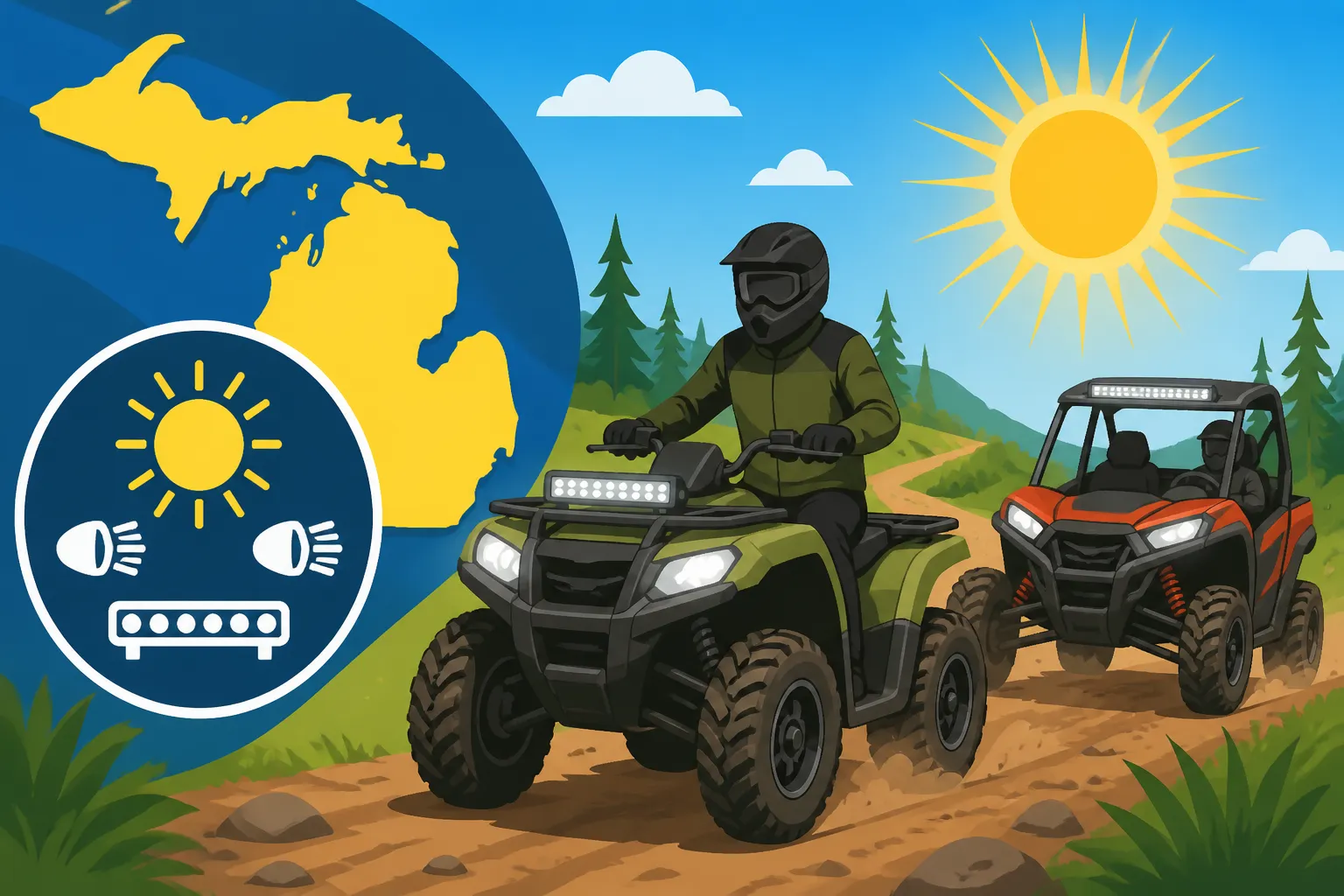
When you're out on the vast network of Michigan's dedicated ORV trails, the rules are generally quite clear regarding lighting. For ORVs to be legally operated, they must be equipped with a functional headlight and taillight. And here’s the kicker for daylight hours: these lights must be on and visible. This isn't just a suggestion; it's a requirement. Think about it from a practical standpoint: even on a bright day, kicking up dust on a dry trail can obscure a rider behind you. Dense tree cover can turn a sunny afternoon into a dusky tunnel in an instant. A sudden dip or rise might hide an approaching rider until the last second. Having your lights on helps other riders spot you, whether they're coming around a blind corner or following in your dust plume. This simple act drastically reduces the chance of an unexpected encounter or, worse, a collision.
It can feel a bit counterintuitive to flick on your lights when the sun is blazing overhead, especially if you're used to only using them at dawn, dusk, or night. But consider a scenario where you're cresting a hill on a winding trail in the [Pere Marquette State Forest ORV Trails] area. Another rider, perhaps enjoying the shade of the trees, might not see you until you're right upon them. Your illuminated headlight and taillight act as an early warning system, giving both of you precious extra seconds to react and maintain a safe distance.
Road Riding Provisions and Headlights
Now, when you venture onto a county road where ORVs are permitted, the lighting requirements become even more critical because you're sharing the space with cars, trucks, and potentially even bicycles and pedestrians. Michigan law states that if you are operating an ORV on a highway, county road, or forest road where ORV use is authorized, your ORV must be equipped with a headlight that is on and illuminated, along with a functional taillight. This applies regardless of the time of day. This is directly tied to the concept of being seen by other traffic. Cars are big, fast, and drivers aren't always looking for a smaller ORV on the shoulder or crossing the road.
Imagine you're taking your UTV down a gravel county road near [Roscommon County ORV Road Riding] to get from one trail segment to another. Even on a perfectly clear day, the dust thrown up by a passing truck or another ORV can momentarily reduce visibility to near zero. Your headlight acts as a beacon, cutting through that dust and making your presence known. Furthermore, your taillight is equally important for preventing rear-end collisions, especially if you need to slow down or stop suddenly. Drivers of conventional vehicles expect to see lights on anything operating on a public road, and your ORV is no exception. It’s all about meeting those expectations for collective safety.
Why Daytime Lighting Matters for ORVs
You might think that on a bright, sunny day, your ORV is already plenty visible. After all, it's not like you're trying to hide, right? But the reality of off-road and shared-road environments presents several challenges that make daytime lighting not just a legal requirement but a crucial safety measure. It's about perception, distance, and the unexpected.
Visibility for Other Riders on Trails
When you’re out on the trails, especially in Michigan’s diverse landscapes – from dense forests to open fields and sandy areas – conditions can change rapidly. A patch of deep woods can be dark even at noon. A sudden rain shower can create a misty, low-visibility environment. And, of course, there’s the ever-present dust. On a popular trail, especially during dry spells, the amount of dust kicked up by multiple machines can be astounding. This dust can create a visual wall, making it incredibly difficult to see what’s ahead or behind you.
Your ORV's headlight and taillight, even in daylight, punch through this dust and gloom, making you significantly more noticeable to other riders. It's not just about avoiding head-on collisions; it's also about letting the rider behind you know you're there, helping them maintain a safe following distance. Consider a group ride: if the lead rider has their lights on, it creates a visual chain that helps everyone stay together and aware of each other's positions, especially when navigating turns or elevation changes. It's a simple, proactive step that dramatically enhances safety for the entire riding community.
Visibility for Vehicles on Roads
This is where daytime lighting becomes absolutely non-negotiable from a safety perspective. When your ORV ventures onto a county road or designated ORV route, you are now operating in an environment designed primarily for much larger, faster, and typically enclosed vehicles. Drivers of cars and trucks are simply not accustomed to seeing ORVs on these roads, and their brains are often conditioned to scan for other cars, not smaller, more agile off-road machines. Even if your ORV is brightly colored, it can still blend into the background, especially against a cluttered visual landscape of trees, signs, and houses.
A bright headlight, even in broad daylight, instantly draws the eye and helps drivers perceive your ORV sooner. This early detection is critical for allowing them more time to react, slow down, or adjust their position. Similarly, a functioning taillight, especially when you apply your brakes, provides vital information to drivers behind you. If you're riding a [Street-Legal UTV Kit Prices] build, you're making a concerted effort to share the road safely, and proper lighting is a huge part of that. Without proper lighting, you become a lower-priority object in their field of vision, increasing the risk of misjudgment or, tragically, a collision. Every bit of visibility you can add, especially when interacting with public road traffic, is an investment in your own safety and the safety of others.
Essential Lighting Components for Your ORV
To meet Michigan's ORV lighting requirements, both on trails and authorized roads, your machine needs to be equipped with certain basic components. These aren't just for looking cool; they're fundamental to your safety and legal operation. Ensuring they are all in good working order before every ride is just as important as checking your tire pressure or fuel level.
Headlights
Your ORV’s headlight is your primary forward-facing light source. For daytime operation on trails and roads, it needs to be illuminated and clearly visible. The purpose isn't necessarily to light up the path ahead, as it would at night, but rather to make your machine discernible to others. Modern ORVs typically come with effective halogen or LED headlights as standard. However, if you have an older machine, or if your stock lights feel a bit dim, it's worth considering an upgrade.
Many riders opt for brighter LED conversions, which draw less power and often provide a much more intense light output. Even a smaller LED light bar, like some options from SuperATV, can significantly boost your forward visibility profile without being overpowering. The key is that your headlight must be on and working whenever you're operating on Michigan trails or authorized roads, day or night. A dim or flickering headlight during daylight hours might not grab attention, which defeats the purpose. Always give them a quick once-over before you head out.
Taillights
The taillight on your ORV serves a critical function: making you visible from the rear. This is essential for riders following you on dusty trails or for drivers approaching from behind on roads. Michigan law requires a functional taillight to be illuminated whenever your ORV is in operation on trails or authorized roads, even during daylight hours. This is especially important for preventing rear-end incidents, which can be particularly dangerous on ORVs.
Think about riding in a group: the rider behind you relies on your taillight to know you're there, especially through corners or when kicking up dust. On a shared road, a driver approaching from behind needs that visual cue to understand your presence and distance. Ensuring your taillight is clean, free of mud, and bright enough to be seen is a quick but vital pre-ride check. Some riders even add auxiliary rear lights for extra visibility, particularly if they frequently ride in dusty conditions or often cross roads.
Brake Lights
While often integrated into the taillight assembly, the brake light has a distinct and crucial function: signaling your deceleration. When you apply your brakes, the brake light must illuminate, providing an immediate visual warning to anyone behind you that you are slowing down or stopping. This is paramount for preventing collisions, especially on shared roads or fast-moving trails. Michigan law mandates functional brake lights for ORVs.
Consider a situation where you suddenly encounter an obstacle on the trail, like a downed tree or a deep puddle. Your immediate reaction is to hit the brakes. If your brake light isn't working, the rider directly behind you has no advance warning and could easily collide with your machine. The same applies with even greater urgency on public roads, where traffic moves faster and stopping distances are greater. Always test your brake lights before you ride. Have a friend confirm they illuminate when you press the brake pedal, or use a wall reflection if you're riding solo. This small check can prevent a big headache, or worse, a serious injury.
Common Misconceptions About ORV Lighting
It's easy to fall into certain traps or assumptions when it comes to ORV rules, especially concerning lighting. Many riders have heard things "through the grapevine" or simply apply logic from other vehicles that doesn't quite fit ORVs. Let's bust a couple of those myths wide open.
"Trails Only, No Lights Needed"
This is perhaps one of the most widespread misconceptions among ORV riders. The idea is that if you're not on a public road and just tearing it up on dedicated trails, then the daylight renders your lights completely unnecessary. After all, you can see fine, right? And everyone else can see you, too. But, as we've discussed, Michigan law disagrees with this sentiment. Whether you're blazing through the [Drummond Island ATV Trail Mileage] or exploring the [Marquette County ORV Road Access], if it's a designated ORV trail or route, your headlight and taillight are required to be on, even in broad daylight.
The reasons for this requirement are rooted in safety and foresight. Trails are dynamic environments. A trail that's open and bright in one section can suddenly dive into a dense, shaded canopy where visibility drops significantly. Dust, especially during dry summer months, can create a blinding cloud that makes it impossible to see riders ahead or behind. Blind curves, elevation changes, and unexpected obstacles are all part of the off-road experience. Your illuminated lights serve as a constant, active signal of your presence, cutting through these variable conditions and giving other riders crucial extra seconds to react. It's not about what you can see, but about what others can see of you. Ignoring this rule isn't just a gamble with a potential ticket; it's a gamble with your safety and the safety of those you share the trails with.
"Stock Lights Are Always Enough"
Another common thought is, "My ORV came with lights, so they must be good enough, right?" While stock lighting on new machines usually meets the minimum legal requirements, "enough" is a subjective term, especially when it comes to safety. The legal minimum might not be the practical optimum, particularly for older machines or those ridden in frequently challenging conditions.
Consider an older ATV where the plastic headlight lens has yellowed over time, or the bulb itself has grown dim. Or a UTV with a small, single taillight that gets easily obscured by mud or dust. While technically legal, the actual effectiveness of these lights in providing critical visibility might be severely compromised. Upgrading to brighter LED lights, for example, can make a world of difference. LEDs offer a much crisper, brighter light, often with less power draw, which can be a significant advantage. Brands like SuperATV offer a wide array of lighting upgrades, from powerful LED headlight replacements to auxiliary light bars and brighter taillight options, specifically designed to enhance visibility beyond the factory standard. While your stock lights might get you by in the eyes of the law, investing in enhanced lighting can significantly improve your safety profile, especially when you consider the varied conditions and shared environments you'll encounter during a ride. It's about being seen clearly, not just technically having a light on.
Upgrading Your ORV's Daytime Visibility
Even if your ORV's stock lighting meets the basic legal requirements, there's always room to enhance your visibility, especially during daylight hours. Making yourself more noticeable isn't just a nicety; it's a proactive step toward safer riding.
LED Upgrades
One of the simplest and most impactful upgrades you can make to your ORV's lighting system is switching to LED technology. Many older ATVs and UTVs came equipped with halogen bulbs, which, while functional, are often not as bright or efficient as their LED counterparts. LEDs produce a much cleaner, more intense light, making your headlight and taillight significantly more noticeable to others, even in bright sunlight.
The benefits extend beyond just brightness. LEDs consume less power, which can be a relief for your ORV's electrical system, especially if you run other accessories. They also tend to be far more durable and long-lasting, resisting the vibrations and impacts inherent in off-road riding better than traditional bulbs. You can often find direct-replacement LED bulbs for your existing headlight and taillight housings, making the upgrade a straightforward DIY project. If you want to take it a step further, complete LED light bar kits are also available, offering a dramatic increase in forward visibility and a striking presence during daylight hours.
Auxiliary Lights
Beyond your standard headlight and taillight, auxiliary lighting can provide an extra layer of visibility. These aren't always legally required for daytime operation on trails, but they can significantly enhance your presence, especially on roads or in dusty conditions. Forward-facing LED light bars or cube lights, strategically mounted, can create a more commanding visual footprint for your ORV. While their primary purpose might be illuminating the trail at night, their intense output during the day makes you much harder to miss.
For rear visibility, consider adding supplemental red LED lights. These can be mounted higher up on a UTV's roll cage or on the rear rack of an ATV, placing them above the dust cloud that often obscures stock taillights. Some kits even integrate amber strobe functions for situations where you need maximum attention, such as when [Crossing a State Highway on an ORV in Michigan]. When selecting auxiliary lights, look for durable, weather-resistant options designed for off-road use. SuperATV, for instance, offers a range of robust auxiliary lighting solutions that can withstand the rigors of Michigan's trails. Remember, the goal is to be seen from all angles, and auxiliary lights help achieve that.
Turn Signals
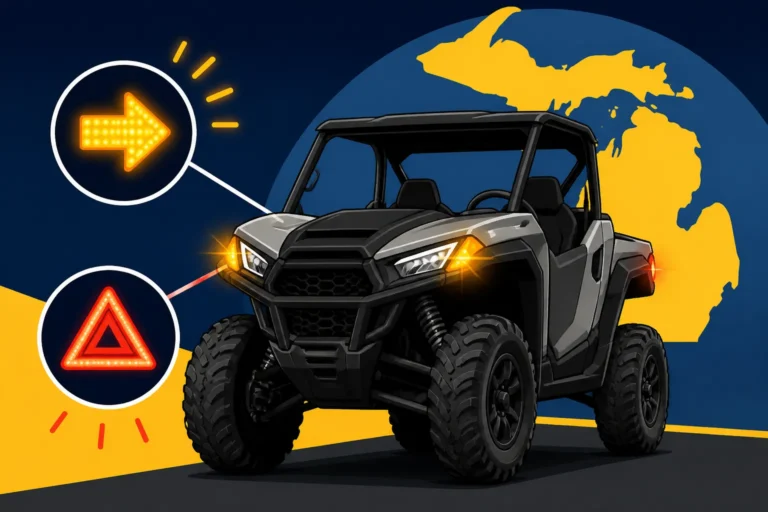
While turn signals are not universally required for all ORV trail riding in Michigan, they become a crucial component if you plan to operate your ORV on public roads, especially if you're building a "street-legal" UTV. Even if your ORV is only partially compliant for road use (e.g., crossing a road), having clear indicators for your intentions makes you a far safer operator. For street-legal conversions, functional [Turn Signals and Hazard Lights on a Street-Legal Build] are typically mandatory.
Even on trails where hand signals might suffice, mechanical turn signals offer a clear, unambiguous indication of your turning intentions. This can be incredibly helpful when riding in groups, preventing miscommunications that could lead to close calls. Installing a turn signal kit often involves a bit more wiring than a simple bulb swap, but many aftermarket kits are designed for relatively easy installation on popular ORV models. Having these visible indicators, even in daylight, adds another layer of communication with other trail users and, critically, with conventional vehicles when you briefly share the road. This is a vital upgrade for anyone serious about safety and road interaction.
Consequences of Non-Compliance
Ignoring Michigan's ORV lighting rules, even during daylight, isn't just a minor oversight. It carries tangible risks and penalties, impacting both your wallet and, more importantly, your safety and the safety of those around you. It's not a regulation put in place to inconvenience you; it's there to protect everyone.
Tickets and Fines
The most immediate consequence of failing to comply with Michigan's ORV lighting rules is, predictably, a ticket. Conservation Officers (COs) and other law enforcement personnel patrol Michigan's trails and authorized ORV routes, and they are well-versed in the regulations. Operating an ORV without its required headlight and taillight illuminated during daylight, whether on a trail or an authorized road, is a violation. The specific fine amount can vary, but it's generally an unwelcome expense that could have been easily avoided with a flick of a switch and a quick check of your lights. This ticket often comes with a financial penalty, and while it might not carry points on your driver's license (since ORV violations typically fall under separate codes), it’s still money out of your pocket.
Beyond the initial ticket, repeat offenses or more serious infractions could lead to greater penalties. It's far cheaper and less stressful to simply ensure your lights are working and turned on than to deal with the aftermath of a citation. Nobody wants their enjoyable day of riding to end with a lecture and a piece of paper telling them to pay up. Knowing the rules, like those governing [Michigan ORV Paperwork During a DNR Stop], is just part of responsible riding.
Safety Risks
While fines sting, the far more significant consequence of non-compliance is the increased safety risk. An ORV with unlit or malfunctioning lights, even in daylight, is simply harder to see. This diminished visibility directly translates to a higher risk of accidents. On trails, it means another rider might not see you around a blind turn, or they might misjudge your speed and distance when following in dusty conditions. The unexpected can happen quickly, and those precious few seconds of early warning that working lights provide can be the difference between a close call and a serious collision.
On public roads, the safety risk escalates dramatically. Drivers of cars and trucks, traveling at higher speeds, rely heavily on visual cues. A small ORV without illuminated lights is easily overlooked, especially if it blends with the background or gets lost in the visual clutter of a roadside environment. This significantly increases the chances of a vehicle pulling out in front of you, rear-ending you, or simply not seeing you as you cross an intersection. Even a relatively minor collision with a full-sized vehicle can have devastating consequences for an ORV rider. The simple act of turning on your lights is a fundamental step in making yourself a visible and predictable participant in any environment, safeguarding not just your own well-being but also that of others.
Michigan ORV Lighting Requirements: A Quick Reference
To help clarify the requirements at a glance, here's a simple breakdown of what Michigan expects from your ORV's lighting, regardless of whether you're hitting the dirt or briefly sharing the asphalt.
| Lighting Component | On ORV Trails (Daylight) | On Authorized Roads (Daylight) | Purpose |
|---|---|---|---|
| Headlight | Required (on) | Required (on) | To be seen from the front; cut through dust/shade. |
| Taillight | Required (on) | Required (on) | To be seen from the rear; for following riders/drivers. |
| Brake Light | Required (functional) | Required (functional) | To signal deceleration/stopping to those behind. |
| Turn Signals | Not required | Required for "street-legal" ORVs; recommended for all road use | To signal directional intentions. |
| Auxiliary Lights | Optional (for visibility/night) | Optional (for visibility/night) | Enhance overall presence, especially in low-light or dusty conditions. |
Always remember that "functional" means the light must be clean, unobstructed, and bright enough to be clearly seen from a reasonable distance. A light that's barely glowing or completely covered in mud might technically be "on" but won't meet the spirit of the law, which is about ensuring visibility. A quick wipe down before your ride can make a huge difference.
Where to Find More Information and Stay Updated
Michigan's ORV laws are designed to keep everyone safe, but they do require a bit of homework on our part as riders. It’s not a one-and-done situation; rules can change, and interpretations can evolve. Staying informed is just as much a part of responsible riding as wearing a helmet.
The best place to find the most current and authoritative information on Michigan's ORV lighting rules, along with all other ORV regulations, is the Michigan Department of Natural Resources (DNR) website. They publish comprehensive guides, FAQs, and the actual text of the laws. I always recommend checking their resources before you head out, especially if you're venturing to a new area or have questions about specific types of trails or roads. You might also find useful details in guides like [Michigan ORV Title Application and What It Costs] or specific discussions around [Michigan's Assembled Vehicle Route for a UTV] if you're considering a road-legal conversion.
Local county sheriff departments or DNR offices in the areas where you ride can also be excellent resources. They are the ones on the ground, enforcing the rules, and can often provide practical interpretations of the law relevant to specific local ordinances, such as those regarding [Michigan County ORV Ordinances Explained]. Many experienced riders also find value in joining local ORV clubs. These clubs often stay on top of regulatory changes, share best practices, and can offer valuable insights from years of real-world riding experience. Remember, knowing the rules isn't just about avoiding a ticket; it's about being a courteous, safe, and responsible member of the Michigan ORV community.
Disclaimer
This article is for general informational purposes only and does not constitute professional advice. Laws, prices and regulations vary by location and change over time. Consult a qualified professional for guidance on your specific situation.