Michigan ORV Paperwork During a DNR Stop
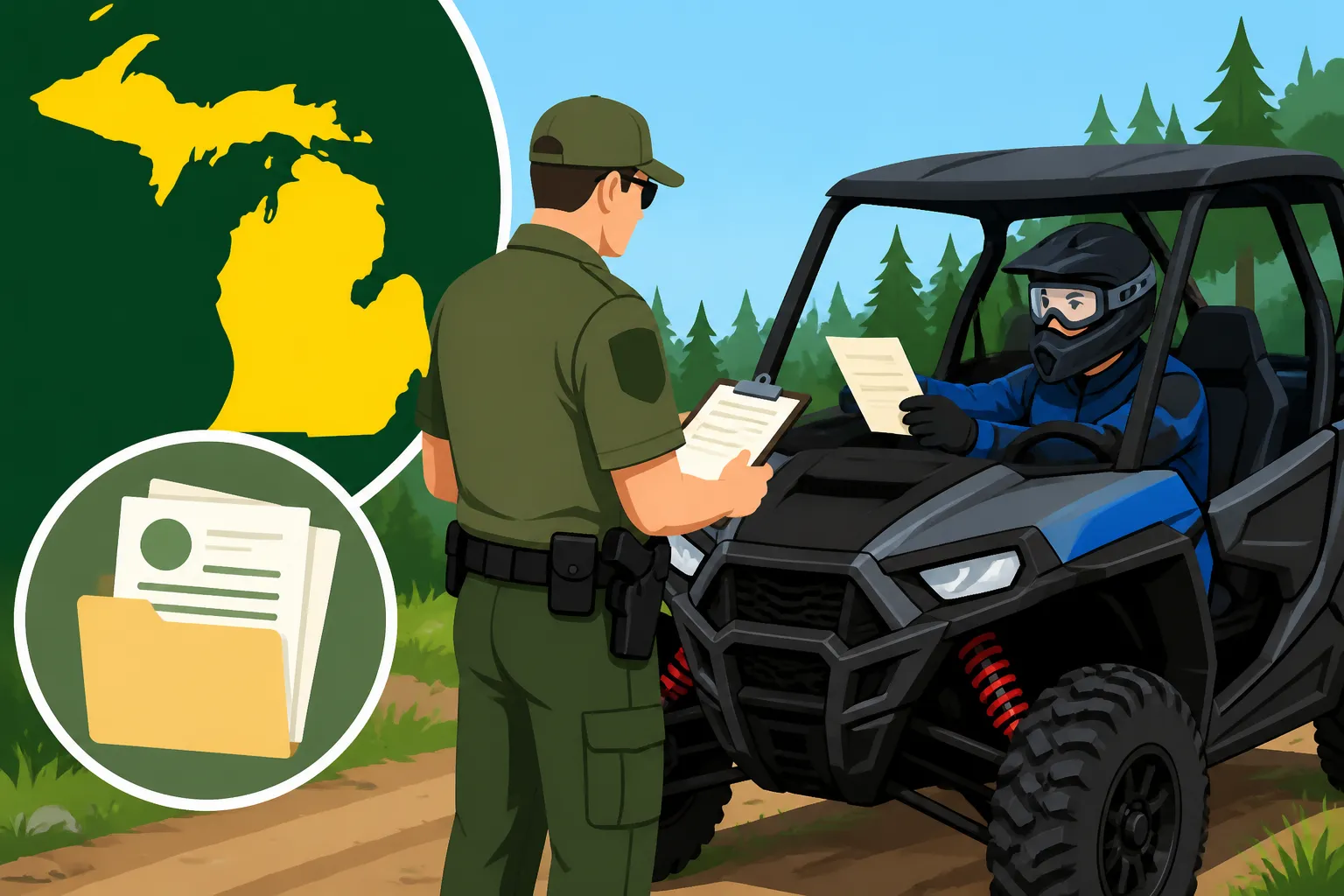
Picture this: you're out on the Michigan trails, enjoying the roar of your engine and the wind in your hair, when suddenly, you see those familiar green and tan uniforms. A Michigan Department of Natural Resources (DNR) officer is signaling for you to pull over. Your heart might sink a little, wondering if you've done something wrong or if all your paperwork is in order. It's a common moment of anxiety for many ORV riders, and it's completely understandable to feel a bit flustered.
This guide is here to cut through that worry and walk you through exactly what paperwork Michigan law requires you to have on hand when you're operating your Off-Road Vehicle (ORV) – whether it's an ATV, UTV, or dirt bike – and what to expect during a DNR stop. We’ll cover the must-have documents, what happens if you're caught without them, and how to make any encounter with law enforcement as smooth as possible.
Why DNR Officers Stop Riders
It’s easy to feel targeted when a DNR officer pulls you over, especially if you believe you haven't done anything wrong. But understanding why these stops occur can help demystify the process and reduce some of that initial apprehension. DNR officers are primarily focused on safety, resource protection, and compliance with Michigan's extensive ORV laws. They aren’t usually out to ruin your day, but rather to ensure everyone is enjoying the trails responsibly and legally.
Ensuring Safety and Compliance on Michigan's Trails
DNR officers play a crucial role in maintaining Michigan's vast network of trails and ensuring the safety of all users. Their patrols are designed to enforce regulations that protect both riders and the environment. This includes making sure trails aren't damaged by illegal riding, that machines are operating safely, and that wildlife habitats remain undisturbed. They want everyone to have a good time out there, but a safe and legal good time. Think of them as the guardians of our recreational lands, working to preserve access for generations to come.
These officers are often seasoned riders themselves, passionate about the outdoors, and deeply knowledgeable about the nuances of ORV operation. Their experience gives them a keen eye for potential issues, from a machine that looks unregistered to a rider exhibiting unsafe behavior. They’re looking out for things like excessive speed, riding off designated trails, or operating a machine that seems to be in disrepair. It's all about keeping our Michigan outdoor spaces pristine and our riding community safe.
Common Reasons for a Stop
While some stops might be random checks for compliance, many occur due to an officer observing something specific. Perhaps you briefly went off the marked trail, or your exhaust seemed unusually loud. Maybe your machine was kicking up a lot of dust in a no-dust zone, or you simply looked like you might be underage operating a larger machine. Visible violations, even minor ones, are often the primary triggers for a DNR officer to initiate a stop.
Another common reason is simply a routine check. Officers frequently station themselves at popular trailheads or intersections to conduct quick document checks on passing riders. This helps them ensure that everyone has the proper permits and is operating a titled machine, which deters theft and ensures trail funding. Even if you’re doing everything perfectly, you might still be selected for a random check, so it's always best to be prepared. This is where having all your ducks in a row with your paperwork truly pays off.
The Essential Paperwork You Must Carry
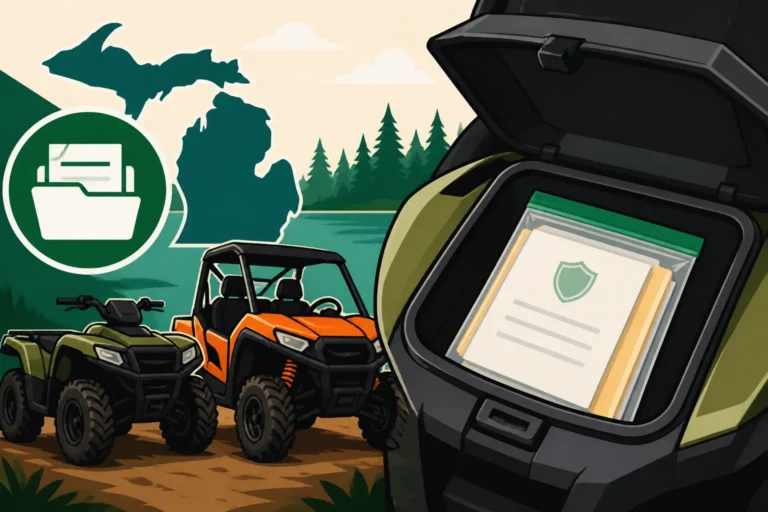
When a DNR officer signals for you to pull over, the first thing they'll likely ask for is your paperwork. Having everything readily accessible, ideally in a waterproof bag or pouch that you keep with your machine, will make the interaction much smoother. This isn't just a suggestion; it's a legal requirement in many cases, and being unprepared can lead to unnecessary delays or even fines. Let’s break down exactly what you should have with you every time you hit the trails.
Your Michigan ORV Title
The title is the foundational document for proving ownership of your ORV. It's like the deed to your house or the title to your car, but for your ATV or UTV. When you purchase an ORV, whether new from a dealer or used from a private seller, you’ll need to apply for a Michigan title. This document has your name, the vehicle identification number (VIN), and details about your machine. While you don't typically carry the original physical title on your person while riding (it's best kept safe at home, perhaps with your important property deeds), Michigan law does require that you have proof of ownership available for inspection. A legible photocopy or a digital image of your title on your phone is usually acceptable proof of ownership.
If you’ve just bought your ORV and are still waiting for the official title to arrive from the Secretary of State, a valid bill of sale can serve as temporary proof of ownership. Make sure this bill of sale is detailed, includes the VIN, buyer and seller information, and the purchase date. Services like LawDepot can provide customizable templates if you need a professional-looking document quickly. Remember that Michigan generally gives you a limited time, usually 15 days, to get your ORV titled after purchase, so don't delay this crucial step. For more details on the process, check out [Michigan ORV Title Application and What It Costs] or [Michigan Gives You 15 Days to Title an ORV].
Your ORV License and Trail Permit
These are often confused, but they are two distinct stickers you'll need for your machine. The Michigan ORV License is a mandatory sticker that shows your machine is legally allowed to operate on public lands, regardless of whether it’s on a designated trail. This fee contributes to the overall ORV program. Then there's the Michigan ORV Trail Permit, an additional sticker required if you plan to ride on state-designated ORV trails. Both are purchased annually, and the permit year typically runs from April 1st to March 31st.
When a DNR officer asks for your "ORV permit," they are generally looking for both of these stickers properly affixed to your machine. It’s not enough to just have one; if you're on a designated trail, you need both. These stickers fund trail maintenance, signage, and enforcement, so they are critical for the sustainability of our riding areas. Make sure they are visible and not obscured by mud or damage. If you're curious about what these cover, see [Michigan ORV License and Trail Permit Explained] or [Michigan's April 1 ORV Permit Year].
Proof of Insurance When Required
For most purely off-road riding on private land or designated ORV trails, Michigan law doesn't mandate liability insurance for your ORV. However, this changes dramatically if you plan to operate your ORV on public roads, shoulders, or in any situation where it might be considered a "street-legal" vehicle. If you’ve gone through the process of making your UTV street legal, you absolutely will need proof of automotive liability insurance, just like a car. Even if not street legal, some county ordinances might require insurance for certain types of road access.
It’s also important to consider if you have a loan on your ORV; your lender will almost certainly require comprehensive and collision insurance. While not a DNR requirement for trail riding, it’s a smart idea for your own protection and financial security. Many riders choose to carry it even when not legally required. Always check your specific circumstances, especially if you're using your ORV in a dual-purpose manner. You can find more information about when it's necessary in [Michigan ORV Insurance and When You Actually Need It].
Driver's License or Safety Certificate
Your ability to legally operate an ORV in Michigan hinges on your age and whether you've completed the necessary safety training. For adults (generally 16 and older), a valid driver's license (any class) is usually sufficient. However, for younger riders, a Michigan ORV Safety Certificate is absolutely essential. Riders between 12 and 15 years old must have a safety certificate and be under the direct supervision of an adult. There are also specific rules about engine size limits for youth riders.
A DNR officer will definitely want to see this proof of competency and age, especially if you appear to be a younger rider or are operating a machine that looks too large for your apparent age. Keep your safety certificate, or a copy of it, with you. It proves you understand the rules of the trail and how to operate your machine safely. To understand the specifics for younger riders, check out [Michigan ORV Safety Certificate Requirements] and [Michigan ORV Road Riding Age Minimum].
Bill of Sale as Temporary Proof
As mentioned earlier, if you’ve recently purchased your ORV from a private seller and are within the grace period for titling, a solid bill of sale is your best friend. This document acts as temporary proof that you are the rightful owner. It should ideally contain:
- Date of Sale: Crucial for proving you're within the 15-day window to title.
- Buyer and Seller Information: Full names, addresses, and signatures.
- Vehicle Information: Make, model, year, and most importantly, the VIN.
- Purchase Price: While not strictly for a DNR stop, it's good practice.
A clear, unambiguous bill of sale can prevent a lot of headaches. You can easily find templates online, including through platforms like LawDepot, to ensure all the necessary fields are covered. Remember, while a bill of sale can bridge the gap, it's not a permanent substitute for a proper title. Get that title application submitted as soon as possible after purchase. For more guidance on creating one, refer to [Michigan ATV Bill of Sale: What to Put in It] or [Does a Michigan ATV Bill of Sale Need a Notary?].
Here’s a quick summary of what you should aim to carry:
| Document Type | What It Proves | Where to Store | Acceptable Format |
|---|---|---|---|
| ORV Title | Proof of Ownership | Home (original), with machine (copy) | Photocopy, Digital Image |
| ORV License Sticker | Legal to Operate on Public Land | Affixed to ORV (visible) | Physical Sticker |
| ORV Trail Permit Sticker | Legal for Designated Trails | Affixed to ORV (visible) | Physical Sticker |
| Proof of Insurance | Liability Coverage (if required) | With machine | Insurance Card (physical or digital) |
| Driver's License | Operator Age & Privilege | On person | Physical License |
| ORV Safety Certificate | Youth Operator Training | On person or with machine | Physical Card, Photocopy, Digital Image |
| Bill of Sale | Temporary Proof of Ownership | With machine (if title pending) | Physical Document, Photocopy, Digital Image |
What Happens If You're Missing Paperwork
Real talk: getting stopped by a DNR officer is one thing, but being caught without the correct paperwork is another entirely. It can range from a polite warning to a hefty fine, and in some more serious cases, even the impoundment of your beloved ORV. No one wants to end a great day of riding by dealing with legal repercussions, so understanding the potential consequences can serve as a strong motivator to stay organized.
Understanding Warnings and Tickets
If you're stopped and found to be missing a minor piece of paperwork, like a slightly obscured trail permit, a DNR officer might issue a verbal warning. They might even give you a chance to rectify the situation, for example, by cleaning off a muddy sticker. However, for more significant omissions, such as a completely missing ORV license or no proof of ownership, you're likely looking at a ticket.
Tickets come with fines, and while some might be relatively small, they can quickly add up, especially if you're missing multiple items. The frustration of receiving a ticket when you thought you were doing everything right is real, but remember, the laws are in place for a reason. Ignoring repeated warnings or multiple tickets can also lead to more severe penalties. It's always best to cooperate, understand the violation, and take steps to avoid it in the future. Articles like [Penalty for Operating an Untitled ORV in Michigan] and [Michigan Fine for No ORV Trail Permit] detail some of these potential costs.
Potential Impoundment and Fines
In more serious situations, particularly if there's no proof of ownership, suspicions of theft, or operating a machine that is clearly unsafe or illegally modified, a DNR officer has the authority to impound your ORV. This is an absolute nightmare scenario for any rider. Impoundment means your machine is towed away, and you'll incur towing and storage fees, on top of any fines for the initial violation. Retrieving an impounded ORV can be a lengthy, expensive, and stressful process.
Fines for violations can vary widely depending on the specific offense and whether it's a first offense or a repeat issue. Operating an ORV without a title, for example, can carry significant financial penalties. Beyond the immediate costs, repeated violations could impact your ability to register or title future vehicles, or even lead to suspensions of riding privileges. It's a stark reminder that staying current with your paperwork isn't just a suggestion; it's a critical part of being a responsible ORV owner and rider in Michigan. For information on the most severe consequences, see [Michigan ORV Title Fraud Penalties].
How to Rectify Missing Documents
So, you got a ticket for missing paperwork. What now? The first step is to get the missing documents in order as quickly as possible. If you were ticketed for an expired ORV license, head straight to a DNR license agent or online portal to purchase and affix the new sticker. If it was a title issue, get to the Secretary of State office with all your supporting documents to complete the title application.
In some cases, if you can provide proof to the court that you had the valid documentation at the time of the stop, but just didn't have it with you, the ticket might be reduced or dismissed. This is rare and usually requires appearing in court. For issues like a missing bill of sale, generating a proper one (perhaps using a trusted platform like LawDepot) and having it ready for any follow-up is wise. The key is to address the issue promptly and show good faith that you are a responsible ORV owner.
Tips for a Smooth DNR Encounter
Let's face it, nobody wants to be pulled over. But if it happens, how you handle the situation can make a huge difference in the outcome. A calm, cooperative demeanor combined with organized paperwork can turn a potentially stressful interaction into a quick and uneventful one. Being prepared isn’t just about avoiding tickets; it’s about demonstrating respect for the officers and the rules that keep our trails safe and open.
Preparation Is Key
The best way to ensure a smooth DNR stop is to be prepared before you even hit the trails. Create a dedicated "ORV paperwork kit." This kit should be a small, waterproof bag or case that contains all the necessary documents. Think about laminating copies of your title and safety certificate to protect them from the elements. Keep your physical driver's license in your wallet, as usual.
Make it a habit to check your stickers at the beginning of each riding season, or even before each major ride. Are they still securely affixed? Are they legible? Is your ORV license still current for the year? A quick visual inspection can save you a lot of trouble. Consider keeping a digital copy of all your documents on your phone as a backup, though be aware that cell service isn't always reliable on remote trails. Having these things ready and accessible, perhaps in a pouch attached to your machine, will show the officer you're a responsible rider. For advice on document storage, check out [Carrying a Title Copy on a Trail Ride] and [Storing Your ATV Title Somewhere Safe].
What to Do During a Stop
When a DNR officer signals for you to pull over, do so safely and promptly. Find a clear, level spot on the side of the trail or road. Turn off your engine and remove your helmet, so the officer can clearly see and hear you. Keep your hands visible and avoid any sudden movements that could be misinterpreted. A polite greeting, such as "Good morning/afternoon, officer," sets a positive tone.
When asked for your documents, calmly and carefully retrieve them from your designated paperwork kit. Hand them over without fumbling or arguing. Answer any questions truthfully and respectfully. Remember, officers are people too, and a calm, cooperative attitude often results in a more pleasant interaction. If you're unsure about something, it's better to say "I'm not sure, officer" than to guess or make up an answer.
Knowing Your Rights (Respectfully)
While it's important to be cooperative, it's also good to have a basic understanding of your rights. You have the right to know why you've been stopped. If an officer asks to search your machine, you generally have the right to refuse, unless they have probable cause or a warrant. However, refusing a search might lead to further investigation or delay, so weigh your options carefully. The goal is always a peaceful and swift resolution.
Never argue or become confrontational. If you disagree with a ticket, accept it calmly and address your concerns through the proper legal channels (e.g., in court) rather than on the side of the trail. The officer is simply doing their job to enforce state laws. A respectful exchange, even when you're receiving a ticket, can make the difference between a minor inconvenience and a much larger problem. Understanding the process and how to interact respectfully is key to minimizing stress during these encounters.
Disclaimer
This article is for general informational purposes only and does not constitute professional advice. Laws, prices and regulations vary by location and change over time. Consult a qualified professional for guidance on your specific situation.