ORV Safety Certificate for Homeschool Groups
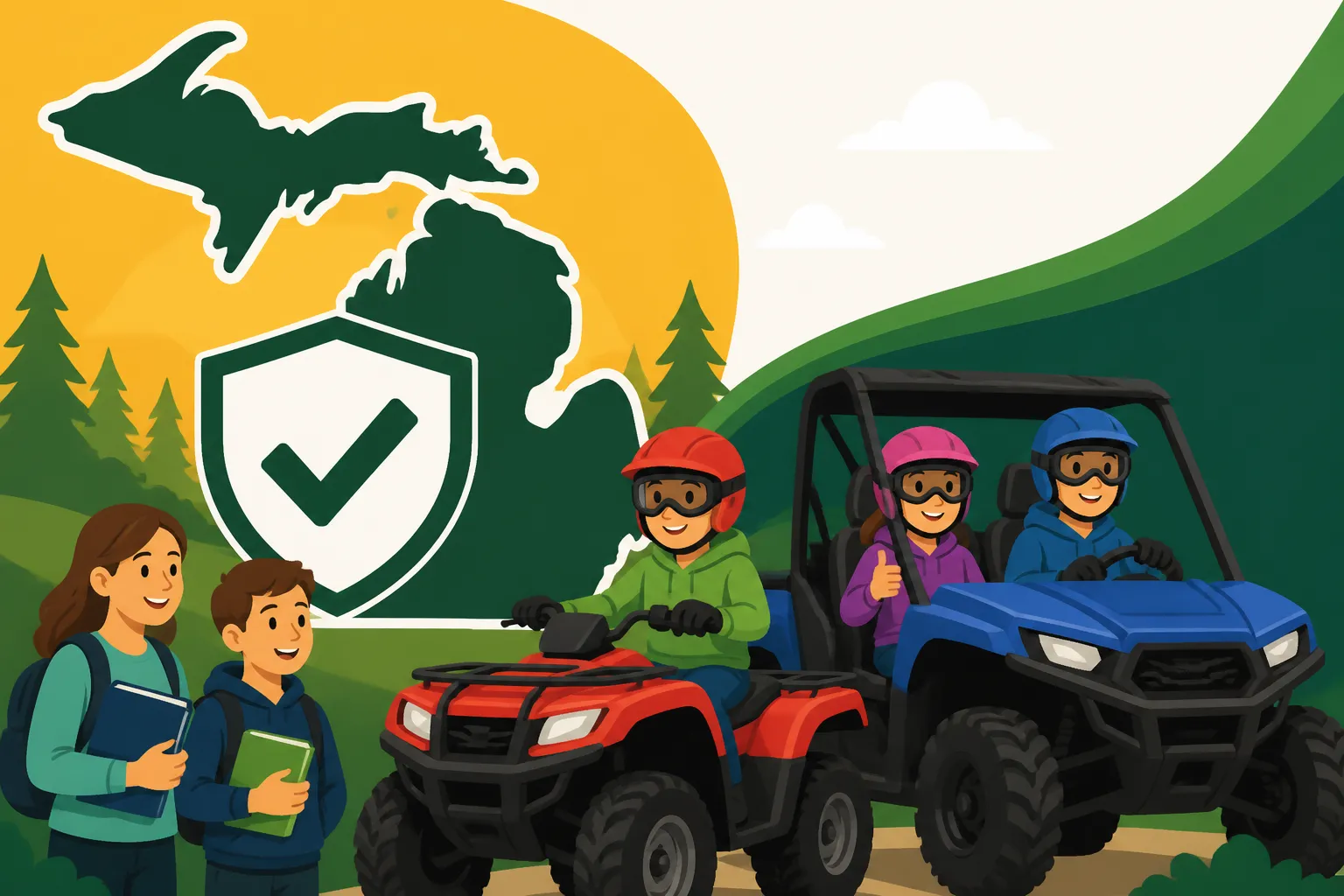
Homeschool families can make ORV safety training part of a group activity, but arranging a class is different from issuing a certificate. Michigan’s youth riding rules still apply to each child, regardless of whether they learn at home, through a co-op, or in a public school. Here’s how to plan training, handle records, and check what young riders need before heading out.
What a Michigan ORV safety certificate does
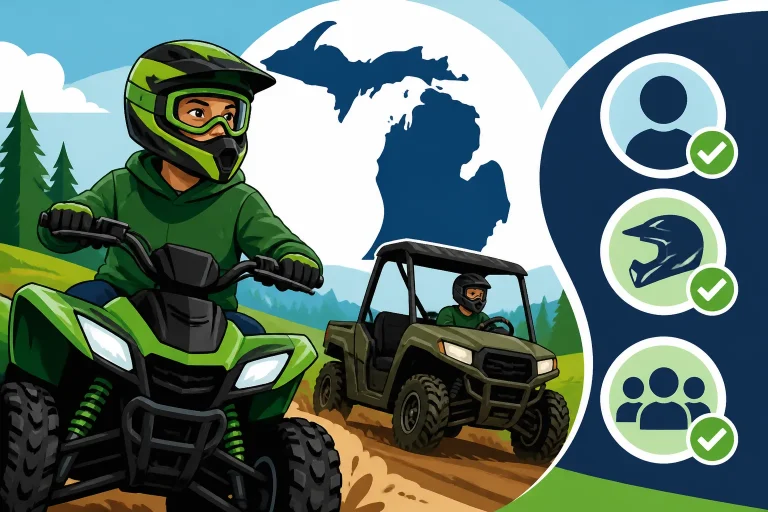
An ORV safety certificate shows that a rider has completed an accepted safety education course. For a child who must have one under Michigan’s youth riding rules, it is a required credential for operating an ORV in situations covered by those rules. Completing a course does not, by itself, make every trail or machine appropriate for that rider.
The certificate is also separate from an ORV license or trail permit. Those permits concern where a machine may be operated; a safety certificate concerns the rider’s training. A family may need to check both issues before a trip. The overview in Michigan ORV Safety Certificate Requirements can help explain how the certificate fits into Michigan’s broader rules.
A homeschool group follows the same rules as any other group
Michigan does not create a separate youth riding standard just because instruction takes place through a homeschool co-op, learning pod, club, or family gathering. A homeschool group can help coordinate a class, but it should not assume that its own lesson or completion record is an official ORV safety certificate.
The key distinction is who provides and recognizes the training. Before advertising a class as certification, confirm that it is delivered through an accepted course or authorized instructor and that students who pass will receive the credential Michigan recognizes. A general safety talk, video session, or practice ride may be useful preparation, but it may not satisfy the state’s certification requirement.
This distinction matters for liability and for trip planning. If a child has only completed a group’s home-made curriculum, do not treat that as proof of state-recognized certification unless the course provider confirms it qualifies.
The certificate is not a substitute for supervision or age limits
A certificate does not erase other youth restrictions. Michigan’s rules can depend on the rider’s age, the type of ORV, the place of operation, and the circumstances of a road crossing. Some young riders may need direct adult supervision even after completing a course. A child’s ability to pass a class is not the same as being legally or physically ready to ride a particular machine.
Parents should check the relevant age rules for the specific child and vehicle rather than relying on a broad statement such as “the kids are certified.” Start with Michigan ORV Age Rules for Young Riders and, where relevant, Michigan ORV Safety Certificate for Riders Under 16. If children will ride different machine types, check each machine’s requirements.
A certificate also does not make an undersized or oversized machine safe. Parents still need to match the vehicle to the young rider’s age, size, skill, and ability to operate the controls. For children choosing a first machine, Youth Quad Weight and Rider Fit offers a useful way to think beyond engine size alone.
How a homeschool group can arrange a class
The most reliable approach is to contact a recognized course provider or an authorized ORV safety instructor before setting dates, collecting enrollment information, or promising certificates. Ask directly whether the proposed class results in the Michigan-recognized certificate, what students must complete, and what documentation they will receive.
Course options and delivery arrangements can change, so confirm current details with the provider. A group may be able to host a class or coordinate enrollment, but the provider determines how instruction, testing, attendance, and certification are handled.
A practical planning sequence
- Estimate the number and ages of students. Ask families to share each child’s age and whether the child has taken an ORV safety course before. The instructor may need this information to decide whether a class can serve the group.
- Contact a recognized provider or authorized instructor. Explain that the request is for a homeschool group and ask what class formats are available. Don’t rely on an old flyer or a recommendation that doesn’t identify the course provider.
- Confirm the credential in writing. Ask what certificate students receive after successful completion and how families can verify or replace it later. Clarify whether a student who misses a session or does not pass can complete the remaining requirements.
- Check the course format and access needs. If instruction is online, ask whether each student needs an individual account, device, or adult’s help. For an in-person class, confirm the location, schedule, equipment, and any materials students need to bring.
- Get parent or guardian consent. Make sure families understand the class requirements, any hands-on activities, and whether a parent must attend or remain available.
- Keep the class focused on learning, not just the card. Encourage students to ask about protective gear, safe spacing, trail signs, machine limits, and what to do when conditions change.
- Verify completion before the ride. Have each family confirm that its child completed the course and received the expected certificate before planning an activity that depends on it.
It can be helpful to compare ORV Safety Course Online vs In Person before choosing a format. An online option may be easier for families who live far apart or have busy schedules. An in-person class may allow more discussion and instructor interaction. Neither format should be assumed to have identical enrollment steps, equipment requirements, or testing arrangements; ask the provider what applies.
Questions to ask before booking
A short call or email can prevent a group from arranging a class that does not meet its needs. Ask:
- Is this course accepted for Michigan ORV safety certification?
- Who teaches or administers it, and what qualifications does that person hold?
- What is the minimum age or other eligibility requirement for students?
- Does the course include a test or practical component?
- What happens if a student cannot attend every session?
- How are certificates issued, and how should families store proof of completion?
- Are parents expected to stay, assist, or provide supervision?
- What arrangements are available for students who need an accommodation?
- If the group hosts the course, what space, equipment, or preparation must it provide?
For online options, also ask whether the student must finish in one sitting, whether progress is saved, and how the provider handles identity or completion records. For in-person options, check the location and schedule carefully, especially if families are traveling with younger children.
Preparing students and families for the course
A group class works best when students arrive knowing the basic purpose of the training: safe decisions matter as much as machine handling. Families can help children come prepared without trying to teach the formal course themselves. Discuss why a rider needs to follow instructions, stay within their ability, and stop when a situation feels unsafe.
Set expectations before class
Tell students that certification is not a contest and that the goal is not to prove who can ride fastest or handle the largest machine. They should be ready to listen, ask questions, and take the safety material seriously. If the class includes a written assessment or practical exercise, explain that they may need to demonstrate understanding rather than simply attend.
Parents can also explain that a certificate is only one part of being ready to ride. A young rider still needs a suitable machine, correctly fitted protective equipment, and an adult who understands the route and applicable rules. A class should not be used to pressure a reluctant child into riding.
Keep records in a way families can find later
Once a child completes a course, each family should save the certificate or other proof of completion in a place it can retrieve. Keep a digital copy if the provider’s rules allow it, and store any original credential where it will not be damaged or lost. The homeschool organizer may keep a roster showing who attended, but that roster should not be presented as a replacement for each student’s official certificate.
If a certificate is misplaced, ask the course provider or the agency responsible for the record how to request a replacement. The process may depend on who administered the course and when the student completed it. See Replacing a Lost Michigan ORV Safety Certificate for the specific record-recovery question.
When a group plans a future ride, confirm that the child’s information is legible and that the family has the credential available in a format accepted for verification. Avoid assuming that a parent’s memory, an old class roster, or a photo of a sign-in sheet will meet the requirement.
Planning the group ride after training
A successful class is a starting point, not a group ride plan. Before taking children out, check the route, vehicle suitability, adult supervision arrangements, permits, and current local restrictions. A ride on private property, a state trail, a designated route, and a public road can involve different rules. Do not assume that certification alone authorizes access.
Separate rider credentials from machine permits
Families should check which ORV license or trail permit applies to each machine and where the group intends to ride. Permit requirements may vary by land or route, and out-of-state visitors may need to consider reciprocity. Use Michigan ORV License and Trail Permit Explained to distinguish the common permit types, then verify current requirements for the planned location.
For a mixed-age group, confirm each child’s eligibility and supervision needs individually. An adult supervising several riders must be able to maintain appropriate contact and respond quickly. That can be difficult if the group is spread out, the machines have different capabilities, or the route has limited places to stop. Keep the group size manageable and agree on a pace that the least experienced rider can maintain.
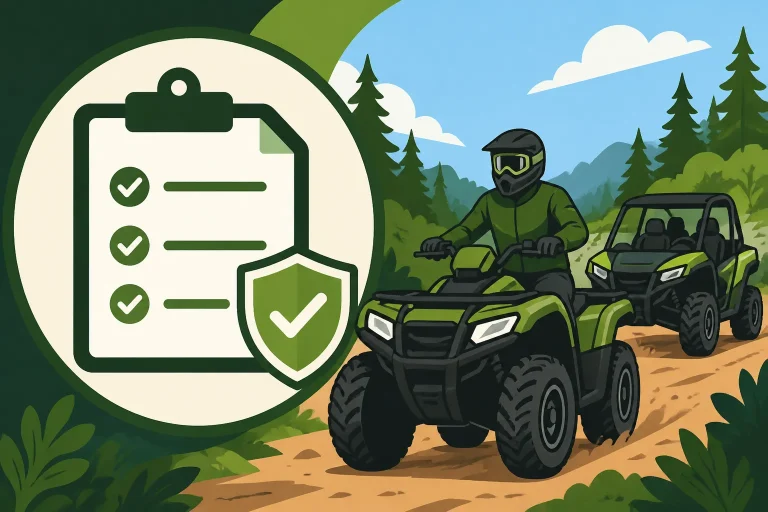
Make a simple ride-day checklist
Before leaving, the organizer can ask each family to confirm:
- The child has completed any required safety course and has proof of completion.
- The child’s age and experience match the machine and planned riding conditions.
- The machine is in safe working order and is appropriate for that rider.
- Required permits are valid for the machine and route.
- The adult supervising the child understands the route and the applicable rules.
- Each rider has properly fitted protective gear, including a suitable helmet where required.
- The group has a meeting point, a way to communicate, and a plan if someone becomes separated.
- Families know whether the route includes road crossings or other sections with added restrictions.
Keep the ride conservative, particularly for children who have just completed a course. Choose a route and pace that leave room for instruction and rest. If the group includes children with different levels of experience, split it into smaller groups rather than expecting new riders to keep up with more confident ones.
A homeschool group can make ORV training convenient and social, but the credential belongs to the individual student and the legal riding conditions still apply to that student. Confirm the course provider, keep each family’s records organized, and treat certification as one part of a broader safety plan—not a guarantee that every child can ride every machine or trail.
Disclaimer
This article is for general informational purposes only and does not constitute professional advice. Laws, prices and regulations vary by location and change over time. Consult a qualified professional for guidance on your specific situation.