Wide Side-by-Sides on 50-Inch Trails
A side-by-side can look like it fits on a narrow Michigan trail until the trees close in, the trail tightens, or a sign makes the restriction clear. If your machine is wider than 50 inches, the key question is not whether you can squeeze through—it is whether that trail is designated for your vehicle. This guide explains how to check before you ride.
What the 50-inch trail restriction means
The trail designation is about your machine, not your driving skill
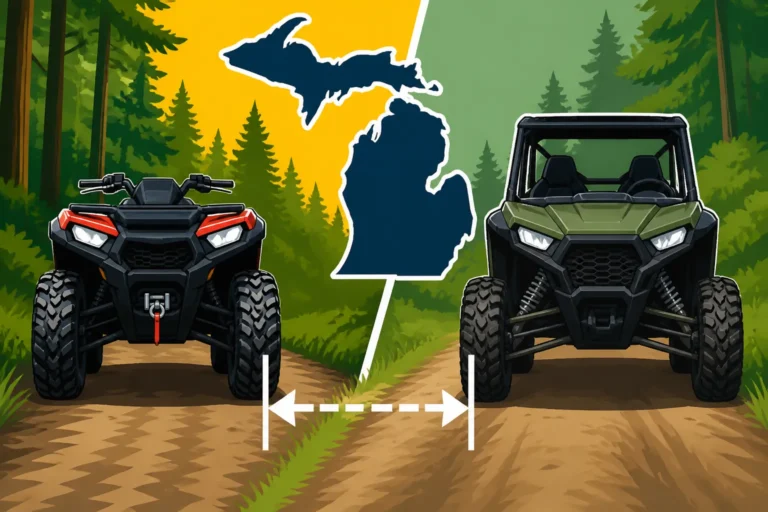
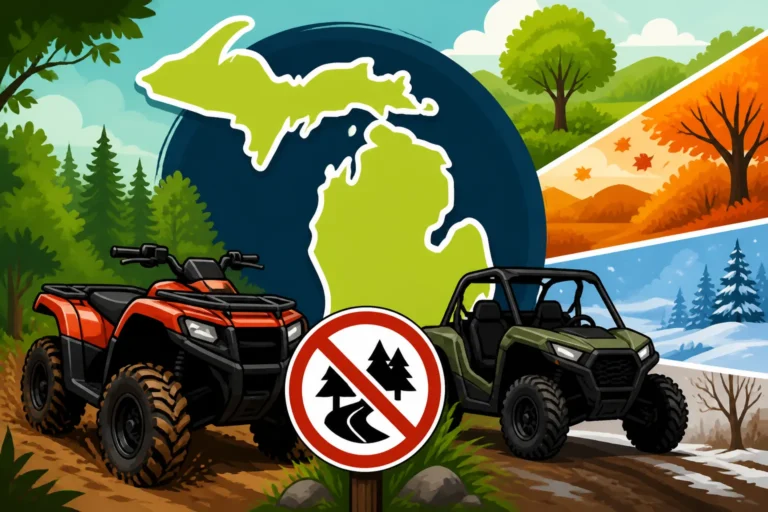
A 50-inch trail is intended for ORVs that meet the trail’s width restriction. A wider side-by-side does not become eligible because you drive slowly, stay centered, or believe there is enough room between the trees. The restriction is about the machine’s fit for the designated trail, not a rider’s confidence.
That distinction matters because some trails look wider in an open stretch than they do around bends, between trees, or over uneven ground. A machine that seems to fit at the trailhead may still be too wide for the route as a whole. Don’t use a short, roomy section as proof that a wider UTV is allowed.
Also, don’t rely only on a model name or a sales listing. Side-by-sides can differ in width by model, trim, accessories, and modifications. Check the actual machine and compare it with the applicable trail restriction. If you’re unsure how Michigan classifies a particular trail, start with [Michigan ORV Trail Widths Explained](Michigan ORV Trail Widths Explained) and confirm the route’s designation before setting out.
Measure the machine as it is ridden
Look up the manufacturer’s width specification for your exact model and configuration, then consider any changes that could affect the machine’s overall width. Wider wheels or tires, wheel spacers, aftermarket suspension parts, and other modifications may change how much room your UTV needs. A brochure figure for a different trim or setup may not describe the machine sitting in your garage.
Measurements can also be confusing because a listed vehicle width may not answer every practical question about the widest points of an equipped machine. If a route’s eligibility is close to your vehicle’s stated width, verify the relevant measurement and rule rather than rounding down or guessing. When in doubt, ask the appropriate land manager or trail authority before you ride.
Finally, a trail’s physical appearance does not override its designation. A broad entrance does not mean the entire trail allows wide machines, and an informal track beside a marked route is not automatically an approved alternative. Follow the signs and the official map information for the route you plan to use.
Where wider side-by-sides may be able to ride
Look for routes designated for your vehicle
Michigan has different kinds of ORV riding opportunities, and they are not interchangeable. Some trails have a 50-inch restriction, while other designated routes or roads may be appropriate for wider machines. The important step is to identify the route type and confirm that your specific UTV is permitted there, rather than assuming that every public ORV route allows every ORV.
Maps and signs can help you distinguish between route types, but read them together. A map may show a network of trails and routes, while signs at an access point or junction identify restrictions or local instructions. For help interpreting the information, see [Michigan ORV Trail Maps and What the Signs Mean](Michigan ORV Trail Maps and What the Signs Mean). If you’re comparing destinations, [Best Michigan ORV Trails for Side-by-Sides](Best Michigan ORV Trails for Side-by-Sides) can help you think about which areas to investigate—but still verify each route for your machine.
Some riders hear that a route accommodates a wider vehicle and assume every connected trail does too. That assumption can lead to a frustrating turn-around—or an unlawful ride onto a restricted segment. Treat a trail connection as a new route to verify, not as automatic permission to continue.
Don’t assume a wider machine is allowed because the area is popular
Popular riding areas can include a mix of trail widths, road types, access points, and local conditions. A destination’s name alone does not tell you whether a particular loop fits your UTV. Before traveling, check the official map for the exact segment you want to ride, and pay attention to access restrictions and seasonal information.
This is especially useful when planning a trip with a group that has different machines. An ATV or narrow side-by-side may be able to use a trail that a wider UTV cannot. If the group wants to stay together, choose a route confirmed for the widest machine in the group, or plan separate routes and a clear meeting point.
A mapping app such as onX Offroad can be useful for planning and comparing route information, but use it as a planning aid rather than a substitute for official designations and signs. Check the route details before the trip, then follow posted restrictions on the ground. For trail-width context beyond the 50-inch limit, [Michigan Trail Widths and 64-Inch Machines](Michigan Trail Widths and 64-Inch Machines) may also be relevant when you’re evaluating a wider UTV.
| What you’re checking | What to confirm | Why it matters |
|---|---|---|
| Machine width | Exact model, trim, and modifications | A different configuration may have a different overall width |
| Route designation | Trail, route, road, or other riding area | Different route types may have different vehicle restrictions |
| Map and signs | Restrictions on the full planned segment | A connecting segment may have a different designation |
| Seasonal status | Current closures or access changes | A route may be unavailable even if it suits your vehicle |
| Group fit | Eligibility for the widest machine | A route suitable for one vehicle may not suit everyone |
How to plan a ride without getting turned around
Check the entire route before leaving home
Start by choosing the area, then trace the full ride—not just the first trail segment. Look for narrow trail sections, junctions, access roads, and any alternate route you might need if a segment is not open to your UTV. A trip that appears straightforward on a broad overview map can involve a restricted connector once you zoom in.
Use official map information and posted signs as your primary references. You can also use onX Offroad to help organize a route and see how planned segments connect, but compare that plan against the relevant official information. Download or save what you need before leaving, especially if you expect spotty cell service. Having a map available offline is more useful than discovering at a junction that your phone has no signal.
Check for closures and seasonal changes close to your ride date. Conditions and access can change, and a route that was open during a previous visit may not be available now. [Michigan ORV Trail Closures and Seasonal Dates](Michigan ORV Trail Closures and Seasonal Dates) is a useful related read for building that check into your planning routine.
Have a backup route and a clear turnaround plan
If you arrive at a junction and a sign shows that the next segment is restricted to narrower machines, don’t continue to see whether the trail gets wider. Turn around where it is safe and practical, and use a confirmed route instead. Backing a wide UTV through a tight section can be difficult, and trying to pass another vehicle in a narrow trail can put riders and machines in a bad position.
Before starting, agree on how the group will handle a route that turns out to be unsuitable. That might mean returning to a known junction, splitting up only if everyone has a safe and agreed plan, or choosing a different ride area. Make sure riders know which machine is widest and that the route was checked for it.
Also think about parking and unloading. A suitable riding route is only part of the plan; your trailer and tow vehicle need a legal, workable place to park. Review [Michigan ORV Trailhead Parking Rules](Michigan ORV Trailhead Parking Rules) before you arrive, particularly if you’re towing a larger trailer or meeting a group at a busy access point.
Common mistakes wide UTV riders can avoid
Treating a map line or an old ride report as permission
A line on a phone map can help you navigate, but it does not by itself establish that a route is open to your machine. Likewise, a photo, online comment, or memory from a previous season may not reflect the current designation or conditions. Use those materials to generate questions, then confirm the route using official information and signs.
Another common misstep is assuming that a road connecting two trails is automatically open to ORVs. Access can depend on the road’s designation and local rules. Verify road use as carefully as trail use, especially when a planned route passes through a town, crosses a public road, or uses a connector that looks like an ordinary forest road.
A little preparation can prevent the most aggravating kind of ride-day surprise: reaching a narrow trail after a long drive and finding out your UTV is not allowed on the route you came for. When choosing a route app or map, use onX Offroad to help with trip planning, but keep official restrictions and posted signs at the center of the decision.
Thinking a permit solves a width restriction
A permit and a vehicle-width restriction answer different questions. A permit may be required for certain kinds of Michigan ORV riding, but having one does not make a restricted trail suitable or authorized for a wider machine. Check both the riding requirements and the route’s vehicle rules. [Michigan ORV License and Trail Permit Explained](Michigan ORV License and Trail Permit Explained) covers the permit side of planning.
The same goes for assuming that permission to ride one area covers every trail in it. Check each segment you intend to use, including connectors and return routes. If you are not certain how a particular route is designated, pause before riding it and seek clarification from the responsible land manager or authority.
A good rule of thumb is simple: confirm your machine’s width, verify the designation of the whole route, and obey the signs you encounter. If the route is marked for machines no wider than 50 inches and your UTV exceeds that limit, choose another route rather than trying to make it fit.
Disclaimer
This article is for general informational purposes only and does not constitute professional advice. Laws, prices and regulations vary by location and change over time. Consult a qualified professional for guidance on your specific situation.