Holly Oaks: Michigan’s ORV Park Near Detroit
Holly Oaks ORV Park gives southeast Michigan riders a place to tackle off-road terrain without making the long drive north to the Upper Peninsula. But a first visit can feel confusing: the park has varied obstacles, machine-specific access rules, and requirements to check before unloading. This guide explains how to plan your ride, choose suitable terrain, and avoid common day-trip surprises.
What to expect at Holly Oaks ORV Park
A former industrial site turned riding area
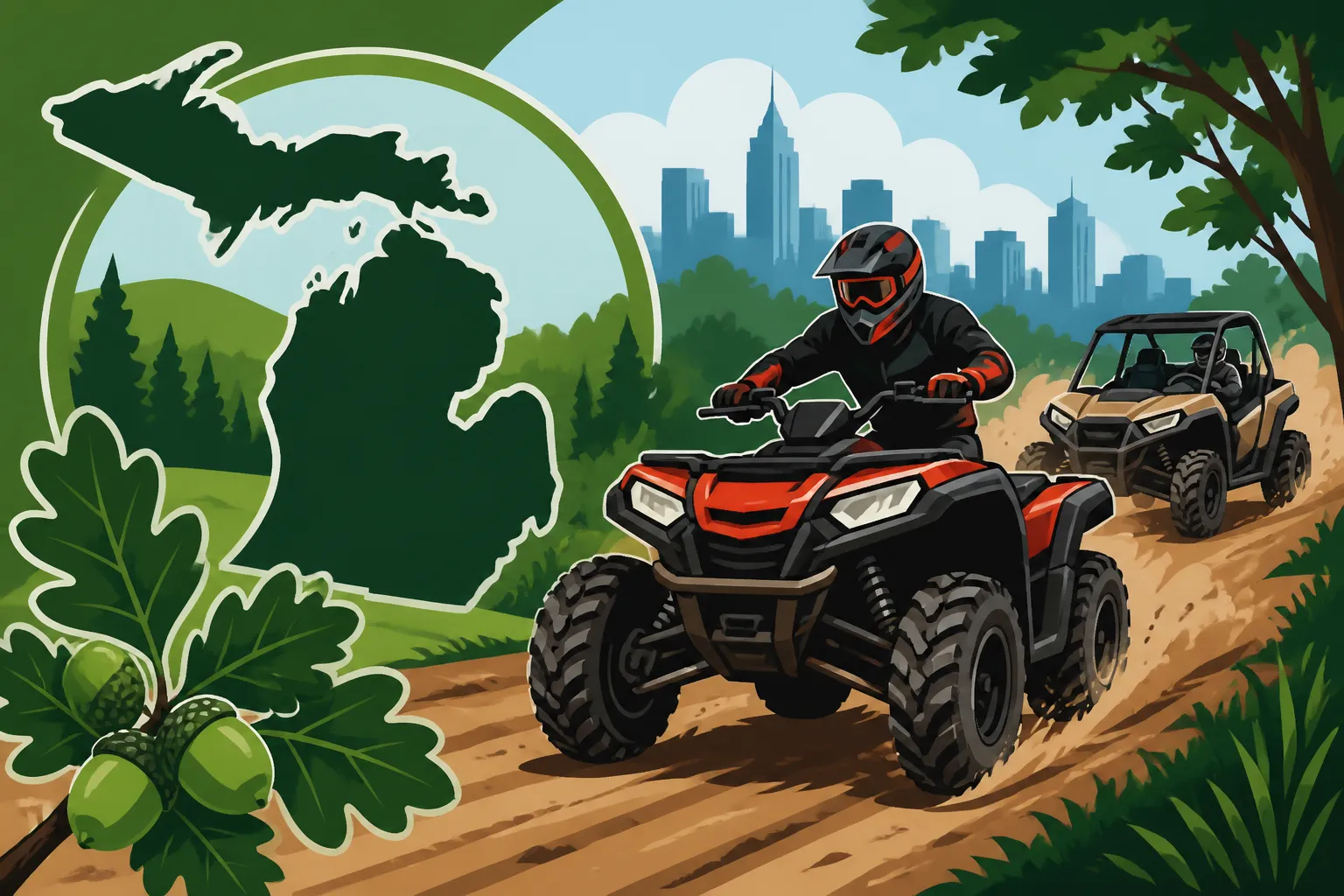
Holly Oaks ORV Park is in Holly, northwest of Detroit, and offers a very different ride from a long forest trail. The landscape was shaped by its former use as a gravel mine, so you can expect an off-road setting with changing surfaces, slopes, and man-made features rather than a single continuous route through the woods. That variety is part of the appeal, but it also means conditions and difficulty can change quickly from one area to another.
For riders used to a marked trail loop, a multi-terrain park may take a little getting used to. You may spend more time choosing an obstacle or line than simply following a route. A hill that looks manageable from the parking area can feel steeper from the seat, and loose ground or uneven approaches can make an otherwise simple climb more demanding. Walk or look over an unfamiliar feature before committing, and give yourself permission to turn around.
Holly Oaks is a destination for off-road vehicles, not a place to assume every machine can go everywhere. Access can depend on the vehicle type, dimensions, park rules, and current conditions. Check the park’s current map and rules before traveling, especially if you are bringing a wide side-by-side, a full-size vehicle, or a machine that has been modified. The broader guide to [Michigan ORV Trails Near Detroit] can help you compare Holly Oaks with other nearby riding options.
How a park ride differs from a trail ride
A trail ride usually involves covering distance along a defined corridor. At a park, the focus is often on selecting terrain that suits your machine and experience. Some riders spend a day working through technical features; others prefer gentler areas and shorter, controlled outings. That flexibility is useful for groups with mixed experience, but it calls for more communication than a straightforward point-to-point ride.
Think about the day your group wants before you arrive. If one rider is eager to test steep climbs while another is new to off-roading, agree on a pace and a meeting plan. It is easy for people to become separated when they stop at different obstacles or take alternate routes around a feature. Choose obvious regrouping points, keep sight of your riding companions where possible, and do not let friendly pressure push anyone onto terrain they have not chosen.
Holly Oaks can also suit people who want a riding day close to the Detroit area without planning an overnight trip. That convenience does not make the outing effortless: transport, machine checks, protective gear, admission and permit requirements, and weather all need attention. Treat it like a full day outdoors, not a quick stop where you can improvise every detail after arriving.
Plan your visit before you load up
Check access rules, permits, and operating information
Before heading out, confirm the park’s current operating information and requirements through official Michigan DNR channels. Rules, access, closures, and procedures can change, and an old social post or a friend’s memory may not reflect what applies to your visit. Check details for the specific vehicle you plan to bring rather than assuming that a rule for an ATV automatically applies to a UTV or a full-size off-road vehicle.
Michigan’s ORV licensing and trail-permit rules can depend on where and how you ride. Do not assume that paying an entrance or day-use charge, if applicable, replaces other required documents or permits. Likewise, do not assume that a permit for another type of riding area covers every activity at Holly Oaks. Use [Michigan ORV License and Trail Permit Explained] as a starting point for understanding the difference, then verify the park’s own instructions before leaving home.
A practical pre-trip check takes only a few minutes: confirm that the park is open to your vehicle category, review its current access rules, check whether any areas are closed, and make sure you have the required documents or permits. Save the relevant information on your phone, but keep a backup plan if service is poor. If a rule is unclear, ask the park or the responsible agency before the drive instead of trying to settle the question at the entrance.
Choose a day and prepare for changing conditions
Weather can change how a feature behaves. Rain may make some surfaces slick, while dry conditions can mean more dust and less visibility behind another vehicle. A forecast is helpful, but it cannot tell you exactly how every section of the park will feel when you arrive. If conditions look questionable, check for park updates and be prepared to skip a feature, shorten the ride, or choose an easier line.
Build in extra time for unloading, gearing up, reviewing the map, and checking your machines. Rushing through the setup is an easy way to overlook a loose tie-down, a low tire, or missing protective equipment. If you are bringing children or newer riders, allow time for a calm orientation before anyone starts moving. A few minutes spent setting expectations can prevent a tense moment later when the group reaches a challenging obstacle.
Use [Michigan ORV Staging Areas and Parking] to think through the practical side of unloading and organizing a riding group. Before the trip, also check whether the park has any restrictions on parking, trailers, or where machines may be unloaded. Arriving with a plan for where your group will meet, gear up, and store essentials can make the first hour feel much less chaotic.
Match the terrain to your machine and experience
Start with capability, not confidence
A machine’s advertised ability does not tell the whole story. Tire condition, ground clearance, wheelbase, suspension, passenger load, and the driver’s experience all affect how it handles a feature. A capable UTV can still be awkward in a tight or uneven section, while a smaller ATV may feel more manageable in one area and less suitable for another. Consider the machine as it is set up today, not as it might perform under ideal conditions.
If you are new to the park, begin with terrain that looks comfortably within your abilities. Pay attention to how your vehicle reacts to the ground beneath it: whether it climbs steadily, slides, bottoms out, or struggles to turn. Use those observations to decide whether to try a more demanding feature. A gradual progression is more enjoyable than spending the day recovering from a choice that was ambitious too early.
Do not follow another rider onto an obstacle simply because they made it look easy. Their machine, tires, experience, and line may be different from yours. If you are uncertain, stop at a safe place and watch how others approach the feature, then decide whether it makes sense for your group. [Michigan ORV Trail Difficulty Ratings] offers a useful way to think about difficulty more generally, though a park obstacle may not match a trail rating exactly.
Read the ground and make a safe line choice
Before taking on a climb, descent, or uneven section, look for changes in the surface and a clear route through it. Consider where you could stop if the machine loses momentum and whether there is room to turn around safely. Avoid choosing a line that leaves no practical exit. If the feature seems too steep, loose, narrow, or crowded, waiting or taking another route is a sensible riding decision—not a failure.
Keep enough room between vehicles to respond if the rider ahead stops or slides. On a steep feature, crowding another machine can leave the following rider with little space to react. Agree on who goes first, where the next rider should wait, and how the group will handle a stalled or stuck vehicle. If a passenger is along, make sure they understand the plan and are secured according to the vehicle’s instructions and applicable rules.
A useful rule for mixed-skill groups is to let the least-experienced rider help set the pace. The more confident riders can take optional features separately, then regroup at a prearranged location. This avoids turning every obstacle into a test of who is willing to take the biggest risk. It also gives new riders a chance to build skill without feeling rushed or watched.
| Before the ride | What to check | Why it matters |
|---|---|---|
| Park access | Current hours, closures, and vehicle-specific rules | Prevents a wasted trip or an access problem |
| Permits and documents | Requirements for your machine and planned riding area | Helps avoid assuming one payment or permit covers everything |
| Machine condition | Tires, controls, fuel, brakes, and secure cargo | Reduces preventable breakdowns and handling issues |
| Rider preparation | Helmets and other protective gear appropriate to the ride | Makes safety part of the plan rather than an afterthought |
| Group plan | Skill levels, meeting points, and communication method | Keeps riders together when people choose different features |
| Navigation | Current park map and an offline backup | Helps when phone reception or battery power is limited |
Navigate responsibly and look after your group
Use maps and signs as planning tools
Read the park map before you start riding, and keep it available during the visit. Signs and marked routes can clarify where a vehicle may travel, but they do not remove the need to pay attention to the terrain or follow posted instructions. If the map, sign, and ground conditions seem inconsistent, stop in a safe place and seek clarification rather than guessing.
A digital map can be useful for orientation, especially when your group wants to mark a meeting point or keep track of a planned route. Some riders use onX Offroad to explore off-road mapping and plan trips. If you use it at Holly Oaks, treat it as a navigation aid—not as a substitute for park signs, official maps, or current rules. Download or save useful information before setting out, and do not rely on mobile data being available everywhere.
Keep track of where your group is in relation to the staging area and its agreed meeting points. If someone takes a different line, decide in advance where everyone will reunite rather than relying on last-minute calls or messages. [Michigan ORV Trail Maps and What the Signs Mean] explains why maps and markers matter on Michigan rides more broadly. At a park, the same habit of checking your route before moving can reduce confusion and unnecessary backtracking.
Ride with courtesy, especially when the area is busy
Holly Oaks is shared by riders with different machines, speeds, and comfort levels. Give other users room, wait for a clear path before entering a feature, and avoid driving in a way that sprays debris or blocks someone else’s line. If another rider is stopped, do not assume they are ready for you to pass. Make your presence clear and give them time to respond.
Stay within designated riding areas and respect closures. Bypassing a barrier can damage the site, create hazards, and put continued access at risk. Avoid cutting new lines around a difficult section, disturbing vegetation, or leaving trash behind. Take out what you bring in, and secure loose items so they do not fall off as you move over rough ground.
A little patience makes a noticeable difference on busy days. If a feature has a queue, wait your turn and keep enough space from the vehicle ahead. If you need to stop, move somewhere that does not obstruct traffic or another rider’s approach. The wider principles in [Trail Etiquette on Shared Routes] apply here too: communicate clearly, be predictable, and remember that everyone is there to enjoy the ride.
Make Holly Oaks part of a better riding day
Pack for comfort, repairs, and changing plans
A good riding day depends on more than the machine. Bring drinking water, weather-appropriate layers, food or snacks, and a way to keep essentials together. Dust, wind, changing temperatures, and physical effort can make a short outing feel longer than expected. If you are riding with children or anyone who tires easily, plan breaks before they are needed rather than waiting until someone is uncomfortable.
Pack a basic set of items suited to your vehicle and the day, such as a first-aid kit, a phone power source, and tools you know how to use. Bring recovery equipment only if you understand how to use it safely and it is permitted. A tool you have never practiced with is not a dependable plan when a vehicle gets stuck. Keep the load secure and avoid placing loose gear where it could interfere with controls or become a hazard in a sudden stop.
Decide what you will do if conditions are worse than expected or a machine develops a problem. Identify who can contact help, where the group should wait, and how you will get everyone back to the staging area. If you need to end the ride early, do so before fatigue or frustration turns a manageable problem into a risky one. [Michigan ORV Trail Closures and Seasonal Dates] is also worth reviewing when planning trips around changing access conditions.
Decide whether Holly Oaks fits your group
Holly Oaks may be a good match if your group wants varied off-road terrain near southeast Michigan and is comfortable choosing features that suit individual machines and skill levels. It can also work for riders who want to practice making careful line choices in a defined riding area. The key is to arrive ready to assess conditions rather than expecting every feature to be appropriate for every rider.
It may be less suitable for a group that wants a relaxed, continuous forest route with little decision-making, or for riders who have not yet learned how to operate their machine safely. That does not mean beginners cannot visit; it means a beginner’s day should be planned around simple terrain, patient companions, and an easy option to stop. For families, [Family-Friendly ORV Trails in Michigan] can help compare outings with different riding styles and levels of challenge.
Before committing to the drive, compare the park’s current access information with your group’s vehicle types and expectations. Check the official map, confirm requirements, and talk through a conservative plan. If you arrive and the terrain feels beyond your comfort level, choose a gentler area or call it a day. The best Holly Oaks outing is not the one where everyone tries the hardest obstacle; it is the one where the group rides within its limits and wants to come back.
Disclaimer
This article is for general informational purposes only and does not constitute professional advice. Laws, prices and regulations vary by location and change over time. Consult a qualified professional for guidance on your specific situation.