Registering a Low-Speed Vehicle in Michigan
Navigating Michigan's rules for driving small vehicles on public roads can feel like trying to find your way through a dense forest without a compass. Many folks assume their trusty golf cart or even a small UTV can just zip onto the neighborhood streets, only to find themselves pulled over or facing confusing paperwork. This guide is here to clear the fog, offering a detailed roadmap on what a low-speed vehicle (LSV) is in Michigan, how to get it registered, and where you can legally drive it without a headache.
What Exactly is a Low-Speed Vehicle (LSV) in Michigan?
Before you even think about putting a license plate on something and hitting the pavement, it's absolutely crucial to understand what Michigan's law actually considers a "low-speed vehicle." This isn't just about how fast it goes; it's a very specific legal definition that dictates everything from its features to where it can operate. Mistaking an LSV for a golf cart or a full-blown street-legal UTV can lead to a world of trouble, so let's get precise.
Defining an LSV vs. Other Off-Road Vehicles
In Michigan, a Low-Speed Vehicle (LSV) is legally defined as a four-wheeled motor vehicle with an attainable speed of more than 20 miles per hour but not more than 25 miles per hour on a paved level surface. That 25 mph cap is key. It also must have a gross vehicle weight rating of less than 3,000 pounds. Think of it as a street-legal golf cart, but with more stringent safety requirements. This immediately sets it apart from a standard golf cart, which often can't hit 20 mph and isn't usually built to Michigan's specific safety standards for road use.
Now, let's contrast this with Off-Road Vehicles (ORVs) like ATVs and UTVs. While some UTVs can be modified to be street-legal, they typically go through a completely different process, often requiring an [Michigan Assembled Vehicle Title Application] and a thorough inspection to ensure they meet car-like safety standards, which can include higher speed capabilities. An ORV is primarily designed for off-road use, whereas an LSV is designed from the factory (or specifically configured) for limited on-road use within a narrow speed band. It's a critical distinction because the rules for titling, registration, and operation are vastly different.
The purpose of the LSV classification is really about providing a safe, neighborhood-friendly option for local travel without the full-blown requirements of a car. It's for those short trips to the corner store, shuttling kids around a residential area, or getting to the community pool. It’s not intended for high-speed traffic or major roads, which is why that 25 mph limit is so strictly enforced and why the vehicle itself must be designed with that in mind.
Essential Equipment for Michigan LSV Status
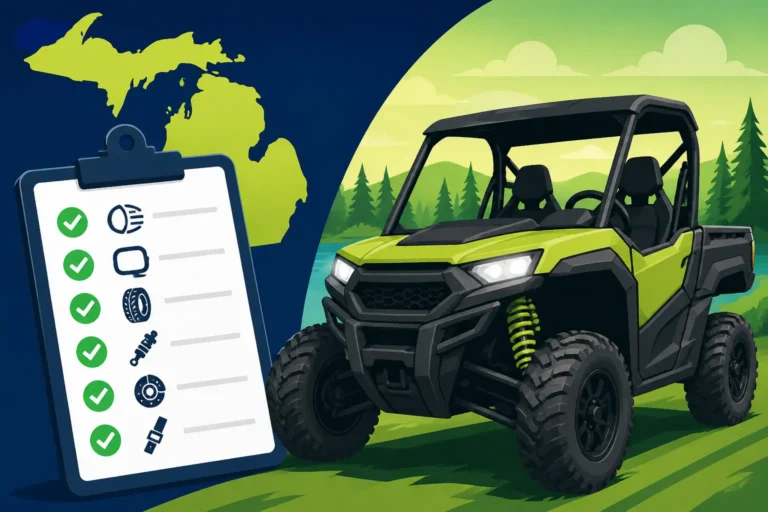
To qualify as an LSV and be eligible for registration in Michigan, your vehicle must come equipped from the manufacturer, or be properly outfitted, with a very specific list of safety features. This isn't optional; these items are what make the vehicle "roadworthy" in the eyes of the law, even with its speed limitations. Without these, it's just a souped-up golf cart, not an LSV ready for a license plate.
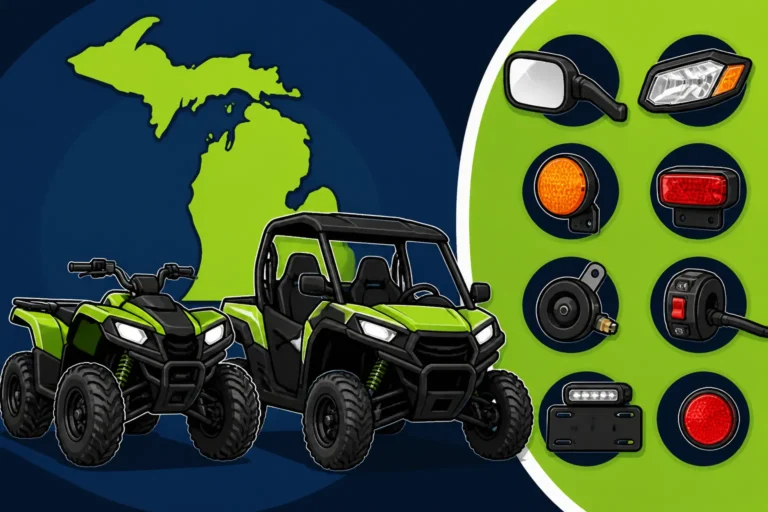
Here's a breakdown of the critical equipment:
- Headlamps: Must have working headlights for visibility, especially during dawn, dusk, or inclement weather.
- Stop Lamps (Brake Lights): Essential for signaling to traffic behind you when you're slowing down or stopping.
- Turn Signal Lamps: Front and rear turn signals are required for indicating your intentions when making turns or changing lanes.
- Tail Lamps: Continuous illumination at the rear of the vehicle to make it visible from behind.
- Reflex Reflectors: Strategically placed reflectors to enhance visibility, particularly at night.
- Exterior Mirror(s): At least one mirror, mounted on the driver's side, is mandatory. Many LSVs will have both driver and passenger side mirrors for better situational awareness.
- Parking Brake: A functioning parking brake system to secure the vehicle when stationary.
- VIN (Vehicle Identification Number): A unique VIN is non-negotiable for any motor vehicle being titled and registered. This is how the state identifies your specific machine.
- Safety Glazing: If the vehicle has a windshield, it must be made of safety glass. You can't just slap on a piece of plexiglass; it needs to meet specific standards to protect occupants in case of impact.
- Seat Belts: All designated seating positions must have safety belts. This is a crucial difference from many basic golf carts.
It's important to remember that these aren't just suggestions; they are legal requirements. If you're considering modifying a vehicle to become an LSV, you need to ensure every one of these components meets the proper standards. For instance, a basic golf cart often lacks turn signals and seatbelts, and its lighting might not be sufficient. You can find aftermarket kits from brands like SuperATV that help add some of these components to a UTV for a street-legal conversion, but remember, that's a different path than meeting LSV requirements specifically. For an LSV, these features are fundamental to its very classification.
The Process of Registering an LSV in Michigan
Once you've confirmed your vehicle genuinely meets Michigan's definition of an LSV and is equipped with all the necessary safety features, the next step is getting it officially registered. This isn't quite as involved as registering a full-size car, but it's more rigorous than simply slapping a trail sticker on an ORV. It involves a visit to the Michigan Secretary of State office, and like any government agency, they appreciate it when you come prepared.
Documentation You'll Need at the Secretary of State
To ensure your visit to the Secretary of State is a smooth one, you'll want to gather all your paperwork in advance. Missing even one document can mean a wasted trip and a lot of frustration, sending you back home to collect what's needed. Think of it like packing for a long road trip; you don't want to forget your map or your wallet!
Here’s a comprehensive list of what you'll typically need to bring:
- The Vehicle's Certificate of Title: This is paramount. If you bought the LSV new from a dealer, they would likely handle the initial title application. If you purchased it used, you must have the original title, properly assigned to you by the previous owner. Ensure the seller has signed it correctly and that the odometer (or hour meter, if applicable) reading is accurately recorded. If there's any issue with the title, such as a missing signature or a lien, you'll need to sort that out beforehand. [Titling an ATV in Michigan Without the Previous Owner] or [ORV Title With a Missing Seller Signature] topics can become complex.
- Proof of Michigan No-Fault Insurance: Just like any other registered motor vehicle, an LSV needs to be insured. You'll need to provide proof of current Michigan no-fault insurance coverage for the vehicle. Your insurance provider should be able to issue you a temporary insurance card or a declaration page to present. Be prepared for insurance costs; while often less than a car, it's still a requirement. [Insurance Cost for an ATV in Michigan] might give you an idea of related costs, though LSV insurance is a separate category.
- Michigan Application for Certificate of Title and Registration (Form TR-11L): This form is specifically for titling and registering vehicles. You can usually download and fill it out in advance from the Michigan Secretary of State website, which can save time at the office. Make sure all information is accurate and legible.
- Proof of Identity: You'll need a valid Michigan driver's license or state ID. If you're a new resident, you might need additional documentation to prove residency.
- Bill of Sale: If you purchased the LSV from a private seller, a detailed bill of sale is highly recommended, even if not always strictly required for title transfer. It serves as proof of purchase price, which is used to calculate sales tax. Make sure it includes the purchase date, price, VIN, and signatures of both buyer and seller. [Michigan ATV Bill of Sale: What to Put in It] offers good guidance here.
- Payment for Fees: Be ready to pay the applicable title and registration fees. These include a title fee, registration plate fee, and potentially sales tax if you haven't already paid it. The exact amounts can fluctuate, so it's always wise to check the Secretary of State's current fee schedule online or call ahead.
Having everything organized in a folder will not only impress the clerk but also make your life a lot easier!
Navigating the Secretary of State Visit
With your stack of documents in hand, it's time to head to the Michigan Secretary of State office. While some places might allow you to book an appointment online, others may still operate on a walk-in basis. It's best to check the specific branch you plan to visit for their current procedures and [Michigan Secretary of State Appointments for ORV Title Work] might be useful. Weekday mornings often have shorter wait times, but sometimes you just have to brave the crowds.
Here’s what to expect and how to handle your visit:
- Check-In: Upon arrival, you'll usually be directed to a check-in kiosk or a desk where you'll indicate the service you need (titling and registration for an LSV). You’ll likely receive a numbered ticket.
- Wait: This is where patience is a virtue. Find a seat and be prepared for a wait, especially if you haven't made an appointment. Use this time to double-check your forms and ensure nothing is missing.
- Called to Counter: When your number is called, approach the designated counter. The clerk will review your documents, verify your identity, and ensure all the required information is present and correct. This is when they'll scrutinize your title, insurance, and application form.
- Fee Payment: Once all documents are approved, you'll be informed of the total fees due. You can typically pay with cash, check, or debit/credit card.
- Temporary Registration & Plate: After payment, you'll receive a temporary registration document and, usually, your permanent LSV license plate on the spot. Make sure to affix the plate properly to your LSV before operating it on public roads.
- Title Mailed: Your official certificate of title will generally be mailed to you within a few weeks. It's crucial to keep this document safe, as it's your ultimate proof of ownership. [How Long a Michigan ORV Title Takes to Arrive] gives a general idea for other vehicle types, and LSV titles follow a similar timeline.
Remember, the clerks are there to help, but they are also bound by strict rules. Being polite, prepared, and understanding will go a long way in ensuring a smooth and successful registration experience.
Operating a Registered LSV on Michigan Roads
So, you've done the hard work, navigated the Secretary of State, and now your LSV sports a shiny new license plate. Congratulations! But before you hit the road, it's vital to understand the rules of engagement. Just because it's registered doesn't mean it can go anywhere or be driven by anyone. Michigan has specific regulations about where and how LSVs can operate, designed to keep everyone safe.
Where You Can (and Can't) Drive Your LSV
The "low-speed" part of Low-Speed Vehicle isn't just a descriptor; it's a critical limitation on where these vehicles can be legally operated. LSVs are primarily designed for local, low-traffic environments, not for mixing with faster-moving cars or heavy commercial vehicles. This is all about ensuring safety and maintaining traffic flow.
In Michigan, a registered LSV is generally permitted on:
- Roads with a posted speed limit of 25 mph or less: This is the golden rule. If the speed limit is higher than 25 mph, your LSV is not allowed, even if you keep your speed below the limit. This means most residential streets, some neighborhood roads, and specific designated routes in communities that have embraced LSVs.
- Roads where the local government (city, village, township) has explicitly approved their use: Some communities actively create ordinances to allow or restrict LSVs on their streets. Always check local ordinances for the areas you plan to drive in, as these can vary significantly.
You absolutely cannot operate an LSV on:
- State trunk line highways (M-roads, US-routes, I-interstates): These roads are designed for higher speeds and traffic volumes, making LSVs a significant safety hazard.
- Roads with a posted speed limit exceeding 25 mph: This is a firm restriction. Even if you're just "crossing" a 35 mph road, it's generally prohibited unless there's a specific, approved crossing point. This distinguishes LSVs from street-legal UTVs, which might have more flexibility. For instance, [Michigan's 25 mph Limit on County Roads] is a separate rule that applies to ORVs on county roads that have been opened to ORV use. An LSV is a different beast entirely.
- Sidewalks or dedicated bicycle paths: LSVs are vehicles and must operate in the roadway, adhering to traffic laws.
The rationale behind these restrictions is purely safety. An LSV, by its very nature, is slower and offers less crash protection than a standard automobile. Placing it in high-speed traffic or on roads where it impedes flow would create dangerous situations. So, stick to your neighborhood streets and enjoy the slow pace, but always be aware of the posted speed limits.
Driver Requirements and Safety Gear
Just because an LSV is "low-speed" doesn't mean the person behind the wheel doesn't need to be qualified. Operating any motor vehicle on Michigan's public roads comes with responsibilities, and LSVs are no exception. Think of it as driving a smaller car; you still need to know the rules and be prepared.
Here's what you need to know about who can drive an LSV and what safety precautions are necessary:
- Driver's License: Anyone operating a registered LSV on Michigan public roads must possess a valid Michigan driver's license. A simple state ID or an ORV safety certificate is not sufficient. This is because you are operating a motor vehicle on public roads, subject to the same traffic laws as cars. [Driver's License Rules for Michigan ORV Road Riding] outlines similar requirements for ORVs, but again, LSVs are distinct.
- Age Restrictions: Because a driver's license is required, the minimum age to operate an LSV on public roads is 16, consistent with obtaining a Michigan driver's license. There are no special provisions for younger drivers, unlike some ORV scenarios where a [Michigan ORV Safety Certificate for Riders Under 16] might apply to off-road riding.
- Seat Belt Use: As previously mentioned, LSVs are equipped with seat belts for all designated seating positions. It is mandatory for all occupants to wear their seat belts while the vehicle is in motion, just like in a car. This is a primary safety measure.
- Helmets: Unlike some ORVs, helmets are generally not required when operating an LSV, primarily because LSVs are designed with a more enclosed structure and seat belts, and they operate at lower speeds on regulated roads. However, always verify local ordinances, as some very specific community rules might have additional requirements.
- Visibility: While headlights and taillights are required, it's always a good idea to enhance your visibility, especially during dawn, dusk, or in poor weather. Consider wearing bright clothing and ensuring your lights are clean and fully functional. Even though you're moving slowly, you still need to be seen by other motorists, pedestrians, and cyclists.
Operating an LSV is about integrating into the existing road infrastructure, albeit at a slower pace. This means adhering to all traffic laws – stop signs, yield signs, speed limits (even if the posted limit is 25, you must obey lower limits), and signaling turns. The idea is to be a predictable and safe presence on the road.
Key Differences: LSVs vs. Street-Legal UTVs
One of the biggest areas of confusion for folks wanting to get a smaller vehicle on Michigan roads is the distinction between a Low-Speed Vehicle (LSV) and a "street-legal UTV." While both can end up with license plates and drive on some public roads, they get there through entirely different legal pathways, with different requirements and limitations. It's not just semantics; it's a fundamental difference in how Michigan views and regulates these machines.
Understanding the Legal and Equipment Distinctions
Let's break down the core differences. An LSV, as we've discussed, is a factory-built or specially configured vehicle designed to meet specific federal and state standards for low-speed operation (20-25 mph). It's essentially a distinct class of motor vehicle. The requirements for headlights, tail lights, turn signals, mirrors, seat belts, and speed are inherent to its classification.
A "street-legal UTV," on the other hand, often starts life as an Off-Road Vehicle (ORV) that then undergoes significant modification to meet the standards of an "assembled vehicle" or "specially constructed vehicle" to be legal for road use. This path, known as the [Michigan Assembled Vehicle Route for a UTV], is far more intensive. It typically involves:
- Higher Speed Capability: Unlike an LSV's strict 25 mph cap, a street-legal UTV is often capable of highway speeds, meaning it has to meet safety standards comparable to a regular car.
- More Rigorous Equipment: Beyond LSV requirements, a street-legal UTV usually needs DOT-approved tires, a safety glass windshield, wipers, a speedometer, a horn that meets specific decibel levels, and often more robust lighting and braking systems capable of higher speeds. Brands like SuperATV are well-known for offering conversion kits, lift kits, and accessories specifically for transforming UTVs into more capable street-legal machines, but these are for the assembled vehicle route, not for turning them into LSVs.
- Inspections: The process for a street-legal UTV almost always includes a physical inspection by a law enforcement officer or authorized agent to verify all the required safety equipment is properly installed and functioning. This is part of the [Michigan Street-Legal UTV Inspection at the Secretary of State] process. An LSV, by contrast, is assumed to meet these standards if it fits the initial definition and has the necessary VIN from the manufacturer.
- Titling: A street-legal UTV might receive a title that designates it as an "assembled vehicle" or "specially constructed vehicle," rather than a simple "LSV" title. This title reflects its modified nature and broader operational capabilities.
Essentially, an LSV is a narrow category for slow, local travel, built to modest safety standards for that purpose. A street-legal UTV is an ORV that has been upgraded to meet much more comprehensive safety standards to perform more like a regular car on a wider range of roads.
Implications for Insurance and Long-Term Ownership
The distinction between an LSV and a street-legal UTV also carries significant implications for practical matters like insurance and the long-term ownership experience. Because they are classified differently, insurance companies will rate them based on their risk profiles and legal definitions.
For an LSV:
- Insurance: You'll typically get a specific LSV insurance policy. These policies often have lower premiums than full-size car insurance due to the vehicle's limited speed and restricted areas of operation. However, it still requires Michigan no-fault coverage. Insurers understand the specific risks associated with low-speed, neighborhood travel. [Does Homeowners Insurance Cover an ATV in Michigan?] is a question often asked, but a registered LSV definitely needs its own policy separate from homeowners.
- Resale Value: The market for LSVs is niche. While popular in certain communities or for specific applications (like large private properties or resorts), their limited road access can impact their broader appeal and, consequently, their resale value compared to a more versatile street-legal UTV.
- Modifications: Modifying an LSV to go faster than 25 mph or to add capabilities beyond its intended design could jeopardize its legal status and insurance coverage. It's designed to be slow, and changing that defeats its legal purpose.
For a Street-Legal UTV:
- Insurance: Insurance for a street-legal UTV will likely be more expensive than an LSV, often falling somewhere between motorcycle and automobile insurance rates. Because these vehicles can operate at higher speeds and on more varied roads, the risk profile is higher. You might even find yourself looking into [Does Motorcycle Insurance Cover a Street-Legal UTV?] for specific coverage types.
- Resale Value: A properly converted and titled street-legal UTV often holds its value better and has a broader market, as it offers more utility and road access. The ability to drive it to more destinations expands its appeal.
- Modifications: The assembled vehicle route allows for more robust modifications, with the understanding that these changes are documented and inspected to maintain safety and compliance. You might see specific performance parts from companies like SuperATV used to enhance the vehicle's capabilities for both on-road and off-road driving.
Ultimately, choosing between an LSV and converting a UTV to be street-legal depends entirely on your intended use. If you only need a vehicle for short, slow trips within your immediate neighborhood or a planned community, an LSV might be the simpler, more cost-effective option. If you envision longer journeys, higher speeds, or more diverse road use, investing in a street-legal UTV conversion, despite its complexity and cost, will give you the flexibility you need.
Comparing Michigan's Small Road-Legal Vehicles
To help clarify the differences between these various types of small vehicles that might see limited road use in Michigan, here’s a quick comparison.
| Feature | Low-Speed Vehicle (LSV) | Street-Legal UTV (Assembled Vehicle) | Golf Cart (Standard) |
|---|---|---|---|
| Max Speed | 20-25 mph | Generally 35+ mph (up to 70 mph) | Typically <20 mph |
| Primary Design | Neighborhood road use | Off-road modified for road use | Golf course / private property |
| Michigan Title/Plate | Yes (LSV Title) | Yes (Assembled Vehicle Title) | No (Unless LSV or specific ordinance) |
| Required Safety Gear | Head/tail/turn lights, mirrors, seat belts, VIN, parking brake, safety glass windshield | Same as LSV + DOT tires, wipers, speedometer, robust braking, usually more durable components | Basic lights (sometimes), no seat belts usually |
| Roads Allowed | <25 mph speed limit roads, local ordinances | Wider range of roads, often up to 55 mph (check local ordinances), crossing highways | Very limited, typically only on specific private property or communities with special ordinances |
| Driver's License Required | Yes | Yes | No (on private property), Yes (if street legal under ordinance) |
| Insurance Required | Yes (No-Fault) | Yes (No-Fault) | No (on private property), Yes (if street legal under ordinance) |
| Inspection Needed? | No (if factory LSV) | Yes (for assembled vehicle) | No |
| Key Advantage | Simple, dedicated local transport | Versatile, more capable on varied roads | Low cost, simple for private use |
| Key Limitation | Very limited speed & road access | More complex, costly conversion/insurance | Not street legal by default |
This comparison highlights that while these vehicles might look similar, their legal standing and operational capabilities in Michigan are quite distinct. It’s crucial to understand which category your vehicle falls into – or which category you want it to fall into – before attempting to title, register, or operate it on public roads.
Disclaimer
This article is for general informational purposes only and does not constitute professional advice. Laws, prices and regulations vary by location and change over time. Consult a qualified professional for guidance on your specific situation.