Michigan ORV Rules on Private Roads
It's a common scenario for many of us here in Michigan: you've got a fantastic off-road vehicle (ORV) – maybe a powerful ATV or a versatile side-by-side – and you're lucky enough to own or have access to private land. The thought often pops up, "If I'm on private property, do all those state ORV rules still apply?" It's a question that can lead to a lot of head-scratching and, if you're not careful, some unexpected trouble. This guide is here to untangle the specifics of Michigan's ORV rules when you're riding on private roads, helping you understand what's truly allowed and what still needs your careful attention.
The Core Distinction: Private vs. Public Land for ORV Use
When you think about taking your ORV out for a spin, the very first thing you need to clarify in your mind is whether you're on public land, designated ORV trails, or truly private property. This distinction isn't just about good manners; it's the foundation of all the rules that apply to you. Many riders assume "private" means a free-for-all, but Michigan law is nuanced, and even private roads can have layers of complexity that impact your ride. Ignoring these distinctions can lead to fines, arguments with neighbors, or even serious legal issues.
What "Private Road" Really Means in Michigan
In Michigan, the term "private road" can encompass a few different scenarios, and it's not always as straightforward as a single-family driveway. It could be your own long gravel path leading to your cabin, a shared easement road that serves multiple properties, or even a network of roads within a private hunting club or a residential association. The key element is that these roads are not maintained by a public entity like a county road commission or the Department of Natural Resources (DNR). They exist on private property, and their use is primarily for the landowners or those with explicit permission.
However, just because a road is physically on private land doesn't mean it operates in a legal vacuum. Sometimes, private roads can have public access easements, or they might connect to public trails, creating a gray area. It's crucial to understand the exact nature of the private road you're on. Is it exclusively yours? Is it shared with others through a deeded easement? Does a homeowners' association govern its use? These details make a huge difference in the ORV rules that might apply, even if they aren't directly state-mandated ORV regulations.
Why This Distinction Matters for ORV Riders
For ORV riders, understanding the public versus private distinction is paramount for several reasons, primarily legal and safety-related. On public lands and designated ORV trails, Michigan's full suite of ORV laws kicks in: you need permits, proper safety gear, you're restricted to specific routes, and you must adhere to noise and speed limits. These rules are designed for public safety, environmental protection, and ensuring a harmonious experience for all users of public resources.
On private property, some of these state-mandated requirements, like the need for a Michigan ORV license and trail permit, might be relaxed or even waived. However, this relaxation doesn't mean a complete absence of rules or responsibilities. The primary concern shifts to the property owner's rights, local ordinances, and civil liability. Riding on private land without proper permission, even if it feels remote, is still trespassing. Furthermore, even if you own the land, you still have a responsibility to ensure safety for yourself and others, and to avoid creating a public nuisance for your neighbors. Knowing the exact boundaries of what is considered "private" and who has the authority to set rules on that land is your first line of defense against potential problems.
Understanding Michigan's Basic ORV Regulations on Private Property
Alright, so you've established that you're on genuinely private land or a private road. That's a great start! Now, let's dive into what Michigan law generally says about ORV use in these scenarios. While it might feel less restrictive than hitting a state trail, there are still fundamental principles that apply, and ignoring them can quickly turn a fun ride into a headache. The key is permission, common sense, and respecting those around you.
Owner Permission is King
When it comes to riding an ORV on any private property, whether it's a vast acreage or a winding private road, explicit permission from the landowner is absolutely non-negotiable. This isn't just a suggestion; it's the bedrock of lawful private land use. If you don't own the property yourself, you need to have a clear understanding and agreement with the person who does. Simply assuming it's okay because it looks abandoned or because "everyone rides there" is a recipe for trouble.
For your own property, you obviously grant yourself permission! But even then, there's a subtle point: if your private road has easements for others to access their properties, their consent might become relevant if your riding impacts their use or enjoyment. When you're riding on a friend's sprawling farm, always get a clear "yes" from them. It’s best practice to have this permission in writing, especially if you're dealing with larger plots of land or an ongoing arrangement. This simple step can prevent any misunderstandings down the line, especially if a new neighbor moves in or if there's a disagreement about land use. Remember, even if you don't need a state ORV permit on your own land, as covered in [Michigan ORV Permit Exemptions on Your Own Land], you still need to respect property boundaries and other local rules.
Consider a common scenario: you and your buddies head up to a family cabin in northern Michigan. The cabin sits on a few acres, and there's a private dirt road leading to it. You know you don't need a trail permit for your specific parcel, but what about the neighbor's property you cross to get there? Even if it's just a corner, you need their blessing. A quick conversation or a clear sign can save a lot of grief. This also extends to larger hunting camps or leased properties. Always verify who owns what and ensure you have explicit, documented permission.
Age and Supervision Rules Still Apply (Sometimes)
This is where things can get a little fuzzy, so let's clear it up. While state-mandated ORV permits often don't apply to private property, Michigan's age and supervision rules for young riders can still be a factor, even if the strict enforcement might differ. The state's primary concern with youth riders is safety, and that concern doesn't magically disappear just because you're off a public trail. For example, if you have a young rider, knowing the guidelines outlined in [Michigan Age Rules on Private Property] is still incredibly important for their safety and your peace of mind.
Generally, on your own private property, the requirement for a safety certificate or direct supervision for riders under 16 years old is often relaxed by state law. However, this doesn't mean it's a free pass to let a 6-year-old tear around unsupervised. Liability is a huge factor here. If a child (or anyone, for that matter) gets injured on your property, even with permission, you could still be held responsible, especially if negligence can be proven. Therefore, even when not legally mandated by the state, adhering to safety best practices, ensuring proper supervision, and matching the machine size to the rider's age and skill level is always the smart choice. Remember, the general guidelines for [Youth ATV Size Rules Michigan Parents Should Know] are there for a reason – to keep kids safe.
Think about it this way: the state sets minimums for public use. On private land, you become the primary rule-setter for safety. If your 12-year-old is riding an ATV on your own land, while they might not need a safety certificate to do so, it's still prudent to have them take a safety course. You'd supervise them closely, just as you would on a public trail, because accidents can happen anywhere. This proactive approach not only protects your loved ones but also reinforces responsible ORV culture.
Noise, Nuisance, and Local Ordinances
Here’s a critical point that many private land riders overlook: even if you’re riding on your own property, you don’t exist in a vacuum. Your ORV activities can impact your neighbors, and local governments (townships, villages, or counties) often have ordinances that address nuisance issues, including excessive noise. These local rules can still apply to you, regardless of state ORV laws. So, while you might not be breaking a state ORV code, you could easily be violating a local noise ordinance or creating a public nuisance, which can lead to tickets, warnings, or even legal action from disgruntled neighbors.
Imagine you're out ripping around on your side-by-side with an aftermarket exhaust that makes quite a rumble. On your vast, isolated property, it might not be an issue. But if your property borders a residential area, or your private road is shared with others, that noise could be a major disruption. Nobody wants to be that neighbor. It's vital to be aware of what your local township or county has on its books regarding noise levels, quiet hours, and general nuisance complaints. These rules are put in place to ensure a peaceful coexistence among residents. Even a stock ORV can generate significant noise, and repeated riding at certain times or in certain areas could trigger complaints. We've got more on this topic in [Neighborhood ORV Noise Complaints].
The prudent approach is to be considerate. Avoid early morning or late-night rides, especially if your property is close to others. Keep your exhaust systems in good working order and avoid modifications that significantly increase noise output. If you live in an area with a homeowners' association, they might have their own specific rules about ORV use and noise that are even stricter than local ordinances. A little courtesy goes a long way in preventing an official visit from the local sheriff or code enforcement officer, allowing you to enjoy your private riding without unnecessary friction.
Navigating Shared Private Roads and Easements
Private roads aren't always just your own exclusive path. Often, especially in more rural or recreational areas of Michigan, you'll encounter shared private roads, access easements, or roads managed by a homeowners' association. This is where the waters can get considerably murkier for ORV riders. What seems like private land might actually have multiple stakeholders, and navigating these complexities requires more than just your own permission.
The Complexities of Private Roads with Multiple Owners
Picture this: you buy a cabin up north, and the only way to get to it is via a gravel road that winds past five other properties. Each of these property owners has a deeded right to use that road, or perhaps it's a road maintained by a small association. While the road itself is technically "private" (not publicly owned or maintained), it's anything but exclusive. In these situations, your right to use your ORV on that road is often governed by a complex web of agreements, covenants, and shared responsibilities.
These agreements might be enshrined in your property deed, in a separate road maintenance agreement, or in the bylaws of a homeowners' association (HOA). They dictate not only who can use the road but also how it can be used. Some agreements explicitly forbid ORV use, or they might limit it to specific types of vehicles or purposes (e.g., only for accessing your property, not for recreational joyrides). Overlooking these details can lead to disputes with your neighbors, legal challenges, and even restrictions on your property access. It's not uncommon for these private road associations to have their own rules, even if they're less formal than state laws. This is particularly true if the road passes through areas where other residents prefer peace and quiet, or if ORV use contributes to road degradation that all owners must pay to repair.
Getting Permission from All Stakeholders
Given the complexities of shared private roads, obtaining permission from just one property owner might not be enough. If the road is an easement that crosses multiple parcels, or if it's governed by a collective agreement, you may need the consent of all involved parties. Imagine that winding gravel road to your cabin again. If the deed states that all six property owners collectively own and maintain the road, and the road agreement prohibits recreational ORV use, then you can't just get permission from your immediate neighbor. You would need the collective agreement of all six owners to change that policy, which can be a significant undertaking.
This often becomes a point of contention in many Michigan communities. One owner might love ORVs, while another values quietude. If you're planning to use a shared private road for ORV riding, your absolute best first step is to carefully review all relevant property documents: your deed, any easements, and any homeowners' association or road maintenance agreements. If there's any ambiguity, or if ORV use isn't explicitly permitted, initiate a conversation with your neighbors or the association board. It’s far better to clarify expectations and seek consensus upfront than to face formal complaints or legal action after the fact. Being a good neighbor means understanding and respecting the established rules and the preferences of everyone who shares that private space.
Key Considerations for Safe and Responsible Private Road Riding
While the state might not be looking over your shoulder as closely on private roads, that doesn't mean you should throw caution to the wind. In fact, on private property, many responsibilities shift more directly onto your shoulders as the rider or landowner. Ensuring safety, managing liability, and being a good steward of the land and neighbor are paramount, even when you're just cruising down your own long driveway.
Safety Gear and Practices (Even When Not Legally Required)
It's a common misconception that if a helmet isn't legally required, it's optional. But for anyone who has seen the potential consequences of an ORV accident, safety gear is a non-negotiable, regardless of the property type. While Michigan law might relax helmet requirements on certain private lands, especially for adults, your personal safety should always be your top priority. Wearing a DOT-approved helmet, like those you’d find at a Powersports dealer or specialty shops, isn't just about avoiding a ticket; it's about protecting your brain. For more detailed information on when helmets are typically required, check out [Michigan Helmet Law for ATV Riders].
Beyond helmets, consider eye protection (goggles or a face shield), sturdy boots that protect your ankles, long pants, and a long-sleeved shirt. These aren't just for looks; they provide crucial protection against flying debris, branches, and abrasions in a fall. Even on a familiar private road, hazards can pop up unexpectedly – a new pothole, a fallen branch, or a patch of loose gravel. Regular maintenance of your ORV is also a safety practice. Ensure your brakes are working, tires are properly inflated, and all controls are functioning correctly. Companies like SuperATV offer a wide range of parts and accessories that can enhance both the performance and safety of your machine, from stronger axles to durable winches for those unexpected stuck situations. Investing in quality parts and taking the time for routine checks means your machine is less likely to fail when you need it most.
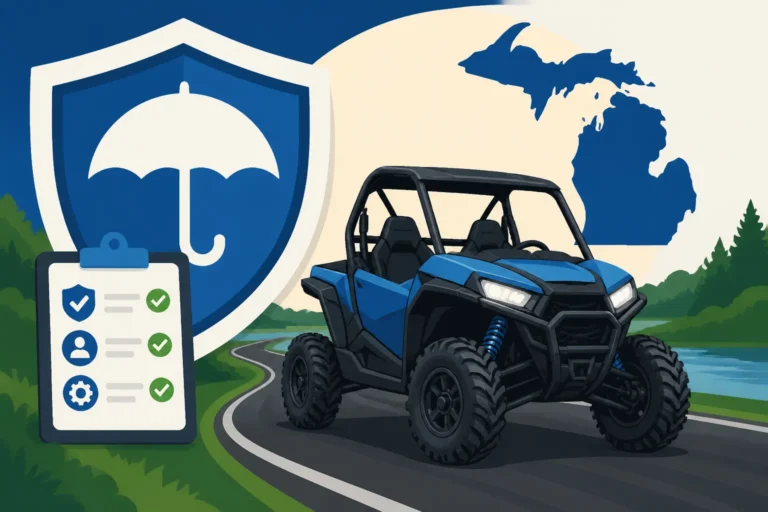
Liability and Insurance on Private Property
This is a really big one, folks, and it's often overlooked when people think they're "safe" on private land. While you might not need the specific ORV liability insurance that's sometimes required for public trail use, accidents can and do happen on private property. And when they do, who is financially responsible? This question can quickly become a massive headache, turning a fun day into a financial nightmare.
If someone gets injured on your property while riding an ORV – even if they had permission and were experienced – you, as the landowner, could potentially be held liable. This is especially true if there's any perceived negligence on your part, such as an unmaintained hazard on the private road or a machine you supplied that had known issues. Your homeowners' insurance policy might offer some coverage for general liability, but many policies have exclusions for recreational vehicles, especially if they are used in a way that's not considered incidental to the home. It’s absolutely critical to talk to your insurance agent about your specific ORV use on your private property. Find out if your current policy covers it, and if not, what additional coverage (like an umbrella policy or specific ORV liability insurance) you might need. It's better to pay a little extra for peace of mind than to face a lawsuit that could jeopardize your assets. We delve deeper into this topic in [Does Homeowners Insurance Cover an ATV in Michigan?]. You might also want to review [Michigan ORV Insurance and When You Actually Need It] for a broader understanding of ORV insurance requirements.
Respecting the Land and Your Neighbors
Finally, let's talk about the golden rule of ORV riding, whether on public trails or private roads: respect. Respect for the land, and respect for your neighbors. Even if you legally have the right to ride on your private road, that doesn't mean you should exercise that right to the detriment of others or the environment. This means staying on designated paths, avoiding creating new ruts or damaging natural habitats, and being mindful of noise levels.
Repeatedly tearing up a private road can lead to erosion, dust issues for nearby homes, and additional maintenance costs that everyone sharing the road might have to bear. Being considerate means riding responsibly, keeping speeds appropriate for the conditions, and being aware of how your actions impact those living nearby. If you share a private road, or if your property is near others, think about when you ride. Early mornings or late evenings might be quiet times for you, but they could be disruptive to someone else trying to sleep or enjoy their peace. Trespassing is also a significant concern; even a slight deviation from your agreed-upon private road could put you on someone else's land without permission. You can learn more about Michigan's rules on this in [Michigan Trespass Rules for ORV Riders]. Maintaining positive relationships with your neighbors is invaluable, and a little consideration goes a long way in ensuring everyone can enjoy their slice of Michigan paradise without conflict.
| Aspect | Your Own Private Land (Exclusive Use) | Shared Private Road / Easement |
|---|---|---|
| Owner Permission | Implied (you own it), but always good to confirm boundaries. | Absolutely essential from all property owners/stakeholders. |
| State ORV Permit | Generally exempt (unless connecting to public trails). | Generally exempt, but check specific agreements. |
| Age/Supervision | State law is relaxed, but personal liability is high; safety recs advised. | State law is relaxed, but personal liability is high; safety recs advised. |
| Noise/Nuisance | Subject to local ordinances and neighbor complaints. | Highly sensitive to neighbor complaints and local ordinances. |
| Liability/Insurance | Crucial to have homeowners' or specific ORV liability coverage. | Even more crucial due to multiple parties involved. |
| Covenants/HOA Rules | N/A | Must abide by all deed restrictions or association bylaws. |
Disclaimer
This article is for general informational purposes only and does not constitute professional advice. Laws, prices and regulations vary by location and change over time. Consult a qualified professional for guidance on your specific situation.