DOT Helmet Standards for ORV Riding
Navigating the world of ORV riding in Michigan means understanding not just the trails, but also the rules that keep us safe. One of the biggest areas of confusion, and frankly, frustration, for many riders revolves around helmet standards, especially what "DOT approved" really means. It's easy to assume any helmet will do, but riding with the wrong gear can lead to serious consequences, from a hefty ticket to much worse in an accident. This guide is going to break down exactly what DOT helmet standards entail for ORV riding in Michigan, helping you understand why these standards are crucial and how to ensure your helmet meets the mark.
Why DOT Helmet Standards are Non-Negotiable in Michigan
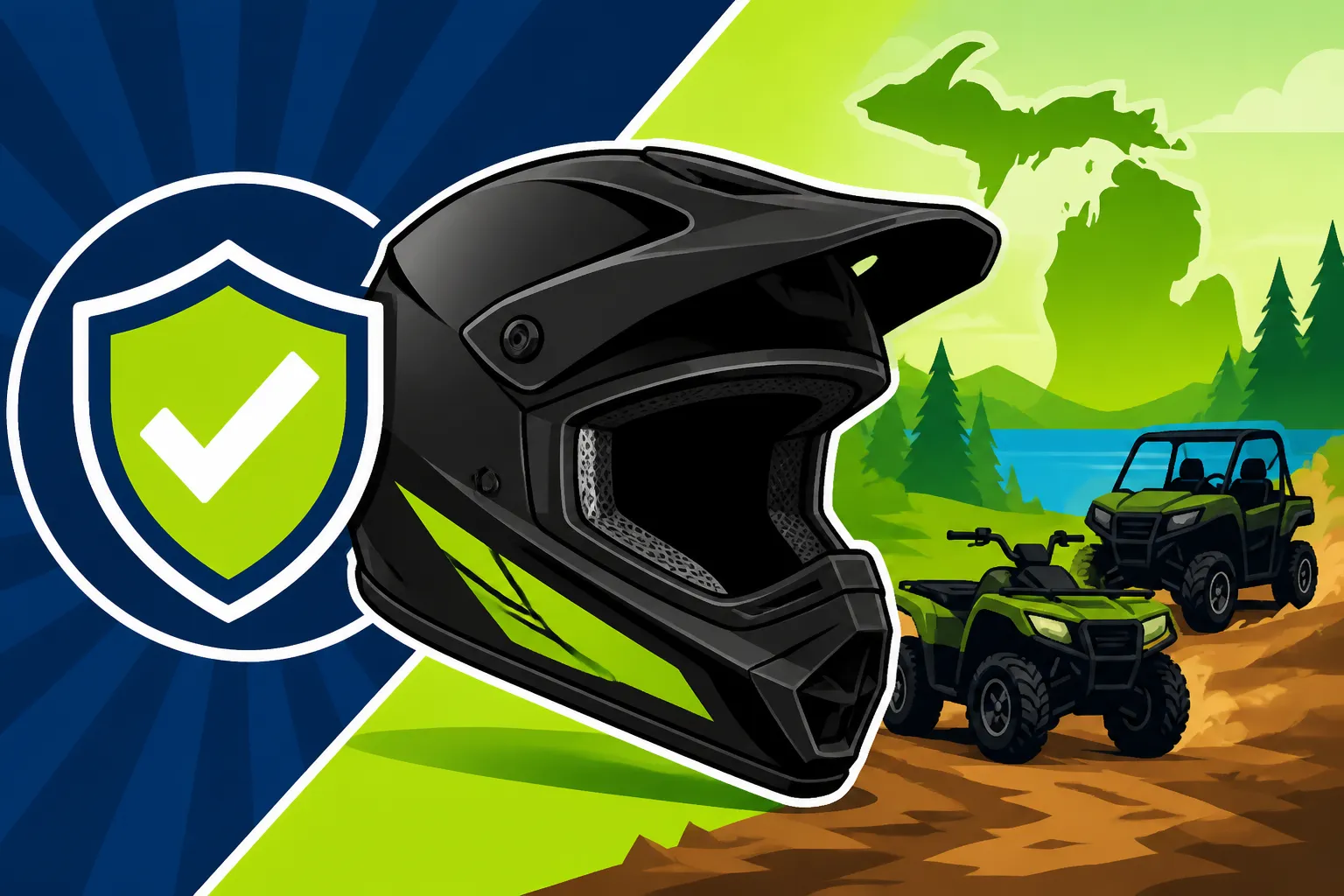
When you're out tearing up a Michigan trail, whether it's on an ATV, UTV, or dirt bike, the last thing you want to worry about is if your helmet is up to snuff. But the truth is, not all helmets are created equal, and Michigan has specific requirements for head protection, particularly when it comes to riding on public land or making your machine street-legal. The "DOT" in DOT standards refers to the U.S. Department of Transportation, and their certification means a helmet has met a minimum level of performance to protect your head in a crash. It's not just a suggestion; it's a critical safety measure.
Safety Beyond a Sticker
Let's be real, no one wants to get hurt. We ride for the thrill, the escape, the camaraderie, not for a trip to the emergency room. A DOT-certified helmet isn't just a piece of plastic; it's engineered with specific materials and construction to absorb impact energy, reducing the force transferred to your head. Imagine hitting a tree branch that suddenly appears, or taking an unexpected tumble on a rocky section of the trail. A cheap, novelty helmet might look cool, but it won't offer the same protection as one designed to DOT specifications. The difference could genuinely be life-changing. Beyond protecting your skull, a good helmet also protects your face from debris, branches, and even the sun's glare, allowing you to focus on the ride.
Avoiding a Ticket from Conservation Officers
Beyond personal safety, there's the legal side of things. Michigan's conservation officers and local law enforcement are well-versed in ORV regulations, and they know what to look for when it comes to helmets. If you're pulled over and your helmet doesn't bear the proper DOT certification, you could be facing a ticket. This is especially true if you're riding on designated ORV trails, public roads where ORVs are permitted, or in scramble areas like Silver Lake. The state takes ORV safety seriously, and proper head protection is a big part of that. Knowing the rules means you can enjoy your ride without constantly looking over your shoulder. You can find more specific rules in articles like [Michigan Helmet Law for ATV Riders] and [Helmet Rules for Michigan UTV Passengers].
Decoding the DOT Label: What to Look For
So, you're ready to buy a helmet or check the one you already own. How do you know it's truly DOT compliant and not just a knock-off? It all comes down to the label. Every helmet that meets the Federal Motor Vehicle Safety Standard (FMVSS) 218, which is the DOT standard, must have a specific sticker or graphic on the back. This isn't just any sticker; it's a declaration from the manufacturer that the helmet has been tested and certified to meet the minimum safety requirements.
The Essential DOT Sticker and What It Means
When you pick up a helmet, flip it over and look for the "DOT" label, usually found on the back. It's a circular sticker, often white or silver, that clearly states "DOT" and the FMVSS 218 standard. You'll also typically see the manufacturer's name, the model, and possibly the size and date of manufacture. Don't be fooled by helmets that just say "DOT style" or imply compliance without the actual sticker. That sticker is your official proof. Without it, you might as well be wearing a plastic bowl, as far as the law is concerned, and more importantly, as far as your head's safety is concerned.
Here's a quick breakdown of what to expect on a genuine DOT label:
| Feature | Description |
|---|---|
| "DOT" Mark | Clearly visible "DOT" letters, often within a circle, signifying compliance with FMVSS 218. |
| "FMVSS 218" | The specific federal standard number that the helmet meets. |
| Manufacturer | The name or brand of the helmet manufacturer. |
| Model Number | The specific model designation of the helmet. |
| Size | The helmet's size (e.g., M, L, XL), indicating the head circumference it's designed for. |
| Date of Mfg. | Sometimes included, indicating when the helmet was produced. While not required for DOT, it's good to know for helmet lifespan. |
It's crucial to understand that while a manufacturer self-certifies that their helmets meet these standards, the DOT does conduct random testing to ensure compliance. So, when you see that label, you can have a reasonable level of confidence in the helmet's design and protective capabilities.
Beyond DOT: Snell and ECE Certifications
While DOT is the minimum legal requirement in Michigan for most ORV riding scenarios, you might encounter other certifications like Snell or ECE. These are higher, voluntary standards that go beyond DOT's minimums.
- Snell (Snell Memorial Foundation): This is a non-profit organization that performs more rigorous testing than DOT. Snell certification is often sought by racers and riders looking for the absolute highest level of protection. A Snell-certified helmet will also meet DOT standards, but offers an extra layer of confidence.
- ECE (Economic Commission for Europe): This is a European standard recognized globally. ECE-certified helmets are also extremely safe and often lighter than Snell-certified helmets, as their testing philosophy differs slightly, focusing on impact dissipation over impact resistance. Many quality helmets from brands like SuperATV that are sold internationally will carry ECE certification alongside DOT.
If a helmet has Snell or ECE certification, it will usually have an additional sticker or label alongside the DOT one. For most recreational ORV riding in Michigan, DOT is sufficient, but knowing about these higher standards can help you make an informed choice, especially if you participate in more extreme riding or competitive events.
Key Features of a DOT-Compliant Helmet
It's not just about a sticker; it's about what goes into making a helmet truly protective. A DOT-compliant helmet is a complex piece of safety equipment, designed layer by layer to shield your most important asset: your brain. Understanding these components helps you appreciate the investment in a good helmet and why those cheap, open-face "brain buckets" just don't cut it for ORV use.
The Anatomy of Protection
Every DOT-certified helmet features a few core components working in harmony:
- Outer Shell: This is the hard, rigid exterior you see. It's usually made from materials like polycarbonate, fiberglass, or carbon fiber. Its primary job is to resist penetration from sharp objects (like branches or rocks) and to distribute the force of an impact over a larger area, preventing a concentrated blow to your skull.
- Impact-Absorbing Liner: This is the unsung hero of the helmet, typically made of expanded polystyrene (EPS) foam, similar to what you find in a bicycle helmet, but much thicker and denser. When an impact occurs, this liner crushes and deforms, absorbing the kinetic energy and slowing down your head's movement, preventing your brain from slamming into the inside of your skull. This is where most of the actual energy absorption happens.
- Comfort Padding: Inside the EPS liner, you'll find soft padding that makes the helmet comfortable to wear. This padding also helps the helmet fit snugly and securely, which is crucial for it to perform correctly in an accident. Good padding can be removed and washed, a blessing after a dusty Michigan trail ride.
- Retention System (Chin Strap): This is arguably one of the most critical parts, as a helmet can't protect you if it comes off. DOT standards require a strong and secure chin strap system. Most ORV helmets use a "D-ring" system, known for its reliability, though some modern helmets feature quick-release buckles that still meet the strength requirements. Always ensure your chin strap is fastened securely and snugly under your chin.
Fit is Everything: Why Sizing Matters
Even the most expensive, DOT-certified helmet won't protect you properly if it doesn't fit correctly. A helmet that's too loose can shift during an impact, exposing parts of your head or even flying off. One that's too tight can be incredibly uncomfortable, distracting you from the ride, and potentially causing headaches.
When trying on a helmet:
- Snug, Not Painful: It should feel snug all around your head, with no pressure points. Your cheeks should be compressed slightly.
- No Movement: With the chin strap fastened, try to move the helmet from side to side and up and down. Your scalp should move with the helmet; if the helmet slides around independently, it's too big.
- Field of Vision: Ensure it doesn't obstruct your peripheral vision. You'll need to see clearly to navigate the diverse terrain found on Michigan's ORV trails.
Many reputable dealers and online retailers like SuperATV provide comprehensive sizing charts. Measure your head circumference and compare it to their charts. If you're between sizes, it's often better to go with the smaller one, as the padding will compress slightly over time. Remember, the right fit isn't just about comfort; it's about maximizing the helmet's protective capabilities. You can also explore options for [Youth ATV Size Rules Michigan Parents Should Know] to ensure proper fit for younger riders.
Choosing the Right Helmet for Your Ride
With so many types of helmets out there, picking the right one for your Michigan ORV adventures can feel a bit overwhelming. But once you understand the DOT standards, the choice becomes clearer. It's about matching the helmet's design to your riding style, comfort needs, and the specific protection required for your machine and the environment you'll be riding in.
Open-Face vs. Full-Face vs. Modular Helmets
Different riding scenarios call for different types of helmets, all of which can be DOT certified:
- Full-Face Helmets: These offer the most comprehensive protection, covering your entire head, face, and chin. They are highly recommended for aggressive trail riding, racing, or any scenario where impacts are more likely or severe. They provide excellent protection against dust, debris, and weather. Many full-face ORV helmets have larger eyeports to accommodate goggles, and aggressive visors to block sun and roost.
- Open-Face (3/4) Helmets: These cover the top, back, and sides of your head, but leave your face exposed. While they offer more airflow and a wider field of view, they don't protect your jaw or chin. If you choose an open-face helmet, make sure you pair it with adequate eye protection that meets state standards. You'll want to check [Eye Protection That Meets Road Rules] for guidance. These might be acceptable for more casual UTV riding on maintained roads where speeds are lower, but they are not generally recommended for ATVs or aggressive off-road use.
- Modular (Flip-Up) Helmets: These are full-face helmets where the chin bar and visor can flip up, converting them into an open-face style. They offer versatility, combining the protection of a full-face with the convenience of an open-face. However, when riding, they should always be in the closed, full-face position to provide maximum protection. These are more common for street-legal UTV conversions where riders might want to talk or get air when stopped. [Michigan's Assembled Vehicle Route for a UTV] might touch on helmet options for such builds.
Don't Forget the Goggles and Other Gear
Even with a full-face helmet, or especially with an open-face one, proper eye protection is critical. Michigan's trails can kick up a lot of dust, mud, and debris. Good quality goggles or a helmet visor will keep your vision clear and protect your eyes from impacts. Look for goggles that fit snugly with your helmet and offer good anti-fog and scratch-resistant properties.
Beyond the helmet, think about other safety gear that compliments your head protection:
- Gloves: Protect your hands from impacts, blisters, and provide better grip.
- Sturdy Footwear: Over-the-ankle boots are best to protect your feet and ankles.
- Long Pants and Long-Sleeved Shirt: Offers basic abrasion protection from brush and minor spills.
- Chest Protector/Body Armor: Especially for ATV riders or those hitting challenging terrain, this can prevent serious injury to your torso.
Investing in quality gear, including a DOT-certified helmet from a reputable brand you can trust, is an investment in your safety and enjoyment of the sport. Brands like SuperATV carry a wide range of DOT-compliant helmets and accessories designed for the rigors of off-road riding. They often have helpful customer service to guide you through sizing and features, ensuring you get a helmet that not only looks good but will truly protect you. Remember, a helmet's job is to sacrifice itself to protect you in an accident, so always inspect your helmet for damage after any significant impact, even if you don't see visible cracks. If it's taken a hard hit, it's time for a replacement.
Disclaimer
This article is for general informational purposes only and does not constitute professional advice. Laws, prices and regulations vary by location and change over time. Consult a qualified professional for guidance on your specific situation.