Do Farmers Need an ORV Title in Michigan?
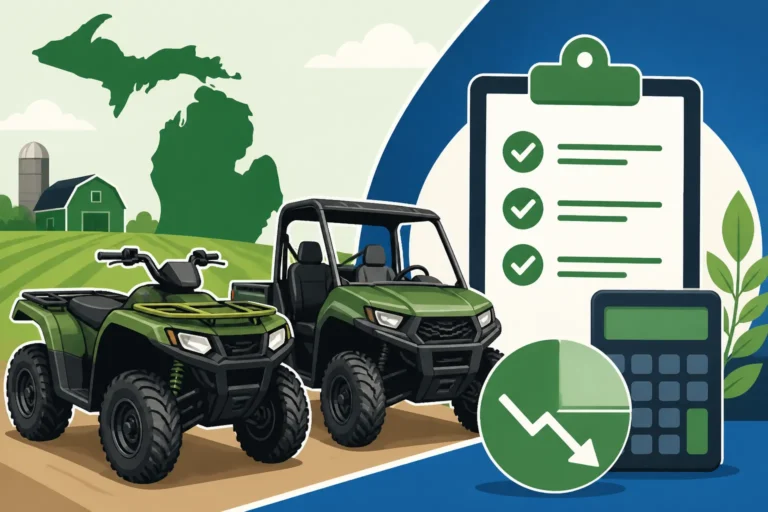
It's no secret that Michigan farmers rely heavily on their ATVs and UTVs. These versatile machines are absolute workhorses, helping with everything from checking fences across sprawling fields to hauling feed to livestock, or even just getting around a large property quickly. But here's where things can get a little murky: does that trusty farm ORV actually need an official title from the Michigan Secretary of State? This is a question that often causes confusion, and getting it wrong can lead to headaches down the road. This guide will clarify the rules around ORV titles for farmers in Michigan, ensuring you understand when an exemption applies and what steps to take if your machine does indeed need to be titled.
Michigan's Standard ORV Titling Requirements
Before we dive into the specifics of farm machines, let's touch base on the general rule in Michigan: most Off-Road Vehicles (ORVs) need a title. This includes your typical ATVs, UTVs (side-by-sides), and even dirt bikes when they're primarily designed for off-road use. The title is essentially the official proof of ownership, much like the title for your car or truck. It's how the state keeps track of who legally owns a machine and it's absolutely crucial for buying, selling, or transferring ownership later on.
When you purchase a new ATV or UTV from a Michigan dealer, they'll typically handle the titling paperwork for you. They'll submit the necessary documents to the Secretary of State, collect the sales tax, and usually, your title arrives in the mail within a few weeks. If you buy from a private seller, the responsibility falls squarely on your shoulders to get that title transferred into your name. Failing to do so within a certain timeframe can lead to penalties and make proving ownership a real nightmare if the machine is ever lost or stolen. You can learn more about this process in [Michigan Title Transfer When You Buy From a Private Seller].
The core reason for this titling requirement is to provide a clear chain of ownership, prevent theft, and ensure that sales tax is collected on transactions. Without a clear title, it's difficult to verify the machine's history, check for liens, or even confirm that the person selling it truly has the right to do so. This system brings order to the ORV market, which is why exceptions are typically quite specific and tied to certain uses or conditions.
The Agricultural Exemption: When a Farm ORV Doesn't Need a Title
Now, for the good news that many Michigan farmers will appreciate! Michigan law does provide specific exemptions for ORVs used exclusively for agricultural operations. This means that if your ATV or UTV is genuinely and solely a tool for your farm, you might not need to title it. This exemption recognizes that these machines are essential pieces of farm equipment, much like a tractor or a combine, and are often used entirely on private land or within a very specific farm-related context.
Defining "Agricultural Operations" for ORVs
The key to this exemption lies in how Michigan defines "agricultural operations" in relation to ORV use. Generally, this refers to the use of an ORV directly in the business of farming, which can include a wide range of tasks. Think about hauling tools, feed, or produce; inspecting crops or fences; spreading fertilizer; or moving equipment around a farm property. The intent here is for the ORV to be an integral part of the agricultural work, not merely present on a farm property. If you're using a UTV to carry hay bales from one pasture to another, check on cattle, or transport workers to a remote field, these are classic examples of qualifying agricultural operations.
It's crucial that the use is directly related to the active farming operation. If you're running a commercial farm, whether it's for dairy, crops, or livestock, and your ORV plays a vital role in the daily tasks that keep that operation running, you're likely in the clear for the exemption. This also generally extends to machines used for specialized agricultural purposes, such as driving through orchards or vineyards for maintenance. The focus is on the utility of the machine as a piece of farm equipment.
Specific Uses That Qualify for Exemption
To help clarify, here's a table outlining common farm uses and whether they generally qualify for a title exemption:
| Type of Use | Description | Generally Exempt from Title? |
|---|---|---|
| Hauling & Transport | Moving feed, hay, tools, fencing materials, harvested crops, or small equipment on farm property. | Yes |
| Inspection & Monitoring | Checking fence lines, irrigation systems, crop health, or livestock across fields. | Yes |
| Maintenance & Repair | Transporting parts or tools for equipment repair, or accessing remote areas for property maintenance. | Yes |
| Farm Personnel Transport | Moving workers or family members efficiently across large farm properties for work tasks. | Yes |
| Plowing/Grading | Using the ORV to plow small areas, grade driveways, or clear snow on farm access roads. | Yes |
| Pest/Weed Control | Carrying sprayers or other equipment for agricultural pest or weed management. | Yes |
| Recreational Riding | Riding trails for fun, pleasure, or sport, even if on farm property. | No |
| Hunting/Fishing Access | Using the ORV primarily to access hunting blinds or fishing spots. | No |
| Non-Farm Business Use | Using the ORV for a landscaping business not directly tied to the farm. | No |
| Commuting on Public Roads | Driving the ORV on public roads to run errands not directly farm-related. | No |
As you can see, the theme is direct engagement with the agricultural business. If your ORV is purely a tool for production or maintenance of your farm, the exemption is there to simplify things for you. However, it's always wise to err on the side of caution and ensure your primary use truly aligns with these agricultural definitions. For more details, refer to [ORV Title Exemptions for Farm Machines in Michigan].
What Doesn't Qualify: Recreational Use on Farm Land
This is where many farmers can accidentally trip up. The exemption is for agricultural use, not for simply owning a piece of land that happens to be a farm. If you use your ATV or UTV for recreational riding, even if that riding takes place exclusively on your own farm property, it generally will not qualify for the title exemption. Think about it this way: if you use your UTV to go deer hunting on your back forty, or your kids take the ATV out for joyrides on the weekends, those are considered recreational activities.
Even if the machine is used for farm work during the week, if it consistently sees recreational use on weekends or during off-seasons, it starts to move out of the "exclusively for agricultural operations" category. The spirit of the law is to exempt true farm equipment, not personal recreational vehicles that happen to be stored on a farm. This distinction is vital because if a conservation officer or other law enforcement determines your ORV is primarily or significantly used for recreation, even on your own land, and it's not titled, you could face penalties.
Hybrid Use Cases: When Your Farm ORV Also Sees Recreational Time
Many farmers find themselves in a gray area where their ORV truly pulls double duty. Maybe it hauls feed on weekdays but also takes the family on a trail ride on Saturday. This is where the concept of "primary use" becomes incredibly important, and where the decision to title or not can become more complex.
The "Primary Use" Test
Michigan law generally looks at the primary purpose of the ORV. If the overwhelming majority of its use is for agricultural operations, and any recreational use is minimal or incidental, you might still fall under the exemption. However, this isn't a hard-and-fast rule, and "minimal" can be subjective. If your UTV is 90% farm work and 10% casual cruising on your property, you might be fine. If it's 50% farm work and 50% recreational riding, you're on much shakier ground.
The challenge here is proving primary use if ever questioned. There isn't a meter on your ORV that records "farm hours" versus "fun hours." This means you need to be honest with yourself about how the machine is truly being utilized. If you're relying on the exemption, your ORV should genuinely feel like a piece of farm equipment, not a recreational toy that occasionally helps with chores. If it looks like a recreational machine with aftermarket accessories for trail riding, that could be a red flag.
Risks of Not Titling a Multi-Use Machine
The biggest risk of not titling a machine with significant recreational use is facing penalties. If an ORV is stopped off your private land (e.g., crossing a county road for a farm task, or used for permitted hunting access on public land) and it's deemed to be primarily recreational and untitled, you could be cited. The penalty for operating an untitled ORV can include fines and potentially even impoundment of the machine. Imagine needing your UTV for crucial farm tasks only to have it sidelined.
Furthermore, if you ever decide to sell the machine, and it wasn't titled due to the farm exemption, a potential buyer might be wary. They might insist on a title, and then you'd have to go through the process of titling it yourself, potentially explaining its history to the Secretary of State, which can add delays and complications. It's often easier to have a clear title from the start, especially for machines that could easily fall into both categories. For private sales, a robust [Michigan ATV Bill of Sale: What to Put in It] is absolutely critical, whether titled or not.
Best Practices for Multi-Use Machines
Given the potential for ambiguity, what's the safest approach for a farmer whose ORV sees both work and a bit of play?
- Err on the Side of Titling: If there's any doubt, or if you anticipate any significant recreational use, it's generally safer and less complicated in the long run to go ahead and title the ORV. The cost of titling is relatively low compared to the potential fines and headaches of not having one when it's required. This is especially true if you plan on using your ORV on designated ORV trails or routes, even if only occasionally.
- Keep Meticulous Records: If you are relying on the farm exemption, keep detailed records proving the machine's primary agricultural use. This could include maintenance logs, records of farm tasks performed, or even photos of the ORV in action on the farm.
- Understand Public Land Rules: If your farm ORV will ever leave your private property – even just to cross a public road to get to another part of your farm – be acutely aware of Michigan's ORV laws regarding road use and public land access. An untitled ORV has very limited legal access to public thoroughfares or designated ORV trails, even if it's agricultural. This is where the recreation passport and ORV trail permit also come into play, regardless of titling status for some uses. You might also want to consult [Michigan ORV Paperwork During a DNR Stop].
Proof of Ownership When a Farm ORV Has No Title
Even if your farm ORV is exempt from titling, it doesn't mean you don't need any proof of ownership. Far from it! A title might be the gold standard, but for exempt machines, other documents become incredibly important. These documents are your defense against theft, your means to sell the machine legitimately, and your proof if ever questioned about ownership.
The Bill of Sale as Crucial Documentation
Without an official state title, a comprehensive and correctly executed bill of sale is your absolute best friend. This document legally establishes the transfer of ownership from a seller to a buyer. For an exempt farm ORV, it essentially acts as your primary ownership record. It needs to include specific details to be effective:
- Seller and Buyer Information: Full names, addresses, and contact details for both parties.
- Machine Details: Make, model, year, and crucially, the Vehicle Identification Number (VIN). The VIN is the unique identifier for your ORV, and it's what ties you to that specific machine. Make sure it's accurate and legible on the bill of sale.
- Purchase Price: The agreed-upon price of the ORV. Even if it's a trade or a gift, document the exchange clearly.
- Date of Sale: The exact date the transaction occurred.
- Signatures: Both the seller and buyer must sign the bill of sale. While Michigan generally doesn't require notarization for ORV bills of sale, it can add an extra layer of legal legitimacy, especially for high-value machines or when dealing with an unknown seller. Services like LawDepot can provide customizable bill of sale templates that ensure you're capturing all the necessary information and adhering to standard legal practices. Using a reputable template from a service like LawDepot can give you peace of mind that you're not missing any critical details.
- "As Is" Clause: For used machines, it's always wise to include an "as is" clause to protect the seller from future claims about the machine's condition.
Keep this bill of sale in a safe, accessible place. Do not keep the original on the ORV itself while riding, as it could be lost or damaged. A copy is fine for riding, but the original should be secured. This document is vital for any future sale or if you ever need to prove ownership for insurance or law enforcement purposes. You can learn more about securing this crucial document in [Proof of Ownership When a Michigan ORV Has No Title].
Other Records to Keep for Untitiled Farm ORVs
Beyond the bill of sale, maintaining other records can further solidify your claim of ownership and use.
- Receipts for Parts and Service: Any major repairs or upgrades you've made, especially if they include the VIN, can help prove your ongoing ownership and investment in the machine.
- Insurance Documents: Even if a title isn't required, you'll likely have insurance on your farm ORV to protect against damage, theft, or liability. Your insurance policy will list you as the owner and include the machine's VIN.
- Farm Records: If the ORV is truly integral to your farm, you might have photos or records of it being used for specific agricultural tasks. This helps reinforce the "agricultural operations" aspect if ever challenged.
- Photographs of the VIN: Take clear photos of the VIN plate on your ORV, along with general photos of the machine. This can be invaluable if the VIN plate is ever damaged or if you need to provide proof of the VIN remotely.
- Lease or Loan Documents: If you financed or leased the ORV, those documents will also list you as the responsible party and include the VIN, serving as additional proof of your connection to the machine. Even for farm vehicles, these financial agreements are crucial, and sometimes financial institutions may require the ORV to be titled as part of their collateral process, overriding the farm exemption if a lien needs to be recorded.
By maintaining a robust portfolio of documentation, you create a clear paper trail that substantiates your ownership and the machine's intended use, even without a state-issued title. Using templates for legal documents like a comprehensive bill of sale from resources like LawDepot can make this record-keeping much easier and more organized.
Titling Your Farm ORV If the Exemption Doesn't Apply
So, after reviewing your use case, you've determined that your farm ORV likely does need a title, either because of significant recreational use, a lender's requirement, or simply to avoid any ambiguity. The good news is that titling a farm ORV is the same process as titling any other ORV in Michigan. It's a straightforward process, but it does require attention to detail and ensuring you have all the correct paperwork.
Steps for Standard ORV Titling
-
Gather Your Documents:
- Manufacturer's Certificate of Origin (MCO): If the ORV is new and you're the first owner.
- Previous Owner's Titled: If you bought it used from a private party and it was previously titled. Ensure the seller has properly signed off on it.
- Bill of Sale: This is critical, especially if the machine has never been titled or if there's any gap in the ownership chain. A detailed bill of sale, perhaps generated using a reliable service like LawDepot, can bridge many gaps.
- Proof of Identity: Your Michigan driver's license or state ID.
- Proof of Michigan Residency: If your ID doesn't show your current Michigan address.
-
Complete the Application: You'll need to fill out the Michigan ORV Title Application form. This form asks for details about the ORV, the owner, and the nature of the transaction. Make sure all information, especially the VIN, is accurate. Any errors can lead to delays or further complications.
-
Visit the Secretary of State: You'll need to go to a Michigan Secretary of State branch office to submit your application and documents. You can often make an appointment online, which can save you a lot of waiting time. Be prepared to pay the titling fee and any applicable sales tax. The sales tax is usually based on the purchase price listed on your bill of sale, and it's typically collected at the time of titling. If you bought from a private seller, you'll pay [Michigan ORV Sales Tax at a Secretary of State Branch].
-
Await Your Title: Once processed, the Secretary of State will mail your new title to your address. This usually takes a few weeks, but can sometimes be longer. Keep a copy of your application receipt as temporary proof until the official title arrives.
Documents Needed and Associated Costs
To break it down further, here's a typical checklist:
- Original Title or MCO: This is the primary document proving the machine's legal history.
- Completed TR-11L Title Application: This form is specific to ORV titles and is essential for the process.
- Bill of Sale: Crucial for confirming purchase price and details, especially for used sales.
- Identification: Driver's License or State ID.
- Titling Fee: Michigan charges a fee for issuing an ORV title. This amount can vary, so it's always a good idea to check the current rates on the Secretary of State website or through a quick call before you go.
- Sales Tax: Currently, Michigan levies sales tax on ORV purchases, even from private sellers, if not previously paid. This will be collected at the Secretary of State office. You can find more information about this in [Michigan Sales Tax Rate on an ATV Purchase].
- Late Fees (If Applicable): If you miss Michigan's 15-day deadline to title an ORV after purchase, you may incur a late fee. This is a common pitfall, so be mindful of the timeframe. See [What Happens If You Miss Michigan's 15-Day Title Deadline] for details.
Remember, having a clear title provides undeniable proof of ownership, makes selling the machine much easier, and ensures you're fully compliant with Michigan law, regardless of whether your ORV is purely for farm work, purely for recreation, or a healthy mix of both.
Why This Matters: Risks of Not Following the Rules
It might seem like a minor detail, but overlooking the titling requirements for your farm ORV can lead to a host of frustrating and potentially costly consequences. Michigan takes its ORV regulations seriously, and ignorance of the law is rarely an acceptable excuse.
Fines and Impoundment
The most immediate risk is incurring fines. If a law enforcement officer, such as a DNR conservation officer or a county sheriff, encounters an untitiled ORV that should have been titled, they have the authority to issue a ticket. These fines can be substantial and can quickly outweigh the cost of simply titling the machine correctly in the first place. Beyond just a fine, in more serious or repeat offenses, your ORV could even be impounded. Imagine needing that UTV for critical farm work during planting or harvest season, only to have it seized because of a titling oversight. This kind of disruption can have a real impact on your farm operations and bottom line. It's a scenario no farmer wants to face, especially when deadlines are tight and work needs to get done.
Difficulties in Resale
When it comes time to upgrade your farm equipment or sell an older ORV, having a clear title (if required) simplifies the entire process. Buyers, especially those who are savvy or purchasing through a lender, will almost always expect a title. Trying to sell an ORV that should have a title but doesn't can significantly devalue the machine and make it much harder to find a willing buyer. They might question the machine's history, fear potential legal issues, or assume it could be stolen. You might be forced to sell it for parts or at a deeply discounted price.
Furthermore, if a title is required and missing, you might have to go through the complicated process of obtaining a [Bonded Title for an ATV in Michigan] or even [Getting a Court Order to Title an ORV], which can be time-consuming, expensive, and frustrating. It’s far better to have the proper documentation in order from the start, ensuring a smooth transaction when you eventually decide to sell.
Proving Ownership for Insurance or Theft Recovery
Should your farm ORV ever be stolen or involved in an accident, proof of ownership is paramount for insurance claims or law enforcement recovery efforts. While a bill of sale and other records are valuable for exempt machines, an official title from the Secretary of State is often the most straightforward and universally accepted form of ownership proof. If your ORV is stolen and it was supposed to be titled but wasn't, proving to the police or your insurance company that it truly belongs to you can become an uphill battle. This could delay or even prevent you from receiving an insurance payout or getting your machine back if it's recovered.
The title provides a clear, state-backed record. This official link is what insurers look for to process claims and what law enforcement uses to verify ownership if they find a suspicious machine. Without it, you could be left without your valuable farm equipment and without the financial means to replace it. Taking the time to understand and adhere to Michigan's ORV titling laws, especially for multi-use farm machines, is a small investment that offers significant protection and peace of mind.
Disclaimer
This article is for general informational purposes only and does not constitute professional advice. Laws, prices and regulations vary by location and change over time. Consult a qualified professional for guidance on your specific situation.