Riding on Michigan Beaches: Where It Is Allowed
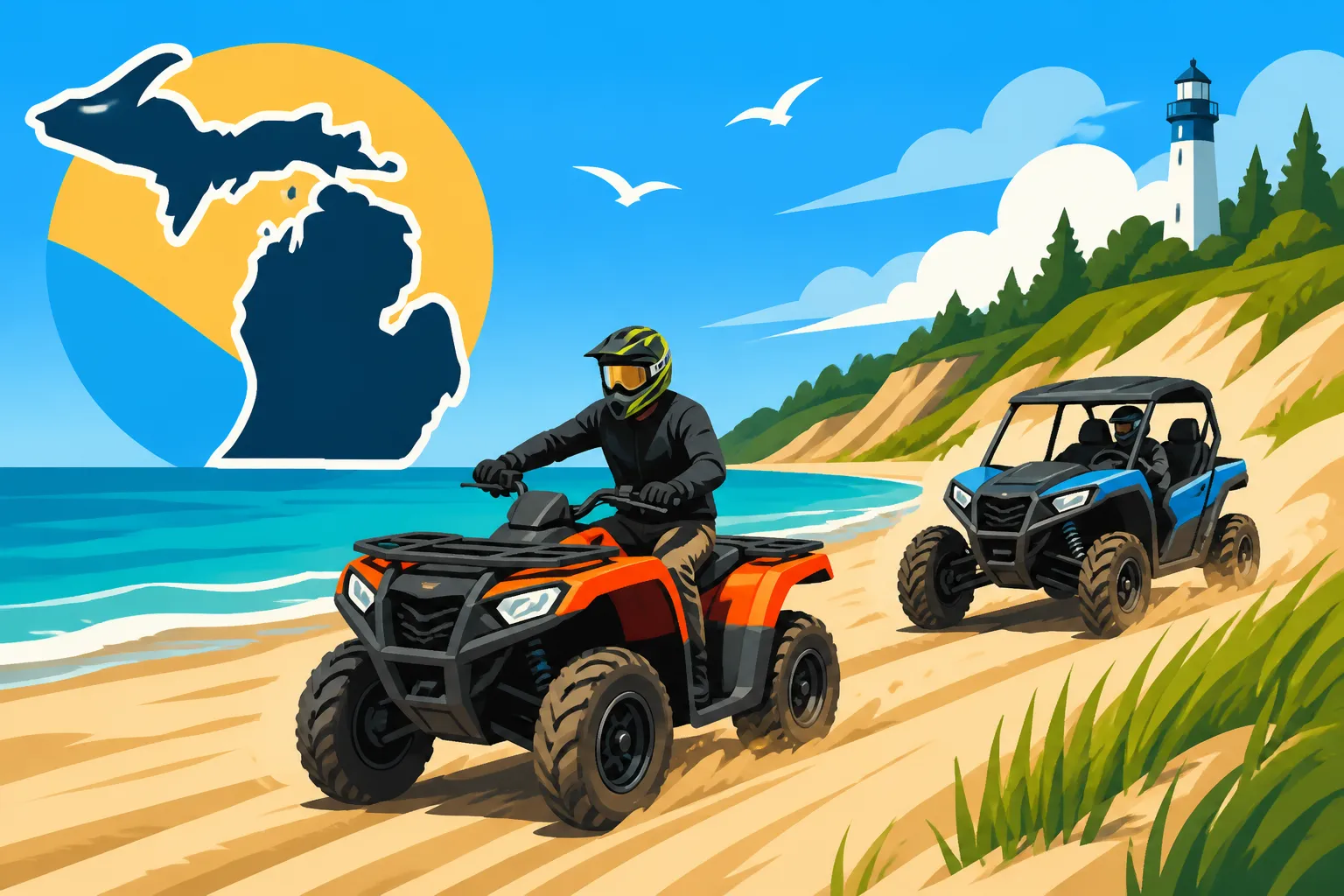
Michigan’s shoreline can look like an open stretch of sand, but that does not mean you can ride an ATV or UTV there. Most Michigan beaches are off-limits to motor vehicles. The key exception is the designated ORV area at Silver Lake Sand Dunes, where riders must stay inside posted boundaries and follow area-specific rules.
Where You Can Ride an ATV or UTV Near Michigan Beaches
Silver Lake Sand Dunes is the main designated exception
Silver Lake State Park’s ORV area is the best-known place in Michigan to ride a machine on coastal sand. It is a managed riding area, not a general invitation to drive along Lake Michigan beaches. The boundary matters: the open riding area is limited, and nearby park beaches and shoreline stretches may be closed to ORVs.
Before unloading, check the current park map and posted signs. Follow the marked entrance, riding limits, and any closures in effect. If a stretch of sand is outside the designated ORV boundary—or a sign says it is closed—do not ride there, even if it looks connected to the open dunes. Conditions and access rules can change, so treat signs at the site as part of the route, not as decoration.
A common point of confusion is the difference between riding in the dunes and riding on a public swimming beach. The dunes are the permitted riding destination at Silver Lake; the park’s swimming and day-use beach areas are not automatically part of the ORV area. If you reach the water’s edge, do not assume you may keep driving along the shoreline. Stop and confirm that the exact ground you are on is within the designated riding boundary.
For a first visit, read [Silver Lake Dune Vehicle Requirements Checklist] and [What You Need to Ride the Silver Lake Dunes] before you go. These help you prepare for the riding area’s requirements and avoid arriving with a machine or setup that cannot be used there.
Most other Michigan beaches are not open to ORVs
Outside a designated riding area such as Silver Lake, assume a public beach is closed to ATVs and UTVs unless the responsible land manager clearly says otherwise. A beach can be owned or managed by a city, township, county, state park, or federal agency, and each may have rules that prohibit motor vehicles on the sand.
That applies to familiar stretches of Lake Michigan, Lake Huron, Lake Superior, and Lake Erie shoreline. A nearby ORV trail or open road does not automatically create permission to ride down to the water. Nor does a machine’s ability to travel across soft sand make the beach a legal route. The ride must be allowed for that particular location.
This distinction is especially important around popular beach towns. For example, riding a legal route near a community does not mean you can cross a public beach to reach a restaurant, campsite, or another road. Check the route and the land manager’s rules instead of relying on what another rider says they did last summer.
Nearby trails are not the same as beach access
Michigan has many excellent routes and riding areas close to lakes and shoreline communities. Those routes may bring you near a beach, campground, or boat launch, but proximity does not mean you can ride on the beach itself. A marked route ends where its signs or map show it ends.
If you are planning a trip around the coast, use [Where to Ride an ATV in Michigan] and [Michigan ORV Trail Maps and What the Signs Mean] to distinguish designated riding areas from nearby public land. The official map and local signs are more useful than a general map that simply shows roads, parks, or shorelines.
A trail-map app such as onX Offroad can help you plan the surrounding route and see where you may need to turn around. Use it as a planning aid, not as proof that a beach is open. A mapped road or path can be private, closed, or restricted to a different type of vehicle. Confirm access with the relevant land manager and obey the signs on the ground.
| Location or situation | General approach | What to confirm |
|---|---|---|
| Silver Lake State Park ORV area | Riding is allowed only within the designated ORV area | Current boundary, posted closures, machine requirements, and permits |
| Public swimming beach outside an ORV area | Assume motor vehicles are prohibited | Rules from the city, township, county, park, or other manager |
| ORV trail near a shoreline | Stay on the marked trail or route | Whether the route actually reaches an authorized riding area |
| Private beach or shoreline property | Do not ride without clear permission | Property boundaries and any separate public or local restrictions |
| Sand that appears open but has no clear signs | Stop rather than guess | Official map and confirmation from the land manager |
How to Confirm Whether a Beach Is Open
Identify who manages the land
Start by figuring out whether the beach is managed by a state park, local government, county, federal agency, or private owner. That can take a little digging when a shoreline path runs between different parcels, but it is worth doing before you unload a machine. A rule posted at one parking area may not apply to a different stretch of sand a short distance away.
Look for signs at the access point, trailhead, parking area, and any junction where the route changes. If the signs are unclear, contact the land manager before riding. Ask a specific question: “May an ATV or UTV be operated on this exact beach or shoreline segment?” Asking whether ORVs are allowed “in the area” can produce an answer that refers to trails nearby rather than the beach itself.
Do not treat a beach access road as an ORV route unless signs or official information identify it as one. A road may be open to cars for parking access while still being closed to recreational riding. Likewise, a path that appears on a digital map may be a pedestrian route, a service road, or a private access lane.
Check boundaries and closures before each ride
At designated areas, study the map before starting the engine. Find the legal entrance, open riding area, closed zones, and any routes connecting the riding area to parking. Then compare that map with the physical markers when you arrive. Sand can shift, signs can be hard to spot, and a closure may change where you can ride.
onX Offroad can be useful for planning the drive to a trailhead and understanding the surrounding route network. Still, verify important details with the land manager’s map and on-site notices. If the app and a posted sign appear to conflict, follow the posted restriction and ask an official for clarification before proceeding.
Also check whether weather or seasonal conditions have affected access. High water, erosion, maintenance, events, or sensitive habitat can lead to temporary closures or changed access points. A route that was open on a previous trip may not be open today, so do a quick check each time rather than relying on memory.
Treat shoreline shortcuts as a separate question
Riders sometimes see a stretch of wet sand and assume it is a convenient connector between two permitted places. That assumption can lead to trespass, damage to sensitive shoreline, or a ticket. A beach shortcut is still beach riding, and it needs its own clear authorization.
If a legal route ends before the shoreline, turn around or use another permitted connection. Do not cross dunes, vegetation, or posted areas to reach the water. These places may be protected for reasons that are not obvious from the seat of a machine, including erosion control, wildlife, nesting areas, or public safety.
For planning, [Michigan ORV Trails Near Traverse City] and [Riding the Silver Lake Sand Dunes in Michigan] can help you explore riding options in shoreline regions without assuming every beach is open. Keep in mind that a trail destination near the coast is not permission to ride on the coast.
Permits, Equipment, and Safe Riding at Silver Lake
Prepare for the riding area, not just the beach
A beach trip to Silver Lake involves more than bringing an ATV or UTV that can handle sand. Review the site’s current entry and machine requirements, permit rules, and safety expectations before you travel. Requirements can depend on the riding area and vehicle, and some details are specific to Silver Lake rather than applying to every Michigan trail.
Use [Silver Lake Dune Riding for First-Timers] to get a feel for what a dune ride involves. If you are bringing your own machine, check the vehicle and required equipment against the current park guidance. Do not assume that a setup suitable for a forest trail is automatically suitable for a sandy riding area.
Michigan’s general ORV requirements also matter. Depending on where and how you ride, you may need an ORV license or trail permit. Silver Lake has its own site-specific access requirements, so confirm what applies to your planned visit instead of relying on a permit from a different riding area. [Do You Need Both a License and a Trail Permit in Michigan?] explains the broader distinction between those requirements.
Ride with sand, visibility, and other visitors in mind
Sand can hide ruts, steep drop-offs, and changes in terrain. Keep a controlled speed, leave room between machines, and avoid climbing a dune when you cannot see what is on the other side. A blind crest could conceal another rider, a stopped vehicle, or a sudden change in slope. If you are new to dune riding, take time to watch the terrain and follow the site’s safety guidance before attempting steeper areas.
Visibility matters even when the day is bright. Dust and blowing sand can make it harder for riders to see one another, particularly when traffic is moving in different directions. Use the required visibility equipment, keep lights in good condition, and never assume that another rider has seen you. If someone in your group is inexperienced, choose a conservative route and stay together.
Protect the beach environment as well as your machine. Stay within the marked riding area, avoid vegetation, and do not drive into the water. Keep trash and fuel containers secured, and stop if you encounter a closed section or a posted warning. A quick decision to turn around is far less costly than damaging a protected area or creating a hazard for other visitors.
Plan the whole day, including parking and recovery
Beach-area visits can involve busy parking lots and limited staging space, especially on warm weekends. Arrive with a plan for unloading, securing your trailer, and keeping the access lane clear. Do not park a truck or trailer in a way that blocks public access or emergency vehicles. If the designated lot is full, look for an authorized alternative rather than creating an informal parking spot.
Carry the basic items you would want for a full trail day: water, protective gear, a way to communicate, and supplies appropriate to your machine. Sand riding can be physically demanding, and a minor mechanical problem may take longer to resolve when you are far from your trailer. Tell someone in your group where you are going and agree on a meeting point if riders become separated.
Before leaving, check that your machine and trailer are secured and that you have not left equipment or litter behind. If your plans include other routes after Silver Lake, confirm each route’s rules separately. A permit or access approval for one area does not automatically cover a different trail, road, or beach.
Common Mistakes to Avoid
Assuming all sand is open because one area is
The most frequent mistake is treating Silver Lake as evidence that Michigan beaches generally allow ORVs. It is a designated riding area with defined boundaries and specific rules. It does not create permission to ride on beaches elsewhere, even where the terrain looks similar.
Another risky assumption is that a beach is open because there are tire tracks. Tracks may be old, unauthorized, or left by maintenance and emergency vehicles. They are not a substitute for a sign, official map, or clear permission from the land manager.
Relying only on an app or a friend’s past experience
Maps and apps are helpful for planning, but they may not show temporary closures or the latest boundary markers. A friend may remember a route from a different season, or may have ridden somewhere without realizing it was restricted. Use digital tools to ask better questions, then verify the answer with current official information.
The same caution applies when a route appears to connect a trail to a shoreline. Check whether the connecting segment is legal for your vehicle and whether the shoreline itself is open. If you cannot confirm it, do not ride it.
Confusing landowner permission with permission to use a public beach
Private land and public shoreline can meet in confusing ways. A landowner’s permission may allow access across private property but may not authorize riding on a public beach or through a protected area. Confirm the full route, not just the first gate or driveway.
When in doubt, use a designated ORV riding area or a marked trail. Michigan offers plenty of places to ride without testing an uncertain beach boundary. For a coastal outing, make the beach a place to enjoy on foot unless the land manager clearly identifies a permitted ORV area.
Disclaimer
This article is for general informational purposes only and does not constitute professional advice. Laws, prices and regulations vary by location and change over time. Consult a qualified professional for guidance on your specific situation.