What to Do in the First Hour After an ORV Crash
Picture this: you're out on a Michigan trail, enjoying the freedom of your ATV or UTV, and suddenly, something goes wrong. A collision, a rollover, an unexpected impact. In that immediate, heart-stopping moment, it's easy to feel overwhelmed, confused, and even panicked. Knowing exactly what to do in the first hour after an ORV crash is absolutely critical, not just for your safety and the safety of others, but also for any future insurance claims or legal proceedings. This guide will walk you through the essential steps to take right after an ORV incident, helping you navigate those crucial initial moments with clarity and confidence.
Prioritizing Safety and Assessing Injuries
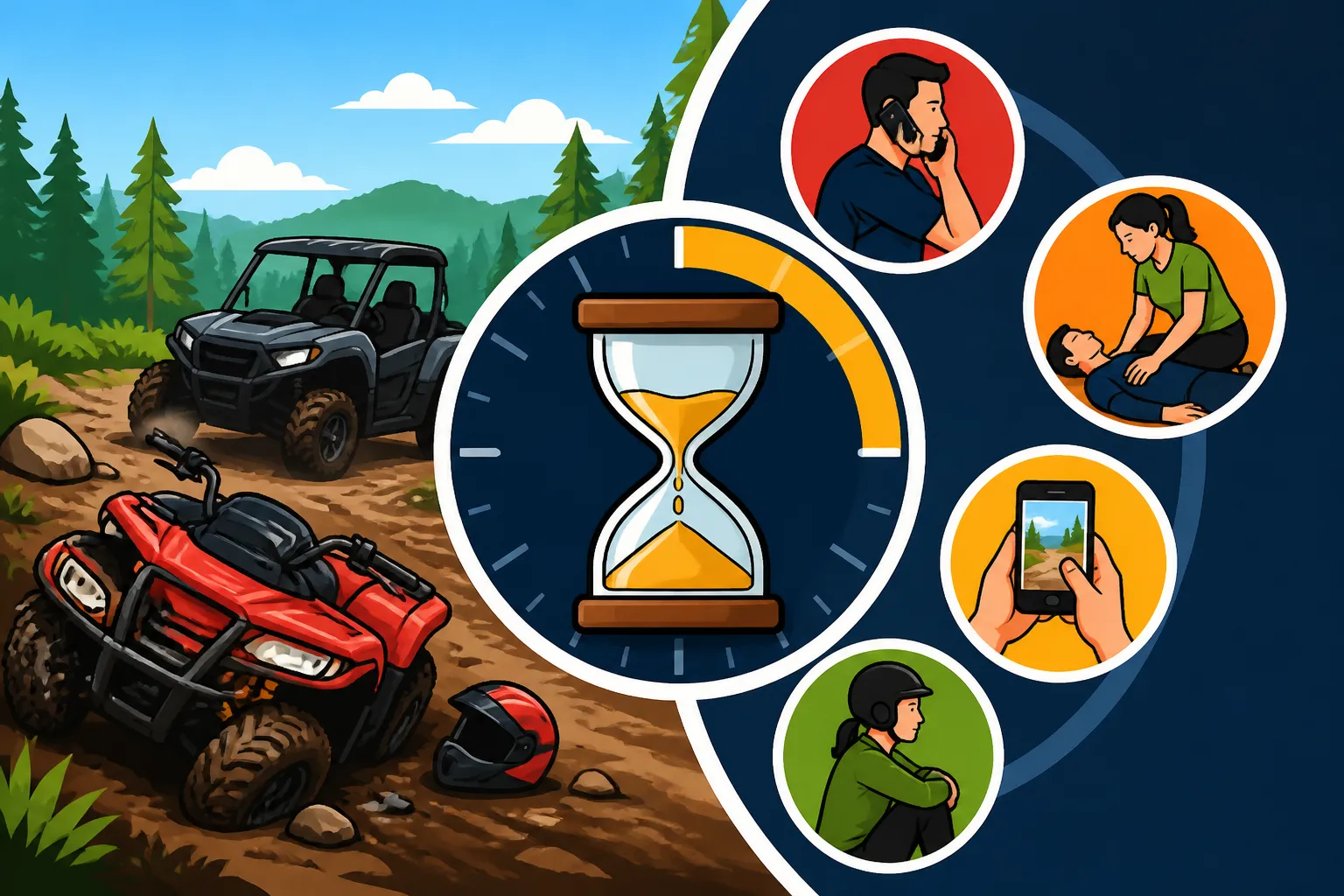
The very first thing you need to do after any off-road vehicle incident, before anything else, is to ensure the safety of everyone involved and assess for injuries. That initial shock can make clear thinking difficult, but focusing on these immediate safety measures is paramount.
Immediate Scene Safety
Even if you're shaken, take a deep breath and quickly scan your surroundings. Is your ORV stable, or is there a risk of it rolling further? Are there any fuel leaks, which could pose a fire hazard? If you're on a public trail or road, consider whether your machine is blocking traffic or creating a new hazard for other riders or vehicles. If your ORV is still operational and it's safe to do so, move it to the side of the trail or road, out of the direct path of others. If it's completely disabled or moving it would put you or others at risk, leave it be.
Activating your machine's hazard lights, if it has them, is a smart move to alert others to your presence and the potential danger. If you have reflective triangles or flares in your trail kit – and I hope you do – deploy them to further mark the scene. This initial assessment and action can prevent a bad situation from getting worse. Remember, whether you're deep in the woods or on a quiet county road, safety first means protecting yourself and anyone else from secondary incidents.
Checking for Injuries
Once the immediate scene feels as safe as you can make it, your focus must shift to people. Start with yourself and any passengers you might have had. Are you experiencing any pain? Can you move all your limbs? Ask your passengers the same questions. Even if someone says they're "fine," encourage them to do a quick mental and physical check. Adrenaline is a powerful thing and can mask injuries in the immediate aftermath.
Next, extend this check to anyone else involved in the crash – other riders, drivers, or even bystanders. If anyone is clearly injured, especially if they are unconscious, have severe bleeding, or complain of head, neck, or back pain, do not attempt to move them unless their current location puts them in immediate, life-threatening danger (like a burning vehicle). Instead, call 911 immediately. Provide them with your exact location if possible, or the nearest cross-trail/road, and a clear description of the situation and injuries. Even seemingly minor bumps can sometimes be more serious, so err on the side of caution. It's always better to get professional medical help on the way than to regret not calling later. You might also want to review [Michigan ORV Accident Reporting Requirements] to understand when emergency services must be contacted.
Documenting the Scene and Gathering Information
After ensuring immediate safety and checking for injuries, the next critical step is to document everything you possibly can. This information will be invaluable for police reports, insurance claims, and any discussions you might have later about what exactly happened. Think of your phone as your best friend in this scenario.
What to Photograph and Note
Start snapping pictures! Take photos from multiple angles of all involved vehicles and any property damage. Get close-ups of specific damage points on your ORV, the other machine, and anything else that was impacted. But don't stop there – broaden your scope. Photograph the entire scene, including the approach leading up to the crash, skid marks on the ground, tire tracks, and any obstacles or terrain features that might have played a role. Capture the weather conditions, time of day, and general visibility. If there are signs, mile markers, or distinct landmarks, include those in your photos.
Beyond photos, jot down notes. Use your phone's memo app or a small notepad you hopefully carry. What was the exact time of the crash? What direction were you traveling? What were the road or trail conditions like? Was there dust, mud, ice, or loose gravel? Make a mental or written note of the specific location, even if it's just a GPS coordinate if your phone allows for it. The more detail you can capture in the immediate aftermath, the clearer the picture will be later. This meticulous documentation can significantly influence how an insurance company processes [ORV Crash Insurance Claims and Denials].
Information Exchange with Other Parties
If another party was involved, it's crucial to exchange information with them. Remain calm and factual. Do not admit fault, make apologies that could be misconstrued as admissions of guilt, or get into an argument. Simply focus on gathering the necessary details.
Here's a checklist of what you should aim to collect:
- Full Name and Contact Information: Get their full legal name, phone number, and email address.
- Driver's License Information: Their license number and state of issue.
- Vehicle Information: Make, model, year, VIN (Vehicle Identification Number) of their ORV. It's also helpful to note any distinguishing features or modifications.
- Insurance Information: Their insurance company name, policy number, and the name of the policyholder.
- Witness Information: If anyone saw the crash, get their name, phone number, and email. Ask them if they'd be willing to provide a statement to the authorities.
You should provide them with your equivalent information. Again, keep it strictly to facts. This is not the time for casual conversation. If you're concerned about the other party's identity or the legitimacy of their vehicle, looking into [Michigan ORV Title Fraud Penalties] might give you an idea of the seriousness of any misrepresentation.
Involving Law Enforcement and DNR
Knowing when to call law enforcement or the Michigan Department of Natural Resources (DNR) can sometimes feel like a gray area, but generally, it's always a good idea if:
- There are injuries: Even minor ones, especially if they require medical attention.
- Significant property damage occurred: To your ORV, another vehicle, or public/private property.
- You were involved in a collision with another vehicle (ORV or otherwise).
- The crash occurred on public land, designated ORV trails, or public roads/shoulders. If you're riding on public lands, a DNR conservation officer will likely be the primary responding agency.
- There is any dispute about fault or circumstances.
- One of the parties involved leaves the scene.
When you call, clearly state that you've been in an ORV accident. Provide your location as accurately as possible and briefly explain the situation, including any injuries. When officers arrive, be cooperative and provide them with all the information you've collected. Stick to the facts you observed. A police report or DNR incident report will be incredibly important for your insurance claim and can also help clarify [Who Is at Fault in a Michigan ORV Road Crash]. While it's always good to have [Michigan ORV Paperwork During a DNR Stop] readily available, the focus here is getting that official report filed.
| Action Category | Immediate Steps | Key Items to Collect | Why It's Important |
|---|---|---|---|
| Scene Safety | Move to a safe spot (if possible & safe), deploy hazards, check for fuel leaks. | N/A | Prevents further accidents, protects people and property. |
| Injury Assessment | Check yourself, passengers, and other parties. Call 911 for any suspected serious injuries. | N/A | Ensures prompt medical attention, critical for health and legal documentation. |
| Documentation | Take photos/videos of damage, scene, road conditions. | Location (GPS), time, date, weather, road conditions, skid marks, damage close-ups. | Provides visual evidence for insurance and authorities. |
| Info Exchange | Gather details from all involved parties and witnesses. | Names, contact info, driver's licenses, ORV VINs, insurance details (company, policy #), witness contact. | Facilitates insurance claims, identifies responsible parties. |
| Authorities | Call 911/DNR if injuries, significant damage, or dispute. | Incident report number, officer's name/badge number. | Official record of the event, crucial for insurance and legal proceedings. |
Notifying Authorities and Next Steps
Once the immediate chaos subsides and you've taken the essential steps at the scene, there are some follow-up actions you need to take fairly quickly. These steps involve formally reporting the incident and beginning the process of dealing with the aftermath.
Reporting the Crash to Michigan Authorities
Beyond the initial call to 911 or the DNR at the scene, Michigan has specific requirements for reporting ORV accidents. If your crash resulted in injury or death, or if property damage exceeds a certain threshold (which can change, so always check the current state guidelines), you are likely required to submit a formal accident report to the Michigan DNR. Even if law enforcement responded and filed their own report, you might still have a personal responsibility to file one.
It's really important to understand these [Michigan ORV Accident Reporting Requirements] because failing to comply can lead to penalties. Don't assume that because an officer came out, your part is done. Often, these reports need to be submitted within a set number of days. Gather all the information you collected at the scene – photos, notes, contact details – as you'll need it to fill out the form accurately. Being proactive here shows responsibility and ensures all official bases are covered.
Contacting Your Insurance Provider
As soon as it's practical, you need to notify your insurance company about the crash. Even if the damage seems minor, or you think the other party is clearly at fault, it’s best to report it. Why? Because seemingly minor issues can sometimes turn into bigger problems, and delaying reporting can sometimes complicate your claim. Your policy likely has a clause about timely notification of incidents.
Be prepared to provide your insurer with all the details you gathered at the scene: date, time, location, description of what happened, information on other parties involved, witness contacts, and if a police report was filed, the agency and report number. They will guide you through the claims process. Remember that understanding your coverage, especially your [Michigan ORV Liability Insurance Minimums], is key. If you're uncertain about what your policy covers, now is the time to ask. They'll assess the damage to your ORV and guide you on next steps for repair or replacement, taking into account factors that affect [ORV Crash Insurance Claims and Denials].
Securing Your ORV and Planning for Repair
After the crash, your damaged ORV might be left at the scene or towed away. If it's at the scene, make sure it's secure from further damage, theft, or vandalism. If you can, cover it, lock it, or arrange for it to be moved to a safe location. This is also a good time to consider what happens if your machine is deemed a total loss or is stolen from the crash site – knowing about [ORV Theft Claims and What Insurers Ask For] might be useful in such an unfortunate scenario.
Once your ORV is safe, the next big step is thinking about repairs. Your insurance company will likely want to inspect the damage before any work begins. Get estimates from reputable repair shops. If you're a DIY enthusiast or looking for parts, companies like SuperATV can be a great resource for replacement components, from suspension parts to body panels. They offer a wide range of aftermarket and OEM-style parts that can help get your machine back in prime condition. After an unexpected crash, having a reliable source like SuperATV for sturdy and dependable parts can be a huge relief, ensuring your repairs are done right the first time. Whether you're replacing a bent A-arm or a shattered headlight, thinking about quality parts from a known brand can make all the difference in restoring your ORV's performance and safety.
Remember, this initial hour can be chaotic and stressful, but by following these steps, you'll be well-equipped to handle the aftermath of an ORV crash in Michigan as effectively as possible.
Disclaimer
This article is for general informational purposes only and does not constitute professional advice. Laws, prices and regulations vary by location and change over time. Consult a qualified professional for guidance on your specific situation.