Using a UTV for Farm Work on Public Roads
As a Michigan farmer, you've likely faced that familiar dilemma: you need to move your trusty UTV, perhaps loaded with tools, feed, or a fresh harvest, from one field to another, or even to the local co-op. The shortest path often involves a stretch of public road, but the rules for Off-Road Vehicles (ORVs) on Michigan's highways can be confusing and frankly, a bit daunting. You might wonder if you're risking a ticket every time you cross the pavement. This guide is here to untangle the complexities of using your UTV for legitimate farm work on Michigan's public roads, helping you understand the specific exemptions and requirements that apply to agricultural operations.
The Special Status of Farm UTVs on Michigan Roads
It's no secret that Michigan has a lot of rules governing how and where you can ride your UTV or ATV. For most recreational riders, taking an ORV onto a public road, even a county gravel road, involves specific permits, safety certificates, and adherence to strict guidelines regarding speed, lighting, and even the type of road. It can feel like a maze, and honestly, it often is. But for farmers, the situation is thankfully a bit different, recognizing the essential role these machines play in daily agricultural operations.
The key distinction lies in the purpose for which the UTV is being used. If your side-by-side is genuinely serving as a piece of farm equipment, transporting materials or people directly related to your farming activities, Michigan law often provides specific exemptions that make road travel possible without all the hurdles recreational riders face. This isn't a free pass to joyride your farm UTV down M-22, but it does create a necessary pathway for operational efficiency, acknowledging that farming doesn't always happen neatly within the confines of private property.
Many farmers experience a knot of anxiety when they pull out onto the shoulder of a county road, wondering if they're about to attract unwanted attention from a local sheriff or DNR officer. This apprehension is completely valid, given the overlapping and sometimes contradictory nature of ORV laws. Understanding the "why" behind the agricultural exemptions can help alleviate some of that stress and empower you to operate your farm UTV confidently and legally.
What Constitutes "Farm Work" in Michigan?
Defining "farm work" is crucial here, as it's the bedrock of the agricultural exemption. In Michigan, farm work isn't just about tilling fields or milking cows; it encompasses a broad range of activities essential to running a farm. This could include transporting seed, fertilizer, or harvested crops between different parcels of land, moving tools and equipment from the barn to a remote field, or even checking on livestock pastured on separate properties. It also covers tasks like fence repair, irrigation maintenance, or pest control, where a UTV is the most practical means of transport.
The spirit of the law recognizes that a farm is a dynamic operation, often spread across non-contiguous land, and modern UTVs are incredibly efficient workhorses for these tasks. However, this exemption is not intended for personal errands, recreational rides, or commuting to a non-farm job. If you're heading to the fishing hole with your buddies, your UTV is no longer considered to be engaged in "farm work," and the standard recreational ORV rules for road use would apply. The intent must clearly be agricultural.
A good rule of thumb is to ask yourself: "Is this trip directly contributing to the production, management, or maintenance of my farm or its products?" If the answer is yes, you're likely within the bounds of what the state considers legitimate farm work for a UTV. If it's anything else, even if it's just a short hop to the neighbor's house for a non-farm related chat, you'd be wise to consider the full scope of Michigan's general ORV road rules.
Understanding the Agricultural ORV Exemption
Michigan's Off-Road Vehicle Act (specifically MCL 324.81101 et seq.) and the Vehicle Code contain provisions that treat agricultural implements differently from purely recreational vehicles. Generally, a UTV, when used for agricultural purposes, is often regarded more like a tractor or other farm machinery rather than a typical ORV for recreational purposes. This is a significant distinction because it means many of the requirements for recreational ORVs, such as obtaining an ORV title, annual trail permits, or a safety certificate, may not apply when you're strictly using your UTV for farm work on public roads. You can find more details on general exemptions in articles like [ORV Title Exemptions for Farm Machines in Michigan].
The rationale here is simple: requiring farmers to title, register, and permit every UTV they use for field-to-field transport would be an unnecessary burden on an essential industry. Think about it—you wouldn't expect a combine harvester to have an ORV sticker. UTVs performing similar functions, albeit on a smaller scale, fall under a similar umbrella of practical necessity. This exemption doesn't mean your UTV can be unsafe or poorly maintained; quite the opposite. It emphasizes that while the paperwork might be lighter, the responsibility for safe operation on public ways remains paramount.
It's also important to note that this exemption typically applies to operational use, not ownership or transfer. While you might not need an ORV title for an antique tractor, a UTV, being a newer class of vehicle, usually has a title upon purchase. However, the requirement to display an ORV license or secure certain permits for road travel is where the agricultural exemption primarily comes into play. Always keep proof that you are indeed a farmer and using the UTV for farm work, such as a farm registration, tax ID, or even documentation for your property, readily available in case you are stopped.
Limitations and Road Types for Farm UTVs
While the agricultural exemption provides significant flexibility, it's not a blanket pass for unrestricted UTV use on every road type in Michigan. The most common allowance is on county roads, especially those that border or connect agricultural properties. These are the gravel, dirt, or even paved two-lane roads that farmers frequently traverse between fields or to market. Generally, state highways (M-routes, US-routes, and Interstates) are off-limits for farm UTVs, just as they are for most other ORVs, except perhaps for brief, direct crossings where permitted.
Even within county roads, you need to be mindful of local ordinances. While state law allows for agricultural exemptions, individual townships or counties might have specific rules about speed limits for farm vehicles or designated routes. It's always a smart move to understand [How to Find Your Michigan County's ORV Ordinance] to avoid any surprises. You might find certain areas have restrictions, particularly near more populated villages or residential areas, even if those areas are surrounded by farmland. For example, a village might have specific rules for farm machinery within its limits, even if the county around it is permissive.
The key here is practicality and common sense. If your farm operation genuinely requires you to cross a busy road or use a short stretch of pavement, the exemption is there to facilitate that. However, if you're attempting to use your UTV for agricultural purposes in a dense urban environment, or trying to commute a significant distance on high-speed roads, you're likely pushing the boundaries of what the exemption intends and risking a citation. Always prioritize safety and consider the volume and speed of other traffic.
Essential Requirements for Farm UTVs on Public Roads
Even with the agricultural exemption, operating a UTV on public roads for farm work isn't a free-for-all. There are still crucial safety and operational requirements designed to protect you, your passengers, and other motorists. These aren't about bureaucratic red tape as much as they are about common sense and ensuring that a slower-moving, open-air vehicle can safely share the road with cars and trucks. Ignoring these basic requirements can lead to dangerous situations and, potentially, costly fines, even if your purpose is agricultural.
Think of your UTV as a mini-tractor when you're on the road for farm work. Just like a tractor, it needs to be clearly visible and operated predictably. Michigan law, and general road safety principles, dictate that any vehicle on a public roadway must meet certain standards for visibility, signaling, and safe operation. This becomes even more critical for a UTV, which is smaller, less protected, and often slower than typical road traffic. Ensuring your UTV is properly equipped isn't just about compliance; it's about your personal safety and the smooth flow of traffic.
Many of these requirements might not come standard on every farm-oriented UTV, especially older models or those designed purely for off-road use. This is where aftermarket solutions become invaluable. Companies like SuperATV offer a wide range of accessories, from full lighting kits to mirrors and turn signals, that can bring your farm UTV up to snuff for road use. Investing in these upgrades is a small price to pay for peace of mind and, more importantly, enhanced safety.
Lighting and Safety Gear for Farm UTVs
When you're operating your farm UTV on public roads, visibility is paramount, especially at dawn, dusk, or during inclement weather. Michigan law requires certain lighting for any vehicle operating on public roads. For a farm UTV, this typically includes working headlights and taillights. More critically, a slow-moving vehicle (SMV) emblem is usually required. This bright orange triangle with a red border is internationally recognized and alerts other drivers that your vehicle is traveling at 25 mph or less. It's a non-negotiable safety item for any farm equipment on a public road.
Beyond the basic requirements, consider adding turn signals and brake lights if your UTV doesn't have them integrated. While the letter of the law for agricultural exemptions might not always explicitly mandate them for a UTV, hand signals can be awkward, and clear indicators drastically improve safety. A good aftermarket turn signal kit, potentially from a brand like SuperATV, can make your intentions unambiguous to other drivers, preventing confusion and potential accidents. Also, ensure you have at least one rearview mirror, ideally two, for better situational awareness.
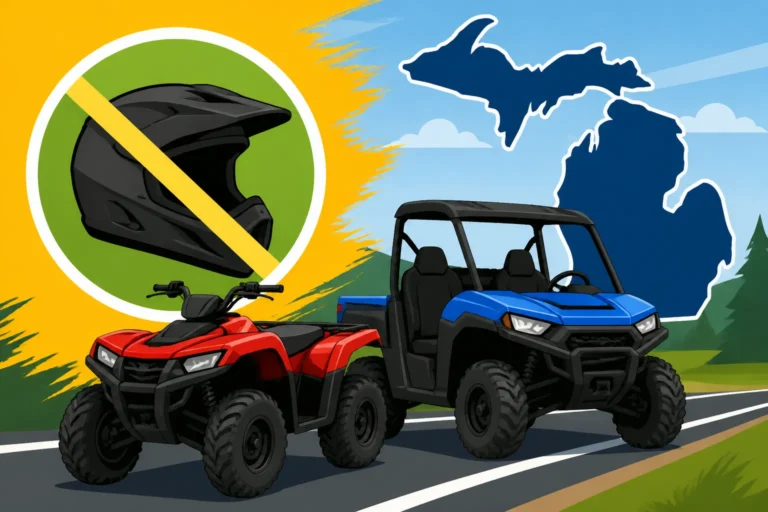
Finally, while helmets aren't always explicitly required for adults in UTVs used for farm work on public roads (especially if the UTV has seat belts and a roll cage), they are always a smart choice. If you're operating an ATV for farm work, helmets are typically a must. Always err on the side of safety. Your farm UTV is a utility vehicle, but on the road, it's still sharing space with much larger and faster traffic, making maximum visibility and occupant protection key.
Driver Qualifications and Age
When it comes to who can drive a UTV for farm work on Michigan roads, the rules generally align more with farm equipment operators than recreational ORV users. Typically, a person operating farm equipment on a public highway for agricultural purposes does not need a special ORV safety certificate or even a standard driver's license if they are otherwise authorized to operate farm equipment. However, common sense prevails: the operator must be competent, capable, and knowledgeable about operating the UTV safely on a public road.
For youth involved in farm work, Michigan law has provisions for minors to operate farm machinery. While there are strict age requirements for recreational ORV use, especially on public roads or trails, a younger individual (often 12 or 14 and older, depending on the specific equipment and task) may be permitted to operate farm machinery if they are engaged in agricultural production. This is usually under direct supervision or after receiving appropriate training. For example, a teenager driving a UTV between fields to help with harvest might be permitted, whereas that same teenager driving the UTV recreationally on a county road would face much stricter age and safety certificate rules.
It's crucial to understand that these agricultural allowances for youth are strictly for legitimate farm work. A quick trip to a friend's house or a joyride does not fall under this exemption. Parents and farm owners should ensure that any youth operating a UTV for farm work on public roads is mature enough, properly trained, and fully understands the immense responsibility involved in sharing the road with other vehicles. Always be familiar with the latest youth operating requirements, which can be found in resources like [Michigan ORV Road Rules for Riders Under 16].
Titling, Registration, and Insurance Nuances
This is where the distinction between an "agricultural implement" and a "recreational ORV" really shines. For a UTV primarily used for farm work, Michigan typically exempts it from the standard ORV title, registration, and annual trail permit requirements that apply to recreational ORVs being used on designated trails or roads. This means you likely won't need to head to the Secretary of State to get an ORV plate or sticker, nor will you need the [Michigan ORV License and Trail Permit Explained]. Your UTV is essentially functioning as a tractor, which has different administrative requirements.
However, a UTV, regardless of its use, still typically comes with a manufacturer's Certificate of Origin, and you would generally obtain a title for it when you purchase it. The exemption applies more to the operational registration and permitting for road use, not necessarily the underlying proof of ownership. Make sure you retain your proof of ownership, like a bill of sale or the original title, in case it's ever needed.
Perhaps the most critical consideration, even with exemptions, is insurance. While your UTV might be exempt from certain registration fees, liability insurance is an absolute must. Accidents can happen, and if your farm UTV is involved in a collision on a public road, you want to be adequately covered. Your standard farm liability policy might extend to cover UTV use on public roads for agricultural purposes, but it's essential to confirm this with your insurance agent. Don't assume. Ask specific questions about road use, property damage, and personal injury coverage. An article like [Michigan ORV Insurance and When You Actually Need It] can provide a good overview of insurance considerations, though you'll want to focus on how it applies to agricultural use.
Practical Considerations and Best Practices for Farmers
Navigating Michigan's roads with your farm UTV, even with agricultural exemptions, requires more than just understanding the law; it demands practical wisdom and a commitment to safety. You're sharing the road with vehicles that travel at much higher speeds, and ensuring your UTV is not only compliant but also visible and predictable can make all the difference. Being a good steward of the road and proactive in your safety measures benefits everyone and helps maintain the goodwill that allows for these agricultural exemptions in the first place.
Think about the environment you're operating in. Rural roads, while often quieter, can still present hazards like blind hills, curves, or distracted drivers. Your UTV, with its open cabin and often slower speed, is more vulnerable than a passenger car or even a farm tractor. Implementing best practices isn't just about avoiding a ticket; it's about safeguarding your life, your livelihood, and your relationship with your community.
Every time you pull out onto a public road with your farm UTV, you're representing the agricultural community. Operating safely and courteously helps reinforce the understanding that farm vehicles are an essential, legitimate part of our road network. It also reduces the likelihood of incidents that could, unfortunately, lead to tighter restrictions or more scrutiny on agricultural exemptions in the future.
Equipment and Load Safety for Farm UTVs
When using your UTV for farm work on public roads, you're often carrying tools, feed, harvested goods, or other supplies. Securement of your load is non-negotiable. Michigan law requires that any load transported on a public road must be properly secured to prevent shifting, falling, or otherwise creating a hazard for other vehicles. This means using tie-downs, nets, or secure containers. A load that comes loose could cause an accident, block the road, or damage your own equipment or someone else's property.
Beyond securement, be mindful of your UTV's weight limits. Overloading a UTV, even a heavy-duty farm model, can significantly impact its handling, braking, and stability. This is particularly dangerous on paved roads where the UTV's suspension and tires are not designed for heavy, high-speed loads. Always check your UTV's manufacturer specifications for cargo and towing capacity. Also, ensure that any towed implements or trailers are properly attached, have working lights (if required by law for the specific implement), and do not obscure your UTV's lights or SMV emblem.
Visibility is also key for your load. If you're hauling something that extends beyond the rear or sides of your UTV, you might need to attach red flags or lights, especially at night. It's an easy way to prevent another driver from misjudging your UTV's length or width. Always ensure your SMV sign is visible and not blocked by whatever you're carrying. If your UTV has aftermarket accessories from a company like SuperATV, ensure they are installed correctly and don't hinder your ability to carry or tow safely.
Interaction with Other Traffic
Sharing the road safely means being predictable and courteous. Because your farm UTV will likely be traveling slower than other vehicles, you must be acutely aware of traffic behind you. If you see a line of cars building up, pull over safely when possible to allow them to pass. This simple act of courtesy goes a long way in fostering good relations between farmers and other drivers and reduces frustration that can lead to aggressive driving.
When making turns, especially left turns across traffic, be extra cautious. Use clear hand signals if your UTV doesn't have turn signals, or if they are hard to see. Ensure you have ample space and time, as your UTV's acceleration may be slower than a car's. Maintain a safe distance from the shoulder and avoid swerving, ensuring your movements are deliberate and predictable. Remember that on roads, you are legally obligated to obey all traffic laws, including stop signs, traffic lights, and right-of-way rules.
Finally, resist the temptation to "dilly-dally." While the agricultural exemption allows you on the road for farm work, it's not an invitation for leisurely rides. Complete your road travel efficiently and get back to your fields or destination as quickly and safely as possible. The less time you spend on higher-speed public roads, the lower your risk of encountering an incident.
Local Ordinances and Communication
While state law provides the overarching framework, local ordinances can sometimes add specific nuances or restrictions regarding farm equipment on public roads. These might involve designated routes, time-of-day restrictions, or other localized rules. It's always a good practice to check with your township or county clerk's office, or even your local sheriff's department, to ensure you're aware of any specific requirements in your immediate operating area. Knowledge is power, and being informed can prevent misunderstandings or tickets.
A proactive approach can also go a long way. Consider reaching out to your local law enforcement. Introduce yourself as a farmer, explain your need to use your UTV for farm work on certain roads, and ask if they have any specific advice or concerns. Building a good relationship with local deputies or conservation officers can be incredibly beneficial. They are often more understanding of farm operations when they know who you are and why you're on the road.
Remember, while Michigan state law offers agricultural exemptions, townships and counties can pass ordinances that regulate ORV use on roads that they maintain. While these ordinances generally cannot contradict state law, they can add specific requirements. For instance, [Michigan County ORV Ordinances Explained] provides general information, but a direct call to your county might clarify specifics for your area, like whether a certain bridge or intersection has particular rules for slow-moving farm vehicles.
Agricultural UTV vs. Recreational ORV: Key Differences for Road Use
To really drive home the nuances of using a UTV for farm work on public roads in Michigan, let's look at the key differences in requirements compared to a recreational ORV. This table will help clarify why the agricultural exemption is so important and how it simplifies things for farmers, while also highlighting where common safety practices still apply.
| Feature / Requirement | Recreational ORV on Public Road (where allowed) | Agricultural UTV on Public Road (for farm work) |
|---|---|---|
| Primary Purpose | Recreation, trail riding, personal transport | Direct farm operations, transport of goods/tools |
| Michigan ORV Title | Usually required | Title typically obtained for ownership, but not always required for road use exemption |
| ORV Trail Permit/License | Required (annual sticker) | Generally exempt |
| ORV Safety Certificate | Required for riders under 16, often advised for all | Not typically required if operating as farm equipment |
| Driver's License | Often required for road riding | Not always required if operating as farm equipment (age/competency dependent) |
| Slow-Moving Vehicle (SMV) Emblem | Not typically required | Required (orange triangle) |
| Headlights / Taillights | Required | Required |
| Brake Lights | Recommended, often required if stock | Recommended, crucial for safety |
| Turn Signals | Often required by road ordinance | Highly recommended (or clear hand signals) |
| Rearview Mirror(s) | Often required by road ordinance | Highly recommended |
| Helmet Requirement (Adults) | Varies by road type/ordinance, often not required in UTV with ROPS/seatbelts | Varies, generally not required in UTV with ROPS/seatbelts, but always recommended |
| Liability Insurance | Strongly recommended, often required | Essential (confirm farm policy coverage) |
| Speed Limit | Specific ORV road limits (often 25 mph) | Operate at safe speed for conditions, often below 25 mph due to SMV |
| Roads Permitted | Designated county roads, trails, crossing state highways (limited) | Primarily county roads, direct crossings of state highways (limited), avoid cities |
| Load Securement | As per state law | Essential, as per state law |
This table clearly illustrates that while many safety requirements overlap, the administrative burden of titling, licensing, and permitting is significantly reduced for UTVs used exclusively for farm work. This is a vital distinction that Michigan law provides to support its agricultural community.
Disclaimer
This article is for general informational purposes only and does not constitute professional advice. Laws, prices and regulations vary by location and change over time. Consult a qualified professional for guidance on your specific situation.