Riding an ORV to a Gas Station
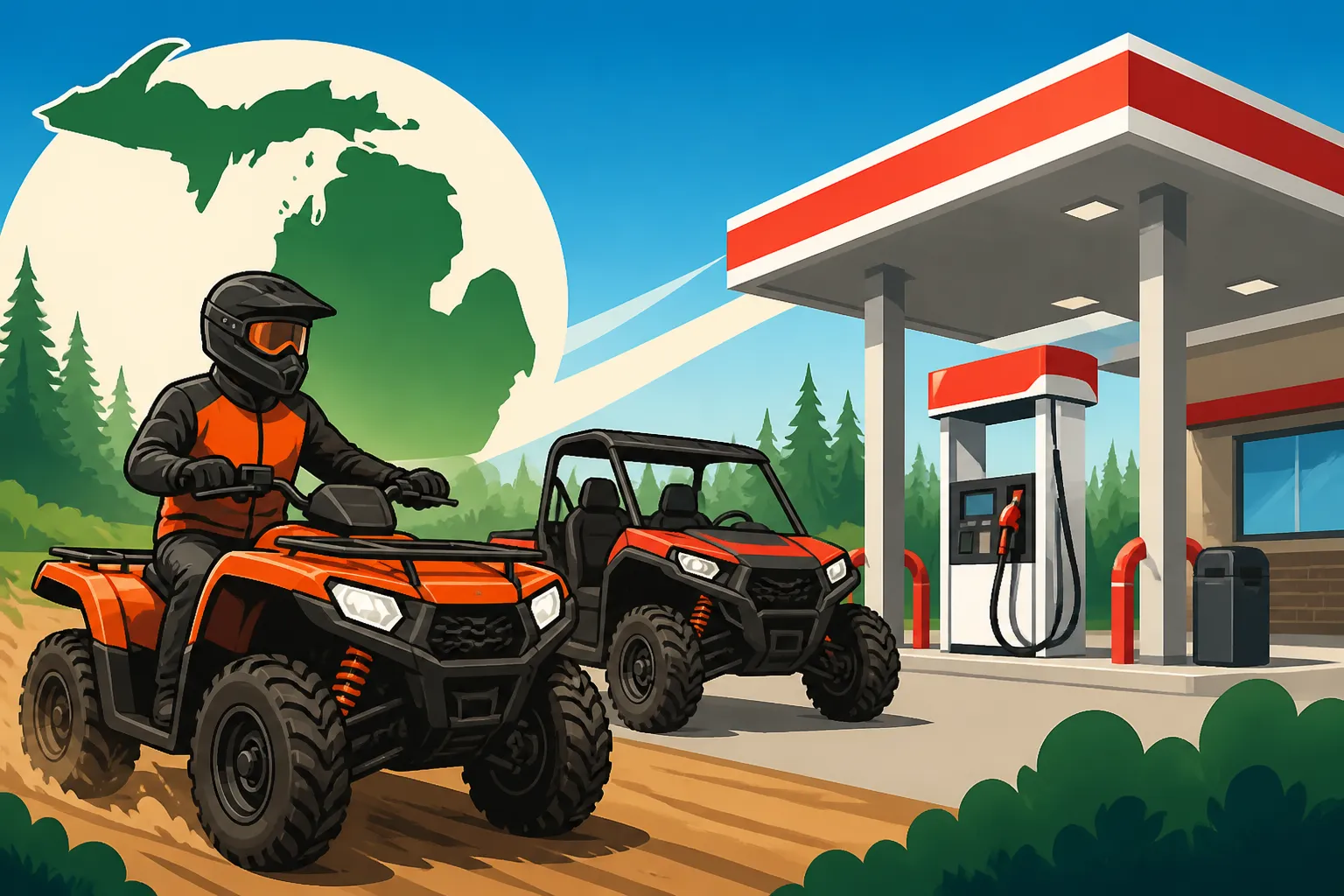
It’s a scenario every Michigan ORV rider knows all too well: you're out on the trails, the sun is shining, the engine is humming, and then you glance down at your fuel gauge. It's flashing. Suddenly, that awesome ride turns into a stressful scramble to find a gas station before you're stranded miles from anywhere. But navigating Michigan's complex ORV road rules just to fill up can feel like a whole new kind of off-road challenge. This guide is here to untangle the confusion and show you exactly what it takes to legally and safely ride your ORV to a gas station in Michigan.
The Core Question: Can You Even Get to a Gas Station? Michigan's Road Rules for ORVs
Let's cut right to the chase: can you hop on your ATV or UTV and ride it down a county road to the nearest gas pump? The answer, like most things involving Michigan ORV laws, is "it depends." It depends heavily on where you are, what local ordinances are in place, and if your machine meets specific requirements. It's not as simple as just hitting the asphalt; there are layers of regulations you need to peel back first. Many riders mistakenly believe that if they're on a designated ORV route or trail, they can just duck off it to grab gas. This isn't always the case, and understanding the nuances is crucial to avoid a ticket or, worse, an accident.
Understanding Michigan's ORV Road Ordinances
Michigan law allows individual counties and townships to pass their own ordinances regarding ORV use on public roads. This means that one county might be wide open to ORV road riding, while the very next county over could have a complete ban. This patchwork of rules is a huge headache for riders who frequently cross county lines or explore different parts of the state. You absolutely cannot assume that because you rode to a gas station last weekend in Roscommon County, you can do the same this weekend in Grand Traverse County. Before you even think about putting your tires on pavement, you need to do your homework. Checking local ordinances for the specific county or township you're riding in is your first, most critical step. This information is usually available on the county's website or by contacting the local sheriff's department. [How to Find Your Michigan County's ORV Ordinance] can be a great resource for this.
These ordinances often specify not just if you can ride on roads, but which roads are permitted, what times of day, and any additional equipment requirements beyond state law. For example, some townships might allow ORVs on all county-maintained roads, while others restrict them only to roads specifically designated as ORV routes. Some ordinances might even have seasonal restrictions or prohibit ORVs during certain events. It's a lot to keep track of, but the responsibility falls squarely on the rider. Ignoring these local rules won't win you any favors with law enforcement, and fines can quickly add up, turning a quick fuel stop into a costly mistake.
The "Maintained Portion" vs. Shoulder: Where You Can Ride
Even if a county or township allows ORVs on its roads, there are very specific rules about where on the road you can operate. Michigan law generally dictates that ORVs, when permitted on a road, must be ridden on the far right of the [Michigan Road Shoulder vs Maintained Portion]. This isn't just a suggestion; it's a legal requirement. The "maintained portion" of the road is typically reserved for street-legal vehicles, which most ORVs are not. Trying to keep up with traffic in the main lane on your ATV or UTV is not only illegal but incredibly dangerous. Your machine isn't designed for those speeds or the dynamics of road traffic, and drivers of cars and trucks aren't always expecting to share the road with an ORV.
Riding on the shoulder means you need to be constantly aware of what's around you, including debris, soft ground, and mailboxes. In some areas, the shoulder might be narrow or nonexistent, making safe passage difficult or impossible. You're also expected to ride in single file if there's more than one ORV in your group, another rule often overlooked. Pay close attention to signage. Designated ORV routes will often have specific signs indicating where you can ride. If you don't see those signs, it's safest to assume you cannot ride on that road, or at least not on the maintained portion. This attention to detail can prevent accidents and ensure you stay on the right side of the law.
Crossing State Highways and Navigating Intersections
Let's talk about the bigger roads – state highways. While many county roads might have ORV access, state highways (like US routes or M-numbered roads) are a different beast entirely. Generally, you cannot ride an ORV on a state highway. However, you are often allowed to cross a state highway at an intersection, provided you do so safely and directly. This means no riding alongside the highway, no cruising on the shoulder, and certainly no U-turns in the middle of a busy intersection. It's a quick, direct traverse from one side to the other, obeying all traffic signals and signs, and yielding to all traffic. [Michigan State Highway ORV Crossing Rules] outlines these regulations in detail.
Navigating intersections requires extreme caution. ORVs are not as visible as cars, and your ability to accelerate quickly or brake suddenly might differ from what other drivers expect. Always assume other drivers don't see you. Make eye contact if possible, use hand signals if appropriate, and cross only when you have a clear, safe window. When you're making a fuel run, chances are you'll encounter at least one major intersection. Planning your route to minimize these crossings, or choosing gas stations that are accessible via less trafficked roads, can significantly reduce your risk. Remember, the goal is to get fuel, not to test the limits of road safety.
Making Your ORV "Road-Ready" (Safety and Legal Requirements)
Before you even consider leaving the trail for the gas station, your ORV needs to be properly equipped and you, as the operator, need to be compliant with Michigan's laws. It's not enough to just be allowed on the road; you need to be prepared for it. Think of it like this: your ORV is a powerful off-road machine, but when you bring it onto the asphalt, it enters a different world with different rules and expectations. Failing to meet these requirements is an easy way to attract the attention of law enforcement, which can quickly turn a simple fuel stop into a costly ticket.
Essential Equipment for Road Travel
Even if your ORV isn't fully "street legal" with a title for an assembled vehicle, there are still specific equipment requirements you must meet when operating on public roads where allowed. This isn't just about avoiding a ticket; it's about making your machine more visible and safer for yourself and others.
Here's a breakdown of common requirements:
- Headlights and Taillights: These are non-negotiable, especially if there's any chance you'll be riding near dusk or dawn. Your lights need to be fully functional, clean, and visible from specified distances. Make sure your headlights are adjusted properly so they don't blind oncoming traffic when you're on the shoulder.
- Brakes: Your braking system must be in excellent working order, able to stop your ORV effectively and quickly. This means checking brake pads, fluid levels, and brake lines regularly.
- Muffler/Exhaust: Michigan has noise limits for ORVs, even on trails. On roads, excessive noise can be particularly jarring to residents and other drivers. Ensure your ORV has a functioning muffler and a spark arrestor. [Michigan ORV Noise Limits on Roads] are something deputies do enforce.
- Mirrors: You absolutely need at least one rearview mirror, typically mounted to allow you to see clearly behind your machine. For UTVs, many riders opt for a center rearview mirror and side mirrors, greatly improving situational awareness. Companies like SuperATV offer a range of robust, durable mirrors specifically designed for ORVs, providing wide-angle views crucial for road safety. Don't skimp on this; knowing what's coming up behind you is paramount.
- Safety Flag: While not universally required for all road sections, a safety flag (often an orange whip flag) is mandatory in specific areas, especially dunes or certain scramble areas. It’s always a good idea for increased visibility, even if not strictly mandated for your specific road segment.
- DOT-Approved Tires: While not always required for casual road use to a gas station, if you're pursuing a full street-legal conversion, DOT-approved tires are a must. For simply riding on a shoulder for a short distance, knobby off-road tires are usually acceptable, but be aware they wear quickly on pavement and can affect handling.
- Horn: An audible warning device is often a requirement for any vehicle operating on public roads. A simple horn that can alert pedestrians or other drivers to your presence is critical.
A quick visual inspection before each ride can help you catch any issues. Blown fuses, cracked mirrors, or a sputtering headlight could mean the difference between a smooth fuel run and an unnecessary encounter with law enforcement.
Driver's License, Age, and Passenger Rules
Just like driving a car, operating an ORV on public roads requires you to meet specific licensing and age requirements. In Michigan, to operate an ORV on any public road where it's allowed, you must possess a valid driver's license. This means a standard automobile driver's license (Class D or higher). A temporary permit or a restricted license might have limitations that prevent ORV road operation.
Age rules are also critical. While there are specific age rules for young riders on trails, when an ORV is on a county road, the driver must generally be 16 years old and possess that valid driver's license. [Michigan ORV Road Riding Age Minimum] are in place to protect young riders and other motorists. For passengers, ensure your ORV is designed to carry a passenger and that they are seated safely. Many ATVs are designed for a single rider only, and carrying a passenger on a single-rider quad is a clear violation. UTVs are typically designed for multiple passengers, but everyone must be seated with a seatbelt if available.
| Requirement/Rule | On Designated ORV Trails | On Permitted County Roads (to Gas Station) |
|---|---|---|
| Driver's License | Not always required (age/safety course dependent) | Required (valid Class D or higher) |
| Age Minimum | Varies (10, 12, 16 w/supervision) | 16 years old (with valid driver's license) |
| Helmet | Required for under 18 (and sometimes for adults depending on machine) | Required for under 18; often recommended for all, especially on ATVs |
| Eye Protection | Recommended for all | Recommended for all (can be required without windshield) |
| ORV License/Permit | Required for public land access | Required for public road access |
| Mirrors | Not typically required | Required (at least one rearview) |
| Horn | Not typically required | Required (audible warning device) |
| Lights | Required for dusk/dawn/night riding | Required (head/tail/brake lights) |
The Critical Michigan ORV License and Trail Permit
This is one of the most common pitfalls for riders: assuming their ORV is good to go just because they bought it. In Michigan, if you're going to operate your ORV on any public land or designated public ORV route or trail, you need both an ORV license and an ORV trail permit. And yes, this includes riding on county roads that permit ORV use to get to a gas station. These permits are crucial for funding the maintenance and development of Michigan's extensive ORV trail system, which benefits all riders. [Michigan ORV License and Trail Permit Explained] goes into great detail about why these are so important.
The ORV license is a small sticker that goes on your machine, visible to law enforcement. The trail permit is often a separate sticker, also visible. They expire annually on March 31st, so many riders purchase them in April for the new season. You can purchase these through the Michigan DNR's eLicense system online or from authorized license retailers across the state, including many sporting goods stores and some gas stations (ironically, the very place you might be heading!). Without these, you're technically operating your ORV illegally on public roads and could face fines. Don't let a quick fuel stop turn into a regulatory headache; make sure your permits are current and properly affixed to your machine. [Where to Buy a Michigan ORV License] is a helpful resource.
Practical Tips for a Fuel Run (Staying Safe and Legal)
Okay, so you've done your homework, checked the local ordinances, equipped your ORV, and made sure your permits are up to date. Now it's time for the actual fuel run. This isn't just about driving to the pump; it's about smart planning, careful execution, and knowing how to interact if you happen to cross paths with law enforcement. Treating this trip with the same respect and caution as any other road travel is paramount.
Planning Your Route: Finding ORV-Friendly Gas Stations
Successful ORV fueling on the road starts long before you even leave the trail. First, familiarize yourself with the area you're riding in. Many popular ORV destinations have towns nearby that are accustomed to riders and have gas stations that are easily accessible from designated ORV routes. Some communities even embrace ORV tourism and will have maps highlighting ORV-friendly businesses.
Using GPS or a mapping app like onX Offroad (which often highlights ORV trails and routes) can be invaluable for identifying potential gas stops before you're low on fuel. Look for gas stations located directly on or very close to an approved ORV route or a permitted county road. Avoid routes that require extensive travel on busy state highways or through congested downtown areas, if possible. These are high-risk zones where ORVs stand out and might not be welcomed. Consider proximity to trails. A gas station right on the edge of a trail system is ideal, minimizing your road time.
Always have a backup plan. What if your planned gas station is closed, out of gas, or inaccessible due to unforeseen circumstances? Knowing a second or third option can prevent a stressful situation from becoming a stranded one. It's also wise to check the hours of operation, especially in smaller towns, as some rural gas stations might have limited evening or weekend hours.
Fueling Up: Parking, Etiquette, and Payment
Once you arrive at the gas station, remember you're representing the entire ORV community. Park your machine respectfully and safely. Avoid blocking traffic flow, pedestrian walkways, or other parking spaces. If the station has a designated area for trailers or larger vehicles, that might be a good spot to pull your ORV in. Take up only the space you need, and don't park your muddy machine right up against the convenience store entrance.
When at the pump, be mindful of other customers. If your ORV is particularly muddy, try to avoid tracking mud into the store or making a mess around the pump. Keep your helmet on until you're safely away from the pump, or remove it quickly inside the store. Payment is typically handled like any other vehicle: pay at the pump with a credit card or go inside. If you go inside, be courteous and quick. Don't linger and make sure any gear you bring in doesn't cause a nuisance. Clean up any spills immediately. A positive experience for the gas station owner and other customers helps foster a better reputation for ORV riders.
What to Do if You Encounter Law Enforcement
Despite all your careful planning and adherence to rules, you might still encounter a sheriff's deputy, state police trooper, or DNR conservation officer during your fuel run. The absolute best approach is to be polite, cooperative, and respectful.
- Pull Over Safely: If signaled to stop, find a safe spot on the shoulder, turn off your engine, and keep your hands visible.
- Be Courteous: Greet the officer respectfully. "Yes, sir/ma'am," goes a long way.
- Provide Documents: Be ready to present your driver's license, proof of your ORV license and trail permit, and any other requested documentation like proof of ownership or insurance if asked. [Keeping Your ORV Paperwork With the Machine] is good practice for this.
- Answer Questions Truthfully: Explain where you're coming from and where you're going (e.g., "I'm heading to the gas station for fuel, sir, as permitted by the county ordinance").
- Don't Argue: If the officer points out a violation, listen calmly. You can explain your understanding of the rules, but don't get into an argument. If you genuinely believe there's a misunderstanding, you can address it in court later, but trying to debate it roadside rarely ends well.
- Learn from the Encounter: Even if you receive a warning or a ticket, take it as a learning opportunity. Double-check the specific rule cited and ensure you don't make the same mistake again.
Remember, officers are primarily concerned with safety and compliance. By being prepared and cooperative, you're much more likely to have a positive outcome, even if it's just a friendly reminder about a local rule you might have missed.
Avoiding the Hassle (Alternatives to Road Riding for Fuel)
While riding your ORV to a gas station is certainly an option in many parts of Michigan, it's not always the easiest or safest choice. Sometimes, the complexities of local ordinances, traffic, and the sheer stress of it all can detract from the enjoyment of your ride. Thankfully, there are several excellent alternatives that can help you avoid the pavement altogether and keep your focus on the trails.
Carrying Extra Fuel: Safe Storage and Transport
One of the simplest ways to extend your range and avoid a mid-ride fuel run is to carry extra fuel with you. However, this isn't as simple as just throwing a gas can in your cargo rack. Proper and safe fuel storage is crucial. You'll want to invest in purpose-built fuel containers designed for ORV use. These are typically robust plastic containers, often red, designed to securely mount to your ATV or UTV. Companies like SuperATV offer excellent mounting solutions for various fuel cans and cargo boxes, ensuring your extra fuel stays put, even on rough terrain.
When selecting a fuel container, look for:
- Durable construction: It needs to withstand bumps, vibrations, and potential rollovers without leaking.
- Secure mounting: A good mounting system will prevent the can from shifting, chafing, or coming loose.
- Proper venting: To prevent pressure buildup or vacuum formation.
- Appropriate size: Match the size to your needs. A 1-gallon or 2-gallon container is often sufficient for extending range by 20-40 miles, depending on your machine.
Always ensure the cap is tightly sealed, and the container is properly vented. Store it in a location where it's protected from direct sunlight and away from hot engine components. Never store fuel inside the passenger compartment of a UTV. Carrying an extra gallon or two can provide peace of mind and significantly expand your riding options without the need to touch pavement.
Planning Rides Around Fuel Availability
Another effective strategy is to meticulously plan your rides with fuel stops in mind, using gas stations that are directly adjacent to designated ORV trails or staging areas. Many of Michigan's extensive trail systems have towns built right around them, with businesses catering specifically to riders. These towns often have gas stations that are literally steps off the trail, meaning you hardly have to touch a public road, if at all.
Before heading out, consult detailed ORV trail maps. The Michigan DNR provides excellent maps, and apps like onX Offroad or Avenza Maps (which allows you to download DNR maps) often mark points of interest, including fuel stops. Look for loops or out-and-back routes that start and end near a gas station, or have convenient fuel access at a midway point. St. Helen, for instance, is known as a very ORV-friendly town with easy access to gas and food right from the trails. [St. Helen as an ATV Base Town] is a good example of how some communities embrace riders.
By choosing your riding areas and routes strategically, you can often eliminate the need to navigate public roads for fuel entirely. This enhances safety, reduces the chance of legal issues, and allows you to focus purely on the joy of riding.
Camping or Staging Area Fuel Solutions
If you're making a weekend trip out of your ORV adventure, consider bringing fuel directly to your campsite or staging area. Many state forest campgrounds and private parks located near ORV trails allow you to have extra fuel on hand. This means you can refuel your machines right where you're parked, without ever needing to venture onto a public road.
- Bring a larger reserve: Instead of just a small can on your machine, bring a 5-gallon or 10-gallon gas can in your tow vehicle. This allows you to fill up multiple machines or refill your smaller onboard cans as needed.
- Use a portable fuel pump: For ease and safety, consider a portable hand pump or a battery-operated fuel transfer pump. These make refilling your ORV's tank much cleaner and safer than trying to lift a heavy gas can.
- Check campground rules: Always verify any rules regarding fuel storage at your specific campground or staging area. Most allow reasonable quantities for vehicle use, but it's good practice to confirm.
This method is especially useful for long weekends or when riding in more remote areas where road access to gas stations is sparse or non-existent. It’s all about preparation. Being self-sufficient with your fuel not only saves you the hassle of road riding but also allows for more adventurous and uninterrupted trail exploration.
Disclaimer
This article is for general informational purposes only and does not constitute professional advice. Laws, prices and regulations vary by location and change over time. Consult a qualified professional for guidance on your specific situation.