DOT-Approved Mirror Options for a UTV
It's a familiar scenario for many Michigan UTV owners: you’ve invested in your off-road machine, you love hitting the trails, but now you’re looking to make it street legal so you can connect those trails or even just run to the corner store. One of the most critical, yet often confusing, components of this conversion is ensuring you have DOT-approved mirrors. This guide is here to cut through the confusion and help you understand exactly what mirrors you need, what features to look for, and how to get them properly installed so you can ride legally and safely on Michigan’s roads.
Why DOT-Approved Mirrors Matter for Michigan UTVs
Making your UTV street legal in Michigan isn't just about slapping a license plate on it; it’s about meeting a specific set of safety standards, and mirrors are high on that list. You might think any old mirror will do, especially if it’s designed for off-road use, but the state has particular requirements for what constitutes "street legal."
Understanding Michigan's Street-Legal UTV Requirements
Michigan law, like that in many states, mandates that vehicles operating on public roads must provide the driver with a clear and unobstructed view of the rear and sides. For UTVs, which aren't typically designed for road use from the factory, this means adding mirrors that meet Department of Transportation (DOT) standards. It's not just a suggestion; it's a legal necessity. Trying to bypass these requirements can lead to tickets, fines, and even having your UTV impounded if you're caught by a Michigan State Police trooper or a DNR officer. The frustration of being pulled over just because your mirrors aren't up to snuff is something no one wants to experience, especially when you’ve put in the effort to make your machine compliant in other areas. The state wants to ensure that when you’re sharing the road with cars, trucks, and motorcycles, you have the same fundamental ability to see what’s going on around you. Without proper mirrors, you're a hazard, plain and simple.
Beyond the legal aspect, proper mirrors are a huge safety boost. Imagine pulling out onto a county road after a trail section, and you can’t clearly see if a logging truck is coming up behind you. Or trying to change lanes to avoid a pothole on a paved shoulder, only to realize your side mirror is rattling loose and distorting the view. These aren't just minor inconveniences; they're genuine safety risks that DOT-approved mirrors are designed to mitigate. They're built to stay put, provide a clear reflection, and give you the field of vision you need to make quick, informed decisions on the road. For a comprehensive look at the entire process, check out [How to Make a Side-by-Side Street Legal in Michigan].
The Difference Between Trail Mirrors and Road Mirrors
You might already have mirrors on your UTV for trail riding, and that's great for seeing your buddies behind you or checking for obstacles. However, trail mirrors are often designed for durability and quick breakaway action, not necessarily for the constant vibration and precise visibility required on the road. Many trail mirrors are smaller, have plastic lenses that scratch easily, or offer a limited field of view. They might be convex to give you a wide angle, but the distortion can be too much for judging distances accurately at speed.
Road mirrors, especially those with a DOT stamp, are constructed with different priorities. They typically feature shatter-resistant glass, robust mounting systems that resist vibration, and a larger, clearer reflective surface. While some might still have breakaway features to protect them on tight trails, their primary function is to provide a stable, clear, and undistorted view for highway speeds and maneuvering in traffic. This distinction is crucial; what works perfectly for navigating a muddy two-track trail might utterly fail to meet the standards for a Michigan road, both legally and practically. You need mirrors that offer stability and clarity, not just something to occasionally glance at.
Types of DOT-Approved Mirrors for Your UTV
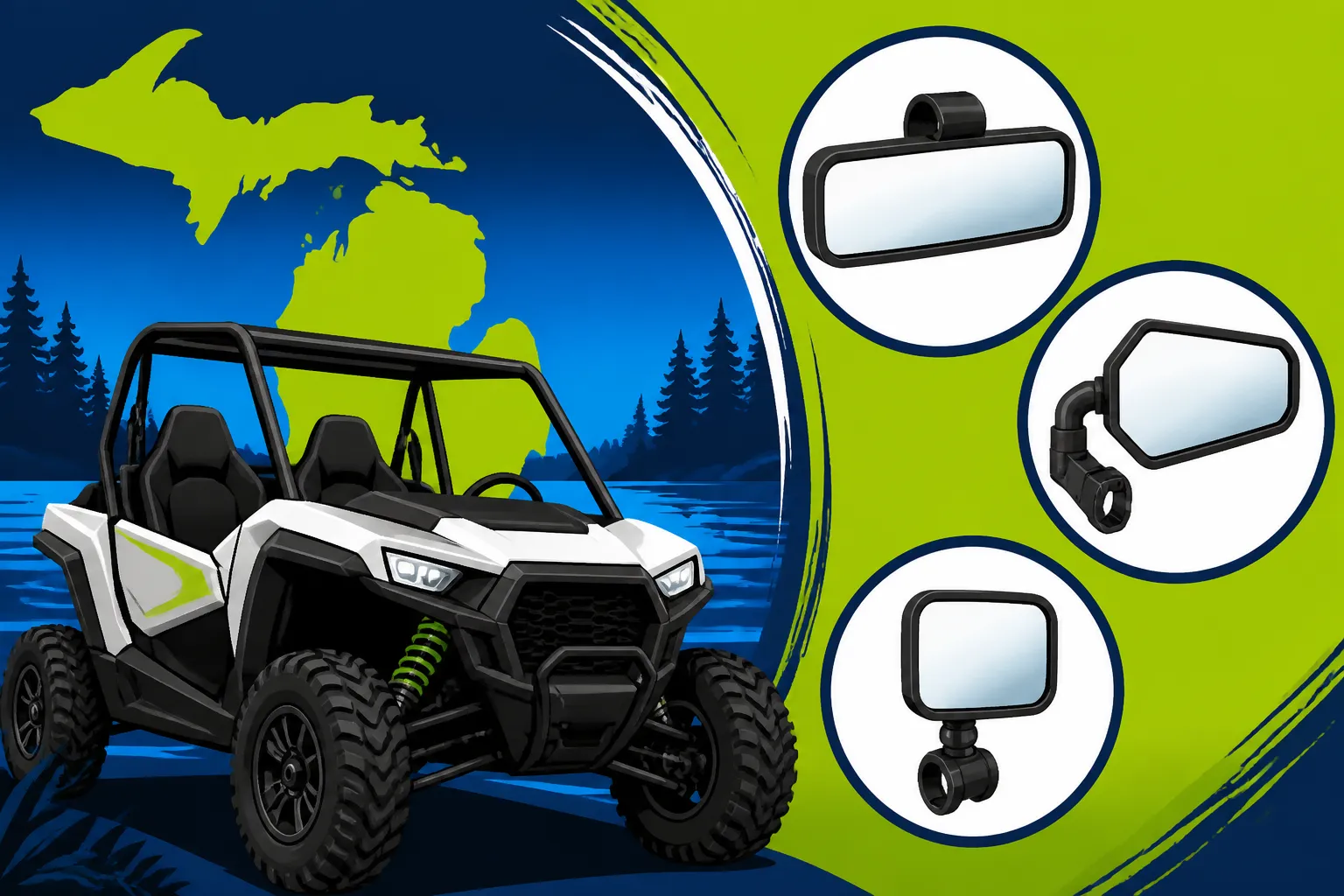
When it comes to outfitting your UTV for street legality in Michigan, you'll generally be looking at a combination of side mirrors and a rearview mirror. Each plays a vital role in providing the complete field of vision required for safe road operation.
Side Mirrors Driver and Passenger
Side mirrors are arguably the most important mirrors for road use, providing critical visibility to the left and right sides of your UTV. Michigan law requires a driver's side mirror and often strongly encourages, if not explicitly requires, a passenger-side mirror as well to truly eliminate blind spots. These mirrors typically mount to your roll cage using clamps or bolts, and you’ll want to ensure they are robust enough to withstand both road vibrations and the occasional brush with a branch if you still plan on hitting the trails.
When choosing side mirrors, look for options that offer a wide field of view, often achieved with slightly convex glass. The key is "slightly" convex – too much curvature will distort images and make judging distances difficult, which is dangerous on the road. Many quality SuperATV mirrors, for example, incorporate a design that balances wide visibility with minimal distortion. Adjustable mounts are a must, allowing you to fine-tune the angle for your seating position and driving style. Breakaway features, where the mirror can fold in or pivot if struck, are a huge bonus, preventing costly damage if you accidentally clip something on a tight trail or even in a crowded parking lot. Make sure your chosen mirrors come with all necessary hardware and can fit your specific roll cage diameter.
Rearview Mirrors
While side mirrors cover the immediate sides, a good rearview mirror is essential for seeing directly behind you and understanding traffic flow. Think about how often you glance at your rearview mirror in your car; it’s no different in a UTV on the road. Many riders opt for a panoramic rearview mirror, which is wider than a standard one and gives an even broader view of what’s approaching from the rear. This can be particularly helpful in UTVs, where cargo or passengers might obstruct a narrower field of view.
These mirrors typically mount to the top bar of your roll cage. The challenge here is finding one that stays stable and doesn't vibrate excessively, especially on rougher paved roads or gravel sections. A vibrating rearview mirror quickly becomes useless. Look for models with secure, anti-vibration mounts. Together with your side mirrors, a well-placed rearview mirror helps create a complete picture of your surroundings, significantly reducing blind spots and enhancing your ability to react to changing traffic conditions. Remember, you'll need a combination of mirrors to pass inspection, so don't overlook this crucial component. For specific requirements, consult [Mirrors Required on a Street-Legal Side-by-Side].
Specialty and Universal Options
The market for UTV mirrors has exploded, offering more than just basic functionality. You can find specialty mirrors designed for specific UTV models, ensuring a perfect fit and sometimes even integrating with the vehicle’s aesthetics. Beyond that, many universal mirror kits are available, designed to fit a wide range of roll cage sizes and UTV brands. These are often an excellent choice if you're looking for a cost-effective or readily available solution.
Some advanced options include mirrors with integrated LED turn signals, providing an extra layer of visibility for road use, or mirrors with built-in auxiliary lights for enhanced nighttime trail visibility. While these aren't strictly required by DOT standards, they can contribute to overall safety and convenience. When considering universal options, pay close attention to the clamping mechanism and ensure it's compatible with your UTV's roll bar diameter. Brands like SuperATV often offer a wide array of both universal and model-specific mirror solutions, known for their robust construction and compliance with road-use standards. It's worth exploring these options to find mirrors that not only meet legal requirements but also enhance your driving experience.
Key Features to Look for in DOT-Approved UTV Mirrors
Choosing the right mirrors isn't just about finding something that "looks" street legal; it's about investing in features that ensure safety, durability, and compliance. Given Michigan's diverse riding conditions, from smooth pavement to dusty gravel roads, your mirrors need to be up to the task.
Durability and Construction
When you're out on the trails or even just cruising down a bumpy county road, your UTV takes a beating, and its accessories need to stand up to that abuse. For mirrors, this means looking for robust construction. High-impact ABS plastic housings are common, but even better are mirrors with aluminum or steel components, especially in the mounting brackets. Shatter-resistant glass is a non-negotiable feature for DOT-approved mirrors, protecting you and others in the event of an impact. Some mirrors even use a film over the glass for added safety, preventing shards from scattering.
Weather sealing is another critical aspect. Michigan weather can be unforgiving, with rain, snow, and extreme temperatures all taking their toll. Good mirrors will have seals that prevent moisture and dust from getting into the mirror housing, which can cause corrosion or fogging. Lastly, vibration resistance is paramount. Off-road vehicles naturally vibrate more than cars, and that vibration can quickly render a flimsy mirror useless, blurring your view or causing it to loosen. Look for mirrors with heavy-duty ball joints or secure clamping systems designed to minimize shake and maintain a clear image at all times.
Adjustability and Field of View
A mirror is only useful if you can see what you need to see. This makes adjustability a top priority. You'll want mirrors that can be easily angled up, down, in, and out to provide the optimal field of view for your specific seating position. Remember, UTV seats and steering wheel positions can vary, so a one-size-fits-all fixed angle simply won't work. Easy adjustment, even on the fly, is crucial for adapting to different drivers or trail conditions.
The field of view itself is equally important. While DOT standards don't specify an exact degree of convexity, they do require an adequate view. Slightly convex mirrors offer a wider perspective, helping to minimize blind spots – those notoriously dangerous areas around your vehicle that aren't visible in your direct line of sight or standard mirrors. However, too much convexity can distort distances, making objects appear farther away than they are. Look for mirrors that strike a good balance, providing a broad, clear image without excessive fish-eye effect. Some mirrors also feature a "breakaway" design, allowing them to fold in when they hit an obstacle on the trail, protecting them from damage without requiring tools for adjustment.
Ease of Installation and Compatibility
Nobody wants to spend an entire weekend wrestling with complicated installations. Look for DOT-approved mirrors that are designed for straightforward installation, ideally with universal clamp-on designs that fit common roll cage diameters (like 1.75", 1.875", or 2"). Many kits come with multiple clamp sizes or shims to ensure a snug fit. While bolt-on options can offer a more secure and permanent attachment, they typically require drilling into your roll cage, which isn't always ideal for every owner.
Before purchasing, always double-check the product specifications for compatibility with your specific UTV model and roll cage. You don't want to buy a beautiful set of mirrors only to find they don't fit your machine's unique geometry. Brands like SuperATV often provide detailed compatibility charts, making it easier to select the right product. An easy installation not only saves you time and frustration but also ensures that the mirrors are mounted correctly and securely, which is vital for both their longevity and your safety on Michigan’s roads.
Installation Tips for Your UTV Mirrors
So, you’ve picked out your perfect set of DOT-approved mirrors. Now comes the exciting part: getting them on your UTV. While most mirror kits come with instructions, a few general tips can make the process smoother and ensure your mirrors are correctly installed for both compliance and safety.
Tools and Preparation
Before you even open the box, gather your tools. You’ll likely need an Allen wrench set, a socket wrench set, a tape measure, and maybe a marker or pencil. Having a helper can also be incredibly useful, especially when trying to hold mirrors in place and tighten clamps simultaneously. Always take a few moments to read through the manufacturer’s instructions completely. Every kit can have slight variations in how it’s designed to be installed, and skipping this step can lead to frustration or improper mounting.
It’s also a good idea to clean the areas of your roll cage where the mirrors will attach. Any dirt or grime could prevent the clamps from seating properly, leading to instability or even scratching your cage. If your mirrors have any protective films on the glass, leave them on until the very end to prevent accidental scratches during installation. Think of it as preparing your workspace – a little bit of prep work goes a long way in ensuring a smooth installation.
Step-by-Step Installation Guide General
While specific steps will vary by manufacturer, here’s a general overview of what to expect:
- Identify Mounting Points: For side mirrors, these are typically on the outer vertical or horizontal bars of your roll cage, where they won't obstruct your view forward. For a rearview mirror, it's usually the top-center horizontal bar.
- Attach Clamps/Brackets: Loosely assemble the clamps or brackets to the roll cage first. Don't tighten them down fully yet. This allows for fine-tuning the position.
- Mount Mirror Heads: Attach the mirror heads to the clamps or brackets. Again, keep them a bit loose so you can adjust the angle.
- Position and Align: Sit in the driver's seat. Have your helper hold the mirrors or make small adjustments while you find the ideal position for maximum rear and side visibility. Ensure they are symmetrical on both sides if possible. Once you’re happy with the general placement, you can start to snug things down.
- Tighten Securely: Once positioned, fully tighten all bolts and clamps. Go slowly and ensure everything is snug but don’t overtighten, especially on plastic components, as this can cause cracking. After a short ride, recheck the tightness of all fasteners, as vibrations can sometimes cause initial loosening.
Remember, a solid installation is key to passing an inspection. If a Michigan Department of State official sees loose or flimsy mirrors during a street-legal UTV inspection, it could be a reason for rejection. You want everything to be as solid and stable as possible. For more details on the inspection process, check out [Michigan Street-Legal UTV Inspection at the Secretary of State].
Fine-Tuning for Optimal Visibility
Even after tightening everything, the work isn't quite done. The final crucial step is fine-tuning the mirror angles for optimal visibility. This isn't just about what looks good; it's about eliminating blind spots and maximizing your ability to see traffic.
Start with the side mirrors. While sitting in the driver's seat, adjust each mirror so that you can just barely see the side of your UTV in the innermost edge of the mirror. This provides the widest possible view of the lanes beside and behind you. For the rearview mirror, adjust it so that you have a clear, centered view of the road directly behind your UTV. Once adjusted, hop out and walk around your UTV. Pretend you’re in another vehicle and see if you can "disappear" from the mirrors at any point. If you find significant blind spots, readjust. You might even want to take a short, slow test drive in a safe area to see how the mirrors perform at speed and if any vibrations cause blurriness. Your goal is a setup that gives you confidence on the road, knowing you can easily monitor your surroundings without straining or guessing. This small amount of effort in fine-tuning can make a world of difference in your safety and enjoyment on public roads.
UTV Mirror Feature Comparison
Here's a quick look at some common mirror types and features to help you decide what's best for your Michigan UTV.
| Feature / Type | Clamp-On Side Mirror | Bolt-On Side Mirror | Panoramic Rearview Mirror | Breakaway Side Mirror |
|---|---|---|---|---|
| Mounting | Adjustable clamp to roll cage | Bolts directly to roll cage (may require drilling) | Clamp to top roll bar | Clamp or bolt-on with pivot mechanism |
| Durability | Good, depends on clamp strength | Excellent, very secure | Good, less exposed to direct impact | Excellent, designed to absorb impacts |
| Vibration | Good, if clamp is tight | Best, very stable | Good, if mount is secure | Good, robust construction |
| Field of View | Standard to wide convex | Standard to wide convex | Very wide, often slightly convex | Standard to wide convex |
| Adjustability | Easy, often tool-free once mounted | Easy, often tool-free once mounted | Easy, often tool-free once mounted | Easy, designed to pivot freely |
| Trail Use | Decent, but can be damaged if struck | Less ideal due to fixed position | Good, offers rear visibility | Best, folds in to prevent damage |
| Street Legal | Yes, if DOT-approved glass and size | Yes, if DOT-approved glass and size | Yes, if DOT-approved glass and size | Yes, if DOT-approved glass and size |
| Common Drawbacks | Can loosen over time if not checked; less integrated | Requires drilling; permanent; less forgiving to impacts | Can be prone to glare depending on angle | Can sometimes look less integrated or bulky |
Disclaimer
This article is for general informational purposes only and does not constitute professional advice. Laws, prices and regulations vary by location and change over time. Consult a qualified professional for guidance on your specific situation.