Michigan ORV Road Rules for Riders Under 16
It can be incredibly exciting to share the joy of off-road riding with your children, picturing them confidently navigating trails and back roads. But for many Michigan families, that dream quickly hits a wall of confusing regulations, especially when it comes to kids operating ORVs on public roads. It's a real headache trying to decipher Michigan's specific age limits, supervision requirements, and safety training rules for young riders, and it often leaves parents feeling overwhelmed and worried about unknowingly breaking the law. This guide is here to untangle those complicated rules, walking you through everything you need to know to ensure your under-16 rider stays safe and legal while enjoying Michigan's ORV-friendly county roads and routes.
The Big Picture: Why Michigan Has Specific Rules for Young Riders
Michigan doesn't just throw out age rules for ORV road riding on a whim; these regulations are deeply rooted in safety and legal liability. It’s a delicate balance of wanting to foster a love for the outdoors in our youth while also acknowledging that operating a powerful machine, even a small one, requires maturity, skill, and an understanding of risks. When a child is operating an ORV, particularly on a public road, the stakes are significantly higher than just puttering around in the backyard. There are other vehicles, pedestrians, and unpredictable situations that demand quick judgment, which younger riders may not yet possess.
Prioritizing Safety on Public Roads
Think about it from a safety perspective: a child’s reaction time, spatial awareness, and ability to anticipate hazards are still developing. Road riding introduces a whole new layer of complexity compared to a controlled trail environment. On a designated ORV route that shares space with cars, trucks, bicycles, and even farm equipment, a young rider needs to be extra vigilant. The rules are designed to protect not just the child, but also other road users. Michigan wants to prevent accidents, injuries, and fatalities, and setting strict guidelines for young operators is a primary way to achieve that. It's about recognizing that a 12-year-old, no matter how skilled on the trails, might not have the same decision-making capacity as an adult when a car suddenly pulls out or a blind corner presents an unexpected obstacle. That's why things like direct adult supervision are so crucial—it provides that immediate backup and guidance that a young rider might need in a pinch.
Understanding Legal Liability for Parents and Guardians
Beyond safety, there's the very real concern of legal liability. As a parent or guardian, you are legally responsible for your child's actions, especially when they are operating a motorized vehicle. If your child is involved in an accident while riding an ORV on a public road without proper supervision, a safety certificate, or on a machine that doesn't meet the requirements, the legal ramifications can be severe. This could range from fines and penalties for violating ORV laws to civil lawsuits if someone else is injured or property is damaged. Imagine the stress and financial burden if your child caused an accident because they didn't understand right-of-way rules, and you, as the supervising adult, weren't within the legal definition of "direct visual supervision." The rules might seem overly complicated at times, but they ultimately serve to clarify responsibilities and mitigate risks, both for the rider and for those who entrust them with a machine. It’s about ensuring that everyone understands the serious commitment involved when an ORV hits the road, especially with a young person at the controls.
Age-Specific Rules for ORV Road Riding
Michigan is pretty clear about who can ride an ORV on public roads and under what conditions, and it varies significantly by age. It's not a one-size-fits-all approach, and understanding these distinctions is key to a safe and legal outing with your kids. Forget what you might have done "back in your day" or what happens in other states; Michigan has its own playbook.
Riders 10 and 11: The Tiniest Trailblazers
For children who are 10 or 11 years old, their opportunities to ride an ORV on a designated county road or route are extremely limited, and for very good reason: safety. At this age, riders are still developing critical motor skills, judgment, and the ability to handle larger, heavier machines. The law acknowledges this by placing significant restrictions. A 10 or 11-year-old can only operate an ORV on a county road or shoulder designated for ORV use if they are under the direct visual supervision of an adult and are riding a machine that meets specific size requirements for their age. Typically, this means an ORV that they can physically control, often smaller youth models. Even then, their access is generally restricted to specific types of low-traffic, designated ORV routes. They absolutely must have a valid Michigan ORV Safety Certificate.
Let's consider a scenario: The Miller family lives near a rural county road in Roscommon County that's been designated an ORV route. Their 11-year-old, Chloe, has completed her ORV safety course and received her certificate. She has a youth model ATV that's the correct size for her. Her dad wants to take her for a short ride down the road to a nearby trailhead. This is permissible, but Chloe's dad must be immediately present and able to see her at all times, riding an ORV of his own or in a vehicle right behind her. He can't just be "somewhere in the vicinity" or waiting at the trailhead; "direct visual supervision" means just that. The types of roads are also important—these aren't generally for busy paved highways, but rather for less-trafficked gravel or dirt county roads where ORVs are explicitly allowed. It’s a very tightly controlled environment, focusing on letting young riders gain experience safely, but always with an adult literally watching their every move.
The Middle Ground: 12 to 15-Year-Old Operators
When a child reaches 12 years old, the rules expand slightly, reflecting their increased maturity and developing skills. Riders aged 12 to 15 years old still face important restrictions but have a bit more latitude than their younger counterparts. To operate an ORV on a designated county road or shoulder, they must possess a valid Michigan ORV Safety Certificate. This certificate is non-negotiable and demonstrates that they have received proper training on safe operation, rules of the trail, and road etiquette. In addition to the safety certificate, they are still required to be under the direct visual supervision of an adult. This adult supervisor must be at least 16 years old.
So, picture this: The Garcia family is on a trip to the Upper Peninsula, planning to ride some of the extensive [Western Upper Peninsula ATV Trail Miles]. Their 14-year-old son, Mateo, has his ORV Safety Certificate and a UTV that's a good fit for him. While they're allowed to use the county roads designated as ORV routes to connect trail sections, Mateo cannot ride off by himself. His mom or dad, who are both over 16, must be riding either immediately in front or behind him, maintaining direct visual contact. It's not enough for an adult to be at the front of a long group ride if Mateo is several machines back and out of sight. The adult needs to be able to intervene instantly if a situation arises. This age group sees more opportunities for road riding, but the emphasis remains heavily on supervised learning and safety. They are permitted on the same types of designated county roads and shoulders as younger riders, but the core requirement for certification and direct supervision remains paramount.
Approaching Adulthood: 16-Year-Olds and Beyond
Once a rider turns 16, Michigan's ORV road rules begin to align more closely with those for adult operators, though there are still nuances. A 16-year-old operator, if they possess a valid driver's license (not just a permit!), can generally operate an ORV on designated county roads and shoulders without the requirement of direct adult visual supervision. However, the requirement for an ORV Safety Certificate is still in place if they are under 16 at the time of the course completion. If they complete the safety course at 16 or older, they don't technically need it for road riding, but it's always highly recommended for all riders. The key here is the driver's license. Having a valid driver's license indicates a certain level of understanding of traffic laws and road etiquette, which is essential for safely sharing public thoroughfares.
Consider Liam, who just turned 16 and got his driver's license. He's itching to take his side-by-side to the local gas station in his small town, which has opened its roads to ORVs. Because he has his driver's license, he can do this without his parents trailing behind him. However, all other road rules still apply: he needs to adhere to speed limits (like Michigan's typical [Michigan 25 mph Limit on County Roads]), display his ORV license sticker, follow all traffic laws, and wear a helmet if the vehicle isn't street-legal with a windshield and other protections. The freedom increases, but so does the individual responsibility. It's a significant step toward independent riding, but it doesn't mean a free pass from safety or legal requirements. They still need to know Michigan ORV Road Rules for Riders Under 16 and follow them closely.
Essential Gear and Machine Requirements for Under-16s on Roads
Getting your young rider ready for a Michigan ORV road adventure isn't just about knowing the rules; it's also about making sure they have the right gear and that their machine is up to snuff. Safety on the road means more than just a certificate; it means being properly equipped for the unexpected.
The Non-Negotiable Helmet and Eye Protection Rule
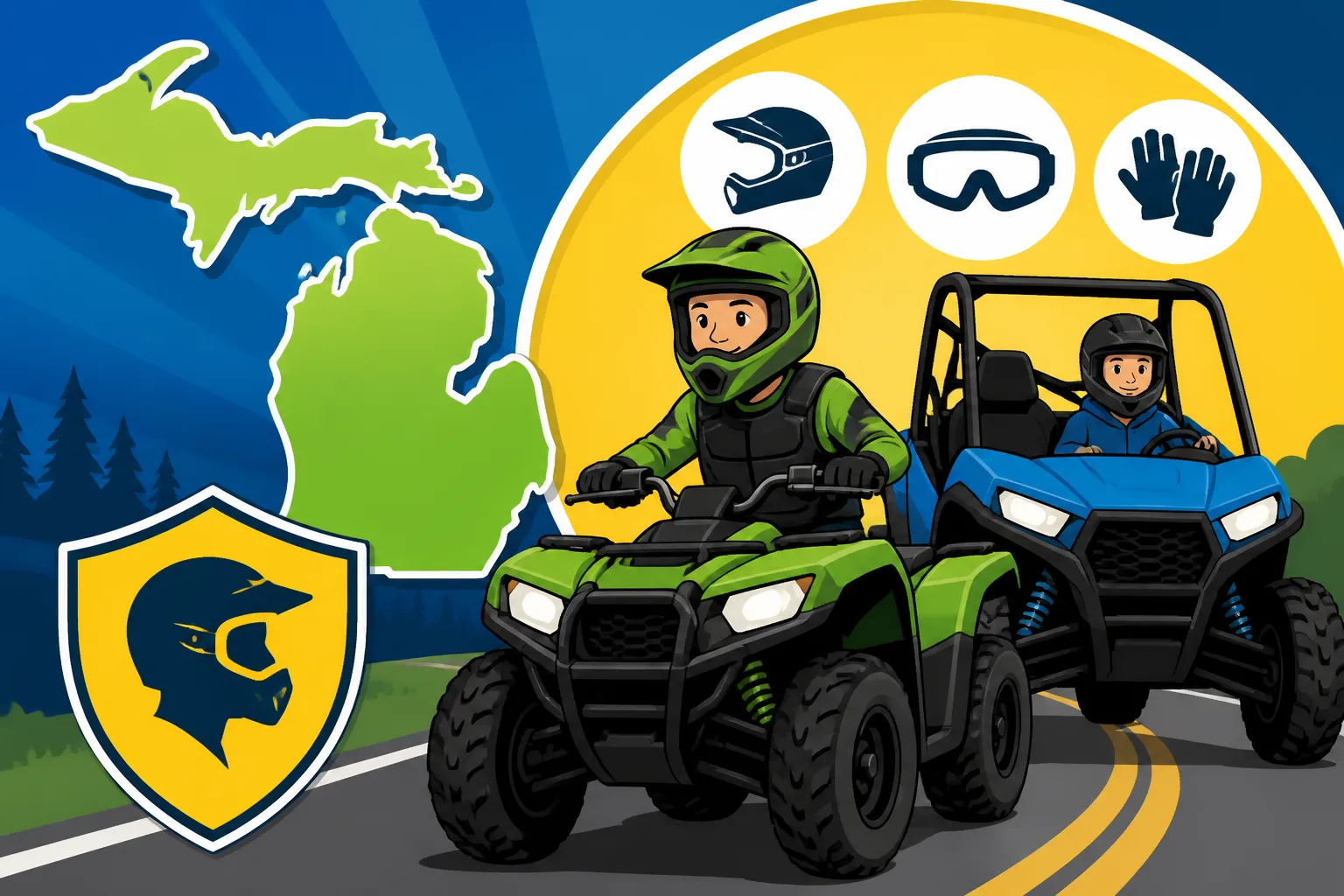
Michigan is very clear on this: if you're riding an ORV on a public road or shoulder, you're almost certainly going to need a helmet. For riders under 16, this requirement is practically universal, regardless of the type of ORV they're operating. This isn't just a suggestion; it's the law, and it's there to protect their most vital asset. A properly fitted DOT-approved helmet can literally be the difference between a minor bump and a life-altering injury. Parents often grapple with finding a helmet that fits well and is comfortable enough that their child will actually wear it without complaint. It's an investment, but one that is absolutely worth it.
Alongside the helmet, suitable eye protection is also mandatory for most ORV road riding. This means goggles or a face shield that can protect against dust, debris, insects, and even small rocks kicked up by other vehicles. Riding without eye protection, especially at speed, can impair vision, lead to serious eye injuries, and even cause a crash. Imagine trying to ride an ORV at 25 mph down a gravel road when a bee flies into your eye or dust blinds you—it’s a recipe for disaster. So, while your child might complain about the "dorky" goggles, remind them it's about seeing clearly and staying safe. For those considering upgrades, looking for well-ventilated helmets and anti-fog goggles is key to comfort and compliance. You might even find that some aftermarket brands have youth-specific safety gear that helps with fit and comfort.
Machine Type and Size Restrictions for Youth
Michigan law also dictates that an ORV operated by a rider under 16 must be appropriately sized for the operator. This means the rider must be able to comfortably reach and operate all controls, including the throttle, brakes, and steering, while seated or standing on the footrests. They also need to be able to shift their weight effectively to control the machine. Trying to put a 12-year-old on an adult-sized 700cc quad for road riding is not only dangerous but illegal. The machine must fit the rider, not the other way around. This typically means youth-model ATVs or smaller, youth-appropriate UTVs.
Furthermore, any ORV used on a public road must be equipped with working headlights, taillights, and brakes. These are not optional "nice-to-haves" for road use; they are critical safety features. While you might use an ORV on private land without a working taillight, taking it on a public road, even a seldom-used county route, demands full functionality. If your child's machine needs some upgrades to meet these standards, it's wise to get them done. For instance, if you're looking at a used side-by-side that might need a lighting overhaul, or perhaps better mirrors for road visibility, remember that companies like SuperATV offer a vast selection of lighting kits, mirrors, and other accessories that can bring your machine up to spec for road legality and safety. Investing in these components ensures visibility and proper signaling, crucial when sharing the road with other traffic. Always double-check your machine's condition before hitting a road with a young rider.
Navigating Supervision and Permits for Young Road Riders
Beyond the physical machine and gear, there's a whole layer of administrative and supervisory requirements that parents must navigate to ensure their under-16 ORV rider is legal on Michigan's roads. Missing these steps can lead to tickets, fines, and even a temporary loss of riding privileges.
The Critical Role of Direct Visual Supervision
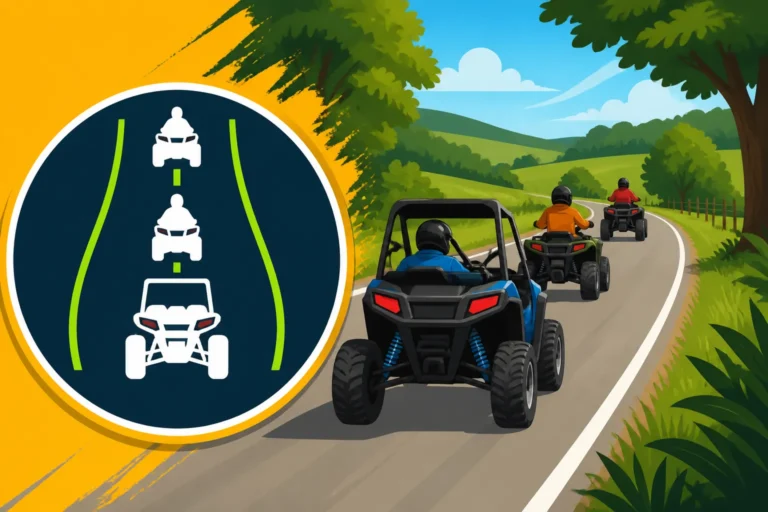
"Direct visual supervision" is one of those legal phrases that can cause a lot of confusion, but in Michigan ORV law, it means exactly what it sounds like. When a young rider (under 16) is on a designated county road or shoulder, the supervising adult (who must be at least 16 years old) needs to be able to see the child at all times. This isn't about being in the same general area or within earshot; it means the adult needs to have a clear, unobstructed view of the young rider and their machine.
This often means the adult must be riding their own ORV either directly in front of or behind the child, or even driving a vehicle that immediately follows them. You can't be several bends in the trail ahead, or waiting at the gas station a mile down the road while your child rides alone. The intent is that if the child encounters a problem—a stalled engine, a tricky patch of gravel, an approaching vehicle—the supervising adult can immediately respond and provide assistance or direction. This rule validates the frustration parents feel about coordinating rides, especially with multiple children or different skill levels, but it's a non-negotiable for safety. It's about being present and prepared to act as a guardian angel on wheels. You need to know [What Direct Visual Supervision Actually Means] to avoid costly mistakes.
Michigan ORV Safety Certificate Requirements
No matter the age (under 16), if your child is operating an ORV on a designated public road or shoulder in Michigan, they must have an ORV Safety Certificate. This isn't something you can skip. The certificate proves that the rider has completed an approved safety education course, which covers essential topics like safe operating procedures, emergency maneuvers, environmental concerns, and, crucially, the rules and laws pertaining to ORV operation in Michigan. These courses are designed to instill a sense of responsibility and knowledge that goes beyond just knowing how to push a throttle.
For parents, securing this certificate often means enrolling their child in an online course or an in-person class offered by the DNR or certified instructors. While it might feel like another hoop to jump through, it's a foundational step in preparing a young rider for the complexities of sharing public spaces. Many parents attest that the courses themselves provide valuable information even for seasoned adult riders. Having that certificate in hand not only makes your child legal but also instills confidence in their ability to make smart decisions on the road. Without it, even with perfect supervision, your child is operating illegally, and you could face penalties if stopped by a conservation officer or local law enforcement. For details, check out [Michigan ORV Safety Certificate Requirements].
The ORV License and Trail Permit: Don't Forget the Sticker!
Before any ORV, regardless of the operator's age, can legally hit a Michigan county road or route, it must display a current Michigan ORV license and trail permit sticker. These aren't just for trails; they're for any designated ORV use area, which includes those county roads where ORVs are allowed. This is often an oversight for parents who think the sticker is only for state trails. Each year, the ORV sticker needs to be renewed and clearly affixed to the machine. It shows that you've paid the necessary fees that contribute to maintaining Michigan's ORV trail systems and routes.
For families with young riders, this means ensuring that the machine your child is riding has a valid sticker. It's a simple step, but easily forgotten in the excitement of a ride. Conservation officers regularly check for these permits, and riding without one can result in a fine. So, before you head out, make it a habit to quickly check for that brightly colored sticker. It's an easy way to avoid unnecessary headaches and ensure you're contributing to the infrastructure that makes Michigan such a fantastic place to ride. You can learn more about [Michigan ORV License and Trail Permit Explained].
Common Pitfalls and How to Avoid Them
Even with the best intentions, it's easy for parents and young riders to stumble into common traps when it comes to Michigan's ORV road rules. A little foresight and understanding of these frequent mistakes can save you from a lot of hassle, fines, and potential danger.
Misinterpreting "Designated Road" and "Maintained Portion"
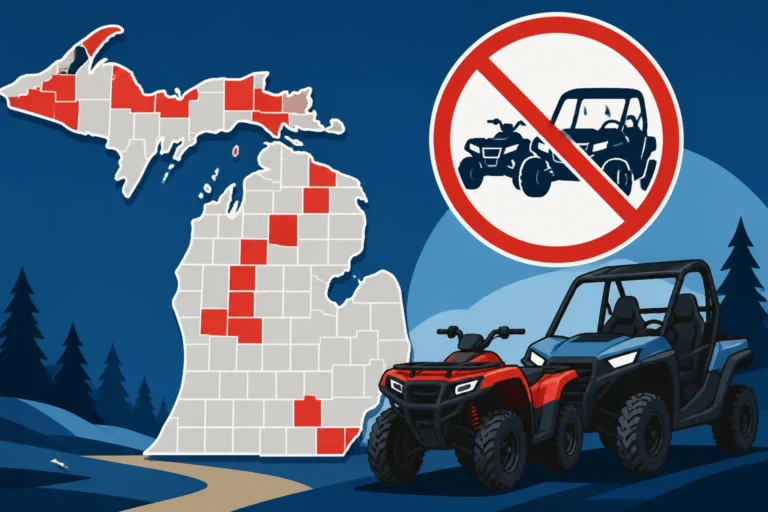
One of the most frequent mistakes families make is assuming all county roads are open to ORVs, or misunderstanding what "designated" truly means. Michigan law specifies that ORVs are only allowed on county roads that have been explicitly designated open by local ordinance. This means you can't just pick any gravel road and assume it's fair game. Some counties have ordinances, others don't, and some might only open specific roads. Similarly, the concept of the "maintained portion of the road" can be tricky. Generally, ORVs are required to ride on the far right of the maintained portion, which includes the shoulder but often excludes the ditch or the main paved lane where cars travel at higher speeds.
A common scenario: The Johnson family is visiting a cabin in a county they're unfamiliar with. Their 15-year-old, fully certified, wants to ride his UTV down a beautiful tree-lined gravel road to the general store. His dad, thinking it's a "back road" so it must be fine, lets him go. However, that specific county may not have an ORV ordinance, or that particular road might not be designated. The fines for operating on an undesignated road can be substantial, and ignorance isn't a valid defense. Always, always check local county ordinances before riding on any public road. Resources like county websites or DNR maps can help clarify where ORVs are permitted. Failing to understand [Michigan County ORV Ordinances Explained] can quickly turn a fun ride into a costly lesson.
Overlooking Machine Road-Worthiness for Kids
While you might be diligent about helmets and safety certificates, it's easy to overlook crucial aspects of the ORV itself that become paramount on public roads. Is the machine truly "road-worthy" for a child operator? This means not just basic lights and brakes, but also things like adequate tires for gravel surfaces, working mirrors for situational awareness, and appropriate seating. A machine perfectly fine for tearing up a forest trail might not be ideal, or even legal, for sustained use on a county road, especially with a young driver.
For instance, many youth ATVs are designed for off-road environments and might not have the best stability or turning radius for road speeds. Similarly, older UTVs might have dim headlights or missing taillight covers. If you're going to put your child on a road, even for short distances, ensure their machine is in top condition. This is where investing in some aftermarket parts can make a huge difference. For instance, if you're concerned about visibility, upgrading to brighter LED light bars or adding robust mirrors (check out options from brands like SuperATV for durable choices) can greatly enhance safety for a young rider on the road. The clearer they can see and be seen, the safer everyone is.
Underestimating the Importance of Practice and Communication
Finally, many parents underestimate the need for consistent practice and clear communication with their young riders about road rules. Just because a child has a safety certificate doesn't mean they'll instinctively remember to check their mirrors, signal a turn (if equipped), or be aware of oncoming traffic. Road riding is a different beast than trail riding, often requiring more nuanced judgment. Before ever setting a tire on a public road, spend time with your child in a controlled environment (like a large field or private driveway) practicing simulated road scenarios.
Talk through different situations: "What do you do if a car comes around this corner?" "Where do you position yourself on the road when another vehicle approaches?" "Remember to look both ways at intersections, even if you have the right-of-way." Establish clear hand signals if your ORV doesn't have turn signals. Reiterate the importance of staying to the far right, maintaining a safe speed, and never, ever riding distracted. This ongoing dialogue and practical reinforcement are invaluable. It's not just about compliance; it's about building responsible, aware riders who can confidently and safely navigate Michigan's beautiful ORV-friendly roads.
Summary of Michigan ORV Road Rules for Young Riders
Michigan has a specific framework to ensure the safety and legal compliance of young ORV riders on designated public roads. Here’s a quick overview of the key points:
| Age of Rider | ORV Safety Certificate Required? | Direct Visual Adult Supervision (16+) Required? | Driver's License Required? | Typical Permitted Roads |
|---|---|---|---|---|
| 10-11 Years Old | Yes | Yes | No | Designated county roads/shoulders, specific low-traffic routes. |
| 12-15 Years Old | Yes | Yes | No | Designated county roads/shoulders, wider range of routes. |
| 16 Years Old | Yes (if course taken < 16) | No (if possess valid driver's license) | Yes (valid driver's license) | Designated county roads/shoulders, similar to adult riders but all ORV laws apply. |
Remember, this table summarizes the core age-specific requirements. All riders, regardless of age, must adhere to general ORV laws, including wearing a helmet (unless explicitly exempt in a street-legal UTV), having proper machine lights and brakes, displaying a valid ORV license and trail permit, and following all traffic laws and local ordinances. Always confirm the specific designation of any county road before riding.
Disclaimer
This article is for general informational purposes only and does not constitute professional advice. Laws, prices and regulations vary by location and change over time. Consult a qualified professional for guidance on your specific situation.