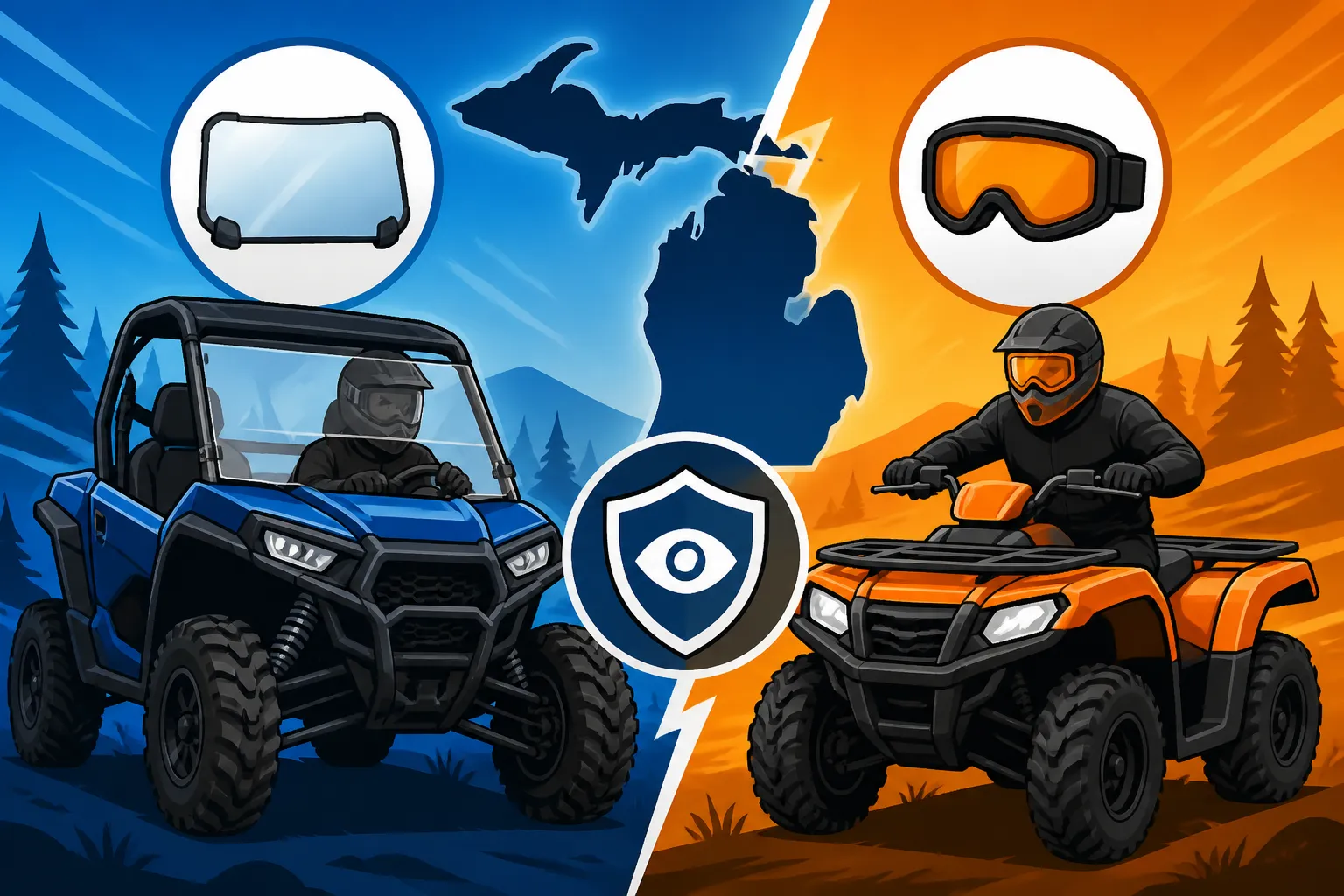
Windshield or Goggles: Michigan’s Eye Protection Rule
You're getting ready to hit the trails or maybe even take your UTV on a county road in Michigan, and a crucial question pops into your head: what's the deal with eye protection? Do you absolutely need a full windshield, or are a good pair of goggles enough to keep you safe and legal? It's a common dilemma, and the answer isn't always as straightforward as you might think, especially with Michigan's unique blend of off-road and street-legal ORV rules. This guide is here to cut through the confusion and clarify Michigan's eye protection requirements, helping you ride confidently and legally.
Understanding Michigan's Eye Protection Laws
Navigating the various rules for off-road vehicles (ORVs) in Michigan can feel like trying to find your way through a dense forest without a map. When it comes to eye protection, the laws differentiate between different types of machines and where you're riding them. It's not just about what feels comfortable; it's about what the law actually expects of you to ensure safety for everyone on the trail or road. Getting this wrong can lead to tickets, or worse, an injury that could have been prevented.
The Basics: What the Law Says for Off-Road Riding
For most general off-road riding on designated trails, routes, or scramble areas in Michigan, the law primarily focuses on the operator and any passengers. The core requirement for any ORV operator and passenger is that they wear a U.S. Department of Transportation (DOT) approved helmet and protective eyewear. This protective eyewear is typically understood to mean goggles or a helmet with a face shield. The emphasis here is on ensuring that your eyes are shielded from flying debris, dust, insects, and anything else the trail might throw at you.
This means that if you're out on the [Michigan's 4,000 Miles of ORV Trails Explained] with your ATV or UTV, a windshield isn't strictly mandated by law for the machine itself. Your personal eye protection is the key. Many riders find that a good pair of motocross-style goggles, designed for off-road conditions, provides excellent protection along with necessary airflow to prevent fogging, which is crucial for maintaining clear vision on challenging terrain. Remember, even if your UTV has a small half-windshield, you'll still need proper eye protection to meet the spirit and letter of the law for off-road use.
The rationale behind this rule is pure and simple: safety. On the trails, you're constantly exposed to hazards. A branch might snap back, a tire might kick up a rock, or simply the persistent dust from other riders can impair your vision. Goggles are designed to seal around your eyes, providing a barrier against these immediate threats while still allowing for the peripheral vision and dynamic sight necessary for off-road navigation. Always check that your goggles are specifically rated for powersports use to ensure they meet the durability and impact resistance needed.
Distinguishing ATVs from UTVs for Eye Protection
While the general rule of protective eyewear applies to both ATVs and UTVs when ridden off-road, the practical application can feel a bit different. On an ATV, the rider is completely exposed, making goggles a non-negotiable piece of gear from a safety standpoint. There's no bodywork or factory-installed windshield to offer even minimal protection from the elements or debris, so direct eye protection is paramount for the operator.
UTVs, or side-by-sides, offer a bit more enclosure, often with a roof and sometimes partial doors. Some UTVs come from the factory with small windscreens or half-windshields, which can provide some deflection of wind and larger debris. However, these factory options typically do not fully enclose the cabin or meet the specific safety glass standards required for on-road use. Therefore, even with a factory half-windshield, the operator and passengers in a UTV are still expected to wear appropriate eye protection like goggles when riding off-road. The air currents and dust inside a moving UTV can still cause significant discomfort and vision impairment without them.
Think of it this way: a factory half-windshield on a UTV is a convenience, not a legal substitute for eye protection on the trails. It might keep some of the mud out, but it won't stop the fine dust particles from getting into your eyes, nor will it protect you from a rock that ricochets just right. For comprehensive safety, especially if you're hitting varied terrain with different speeds and conditions, combining the machine's limited protection with personal goggles is always the smartest approach. This ensures you're ready for anything the trail environment might present, from a sudden downpour to a thick cloud of dust.
The Street-Legal Exception
Here's where things get interesting, and the rules shift considerably. If you've gone through the process of making your UTV street-legal in Michigan, the eye protection requirements change dramatically. Once your UTV is officially titled and registered as an "assembled vehicle" and meets all the Michigan Department of State's criteria for on-road use, it essentially falls under the same rules as other motor vehicles regarding windshields and eye protection. This means if your street-legal UTV has a windshield that meets specific safety glass standards, goggles or other personal eye protection are generally not required for the occupants when riding on public roads.
However, there's a critical caveat: this windshield must be made of safety glass and be in good condition, providing an unobstructed view. It's not just any piece of plastic that qualifies. Michigan law specifies material standards for on-road vehicle components. If your street-legal UTV does not have such a windshield (perhaps you removed it for summer riding, or you have a UTV designed without one, like some open-air models), then the operator and passengers are once again required to wear eye protection like goggles. This is similar to how motorcyclists are required to wear eye protection if their bike doesn't have a windscreen or fairing.
The conversion to street-legal status for a UTV is a substantial undertaking, involving much more than just a windshield. You'll need proper lighting, mirrors, a horn, and often a VIN inspection. When you're considering [Michigan Street-Legal UTV Inspection at the Secretary of State], the condition and type of your windshield will be a major factor. Investing in a high-quality, DOT-approved safety glass windshield is often a core component of this process, ensuring you meet the legal requirements and enjoy a safer, more comfortable ride on paved roads without constantly worrying about your goggles fogging up.
The Case for Goggles: Flexibility and Direct Protection
Goggles have been the trusty companion of off-road enthusiasts for decades, and for good reason. They offer a direct, uncompromised layer of protection specifically designed for the dynamic and often dirty environment of trail riding. While a windshield provides broad coverage, goggles focus precisely on shielding your eyes, adapting to different conditions with a simplicity that sometimes a fixed windshield cannot match. They are an essential part of any rider's kit, ensuring you can maintain clear vision no matter how rough the trail gets.
Benefits of Goggles: Airflow, Anti-Fog, and Vision
One of the primary advantages of goggles, especially for aggressive off-road riding, is their ability to provide superior airflow and ventilation. High-quality goggles are designed with vents and often feature anti-fog coatings or dual-pane lenses to combat condensation. This is crucial when you're exerting yourself on a challenging trail, climbing hills, or just riding on a humid day. A fogged-up lens can instantly blind you, turning a fun ride into a dangerous situation. The direct air circulation around your eyes helps keep your vision clear, allowing you to react quickly to obstacles.
Beyond anti-fog capabilities, goggles offer an excellent field of vision. They are typically shaped to provide a wide panoramic view, minimizing blind spots that might occur with certain windshield designs or frames. The direct fit on your face also means there's no gap for dust, wind, or bugs to sneak in, providing a complete seal around your eyes. This close fit, combined with a comfortable strap, ensures they stay put even during jarring bumps and jumps. Many riders appreciate the sense of direct connection to the environment that goggles provide, allowing them to feel the air and experience the ride more viscerally, while still being protected.
Furthermore, goggles are incredibly versatile. You can easily switch lenses to match changing light conditions—clear for cloudy days or night riding, tinted for bright sunlight, or even specialized low-light lenses for dawn or dusk. This adaptability means you always have optimal vision, enhancing both safety and enjoyment. When you're navigating Michigan's varied terrains, from sun-drenched sand dunes at [Silver Lake Sand Dunes: Michigan's Only Dune Ride] to shadowy forest trails, being able to quickly adjust your eye protection is a huge asset.
Types of Goggles and What to Look For
Just like ORVs themselves, goggles come in a vast array of types, each with features catering to different riding styles and budgets. For general trail riding, motocross-style goggles are the go-to. They feature robust frames, thick foam padding for a snug fit against your face, and strong elastic straps designed to fit over a helmet. Look for models with multi-layer foam that wicks away sweat and provides a comfortable seal, preventing dust from entering.
When choosing lenses, consider options like anti-scratch and anti-fog coatings, as well as UV protection. For riders who often encounter muddy conditions, tear-offs or roll-off systems are invaluable. Tear-offs are thin, clear sheets that you stack on your goggle lens and peel off one by one when they get too dirty, instantly restoring clear vision. Roll-off systems use a canister of clear film that you can advance across the lens with a pull cord. These features are game-changers in heavy mud or dust, preventing dangerous momentary blindness.
Another important consideration is lens material. Polycarbonate lenses are standard due to their excellent impact resistance and optical clarity. Ensure the goggles you choose meet safety standards for impact protection, which is vital for protecting your eyes from unexpected debris. Brands like SuperATV, while perhaps better known for windshields and other accessories, also offer or stock a variety of high-quality goggles that stand up to the rigors of off-road riding, making them a good place to start your search for reliable eye protection that prioritizes safety and durability.
Goggle Pitfalls and How to Avoid Them
While goggles offer numerous benefits, they do come with their own set of potential drawbacks if not chosen or maintained properly. One of the most common complaints is fogging, especially during strenuous activity or in humid, cold, or rapidly changing conditions. To minimize this, invest in goggles with good ventilation, anti-fog coatings, or dual-pane lenses. Ensuring a proper fit is also key; too loose, and air can get in; too tight, and it can reduce airflow and press against your face uncomfortably.
Another issue can be discomfort over long rides, particularly if the foam padding is thin or the fit is incorrect. This can lead to pressure points around your eyes or nose. Always try goggles on with your helmet to ensure a seamless fit that doesn't create gaps or unnecessary pressure. Some riders also find that the elastic strap can become stretched out over time, leading to a loose fit. Regularly inspecting your goggles for wear and tear, and replacing them when necessary, is part of responsible riding.
Lastly, some riders might find that goggles restrict peripheral vision slightly compared to riding completely open. While modern goggles are designed to minimize this, it's something to be aware of. Practice riding with your new goggles in a familiar, safe environment before tackling challenging trails. Proper cleaning and storage are also essential to prolong the life of your goggles and maintain clear vision. Avoid wiping dusty lenses with dry cloths, as this can scratch the anti-fog coating. Instead, rinse them with water first or use a specialized goggle cleaning solution.
The Windshield Advantage: Comfort and Comprehensive Coverage
While goggles excel at direct eye protection, a good windshield, particularly on a UTV, offers a different kind of advantage: comprehensive cabin comfort and protection. It transforms the riding experience, shielding occupants from a broader range of elements and making longer rides, or rides in less-than-ideal weather, far more enjoyable. For many UTV owners, a windshield is less about meeting a minimal legal requirement for eye protection (unless street-legal) and more about enhancing the overall utility and comfort of their machine.
Benefits of Windshields: Debris, Weather, and Comfort
A primary benefit of a UTV windshield is its ability to deflect a vast amount of trail debris. Imagine riding behind another UTV on a gravel road; without a windshield, you're constantly bombarded by dust, small rocks, and even mud thrown up by their tires. A windshield acts as a barrier, keeping these nuisances out of the cabin and off your face. This significantly reduces rider fatigue and allows you to focus on the trail ahead, rather than constantly squinting or ducking. It's especially valuable in group rides where dust and flying debris are almost guaranteed.
Beyond debris, windshields offer substantial protection from the elements. Whether it's a sudden rain shower, biting wind, or even snow during a late-season ride, a windshield provides a crucial barrier. This keeps the cabin warmer in cold weather and dryer in the rain, making your UTV a much more versatile machine. You'll find yourself able to extend your riding season into cooler months or brave a pop-up storm without getting completely soaked and miserable. This enhanced comfort can be a game-changer for long days on the [Upper Peninsula ATV Trails Worth the Drive].
The comfort aspect extends to wind reduction. Riding at speed on an open UTV can be exhilarating, but the constant wind blast can be tiring and irritating, especially if you wear glasses. A windshield significantly reduces this wind, creating a calmer, quieter cabin environment. This not only makes conversation easier but also reduces the effort your body expends fighting the wind, leading to a more relaxed and enjoyable ride, especially on faster sections of trails or when transitioning between trailheads on county roads.
Windshield Materials and Durability
The material of your UTV windshield plays a huge role in its durability, clarity, and cost. The most common materials are polycarbonate, acrylic, and tempered glass. Polycarbonate is by far the most popular choice for off-road UTVs due to its incredible impact resistance. It's virtually unbreakable, making it ideal for deflecting rocks, branches, and other trail hazards. While it can scratch more easily than glass, many high-quality polycarbonate windshields come with hard coatings on both sides to improve scratch resistance. For example, brands like SuperATV offer scratch-resistant polycarbonate windshields that are designed to withstand the harsh off-road environment.
Acrylic windshields are generally more economical and offer good optical clarity, but they are more brittle than polycarbonate and are prone to cracking or shattering upon impact. They're typically not recommended for aggressive off-road riding where impacts are common. Tempered glass windshields, similar to what you'd find in a car, offer the best optical clarity and scratch resistance. However, they are heavy, the most expensive, and can shatter (into small, relatively harmless pieces) upon a severe impact, though they are quite durable. Glass is often the material of choice for UTVs that are being made street-legal, as it meets specific safety standards.
When selecting a windshield, consider your primary riding conditions. If you're tackling dense woods with low-hanging branches or aggressive rock crawling, the impact resistance of polycarbonate is paramount. If your riding is mostly open trails or light utility work, then tempered glass might be appealing for its clarity and scratch resistance, especially if you're leaning towards a street-legal conversion. Many manufacturers also offer various configurations: full windshields, half windshields, flip-up designs, and even vented options for adjustable airflow, allowing you to tailor your protection to your specific needs.
Installation Considerations for Windshields
Installing a UTV windshield can range from a relatively simple bolt-on process to a more involved affair, depending on the type and design. Most aftermarket windshields are designed to fit specific make and model UTVs, ensuring a precise fit to the roll cage and body lines. These typically come with all the necessary hardware, such as clamps, seals, and mounting brackets, and can often be installed with basic hand tools in a home garage. However, ensuring a tight, rattle-free fit is crucial for long-term satisfaction and to prevent dirt and water from sneaking in.
One key consideration during installation is sealing. A poorly sealed windshield can allow water, dust, and cold air to infiltrate the cabin, defeating some of its primary purposes. Many kits come with rubber seals or gaskets that need to be carefully installed around the edges. For full windshields, ventilation options are also important. Some designs include a vent that can be opened or closed to allow airflow, which is particularly helpful in hot weather or to reduce cabin pressure and dust swirl. Flip-up or folding windshields offer the ultimate flexibility, allowing you to quickly switch between full protection and an open-air experience.
If you're upgrading to a windshield from a brand like SuperATV, known for its durable and well-engineered accessories, you can generally expect comprehensive instructions and a relatively straightforward installation process. However, if you're not comfortable with mechanical work, or if your UTV requires complex modifications, it might be worth having a professional powersports shop handle the installation. A correctly installed windshield won't just look better; it will perform better, offering reliable protection and comfort for years of riding adventures.
When a Windshield Becomes a Requirement (Street Legal UTVs)
The biggest shift in the eye protection debate happens when you decide to take your UTV from the dirt trails to Michigan's public roads. At this point, the casual "goggles or helmet visor" rule for off-road riding gives way to more stringent requirements that align with traditional motor vehicle laws. If you're going to make your UTV street-legal, a proper windshield isn't just a comfort feature—it's a legal necessity that comes with specific standards.
The Michigan Assembled Vehicle Rules
Michigan allows for UTVs to be made street-legal through its "assembled vehicle" process, which is designed for custom-built or heavily modified vehicles that don't fit standard vehicle categories. This process is complex and involves a thorough inspection to ensure the UTV meets a comprehensive list of safety equipment requirements. One of the most significant requirements for a street-legal UTV is the presence of a windshield that meets specific automotive standards. It's not enough to simply have a piece of plastic mounted to your roll cage. This windshield must be made of safety glass, providing an unobstructed view and capable of withstanding impacts safely.
Without a proper safety glass windshield, your UTV will not pass the assembled vehicle inspection required by the Secretary of State. This means that if you're planning to take your machine on county roads that permit ORV use or even trying to get a full registration for street use, this component is non-negotiable. The law is designed to ensure that vehicles sharing public roadways offer a baseline of safety for their occupants, and an approved windshield is a critical part of that. It prevents debris from hitting the driver's face at road speeds and helps maintain visibility in various weather conditions, much like a car windshield. You can learn more about this process in [Michigan's Assembled Vehicle Route for a UTV].
Navigating these regulations can be a bit daunting, and it's easy to overlook a detail. But missing this crucial component will stall your plans to ride legally on the street. It’s a testament to the state’s commitment to safety that they require such robust standards for any vehicle sharing the road with traditional cars and trucks. For many riders, the investment in a compliant windshield is one of the most substantial parts of the street-legal conversion, but it's an investment that pays off in legal peace of mind and enhanced road safety.
Safety Glass and Material Standards
When Michigan law specifies a windshield for street-legal vehicles, it's referring to "safety glass." This isn't just any transparent material. Safety glass, specifically automotive-grade laminated or tempered glass, is designed to either remain intact when shattered (laminated) or break into small, blunt pieces (tempered) to minimize injury to occupants in the event of an impact. This is a far cry from the polycarbonate or acrylic typically used for off-road-only UTV windshields, even the scratch-resistant ones.
The material must be optically clear, free from distortion, and capable of being cleaned by a windshield wiper system, which is another requirement for street-legal UTVs. You can't have a windshield that warps your vision or becomes permanently obscured by mud or grime after a short ride. This means that a windshield designed primarily for off-road use, even a high-quality polycarbonate one from a reputable brand, might not meet the specific safety glass certifications required for on-road use without specific DOT approval markings.
It's crucial to purchase a windshield that is explicitly advertised as "DOT approved" or meeting "safety glass standards" for automotive use if your goal is a street-legal conversion. Attempting to use a standard off-road windshield will likely result in a failed inspection. When asking about [Safety Glass Windshield Cost for a Side-by-Side], be sure to specify that you need a street-legal compliant option, as these will inherently be different and generally more expensive than their off-road counterparts due to the specialized material and testing requirements. Don't compromise on this point, as your safety and legal compliance depend on it.
Inspection Requirements for Street-Legal UTVs
The final hurdle for your street-legal UTV, including its windshield, is the inspection process at the Michigan Secretary of State. This isn't a quick glance; it's a detailed check against a comprehensive list of requirements. The inspector will specifically examine your windshield to ensure it meets the safety glass standards, is properly installed, provides an unobstructed view, and is accompanied by a functional windshield wiper and washer system. They'll also check for any cracks, chips, or excessive scratching that might impair visibility.
This inspection is your final gateway to legally operating your UTV on public roads. If your windshield doesn't pass muster, you'll be denied the street-legal title and registration until the issue is rectified. This can mean delaying your plans, incurring additional costs for a new windshield, and rescheduling your inspection. It's a frustrating situation to be in, which is why meticulous preparation is key. Knowing [What Fails a Michigan Assembled Vehicle Inspection] ahead of time can save you a lot of grief.
To prepare for this, gather all documentation for your windshield, especially if it came with DOT approval certificates. Ensure it's clean, clear, and fully functional with its wiper system. Think of the inspection as a job interview for your UTV—it needs to present itself in perfect compliance. Taking the time to properly research, purchase, and install a compliant safety glass windshield is an essential step towards enjoying the freedom of street-legal UTV riding in Michigan.
Making the Right Choice for Your Ride
Deciding between goggles, a windshield, or a combination of both for your Michigan ORV isn't just about what the law says; it's also about optimizing your riding experience for comfort, safety, and the type of adventures you pursue. Every rider and every machine is unique, and what works perfectly for one might be a hindrance for another. Taking the time to consider your specific needs will lead to a more enjoyable and safer time on the trails and roads.
Matching Protection to Your Riding Style
Your preferred riding style is one of the biggest factors in determining the best eye protection. If you're an aggressive trail rider, constantly tackling tight, wooded trails, mud bogs, or technical terrain, then goggles are likely your primary choice for eye protection. They offer superior impact protection, ventilation to combat fogging during strenuous activity, and a tight seal against dust and debris. In these environments, a full windshield might become caked with mud, scratched by branches, or simply fog up more easily than well-ventilated goggles, potentially hindering vision rather than helping it.
On the other hand, if your UTV use leans more towards casual cruising on wider trails, exploring [Michigan's 4,000 Miles of ORV Trails Explained], doing utility work on your property, or if you've made your UTV street-legal for road excursions, a full windshield offers significant comfort advantages. It protects you from wind, rain, and highway debris, making longer rides more pleasant and reducing fatigue. For riders who enjoy a more relaxed pace and prioritize comfort over extreme off-road performance, a windshield (possibly with a vent or flip-up option for airflow) can be an excellent choice.
It's important to be honest about how you primarily use your ORV. Don't buy a heavy, rigid glass windshield if you're going to be slamming through mud pits every weekend, risking scratches and damage. Conversely, if you're often on open county roads, relying solely on goggles might leave you exposed to windblast and road debris that a windshield could easily handle. Tailoring your eye protection to your typical adventure will ensure you're always adequately prepared and comfortable.
Budget vs. Protection: Finding the Balance
Let's be realistic: budget always plays a role in our gear choices. High-quality goggles can range from surprisingly affordable to quite expensive, depending on features like anti-fog technology, interchangeable lenses, and tear-off systems. Windshields, especially those made from scratch-resistant polycarbonate or DOT-approved safety glass, represent a more significant investment. For example, a street-legal compliant windshield can be one of the more costly single accessories you buy for your UTV, not including installation costs.
The key is to find the sweet spot between what you can afford and the level of protection you genuinely need. Never compromise on safety. A cheap, ill-fitting pair of goggles that constantly fogs up or falls off is no protection at all. Likewise, opting for an inexpensive, flimsy acrylic windshield that shatters on the first branch impact is a waste of money and a safety hazard. Prioritize durable, functional gear that meets the demands of your riding.
For many riders, a good strategy is to invest in quality goggles first, as they are legally required for off-road use and offer essential direct eye protection. If budget allows, then consider adding a windshield, perhaps a versatile flip-up polycarbonate model, to enhance comfort and broader protection. Brands like SuperATV offer a range of windshields at different price points and materials, making it easier to find an option that fits both your budget and your needs without sacrificing quality. Remember, saving a few dollars upfront isn't worth risking your eyesight or enduring a miserable ride.
Combining Both: The Best of Both Worlds
For ultimate versatility and protection, many experienced ORV riders opt for a combination of both a windshield and goggles. This "best of both worlds" approach allows you to adapt to any riding condition or legal requirement, giving you maximum flexibility and safety. It's a strategy that acknowledges the strengths of each type of protection and deploys them where they are most effective.
For example, if your UTV has a full windshield, you might find that on open trails or roads, you don't need goggles. However, if you decide to venture into a dusty scramble area or a particularly muddy, slow-speed section of trail, slipping on a pair of goggles under your helmet can provide that crucial direct eye seal against fine particles or splashing mud that might otherwise bypass the windshield. Similarly, if your windshield becomes heavily caked with mud, you can remove it (if it's a quick-release design) or simply rely on your goggles for clear vision.
This dual-protection strategy is particularly smart for those who might transition between street-legal road riding and aggressive off-road adventures. You get the comfort and weather protection of a windshield for highway speeds, and the immediate, sealed protection of goggles when you hit the dirt. It eliminates the need to choose one over the other and ensures you're never caught unprepared, whether you're navigating [Michigan's 25 mph Limit on County Roads] or tackling the challenging terrain of [Holly Oaks: Michigan's ORV Park Near Detroit]. It’s about having options and making smart choices based on the moment.
Beyond the Law: Practical Considerations for Eye Safety
While knowing Michigan's legal requirements for eye protection is fundamental, true safety and riding enjoyment often extend beyond the minimum mandates. The realities of off-road riding present a host of challenges that can impact your vision and eye health, regardless of what the law strictly dictates. Thinking proactively about these practical considerations will make you a more prepared, safer, and ultimately happier rider.
Dust, Debris, and Bugs: The Trail Realities
Anyone who's spent time on Michigan's ORV trails knows that dust is an ever-present companion, especially during dry spells or on popular routes. Fine dust can easily get under helmet visors or around poorly fitting goggles, leading to irritated, itchy, or even scratched eyes. Prolonged exposure to dust can cause eye fatigue and discomfort, making it harder to focus on the trail. This is where the tight seal of quality goggles or a well-sealed windshield truly proves its worth.
Beyond dust, trails are full of physical debris. Small rocks kicked up by tires, snapping branches, flying gravel, and even loose dirt can all become projectiles that pose a serious threat to your eyes. Even seemingly harmless interactions, like riding through tall grass, can launch seeds or small twigs into your face. Goggles with impact-resistant lenses or a strong polycarbonate windshield are your primary defense against these unexpected hazards. It's not a matter of if something will fly towards your face, but when.
And let's not forget the bugs! Michigan's diverse ecosystem means you'll encounter everything from tiny gnats to larger, more persistent insects. Hitting a large bug at speed can be startling, messy, and potentially painful without proper eye protection. A windshield provides a clear barrier, turning those impacts into mere splats that can be wiped away, while goggles ensure that even if a bug gets into your helmet, it won't hit your eyes directly. These common trail realities underscore why robust eye protection is non-negotiable for safe and enjoyable ORV riding.
Weather Woes: Rain, Snow, and Cold
Michigan's weather is famously unpredictable, and it rarely cooperates perfectly with your riding plans. One minute it's sunny, the next you're caught in a sudden downpour. Rain, while often a welcome dust-settler, can severely impair vision. Water droplets on goggles or a windshield scatter light, making it difficult to see obstacles. This is where anti-fog coatings on goggles and functional windshield wipers on UTVs become invaluable. Riding without protection in heavy rain is akin to driving a car with a completely obscured windshield—it's incredibly dangerous.
As the seasons change, so do the challenges. Cold weather riding, whether it's brisk autumn air or winter snow, brings its own set of eye protection needs. The biting wind can cause your eyes to water uncontrollably, leading to blurred vision and discomfort. A full windshield on a UTV offers excellent protection from the wind chill, creating a more temperate cabin. For ATV riders or UTV riders without a windshield in cold conditions, insulated goggles designed for winter sports can help keep your eyes warm and prevent frosting. You might be surprised how much [Winter Road Riding on an ORV] or a late-season deer hunt can be impacted by inadequate eye protection.
Snow, like rain, can obscure vision and make trails slippery. If you're venturing out for some winter ORV fun, consider how snow will accumulate on your eye protection. Snow-specific goggles often have dual-pane lenses to prevent fogging and wider straps for a secure fit over winter helmets. For UTVs, a heated windshield or even a simple defroster fan can prevent ice and fog buildup, ensuring you maintain critical visibility when the flakes start to fly. Being prepared for Michigan's diverse weather means having eye protection that can handle it all.
Long-Term Eye Health on the Trail
Beyond immediate safety from impacts and debris, continuous exposure to the elements during ORV riding can have long-term implications for your eye health. UV radiation from the sun, even on cloudy days, can contribute to cataracts, macular degeneration, and other eye conditions over time. Many quality goggle lenses and windshield materials offer UV protection, filtering out harmful rays. This is a subtle but incredibly important benefit that often goes overlooked.
Similarly, the constant strain of squinting against wind, dust, or glare can lead to chronic eye fatigue, headaches, and even impaired vision. Proper eye protection reduces this strain, allowing your eyes to remain relaxed and focused. Riders who experience dry eye syndrome might find that a windshield, by reducing direct airflow to the face, helps alleviate symptoms, making longer rides more comfortable. Goggles, when properly sealed, also help maintain a humid environment around the eyes, which can be beneficial.
Investing in high-quality eye protection isn't just about avoiding a ticket or a single injury; it's about safeguarding your vision for years to come. Your eyes are irreplaceable, and they deserve the best defense you can provide against the myriad of challenges posed by off-road and on-road riding. So, whether you opt for robust goggles, a durable windshield, or a smart combination of both, make sure your choice prioritizes both immediate safety and long-term eye health.
| Feature / Scenario | Goggles (Off-Road Focus) | Windshield (UTV Focus, General) | Street-Legal Windshield (UTV Specific) |
|---|---|---|---|
| Legal Requirement | Required for all ORV operators/passengers off-road. | Not legally required off-road (personal goggles still needed). | Required for street-legal UTVs. |
| Primary Protection | Direct eye seal against dust, debris, impact, fog. | Broad deflection of wind, rain, large debris. | Broad deflection, meets auto safety standards. |
| Airflow / Fogging | Excellent ventilation, anti-fog coatings common. | Can fog in humidity; some have vents/wipers. | Requires wiper/washer; can fog; may have defroster. |
| Material | Impact-resistant polycarbonate lenses. | Polycarbonate (impact-res.) or acrylic (less res.). | Safety glass (laminated/tempered), DOT-approved. |
| Scratch Resistance | Varies; good models have anti-scratch coating. | Varies; hard-coated polycarbonate is best for off-road. | Excellent scratch resistance. |
| Field of Vision | Wide, panoramic view. | Excellent; can be affected by frame/mud. | Excellent; required to be unobstructed. |
| Weather Protection | Direct eye protection from elements. | Good for wind, rain, snow deflection. | Excellent for all weather, maintains cabin comfort. |
| Cost | Generally lower (but high-end can be significant). | Moderate to high. | High (due to safety glass standards). |
| Installation | N/A (worn). | Moderate (bolt-on, clamps). | Complex (precise fit, seals, wiper motor, wiring). |
| Primary Use Case | Aggressive trail riding, mud, dust. | Casual trail riding, utility, comfort. | Public road use, commuting, extended touring. |
| Michigan ORV Inspection | N/A (personal gear). | N/A (personal goggles still required). | Key component for passing assembled vehicle inspection. |
Disclaimer
This article is for general informational purposes only and does not constitute professional advice. Laws, prices and regulations vary by location and change over time. Consult a qualified professional for guidance on your specific situation.