Safety Glass, Mirrors and Horns: Michigan’s Street-Legal List
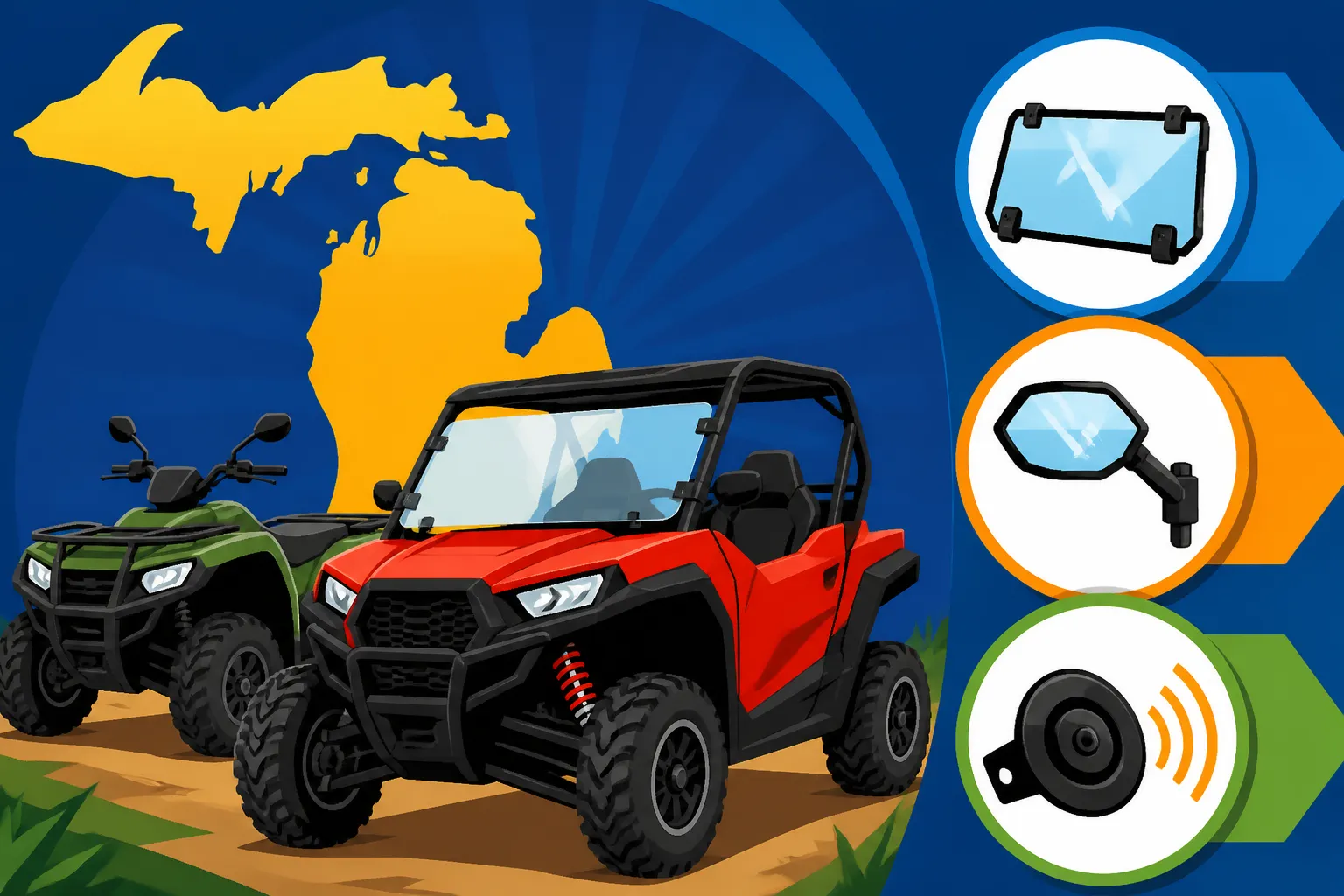
You've bought that shiny new (or new-to-you) side-by-side, dreaming of cruising down a scenic Michigan county road, maybe heading straight from your cabin to the trailhead, or even just popping into town for gas and groceries without loading up the trailer. It sounds ideal, doesn't it? But then reality hits: Michigan has specific rules about what makes an Off-Road Vehicle (ORV) truly "street legal," and the requirements can feel like a tangled mess of regulations. This guide is here to untangle that mess, focusing specifically on three critical components – safety glass, mirrors, and horns – that are often overlooked but absolutely essential for getting your UTV legally on Michigan's public roads.
Understanding Michigan's Street-Legal Landscape for ORVs
The idea of making your ORV street legal in Michigan is incredibly appealing. Imagine the convenience of extending your ride beyond the dirt trails, connecting different routes, or even using your utility vehicle for everyday tasks in your local community. For many, the dream is to combine the rugged capability of a UTV with the practicality of a road-worthy vehicle. However, Michigan law distinguishes very clearly between an ORV that’s designed strictly for off-road use and one that can legally share the pavement with cars and trucks. It's not as simple as adding a license plate; there's a specific path you need to follow, often involving the "assembled vehicle" route.
The Allure and the Legal Reality of Road Riding
There’s a freedom that comes with not being confined to just the trails. Picture this: you’ve spent a fantastic morning exploring the [Michigan's 4,000 Miles of ORV Trails Explained], and now you want to grab lunch in a nearby small town without the hassle of trailering your machine. Or perhaps you live just a few miles down a gravel road from the general store, and taking the UTV seems like the most practical option. This is the allure – convenience, extended adventure, and breaking down the barriers between recreational riding and daily life.
But then you run into the reality of enforcement. Local sheriff's deputies and DNR conservation officers aren't just looking for ORV trail permits; they're also scrutinizing machines on public roads to ensure they meet the criteria for being there. Get caught operating an ORV on a public road without the proper equipment and legal status, and you could face fines, impoundment, and a whole lot of headache. It's a significant deterrent for many, leaving them wondering if the dream is even achievable. The good news is, it is, but it requires diligent attention to detail.
What "Street Legal" Really Means in Michigan
When we talk about "street legal" for an ORV in Michigan, we're generally referring to transforming your machine into what the state calls an "assembled vehicle" or a "low-speed vehicle" (LSV) if it meets certain criteria. For most UTVs, the assembled vehicle route is the most common path. This isn't just about throwing on some headlights and calling it a day. It’s about equipping your ORV with all the safety features mandated for vehicles on public roads, undergoing an inspection, and obtaining a special title and registration.
Michigan's requirements are designed to ensure that any vehicle sharing the road with standard traffic can do so safely and predictably. This means it needs to signal, stop, illuminate, and generally behave like any other road vehicle. Without meeting these stringent requirements, your ORV is strictly limited to designated trails, private property, and specific county roads where ordinances allow, often with severe speed and travel restrictions. Understanding these baseline requirements is the first, most crucial step in your street-legal journey. You can learn more about this through [Michigan's Assembled Vehicle Route for a UTV].
The Critical Role of Safety Glass in Your Street-Legal UTV
When you're out on the trails, a simple polycarbonate windshield might be perfectly adequate. It protects you from flying debris, bugs, and the occasional branch. However, once you venture onto public roads, the game changes entirely, especially when it comes to your windshield. Michigan law is very clear: if your UTV has an enclosed cab or a windshield, that windshield must be made of safety glass. This isn't just a suggestion; it's a non-negotiable requirement that speaks directly to the safety of you, your passengers, and other drivers.
Why Just Any Windshield Won't Do: DOT Compliance
The reason for the safety glass mandate is simple: impact and shatter resistance. On the highway, debris can strike your windshield at much higher speeds, and in the event of an accident, a non-safety glass windshield can shatter into sharp, dangerous shards. Safety glass, specifically tempered or laminated glass that meets Department of Transportation (DOT) standards, is designed to either break into small, blunt pieces (tempered) or remain largely intact when fractured (laminated), reducing the risk of severe injury.
When shopping for a windshield, look for the "DOT" mark or "AS1" or "AS2" designations etched into the glass itself. This is your proof that the glass meets the federal safety standards required for road use. Without this certification, even if the glass looks like safety glass, it won't pass inspection. This is where quality components become vital. Many aftermarket manufacturers, like SuperATV, offer DOT-approved glass windshields specifically designed for popular UTV models, making the upgrade process much smoother. Don't skimp here; it's a matter of life, limb, and legality.
Common Pitfalls: Plexiglass and Non-Approved Materials
One of the biggest mistakes UTV owners make when attempting a street-legal conversion is thinking that their existing polycarbonate or acrylic windshield will suffice, or that a cheap plexiglass replacement is a good idea. This is a common pitfall that will immediately fail a street-legal inspection in Michigan. [Plexiglass Windshields and Why Michigan Rejects Them] covers this in more detail. These materials, while robust for off-road impacts, do not offer the same shatter-proof characteristics as DOT-approved safety glass. They can splinter, scratch easily, and warp over time, impairing visibility.
Consider a scenario: you’re cruising down a two-lane county road, and a stone flies off the back of an oncoming truck. If you have a polycarbonate windshield, it might crack or spider, obscuring your vision. If it's safety glass, it's designed to withstand such impacts without disintegrating, allowing you to maintain control and see clearly. The cost difference might seem significant upfront, but the safety benefits and the ability to legally operate on roads make it an invaluable investment. Remember, inspectors are trained to look for these specific certifications, and there's no way around it.
Beyond the Windshield: Other Glass Requirements
While the windshield is the primary focus, it's worth considering if any other glass components on your UTV need to meet safety standards, especially if you're building a fully enclosed cab. Side windows or rear panels, if they are glass, should also ideally meet similar safety standards to protect occupants in a rollover or impact. While not always as strictly regulated as the front windshield, using safety glass throughout any enclosed portion of your UTV provides comprehensive protection.
This often means looking into specific kits designed for full cab enclosures that already incorporate DOT-compliant glass in their designs. Retrofitting standard automotive glass can be a complex and expensive endeavor, often requiring custom fabrication. For most UTV street-legal conversions, ensuring the front windshield meets the safety glass requirement is the main hurdle, but always think about the overall integrity of your vehicle's occupant protection system. Getting a clearer picture of potential costs can be found in [Safety Glass Windshield Cost for a Side-by-Side].
Mirrors: Seeing is Believing (and Staying Legal) on Michigan Roads
Just like in a car, mirrors on your street-legal UTV are not just for convenience; they are fundamental safety devices. When you're sharing the road with bicycles, motorcycles, cars, and even large trucks, knowing what's happening around and behind your vehicle is absolutely paramount. Michigan's laws are clear on the requirements for mirrors, ensuring that drivers have adequate visibility to make safe lane changes, turns, and to be aware of their surroundings at all times.
The Specifics: Side Mirrors and Rearview Mirrors
For a street-legal UTV in Michigan, you'll need at least two mirrors: one rearview mirror that provides a clear view to the rear, and one outside rearview mirror on the driver's side. Many enthusiasts choose to install an outside mirror on the passenger side as well, which, while often not legally required as a second outside mirror, significantly enhances overall visibility and safety. Think of it this way: the more you can see, the safer you are.
These mirrors must be securely mounted and provide an unobstructed view of the road behind and to the sides of your UTV. They should be adjustable and maintain their position once set, even over bumps. On a trail, a quick glance over your shoulder might suffice, but on a busy road, you need reliable, consistent visual information without having to crane your neck. This is where properly installed and robust mirrors truly earn their keep.
Placement and Field of Vision Requirements
The placement of your mirrors is just as important as their presence. The rearview mirror should be centrally located to give you a broad view directly behind your machine, free from obstructions by passengers or cargo. The driver's side mirror needs to be positioned so you can see down the side of your vehicle and into the adjacent lane, covering your blind spot as much as possible.
When testing placement, sit in the driver's seat and adjust the mirrors as you would in your car. Can you clearly see traffic approaching from behind and to your sides without excessive head movement? Are there significant blind spots? If so, you might need different mirror styles or mounting locations. Some UTVs have wider cabs or roll cages, which can make mounting challenging. [DOT-Approved Mirror Options for a UTV] explores various choices designed to meet these needs, from traditional clamps to integrated roll-cage designs, ensuring you get the best field of vision possible.
Choosing Durable, Compliant Mirrors for Off-Roaders
Given that your UTV will still likely see off-road action, choosing mirrors that can withstand rough treatment is crucial. Standard car mirrors might shatter or break off easily with trail impacts. Look for mirrors designed for ORVs, featuring breakaway designs, durable housings, and robust mounting hardware. Many quality aftermarket brands, including SuperATV, offer heavy-duty, DOT-compliant mirrors that are built to handle both the rigors of the trail and the demands of road use.
These mirrors often feature strong, vibration-resistant mounts to prevent them from constantly shifting or vibrating excessively at road speeds, which can render them useless. Investing in good quality mirrors will save you the frustration of constantly readjusting or replacing them. Plus, when it comes time for your [Michigan Street-Legal UTV Inspection at the Secretary of State], the inspector will be checking for both the presence and the functionality of these crucial safety components.
Horns: Making Your Presence Known and Staying Safe
It might seem like a small detail, but a functional horn is another non-negotiable item on Michigan’s street-legal checklist for your UTV. On the trails, a shout or a hand signal might alert a fellow rider, but on public roads, you need a universally recognized and effective way to signal your presence or warn others of potential danger. A horn isn't just about honking in frustration; it's a vital communication tool that contributes significantly to road safety.
The Simple Necessity of an Audible Warning Device
Think about the scenarios where a horn is essential: preventing an accident, alerting a pedestrian or cyclist to your approach, or even just getting the attention of a distracted driver. Your UTV, even when street legal, might still look different or be perceived differently by other drivers. A clear, audible horn ensures that your presence can be quickly and effectively communicated in situations where visual cues alone might not be enough.
Michigan law requires every motor vehicle operated on a public highway to be equipped with a horn or other audible warning device capable of emitting sound for a reasonable distance. This means a tiny bicycle bell isn't going to cut it. You need a robust, vehicle-grade horn that can be heard over ambient traffic noise and at a distance, giving others ample time to react.
Volume and Functionality: What Michigan Expects
While Michigan law doesn't specify an exact decibel level, the horn must be "audible under normal conditions for a reasonable distance." Practically speaking, this means it needs to be loud enough to be heard by other drivers in their enclosed vehicles, or by pedestrians with headphones on, within a typical warning range. Most standard automotive horns or aftermarket ORV horns designed for street legality will easily meet this requirement.
Beyond volume, the horn must be functional and easily accessible to the driver. This usually means a push-button activation on the steering wheel or a conveniently mounted switch within easy reach. The sound should be continuous and clear, not a faint or sputtering noise. When the inspector checks your street-legal conversion, the horn will be one of the first things they test, so ensure it's wired correctly and working reliably.
Installation Tips for Reliability
Installing a horn on your UTV is typically a straightforward process, but attention to detail ensures reliability. You'll need a power source (usually directly from the battery with an inline fuse), a ground wire, and a switch. Ensure all connections are secure and weatherproof, as your UTV will undoubtedly encounter moisture and dirt. Running wires through the roll cage or existing conduits can protect them from damage.
For placement, consider [Where to Mount a Horn on a Side-by-Side]. It should be protected from direct impact but not so hidden that its sound is muffled. Many UTV owners mount them under the hood, behind the grille, or even within the dash area if space allows. Test your horn frequently, especially after washing your UTV or after a particularly muddy ride, to ensure it remains in working order.
Beyond the Big Three: Other Essential Street-Legal Components
While safety glass, mirrors, and a horn are foundational, they are just part of the comprehensive list of equipment needed to make your UTV street-legal in Michigan. The state requires a full complement of safety features, essentially treating your converted UTV like any other small vehicle on the road. Overlooking any of these additional components can lead to immediate inspection failure and prevent you from getting that coveted street-legal title and plate.
Lighting, Turn Signals, and Hazard Lights
Proper lighting is absolutely non-negotiable for road travel, especially at dawn, dusk, or night, but also for visibility during the day. Your UTV needs:
- Headlights: Capable of illuminating the road ahead for a specified distance and equipped with high and low beams.
- Taillights: Red lights visible from the rear.
- Brake Lights: Red lights that illuminate when the brakes are applied.
- License Plate Light: A white light to illuminate your rear license plate.
- Turn Signals: Amber lights visible from the front and rear, allowing you to clearly indicate your intentions to other drivers. These are critical for safe lane changes and turns. [Turn Signals and Hazard Lights on a Street-Legal Build] will be very helpful here.
- Hazard Lights: Flashing amber lights, using your turn signal system, to warn other drivers of a stopped or disabled vehicle.
All lighting components must be DOT-compliant, meaning they meet federal standards for visibility, intensity, and color. Wiring these systems correctly is paramount, often requiring relays and proper fuse protection to avoid electrical issues.
Tires, Speedometers, and Seatbelts
Beyond lighting, several other components are essential for safe and legal road operation:
- Tires: Your UTV tires must be DOT-approved for road use. Many aggressive off-road tires are not rated for highway speeds and lack the proper tread pattern for pavement, leading to poor handling, excessive wear, and potential failure. Look for the "DOT" stamp on the tire sidewall.
- Speedometer: A functional speedometer is required to ensure you can monitor and adhere to posted speed limits. This is often an aftermarket addition, as many stock UTVs don't come with highly accurate speedometers for road use.
- Brakes: Your UTV must have fully functional brakes on all wheels, capable of stopping the vehicle safely.
- Seatbelts: All occupants must have access to and use properly functioning seatbelts, which are typically standard on UTVs but should be inspected for wear and tear.
- Windshield Wiper: If your UTV has a windshield, it generally needs a functional windshield wiper. Even a manual one can sometimes suffice, but an electric one is usually preferred for practicality.
The Importance of a Michigan Street-Legal UTV Inspection
Once you've installed all the necessary components, your UTV isn't automatically street legal. It must undergo an inspection by the Michigan Secretary of State to verify compliance. This is where all your hard work is put to the test. An inspector will go through a checklist, looking for every single required item, from the DOT stamp on your windshield to the functionality of every light and the audibility of your horn.
It's highly recommended to go through a pre-inspection checklist yourself, or even have a trusted mechanic familiar with street-legal conversions do a review. Don't show up with a non-compliant item, as it will likely result in failure and necessitate a return visit. Understanding [What Fails a Michigan Assembled Vehicle Inspection] can help you prepare thoroughly. This inspection is the final hurdle before you can officially title and register your machine for road use.
Navigating the Conversion Process: Getting Your UTV Road-Ready
Transforming your off-road machine into a street-legal vehicle is a significant project, but one that many Michigan riders successfully undertake. It involves careful planning, sourcing the right parts, and often, a fair bit of mechanical know-how. The process can be both rewarding and challenging, but with the right approach, you can navigate it smoothly.
Sourcing Compliant Parts
Finding parts that meet Michigan's street-legal requirements is the foundation of your conversion. This means looking for components specifically labeled as DOT-compliant where applicable. For example, for windshields, seek out those with the AS1 or AS2 marking. For lighting, ensure they meet federal motor vehicle safety standards (FMVSS). Many reputable aftermarket manufacturers specialize in street-legal conversion kits and individual components for UTVs.
Brands like SuperATV, for instance, offer a wide range of products from DOT-approved glass windshields to turn signal kits and mirrors that are designed to help you meet these regulations. They understand the nuances of making these machines road-worthy. When purchasing, always double-check the product description to confirm its compliance, and don't hesitate to ask the manufacturer or vendor directly if you have questions about specific certifications. Building a checklist of required items and then systematically sourcing each one will keep you organized and help prevent costly mistakes.
DIY vs. Professional Installation Considerations
Once you have all your parts, you'll need to decide whether to tackle the installation yourself or hire a professional.
- DIY Approach: If you're mechanically inclined and comfortable with electrical wiring, a DIY conversion can save you money on labor. Many components, such as mirrors and horns, are relatively straightforward to install. However, complex wiring for turn signals, headlights, and integrating a speedometer might require a deeper understanding of your UTV's electrical system. It also demands patience and attention to detail to ensure everything is installed securely and functions correctly. Plus, you’ll need to track down forms for your [Michigan Assembled Vehicle Title Application].
- Professional Installation: If you're not confident in your mechanical skills or simply prefer to have the work done by experts, a powersports dealership or an automotive customization shop experienced in ORV conversions can handle the job. While this will incur labor costs, it can save you time, ensure proper installation, and potentially avoid issues during inspection. Always choose a shop that has experience with street-legal conversions for UTVs, as they'll be familiar with Michigan's specific requirements.
Whichever route you choose, it's crucial that the work is done to a high standard. Shoddy wiring, loose mounts, or improperly installed components will not only fail inspection but also pose significant safety risks on the road.
Preparing for Your Michigan Assembled Vehicle Inspection
The inspection at the Secretary of State is the culmination of your efforts. Before you even schedule the appointment, gather all your documentation. This includes proof of ownership (title or bill of sale), receipts for major components (especially if you're building an assembled vehicle from scratch or significant modifications), and any compliance certificates you have for parts like the windshield.
Give your UTV a thorough once-over. Test every light, honk the horn, check the mirrors for stability and visibility, and ensure your speedometer is working. Clean your machine; a clean vehicle often gives a better first impression. Make sure your VIN is clearly visible and matches all your paperwork. Review the entire checklist for [Michigan's Street-Legal UTV Inspection Checklist] to ensure you haven't missed anything. Being fully prepared will make the inspection process much smoother and increase your chances of passing on the first attempt, getting you one step closer to legal road riding.
Maintaining Your Street-Legal Status and Staying Compliant
Getting your UTV street-legal in Michigan is a significant accomplishment, but the journey doesn't end once you've received your title and license plate. Like any other vehicle, your street-legal ORV requires ongoing maintenance and adherence to regulations to ensure it remains safe and compliant for road use. This commitment extends beyond the initial conversion, ensuring that your investment continues to provide reliable and legal transportation.
Regular Checks and Upgrades for Wear and Tear
Operating your UTV on both trails and roads will inevitably lead to wear and tear. Regular maintenance checks are crucial to keep your machine in top condition and ensure all street-legal components remain functional.
- Lights: Routinely check your headlights, taillights, brake lights, and especially your turn signals and hazard lights. Bulbs can burn out, wires can get loose, and lenses can become dirty or cracked. Replace any non-functional lights immediately.
- Mirrors: Ensure your mirrors are still securely mounted, free from cracks, and provide a clear, unobstructed view. Vibration and trail abuse can loosen mounts or damage mirror glass.
- Horn: Test your horn periodically to ensure it emits a clear, audible sound.
- Windshield: Inspect your safety glass windshield for chips, cracks, or excessive pitting that could impair visibility. Even safety glass can be damaged, and a severely compromised windshield might need replacement.
- Tires: Monitor your DOT-approved tires for proper inflation, tread depth, and any signs of damage or uneven wear, especially if you frequently transition between pavement and dirt.
Thinking about [Putting an ORV Title in Two Names] or [Adding a Spouse to an ORV Title] might also be a good time to review who is responsible for this ongoing maintenance.
Staying Informed About Changing Regulations
While Michigan's street-legal ORV laws have been relatively stable, regulations can change. Local county or township ordinances regarding ORV road access can also be updated. It's important to stay informed about any new legislation or rule changes that could impact your street-legal status.
- DNR Website: Periodically check the Michigan Department of Natural Resources (DNR) website and the Secretary of State's office for updates regarding ORV laws and assembled vehicle requirements.
- Local Ordinances: If you plan to ride on specific county roads or within certain municipalities, be aware that [Michigan County ORV Ordinances Explained] can vary. What's legal in one county might have different nuances in another, such as speed limits or road types allowed.
- Community Groups: Join local Michigan ORV clubs or online forums. These communities are often excellent sources of real-time information and discussions about legal changes, helping you stay ahead of potential compliance issues.
Being proactive about understanding the rules ensures that you don't inadvertently fall out of compliance. Also consider [Driver's License Rules for Michigan ORV Road Riding] and [Michigan ORV Road Rules Inside City Limits] as these directly impact where and how you can ride.
The Ongoing Benefits of a Fully Compliant Machine
Maintaining your UTV's street-legal status isn't just about avoiding tickets; it's about maximizing the utility and enjoyment of your machine. A fully compliant ORV offers unparalleled freedom and convenience, allowing you to seamlessly transition from trail to town.
- Enhanced Safety: By keeping all safety features in working order – from your safety glass to your turn signals – you significantly reduce your risk of accidents on public roads.
- Convenience: The ability to ride from your property directly to a trailhead, a gas station, or a local store without the need for a trailer transforms your ORV into a much more versatile vehicle.
- Peace of Mind: Knowing that your UTV is fully legal on Michigan roads eliminates the stress and worry of potential fines or interactions with law enforcement. You can ride with confidence, focusing on the joy of the journey.
- Insurance Implications: A properly titled and registered street-legal UTV may also have different [Insurance a Michigan Street-Legal UTV Needs] considerations compared to a purely off-road machine, potentially offering better coverage for road incidents.
The effort you put into maintaining your street-legal UTV will pay dividends in safety, convenience, and the sheer enjoyment of Michigan's diverse landscapes.
| Component Category | Michigan Street-Legal Requirement | Non-Compliant Examples (Will Fail Inspection) | Recommended Features for ORV Durability |
|---|---|---|---|
| Windshield | DOT-approved safety glass (AS1 or AS2 marking) if equipped | Plexiglass, acrylic, uncertified polycarbonate | Scratch-resistant, hard-coated, full frame |
| Mirrors | One rearview, one driver's side external (passenger side optional but recommended) | Missing mirrors, cracked glass, loose mounting | Breakaway design, robust housing, vibration-dampening |
| Horn | Audible warning device, easily accessible, clear and continuous sound | Bicycle bell, quiet "beep," non-functional | Weatherproof, loud (standard automotive grade), reliable button |
| Lighting | Headlights (high/low beam), taillights, brake lights, turn signals (front/rear), hazard lights, license plate light | Missing lights, non-DOT compliant, incorrect color/brightness, non-functional | LED for durability/brightness, sealed units, properly fused wiring |
| Tires | DOT-approved for street use (marked on sidewall) | "Not for highway use" tires, excessively worn | Radial construction for smoother ride, all-terrain pattern for versatile use |
| Speedometer | Functional and accurate | Non-functional, missing, highly inaccurate | Digital display, GPS integration for accuracy |
| Seatbelts | All seating positions equipped with functional seatbelts | Frayed, broken, or missing seatbelts | 3-point harnesses for enhanced safety |
| Wiper (if windshield equipped) | Functional wiper (manual or electric) | Missing wiper, non-functional wiper | Electric wiper kit with washer system (for convenience) |
| Exhaust | Quiet muffler with spark arrestor | Loud aftermarket exhaust, no spark arrestor | USFS-approved spark arrestor, moderate sound level |
Disclaimer
This article is for general informational purposes only and does not constitute professional advice. Laws, prices and regulations vary by location and change over time. Consult a qualified professional for guidance on your specific situation.