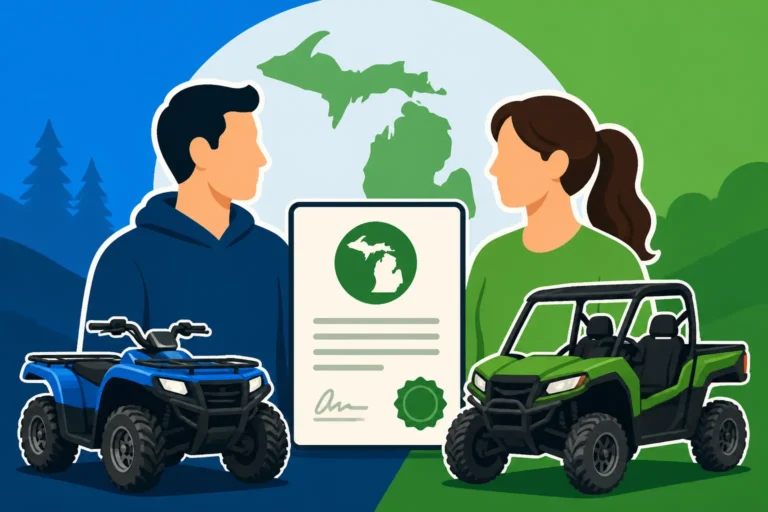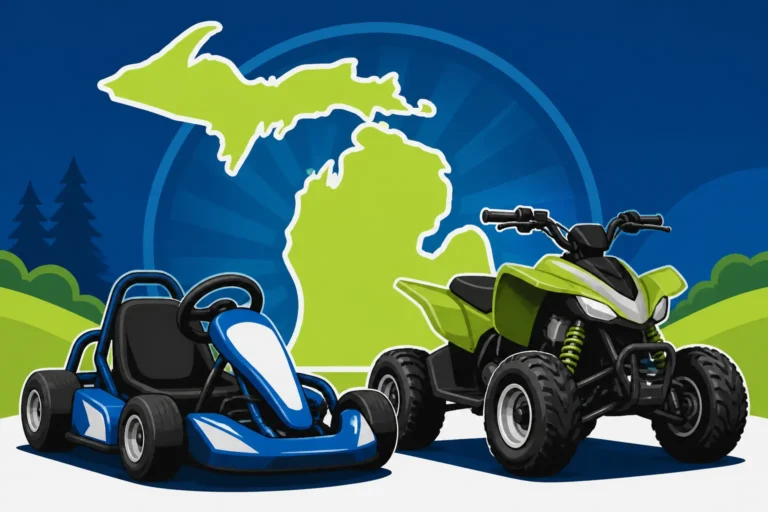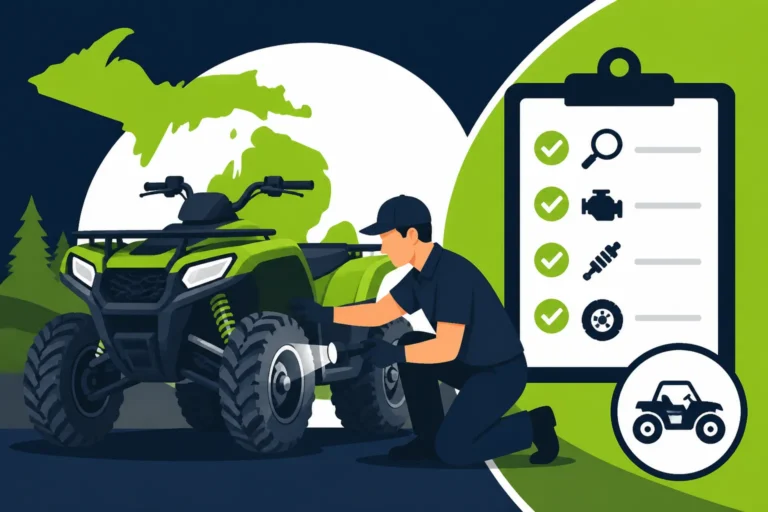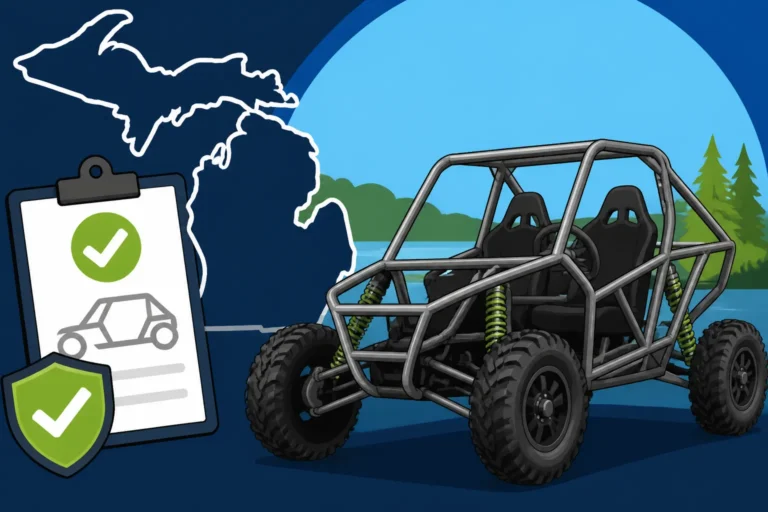
Changing an ATV to a UTV on the Title
It’s a common scenario for many off-road enthusiasts: you’ve got a machine you love, maybe it’s been modified, or perhaps you bought it and the title just doesn't seem to match what's sitting in your garage. You might be staring at a title that says "ATV" but know in your heart and by its design that it's clearly a side-by-side, or "UTV." This can be a source of real frustration and confusion, especially when you're trying to stay compliant with Michigan’s off-road vehicle (ORV) rules. This guide is here to walk you through the nuances of Michigan's titling process, explain why a direct "change" from ATV to UTV on a title isn't usually an option, and outline the actual steps you'll need to take to correct or properly title your machine.
The Core Difference: ATV, UTV, and Michigan's View
Before we dive into how to correct a title, it's crucial to understand why Michigan differentiates between an All-Terrain Vehicle (ATV) and a Utility Terrain Vehicle (UTV) in the first place, especially when it comes to official paperwork. The Secretary of State doesn't just randomly assign these labels; there are specific definitions that dictate how a machine is classified and, consequently, titled. It's not like changing the color of your car on the title; this distinction goes to the fundamental nature of the vehicle.
What Defines an ATV in Michigan?
An ATV, as most of us know, is typically designed for a single rider, though some are built for a rider and one passenger. They have handlebars for steering, straddle seating (meaning you sit on it like a horse or motorcycle, not in it), and are usually powered by an engine with a displacement of 50 cubic centimeters (cc) or more. Think about those classic quads you see flying through the trails – that's your typical ATV. Their design emphasizes agility, often with independent suspension and a narrow profile to navigate tight paths. When you get a title for an ATV in Michigan, this classification is based on these design characteristics.
The physical attributes are key here. If your machine has a saddle seat, handlebars, and is generally built for a more active, body-involved riding style, it's an ATV. This classification impacts everything from where you can ride to potential insurance requirements, so getting it right from the start is important. A mistake here can lead to headaches down the road, making you feel like you're constantly fighting against the system, even when you're just trying to enjoy your machine responsibly.
What Defines a UTV in Michigan?
A UTV, or side-by-side as it's often called, presents a completely different set of characteristics. These machines feature a steering wheel, bucket seats (you sit in them, often side-by-side with a passenger), and usually have a roll-over protection structure (ROPS) and seatbelts, much like a small car or truck. They tend to be wider, heavier, and offer more cargo capacity, making them popular for utility work, hunting, or family recreation. From a titling perspective, the Secretary of State sees a UTV as a distinct category of ORV because its design, safety features, and typical use cases are quite different from an ATV.
Imagine trying to title a small pickup truck as a motorcycle – it simply doesn't fit the definition, no matter how much you modify it. The same logic applies here. The fundamental differences in how you operate, ride, and are protected in a UTV vs. an ATV are what drive Michigan's classification. So, if your title incorrectly identifies your side-by-side as an ATV, it’s not just a minor clerical error; it’s a misrepresentation of the vehicle's actual type according to state standards.
Why a Direct "Change" Isn't an Option
Given these distinct definitions, you can probably guess why you can't just walk into a Secretary of State branch and ask to "change ATV to UTV on the title." Michigan doesn't have a simple form or process for re-designating a vehicle type in this manner. It's not a matter of checking a different box; it's about the physical characteristics of the machine itself. If a vehicle truly is an ATV, it will always be titled as an ATV unless it undergoes such a radical transformation that it essentially becomes a new, assembled vehicle.
This can be incredibly frustrating for owners who find themselves with a mislabeled title. You might feel like you're stuck in a bureaucratic loop, trying to fix something that seems so simple on the surface. However, the state's perspective is rooted in maintaining clear classifications for safety, registration, and enforcement purposes. They need to ensure that the document accurately reflects the machine you’re operating. If your vehicle was mistakenly titled, that's a different path than trying to change its fundamental classification.
When You Might Think You Need a "Change" (Common Scenarios)
The desire to "change" an ATV title to a UTV title often stems from one of a few common situations. It's important to identify which scenario applies to you, as the solution will vary greatly. Sometimes, it's genuine confusion; other times, it's a legitimate error that needs to be corrected.
Scenario 1: My UTV Was Mistakenly Titled as an ATV
This is perhaps the most straightforward situation. Maybe you bought a brand-new side-by-side from a dealer, and somewhere in the paperwork shuffle, it was inadvertently titled as an ATV. Or perhaps you bought a used UTV from a private seller, and when you went to transfer the title, you noticed the previous title had this error. This isn't about changing the vehicle; it's about correcting a clerical mistake on an existing document.
If this is your situation, you're not trying to transform your machine; you're trying to get the title to accurately reflect what it already is. This typically requires providing proof to the Secretary of State that the original titling was incorrect. This proof might include the original manufacturer's certificate of origin (MCO/MSO) which clearly labels it as a UTV, or other definitive documentation. You'll likely need to explain the discrepancy and present evidence. Sometimes, this can be resolved by applying for a corrected title. [Fixing a Wrong VIN on a Michigan ORV Title] might be a useful resource as it covers correction processes.
Scenario 2: I Heavily Modified My ATV Into Something More Like a UTV
This is where things get a bit more complex. Maybe you started with an ATV chassis, but you've added a roll cage, bucket seats, a steering wheel, and basically rebuilt it to function and look like a UTV. You might even call it a "kit-built side-by-side." In this case, you haven't just modified an ATV; you've essentially created a new vehicle that now fits the UTV definition.
Michigan doesn't typically allow you to "amend" an existing ATV title to magically become a UTV title after such modifications. Instead, you'll likely be looking at a process for titling an "assembled vehicle." This means the state treats your heavily modified machine as if it were a new, custom-built vehicle. This process is far more involved than a simple correction and will require significant documentation and inspections. For insight into this, you'll want to review resources like [Titling a Rebuilt or Homemade UTV in Michigan] and [Michigan Assembled Vehicle Title Application].
Scenario 3: I Just Don't Understand the Difference on My Title
Sometimes, the confusion isn't about an error or a modification, but simply a lack of familiarity with how titles are formatted. You might see terms or codes on your title and assume they're incorrect. For instance, some older titles might use generic terms or abbreviations that aren't immediately clear. Or perhaps you're used to car titles and the ORV title seems different, leading to questions.
In this instance, the best course of action is often just to seek clarification. A visit to the Secretary of State or a call to their ORV titling department can help clear up any misunderstandings. Bring your title and any other paperwork you have, and ask them to explain the classification. They can help you understand what the current title means and if it accurately reflects your machine. Don't be afraid to ask questions; it's better to be informed than to try to fix something that isn't actually broken.
Navigating the Process: Corrections, Inspections, and New Titles
So, you've figured out why you think your title needs changing. Now, let's talk about the actual steps to take. Depending on your scenario, this could involve a simple correction, or it might be a more intensive process to get your truly modified machine properly recognized.
For Clerical Errors: Correcting a Mis-Titled Machine
If your UTV was genuinely mis-titled as an ATV due to a clerical error, your goal is to have the Secretary of State issue a corrected title. This isn't about "changing" the vehicle type, but rather about rectifying an initial mistake.
- Gather Your Proof: The most crucial piece of evidence is usually the Manufacturer's Certificate of Origin (MCO or MSO). This document, provided by the manufacturer when the vehicle was new, explicitly states whether the machine is an ATV or UTV. If you bought it from a dealer, they should have provided this or have a copy. Other strong proofs might include sales agreements, detailed repair records, or even clear photographic evidence of the machine's UTV characteristics (steering wheel, side-by-side seating). [What the Michigan Secretary of State Needs to Title an ORV] provides more context on required documents.
- Visit the Secretary of State: You'll need to make an appointment at a Michigan Secretary of State branch office. It's often best to call ahead or check their website for specific requirements for title corrections, as procedures can sometimes vary slightly.
- Explain the Discrepancy: Clearly articulate to the clerk that your UTV was mistakenly titled as an ATV and you are seeking a correction, not a re-classification. Present all your supporting documentation. They may ask you to fill out a specific form for title amendments or corrections.
- Inspection (Possible): In some cases, the Secretary of State might require a physical inspection of the vehicle to verify its type before issuing a corrected title. This is less common for straightforward clerical errors with strong MCO evidence but can happen if there's any ambiguity.
- New Title Issuance: Once the Secretary of State is satisfied that a genuine error occurred, they will process a corrected title showing the accurate UTV classification. Be prepared for any associated fees.
For Heavily Modified Machines: The Assembled Vehicle Route
If you've taken an ATV and rebuilt it into a UTV, or built a UTV from scratch using various components, you're looking at the "assembled vehicle" titling process in Michigan. This is a very different path and acknowledges that you’ve created something new, rather than just correcting a mistake on an old title.
- Documentation, Documentation, Documentation: This cannot be stressed enough. You'll need proof of ownership for all major components that went into your assembled UTV, especially the frame or chassis (if it has a VIN from an original ATV), engine, and transmission. This means keeping bills of sale, receipts, and any previous titles. For any components you fabricated yourself, you'll need to document those as well. LawDepot can be a helpful resource for creating a clear [Michigan ATV Bill of Sale: What to Put in It] or other legal documentation if you're buying components from private sellers.
- Affidavit of Ownership: You'll likely need to complete an affidavit of ownership detailing how the vehicle was assembled, where the components came from, and confirming that it is not stolen.
- VIN Assignment and Inspection: Since your assembled UTV won't have a standard manufacturer's VIN as a complete unit, you'll need to apply for a Michigan assigned VIN. This involves a detailed inspection by a specially trained law enforcement officer or Secretary of State investigator. They will examine the vehicle to ensure it meets safety standards, isn't stolen, and accurately fits the UTV classification. This inspection is thorough and can be a significant hurdle. [Michigan Street-Legal UTV Inspection at the Secretary of State] delves into similar inspection requirements.
- Application for Assembled Vehicle Title: Once your documentation is in order and you've passed the VIN inspection, you'll submit a specific application for an assembled vehicle title. This application will require all the paperwork gathered and the results of the VIN inspection.
- Sales Tax and Fees: Be prepared to pay sales tax on the total value of the components used to build your UTV, as well as the standard titling fees. This is often an overlooked cost in custom builds.
This process can be lengthy and requires meticulous record-keeping. It's a testament to the fact that the state takes the classification of ORVs seriously, especially when a machine doesn't come directly from a factory.
Getting Help with the Paperwork
Dealing with government paperwork can be overwhelming. Whether you're trying to correct a simple error or navigate the complex assembled vehicle process, having organized documentation is key. While not an exhaustive solution, online legal form providers like LawDepot can offer templates for bills of sale, affidavits, or other general documents that might help you keep your records in order. While they can't fill out state-specific forms for you, having your own foundational paperwork solid can make the process smoother. Remember, for the official state forms, always go directly to the Michigan Secretary of State website or office. You can find the necessary forms for titling on their site.
Keeping Your Paperwork Straight: Preventing Future Titling Issues
The best way to avoid the headache of changing a title is to prevent the issue from happening in the first place. Whether you're buying a new machine, a used one, or embarking on a custom build, a little diligence upfront can save you a lot of grief down the road.
When Buying a New ATV or UTV from a Dealer
When purchasing a brand-new ORV from a Michigan dealer, they are responsible for handling the initial titling paperwork. This is usually a smooth process, but it's not foolproof.
- Review Before You Sign: Before you sign any final paperwork or drive away with your new machine, carefully review the purchase agreement, the manufacturer’s certificate of origin (MCO/MSO), and any temporary title documents. Ensure that your new side-by-side is clearly identified as a UTV and not an ATV. Double-check the VIN matches exactly across all documents.
- Keep Your MCO: Make sure you receive and safely store a copy of the MCO/MSO. This is the definitive document from the manufacturer, and it's invaluable if any titling discrepancies arise later. It's your ultimate proof of the vehicle's original classification.
- Understand What the Dealer Files: Dealers will submit your titling application to the Secretary of State. While they are professionals, errors can happen. It's worth understanding the basic steps they take, which can give you peace of mind. [Buying an ATV From a Michigan Dealer: What the Dealer Files] offers a good overview.
When Buying a Used ATV or UTV from a Private Seller
Buying privately can often save you money, but it also places more responsibility on you to ensure the paperwork is correct. This is where many title issues for used machines originate.
- Inspect the Title Carefully: Before you hand over any money, thoroughly inspect the seller's title. Does it clearly state "ATV" or "UTV"? Does the VIN on the title match the VIN stamped on the machine's frame? Look for any signs of alteration or damage to the title. If the title says ATV but the machine is undeniably a UTV, proceed with extreme caution and ask for clarification.
- Bill of Sale is Key: Always use a detailed bill of sale, even if the seller provides a simple one. This document should explicitly state the machine’s make, model, year, VIN, purchase price, and the seller’s and buyer’s information. It can be a vital piece of evidence if you encounter a title problem later. Online platforms like LawDepot offer customizable bill of sale templates that ensure you cover all necessary details, providing a layer of protection for both parties.
- Ask for Proof of Classification: If there's any doubt, ask the seller for proof that the machine is indeed a UTV if the title simply states "ORV" or has an ambiguous classification. Older machines might not have the clear ATV/UTV designation common today, but the MCO or original sales paperwork can help.
- Check for Liens: Before buying, always check the title for any recorded liens. You don't want to inherit someone else's debt. [Liens on a Michigan ORV Title] provides details on how to do this.
- Timely Title Transfer: Michigan gives you [Michigan Gives You 15 Days to Title an ORV] after purchase. Don't procrastinate. The sooner you transfer the title, the sooner you can identify and address any issues.
Aftermarket Modifications and Custom Builds
If you're planning extensive modifications that could change your machine's classification, or if you're building a custom ORV from the ground up, careful planning and documentation are your best friends.
- Keep Every Receipt: For an assembled vehicle, every single receipt for major components (engine, transmission, frame, body parts) is critical. This helps establish ownership and the value for tax purposes.
- Document the Build Process: Take photos and keep a log of your build. This can serve as evidence during an inspection for an assembled vehicle title.
- Consult the Secretary of State Early: If you're undertaking a major project, consider calling or visiting the Secretary of State before you're finished. Explain what you're doing and ask for guidance on the specific requirements for titling your modified or assembled vehicle. This proactive step can save you immense frustration later.
- Understand VIN Requirements: If your machine needs a new VIN, know the process for [VIN Inspection Requirements for a Michigan ORV Title] beforehand. It's a critical step that you'll need to pass.
A Table of ORV Types and Titling Paths
To help clarify the common scenarios, here's a quick reference table:
| Scenario | What It Looks Like | Primary Issue | Titling Path in Michigan | Key Documents/Actions Required |
|---|---|---|---|---|
| New UTV, Mistitled as ATV | Dealer paperwork, title says "ATV" for UTV. | Clerical error. | Title correction. | Original MCO/MSO, sales invoice, visit SOS. |
| Used UTV, Mistitled as ATV | Seller's title says "ATV" for a UTV. | Clerical error carried over. | Title correction after transfer. | Seller's original title, bill of sale, MCO (if available), visit SOS. |
| Heavily Modified ATV (now UTV-like) | Started as ATV, now has steering wheel, seats. | Vehicle classification change. | Assembled vehicle titling. | Proof of ownership for components, affidavit of assembly, VIN inspection, assembled vehicle application. |
| Custom-Built UTV | Built from components, no existing title. | New vehicle classification. | Assembled vehicle titling. | Proof of ownership for all components, affidavit of assembly, VIN inspection, assembled vehicle application. |
| Simply Confused About Title Wording | Title looks ambiguous, unclear designation. | Misunderstanding of terminology. | Seek clarification. | Bring title to SOS, ask for explanation of codes/designations. |
Navigating the world of ORV titles in Michigan can certainly feel like a winding trail at times, but with a clear understanding of the distinctions between ATVs and UTVs, and the proper procedures for corrections or new titles, you can ensure your machine is legally documented. Taking the time to get your paperwork right now means more time enjoying the trails later.
Disclaimer
This article is for general informational purposes only and does not constitute professional advice. Laws, prices and regulations vary by location and change over time. Consult a qualified professional for guidance on your specific situation.