Michigan Title for an ORV Bought in Ohio
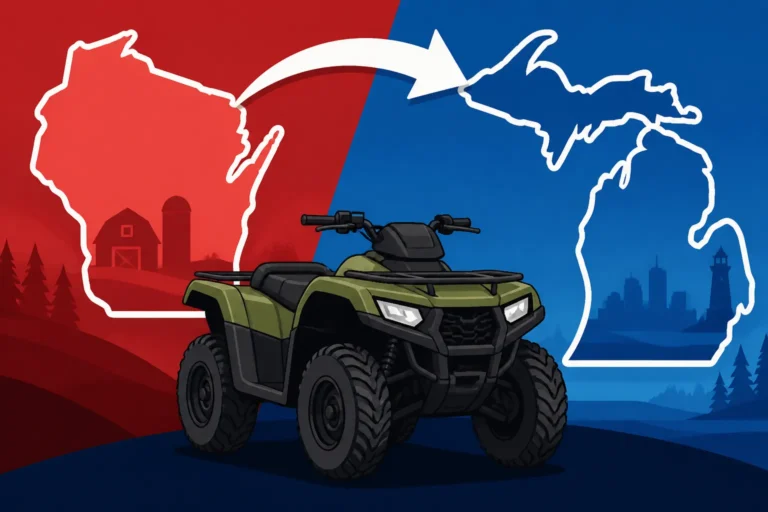
Buying an off-road vehicle (ORV) in another state, like Ohio, and bringing it back home to Michigan can feel like navigating a maze of paperwork. You've found the perfect quad or side-by-side, maybe even got a great deal, but now you're wondering how to make it officially yours under Michigan law. This guide will walk you through the precise steps to title an ORV purchased in Ohio, ensuring you meet all of Michigan's requirements without unnecessary headaches.
Understanding Michigan's Titling Requirements for Out-of-State ORVs
It's a common scenario: you travel out of state, stumble upon a fantastic deal on an ATV or UTV, and bring it home to Michigan. But then the confusion sets in. You might be thinking, "Ohio didn't even require a title for this machine, so why does Michigan?" This difference in state laws is where many folks get tripped up, and it's crucial to understand it right from the start.
Why Ohio Rules Differ from Michigan's
The truth is, not all states have the same titling and registration requirements for off-road vehicles. Ohio, for example, has historically had different rules regarding ORV titles. Depending on the year of the machine and its use, some ORVs purchased in Ohio might not have been titled at all by the previous owner. This can be a huge surprise for Michigan residents, because here in the Wolverine State, we take ORV titling very seriously.
Michigan law generally requires a title for nearly every ORV, regardless of its age or where it was purchased. This title serves as your official proof of ownership. Without it, you can't legally prove the machine is yours, which can lead to big problems down the road if you ever need to sell it, insure it, or deal with law enforcement. So, even if your newly acquired Ohio ORV never had an Ohio title, Michigan will still require you to obtain a Michigan title for it. This is not about being difficult; it’s about establishing clear ownership and preventing theft.
Essential Documents You'll Need from Ohio
To successfully title your Ohio-bought ORV in Michigan, you'll need to gather a specific set of documents. Think of this as your "travel kit" for the Michigan Secretary of State office. The more prepared you are, the smoother the process will be.
First and foremost, you absolutely must have a solid bill of sale. This document is the bedrock of your ownership claim, especially if the ORV didn't come with an Ohio title. A robust bill of sale should clearly identify both the buyer (you) and the seller, include a detailed description of the ORV (make, model, year, and crucially, the Vehicle Identification Number or VIN), the purchase price, and the date of sale. Both parties should sign and date it. If the seller only provided a flimsy handwritten note or nothing at all, it's wise to consider creating a more comprehensive document. Resources like LawDepot can provide templates to help you draft a professional [Michigan ATV Bill of Sale: What to Put in It], ensuring all the necessary details are present.
If the ORV did have an Ohio title, then that original title, properly signed over to you by the previous owner, is gold. Make sure the seller's signature is correct and matches the name printed on the title. Also, pay attention to any sections for odometer readings or sales price; fill these out accurately, even if the machine is an ORV and not subject to odometer laws in the same way a car is.
Finally, consider any proof of sales tax paid in Ohio. If you paid sales tax on the ORV purchase in Ohio, having that receipt or notation on the bill of sale can potentially save you money. Michigan has a 6% use tax on ORV purchases, but you often get credit for sales tax already paid to another state, preventing you from being taxed twice.
The Step-by-Step Michigan Titling Process
Now that you understand the "why" behind Michigan's requirements and have your initial documents in order, let's walk through the actual process of getting that Michigan title. It's a series of steps, and tackling them one by one will lead to success.
Gathering Your Paperwork and Fees
Before you even think about setting foot in a Secretary of State branch, ensure you have every single piece of paper required and a clear understanding of the fees involved. This preparation is key to avoiding multiple trips and frustration.
You'll need to complete the Michigan ORV title application. While the exact form number might vary over time, it's typically an official form available from the Secretary of State or their website. This form will ask for details about you, the buyer, and the ORV itself. You'll need to accurately transcribe the VIN, make, model, and year of the machine.
Alongside this application, you'll need:
- The original Ohio title, if one existed and was signed over to you.
- Your robust bill of sale. This is non-negotiable, especially if there was no Ohio title. A well-drafted bill of sale, perhaps using a template from a service like LawDepot, can make all the difference.
- Proof of identity, typically your Michigan driver's license or state ID.
- Any proof of sales tax paid in Ohio. This will be vital for calculating Michigan's use tax.
Now, let's talk about money. There will be a title fee, which is a relatively modest amount. The bigger cost to prepare for is Michigan's 6% use tax on the purchase price of the ORV. This tax applies to all private-party sales and out-of-state purchases. If you paid sales tax in Ohio, Michigan will generally credit you for that amount, meaning you'd only owe the difference (if Michigan's tax rate is higher) or nothing at all (if Ohio's tax was equal to or higher than Michigan's). Make sure you understand how [Michigan ORV Sales Tax at a Secretary of State Branch] and [Michigan Use Tax on a Private-Party ATV Sale] apply to your specific situation. Remember, you generally have [Michigan Gives You 15 Days to Title an ORV] from the date of purchase to complete this process without incurring late fees, so don't procrastinate!
Visiting the Secretary of State Office
With all your paperwork meticulously organized and your fees accounted for, it's time for the main event: a visit to a Michigan Secretary of State branch. While some services are moving online, ORV titling for out-of-state purchases often requires an in-person visit due to the need for document verification and VIN inspection.
It's highly recommended to make an appointment beforehand. The Michigan Secretary of State's office has moved to an appointment-based system for many services, and walking in without one can lead to very long waits or being turned away. Check their website or call ahead to schedule your [Michigan Secretary of State Appointments for ORV Title Work].
During your appointment, a staff member will review all your documents. They'll check your identification, verify the bill of sale, and examine the Ohio title (if applicable). They will also look at the ORV's VIN on your paperwork. In some cases, especially for out-of-state vehicles that might not have a clear titling history, they may require a physical VIN verification to ensure the number on the machine matches your documents and isn't tampered with. Be prepared for this possibility. If everything is in order and you've paid all applicable fees, they will process your application, and your new Michigan ORV title will be mailed to you, typically arriving within a few weeks. You can usually ask the clerk for an estimated timeframe, as outlined in [How Long a Michigan ORV Title Takes to Arrive].
What If the Ohio ORV Never Had a Title?
This is perhaps the most common point of confusion and frustration when buying an ORV from Ohio and bringing it to Michigan. What if the Ohio seller legitimately never had a title because their state didn't require one for that particular machine or year? Don't panic; Michigan has a process for this, but it heavily relies on one crucial document: the bill of sale.
When an ORV has no prior title, the Michigan Secretary of State relies almost entirely on your bill of sale as proof of ownership. This is why we stressed the importance of a comprehensive and properly executed bill of sale earlier. If your bill of sale clearly details the transaction, including the VIN, and is signed by both parties, it serves as the primary document establishing your claim. The staff will review it carefully. They might also run the VIN through national databases to check for stolen status.
In these situations, a robust bill of sale essentially acts as your [Proof of Ownership When a Michigan ORV Has No Title]. If your initial bill of sale is sparse or vague, the Secretary of State might ask for more information or a more detailed document. This is another scenario where having a professionally drafted template from a service like LawDepot can be incredibly beneficial. It fills in the gaps and ensures you're presenting a document that satisfies Michigan's requirements for establishing ownership without a prior title. They might also require a VIN inspection by law enforcement or a certified VIN inspector to confirm the machine's identity.
Potential Hurdles and How to Overcome Them
Even with the best preparation, sometimes unexpected issues can pop up. Knowing what these common hurdles are and how to approach them can save you a lot of stress and prevent delays in getting your ORV titled.
Missing or Incomplete Documentation
One of the biggest hang-ups people face is discovering their paperwork from the Ohio seller is incomplete or contains errors. Maybe the Ohio title had a name misspelled, or the bill of sale was just a scrawled note with minimal information.
If you arrive at the Secretary of State and your Ohio title is missing a signature, has incorrect information, or is otherwise deemed invalid, you'll likely hit a roadblock. The ideal solution is always to go back to the seller and have them correct the issue. However, that's not always feasible, especially if you bought the machine a while ago or the seller is no longer cooperative.
In cases where the original Ohio title is lost or was never provided, and your bill of sale is weak, you might need to pursue alternative routes. Sometimes, obtaining a duplicate title from the state of Ohio (if the machine was ever titled there) is an option, though this typically needs to be initiated by the previous owner. If that's not possible, Michigan has provisions for situations like [Titling an ATV in Michigan Without the Previous Owner]. This might involve submitting additional sworn statements, seeking a court order, or in rare cases, pursuing a bonded title, though that's a more complex process generally reserved for cases with very murky ownership histories. For general advice on resolving issues, check out [Michigan ORV Title Problems and How to Clear Them].
Sales Tax Differences and Use Tax Implications
Michigan's 6% use tax on ORV purchases from private parties or out-of-state sellers is a significant financial consideration. While it's generally straightforward if you bought the machine within Michigan from an individual, it can get a little tricky with out-of-state purchases, particularly from states with different tax rates.
If you paid sales tax when you bought the ORV in Ohio, make sure you bring undeniable proof of that payment (e.g., a line item on the bill of sale, a separate receipt). Michigan will credit you for the amount of sales tax you paid to Ohio. For example, if Ohio's sales tax rate was 5% and Michigan's use tax is 6%, you would only owe the remaining 1% difference to Michigan. If Ohio's tax rate was 6% or higher, you wouldn't owe any additional sales tax to Michigan.
The key is proper documentation. Without proof of sales tax paid in Ohio, Michigan will assume no tax was collected and will levy the full 6% use tax on the purchase price. This is similar to the process described in [Paying Michigan Tax on an ATV Bought in Indiana], where the principle of tax reciprocity and use tax application remains the same. Be transparent about your purchase price on the title application, as misrepresenting the value to avoid tax can lead to penalties.
VIN Verification and Potential Issues
The Vehicle Identification Number (VIN) is your ORV's unique fingerprint, and it's absolutely critical for titling. When you bring an ORV from out of state, the Michigan Secretary of State will pay close attention to the VIN. They need to ensure the VIN on your documents matches the one physically stamped on the machine, and that it hasn't been altered or is not associated with a stolen vehicle.
You should know [Where the VIN Is Stamped on an ATV or UTV] for your specific make and model before you go to the Secretary of State. Often, it's on the frame near the left front wheel, or on a crossmember. Make sure it's clean and legible.
If the VIN on your Ohio paperwork somehow doesn't match the actual VIN on the machine, or if it appears to have been altered, you've got a serious problem. A mismatched VIN can trigger a red flag, potentially leading to a police investigation to ensure the machine isn't stolen. If it's a simple typo on a document, the Secretary of State might allow for a correction with sufficient proof. However, if the physical VIN on the machine is wrong or damaged, you might need to go through a specialized process to get it verified or even corrected, as detailed in [Fixing a Wrong VIN on a Michigan ORV Title]. This usually involves a law enforcement inspection. Always double-check the VIN on all documents against the machine itself before you even complete the purchase in Ohio.
Successfully navigating the titling process for an ORV bought in Ohio and brought to Michigan is all about understanding the rules and being thoroughly prepared. By gathering your documents, knowing the fees, and being ready for common hurdles, you can make your new-to-you machine officially a part of your Michigan off-road adventures.
Disclaimer
This article is for general informational purposes only and does not constitute professional advice. Laws, prices and regulations vary by location and change over time. Consult a qualified professional for guidance on your specific situation.