How Long a Michigan ORV Title Takes to Arrive
Waiting for your Michigan ORV title to arrive in the mail can feel like watching grass grow, especially when all you want to do is hit the trails or finalize a sale. The anticipation is real, and the uncertainty of "when will it actually get here?" can be frustrating. This guide will demystify the timeline for receiving your off-road vehicle title from the Michigan Secretary of State, shed light on the common factors that influence its journey, and give you clear steps to take if it feels like your title has gotten lost in the shuffle.
The Typical Waiting Game: How Long Until Your Michigan ORV Title Arrives?
When you apply for a Michigan ORV title, whether it's for a brand-new quad or a side-by-side you just bought from a private seller, you're usually looking at a specific window for it to make its way to your mailbox. For most straightforward applications processed without a hitch, you can generally expect your new ORV title to arrive within 2 to 4 weeks. This isn't an instant process, and it definitely requires a bit of patience on your part.
Think about it like this: the Secretary of State (SOS) offices handle a massive volume of vehicle-related paperwork every single day, from car registrations to boat titles and, of course, ORV titles. Your application enters a queue, gets reviewed, processed, and then the physical title document needs to be printed and mailed out. It's a system designed for accuracy, which sometimes means it isn't the fastest. If you applied in person at an SOS branch and there were absolutely no complications, you might even walk out with a temporary permit or proof of application that day, but the actual, official title usually still gets mailed to you later.
However, that 2 to 4-week estimate is just a baseline. Life, and bureaucracy, rarely stick to the simplest timeline. There are several moving parts that can either keep you within that estimate or push you well beyond it. Understanding these variables is key to setting your own expectations and knowing when it might be time to follow up.
Factors That Influence Your ORV Title's Journey
The path your ORV title takes from application to your hands isn't always a straight line. Many elements can affect how quickly (or slowly) it arrives. It’s not just about how fast the mail travels; it's about the entire process, from submitting your paperwork to the final print and dispatch.
How You Applied Matters
One of the biggest determiners of your waiting period is how you submitted your title application.
- In-Person at a Secretary of State Branch: If you head into an SOS branch with all your [Documents to Bring to a Secretary of State ORV Appointment], this is often the quickest way to get things moving. A clerk can review your paperwork on the spot, catch any immediate errors, and process your application. While you typically won't walk out with the physical title in hand (it's usually mailed from a central facility), the processing time for the application itself begins immediately and without delay. Sometimes, for very simple transfers with no liens or complex issues, you might receive a title on the spot, but that's rarer for ORVs and more common for basic vehicle renewals.
- Through a Licensed Michigan Dealer: When you buy a new or used ORV from a dealer, they usually handle the title transfer paperwork for you. This can be convenient, but the speed depends on the dealer's efficiency. Some dealers process paperwork immediately; others might batch applications and send them in periodically. If you financed your ORV, the dealer will also coordinate with the lienholder, which can add another layer of communication and potential delay. They're typically quite good at it, but it's worth asking your dealer what their typical turnaround time is for submitting the paperwork.
- Mail-In Applications: While less common for initial titling, some processes might involve mailing documents. This method inherently adds mail transit time to both ends of the process – sending your application to the SOS and receiving the title back from the SOS. This alone can add several days to a week or more compared to an in-person application.
The Completeness and Accuracy of Your Paperwork
This is perhaps the single most critical factor. An incomplete or incorrect application is guaranteed to cause delays.
- Missing Information: Did you forget to fill in a required field? Leave out a signature? Fail to include the purchase price or date? Any missing piece of information will lead to your application being flagged, potentially sent back to you for correction, or put on hold until you provide the necessary details. This can easily add weeks or even months to your waiting time.
- Incorrect Information: A wrong VIN, an misspelled name, an incorrect purchase date, or an improperly calculated sales tax can all halt your application. Imagine the frustration of waiting a month only to receive your packet back with a note saying you typed one digit of the VIN wrong. Ensuring every detail is double-checked – and then triple-checked – before submission is paramount. Using a clear [Michigan ATV Bill of Sale: What to Put in It] is a great start. If you're using a generic bill of sale, or even one from a template service like LawDepot, make sure all fields are explicitly and correctly filled out according to Michigan's specific requirements.
- Insufficient Proof of Ownership: If you're titling an ORV that has [Proof of Ownership When a Michigan ORV Has No Title] or if you're trying to title an ATV without the previous owner's signature, these situations require extra steps and can significantly prolong the process. The SOS needs clear evidence that you are the rightful owner.
Secretary of State Workload and Seasonal Fluctuations
Just like any government agency, the Michigan Secretary of State experiences peak times.
- Peak Seasons: Spring and summer are often busier for outdoor recreational vehicle sales and titling. As the weather warms up, more people buy ORVs, creating a higher volume of title applications. This increased workload can naturally lead to longer processing times. If you apply in February, your wait might be shorter than if you apply in June.
- Staffing and System Updates: Occasionally, internal factors like staffing shortages, system upgrades, or unexpected closures can also affect processing times. These are usually beyond your control but contribute to the overall timeline.
Liens and Financing
If you financed your ORV purchase, the process becomes a bit more complex.
- Lienholder Involvement: When there's a loan involved, the lienholder (the bank or credit union) will be listed on the title. The SOS often communicates directly with the lienholder to confirm details before issuing the title. In many cases, the physical title itself might be sent directly to the lienholder, and they will hold onto it until the loan is paid off. This adds an extra step and can slightly extend the initial waiting period. If you’ve been through this, you know how critical it is to ensure your lender provides all necessary information promptly. Once the loan is paid off, getting your [Lien Release on a Paid-Off UTV] is the next step.
Special Circumstances
Certain situations automatically add complexity and time to the titling process.
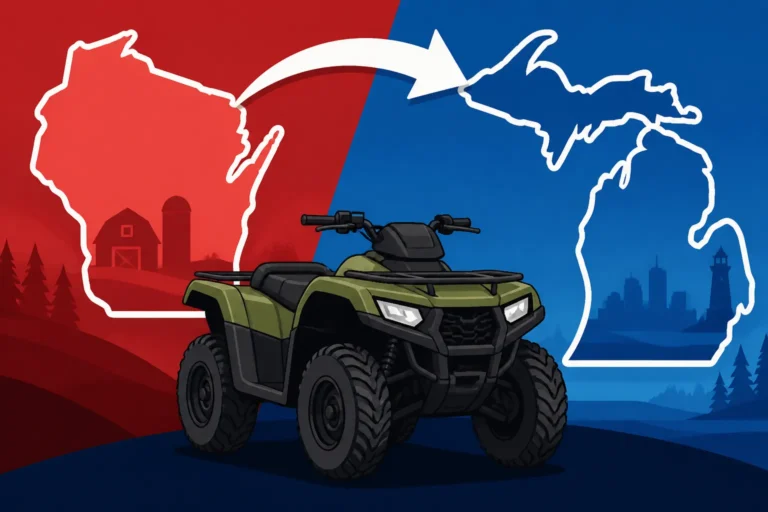
- Out-of-State Purchases: If you bought your ORV in another state, like [Titling an ATV Bought in Wisconsin and Brought to Michigan] or [Titling an ATV Bought in Indiana and Brought to Michigan], the SOS needs to verify the out-of-state title and ensure all Michigan requirements are met, including sales tax. This can involve extra checks and paperwork.
- Homemade or Rebuilt ORVs: Titling a [Titling a Rebuilt or Homemade UTV in Michigan] or a kit-built side-by-side involves a mandatory VIN inspection. This inspection needs to be scheduled and completed before the title can be issued, adding a separate step and its own waiting period. The same goes for if you have to [Fixing a Wrong VIN on a Michigan ORV Title].
- Inherited ORVs or Gifting: Transfers due to inheritance or gifting, especially if the original title is missing or complex ownership is involved, often require additional affidavits or probate documents. A well-prepared affidavit, perhaps one found on a reputable legal template site like LawDepot, can help, but it still requires review by the SOS. For details, you might look into [Transferring a Michigan ORV Title After an Owner Dies].
Summary of Influencing Factors
| Factor | Typical Impact on Delivery Time | Notes |
|---|---|---|
| Application Method | ||
| In-person at SOS branch | Generally faster processing | Application processed immediately; title mailed from central facility (2-4 weeks). |
| Through a licensed dealer | Variable, often efficient | Depends on dealer's processing speed and communication with SOS/lienholders. |
| Mail-in application | Adds 3-7+ days to process | Extra transit time for both sending and receiving documents. |
| Paperwork Quality | ||
| Complete & accurate | Within standard timeframe | No delays due to errors. |
| Incomplete or incorrect | Significant delays (weeks/months) | Application returned for correction or put on hold. |
| SOS Workload | ||
| Non-peak season | Within standard timeframe | Lower volume of applications. |
| Peak season (spring/summer) | Can be delayed (4-6+ weeks) | Higher volume leads to longer queues. |
| Financing/Liens | ||
| No lien | Within standard timeframe | Simpler process. |
| With a lien | Slightly longer | Coordination with lienholder required; title may be sent to lender first. |
| Special Circumstances | ||
| Out-of-state purchase | Longer | Requires verification of foreign title/sales tax. |
| Homemade/rebuilt | Longer | Requires VIN inspection before title can be issued. |
| Lost prior title | Longer | Requires additional proof of ownership/affidavits. |
Navigating the Waiting Period: What You Can Do
While you're waiting for that coveted piece of paper to arrive, you're not entirely powerless. There are practical steps you can take to ensure you're covered and to manage your expectations.
Keep Your Proof of Application and Ownership Handy
When you apply for a title, especially in person, the SOS will provide you with some form of temporary receipt or confirmation that your application has been submitted. DO NOT LOSE THIS. This document is your temporary proof that you've initiated the titling process. It’s crucial, especially if you get stopped by a DNR officer while riding before your official title arrives. Having this, along with your [Michigan ORV License and Trail Permit Explained], shows you're acting in good faith.
Beyond the application receipt, keep a copy of your bill of sale and any other purchase documents (like a dealer invoice or previous owner's title, if applicable) with you. These, combined with your application proof, serve as strong evidence of your ownership during the waiting period. A well-crafted bill of sale, perhaps using a template from a service like LawDepot, is your best friend here. It clearly outlines the transaction and transfer of ownership, which is vital until the official title arrives.
Understand Legal Riding Requirements While You Wait
Michigan law actually gives you a bit of a grace period. [Michigan Gives You 15 Days to Title an ORV] after purchase. However, the title arriving in your mailbox is a separate timeline. During the waiting period, especially if it extends beyond those initial 15 days, it's essential to understand what documentation you need to ride legally.
Generally, you need to have applied for the title, paid sales tax, and have your ORV license and trail permit. You don't necessarily need the physical title in your possession to ride on designated trails or routes if you can prove you've applied for it and meet all other requirements. This is why that temporary receipt and a robust bill of sale are so important. Always carry these documents with you when you ride, perhaps in a waterproof bag, as conservation officers or local law enforcement may ask for them. Remember, operating an [Penalty for Operating an Untitled ORV in Michigan] can lead to fines, so proactive documentation is your friend.
Checking the Status of Your Application
Patience is a virtue, but waiting indefinitely without information can be tough. The Michigan Secretary of State generally doesn't offer a real-time online tracker specifically for ORV titles in the same way you might track a package. However, there are ways to check in:
- Call the Secretary of State: After a reasonable amount of time (e.g., beyond the 4-week mark), you can call the Michigan Department of State's customer service line. Have your application details, including any temporary receipt numbers, the VIN of your ORV, and the date you applied, ready. They might be able to look up the status in their system and give you an update on where it is in the process.
- Contact Your Dealer (if applicable): If you purchased your ORV from a dealer, reach out to them first. They often have direct contacts or methods to check on the status of title applications they've submitted. They can also tell you exactly when they sent the paperwork in, which helps you gauge the timeline.
When Your Title Doesn't Arrive: Next Steps
So, you’ve waited the typical 2-4 weeks, then stretched it to 6, maybe even 8 weeks, and still no title. It's frustrating, but it's not the end of the world. There are clear steps you can take to resolve the issue.
Don't Panic, But Do Act
First, check your mail thoroughly again. Sometimes it gets tucked away with junk mail or overlooked. If you're certain it hasn't arrived, it's time to follow up systematically. Don't wait until six months have passed. A good benchmark is to start making inquiries if it hasn't arrived within 6 weeks of your application date, especially if you applied in person or through a dealer.
Contact the Michigan Secretary of State
Your first line of defense is the Secretary of State's customer service.
- Gather Your Information: Before you call, make sure you have everything at your fingertips: the date you applied, the SOS branch or dealer where you applied (if applicable), your full name and address, and most importantly, the Vehicle Identification Number (VIN) of your ORV. Having a copy of your application receipt or bill of sale is also incredibly helpful.
- Explain the Situation Clearly: State that you applied for an ORV title on a specific date, provide the VIN, and explain that you have not yet received it. Ask them to look up the status of your application.
- Inquire About Issues: The representative might be able to tell you if there was an issue with your application – perhaps it was incomplete, had an error, or was returned to you and never received. This is where a detailed [Michigan ORV Title Application Form and Where to Get It] comes into play. If there was a specific problem, they can guide you on how to correct it.
- Ask About Expected Delivery: If everything looks okay on their end, ask for an estimated delivery date or if they can confirm it was mailed and when.
What if it was lost in the mail or never sent?
If the SOS confirms the title was processed and mailed but you never received it, or if it was returned to them due to an incorrect address, you'll likely need to apply for a replacement.
- Applying for a Replacement Title: This usually involves filling out a specific form for a duplicate title. There might be a small fee associated with this, similar to the [Michigan ORV Title Fee at the Secretary of State]. You'll typically need to certify that the original title was lost or never received. The process for a replacement title often mirrors the initial titling process in terms of paperwork, just with a different form.
- Address Verification: Double-check the address they have on file for you. A simple typo in your street number or zip code could be the culprit.
- Wait Again: Unfortunately, applying for a replacement means you’ll re-enter the processing queue, so you'll have another waiting period, likely similar to the original 2-4 weeks.
Dealing with Specific Errors
If the SOS informs you there was an error in your initial application that caused the delay, you'll need to promptly correct it and resubmit.
- Common Errors: These could include an incorrect VIN (see [Fixing a Wrong VIN on a Michigan ORV Title]), a missing signature from the seller (relevant if you are dealing with an [ORV Title With a Missing Seller Signature]), or an underpayment of sales tax.
- Resubmission: You'll typically be sent the original application back with notes on what needs to be fixed. Make the corrections carefully and resubmit it as soon as possible. Be mindful that this restarts your processing clock from the date of resubmission.
While waiting for your Michigan ORV title can test your patience, understanding the process, knowing what can cause delays, and being prepared to follow up can make the experience much smoother. Always keep good records, maintain copies of all your paperwork (including any templates from services like LawDepot you might have used for bills of sale or affidavits), and don't hesitate to contact the Secretary of State if your title doesn't arrive within a reasonable timeframe.
Disclaimer
This article is for general informational purposes only and does not constitute professional advice. Laws, prices and regulations vary by location and change over time. Consult a qualified professional for guidance on your specific situation.