Gifting an ATV in Michigan and the Title That Follows
There’s nothing quite like the look on someone’s face when they realize they’re getting an off-road vehicle. That moment of pure joy, the dreams of hitting Michigan’s incredible trails, the anticipation of adventure – it’s truly special. But before you hand over the keys and send them off, there’s some crucial paperwork to handle, because gifting an ATV or UTV in Michigan isn't just about the gesture; it's about the proper title transfer to ensure your thoughtful present doesn't become a future headache for the new owner. This guide will walk you through everything you need to know about legally gifting an ORV in the Wolverine State.
Why Gifting an ATV Isn't Just "Handing Over the Keys"
The excitement of giving or receiving an ATV or UTV as a gift is undeniable. You picture the trails, the mud, the scenic views of the Upper Peninsula or the challenging terrain of Holly Oaks. However, many people forget that behind every exhilarating ride is a pile of essential paperwork, and gifting an ORV has its own set of rules, particularly when it comes to the title. It’s not simply a matter of saying "it's yours now" and calling it a day.
The Emotional Side of the Gift vs. Legal Realities
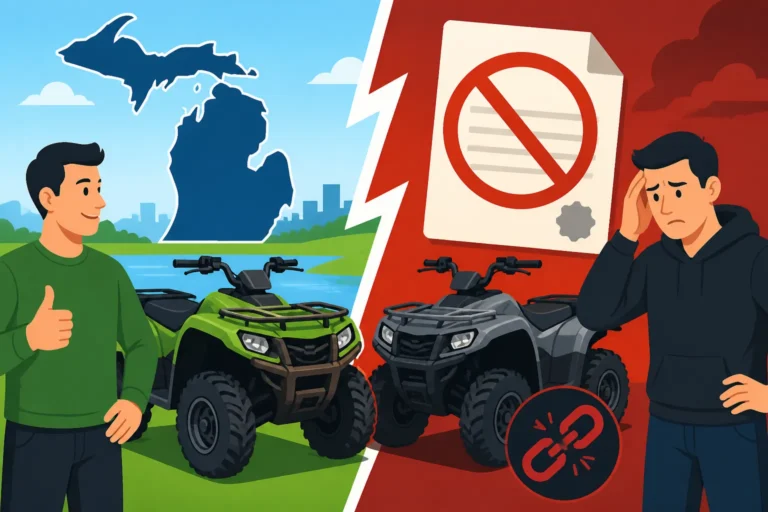
Imagine the scenario: you've been saving up, planning this surprise for months. Your spouse, child, or a close friend has always dreamed of owning an ATV. The big reveal is fantastic, full of smiles and appreciation. But then, a few weeks later, they try to get their trail permit or perhaps even sell it down the line, and they hit a wall. Why? Because the title wasn't properly transferred. The initial joy can quickly turn into frustration if the legalities aren't handled correctly at the outset. It's a classic situation where good intentions meet bureaucratic reality, and without the right steps, that generous gift can become a source of stress for the recipient.
The Hidden Bureaucracy of Title Transfers
Michigan, like every state, has specific procedures for transferring ownership of titled vehicles, and ORVs are no exception. These rules are in place for several reasons: to track ownership, prevent theft, ensure proper taxation, and facilitate legal sales. When you're "gifting" an ATV, the state still views it as a transfer of ownership, even if no money changes hands. This means you can't bypass the Secretary of State or ignore the title document itself. Failing to navigate this bureaucracy can leave the recipient in a difficult spot, potentially unable to legally ride their new machine, register it, or even prove it belongs to them if it's ever stolen. Thinking through this process beforehand ensures that the joy of the gift lasts, rather than being overshadowed by unexpected administrative hurdles.
Understanding Michigan's ORV Gifting Rules
Michigan has specific ways of defining what constitutes a "gift" when it comes to vehicle transfers, and understanding these nuances is critical. It primarily revolves around the exchange of money, or lack thereof, and how that impacts sales or use tax. Getting this wrong can lead to unexpected tax bills for the recipient down the road.
Michigan's Definition of a True Gift
For an ATV or UTV transfer to be considered a true "gift" in Michigan, there absolutely cannot be any money, goods, or services exchanged for the machine. This means no cash changing hands, no trade-ins, no "I'll give you this old snowmobile for it," and no "I'll mow your lawn for a year if you give me that quad." If any consideration—even a nominal amount or a promise of future service—is involved, the Secretary of State will consider it a sale, not a gift. This distinction is vital because it directly impacts whether use tax is owed. A genuine gift means the recipient is typically exempt from paying Michigan's use tax, which is essentially the same rate as sales tax.
The "Use Tax" Exemption for Gifts
One of the biggest advantages of officially gifting an ATV in Michigan is the exemption from use tax. When you buy an ORV from a private seller, the buyer typically owes Michigan's 6% use tax on the purchase price. However, if the ATV is truly a gift, and no money changed hands, the recipient is generally exempt from this tax. This can save a significant amount of money, especially on higher-value machines. The key is proving to the Secretary of State that it was indeed a gift. This usually requires a properly filled out title, a bill of sale stating "gift" as the price, and sometimes a specific gift affidavit, which we'll discuss shortly. This tax break is a huge relief for the recipient, making the gift even more valuable.
When a "Gift" Might Not Be a Gift in the State's Eyes
Sometimes, people try to sidestep the tax implications of a sale by calling it a "gift," but the state isn't easily fooled. Let's say you're selling your ATV to a friend for $1,000, but you write "gift" on the title to save them tax. If the Secretary of State suspects foul play—perhaps the value of the machine is obviously much higher than $0, or there are other inconsistencies—they might question the transaction. The recipient could then be on the hook for the use tax based on the ATV's fair market value, plus potential penalties. It's always best to be honest and transparent with the Secretary of State. Trying to circumvent the system can lead to bigger problems down the line, including [Michigan ORV Title Fraud Penalties].
The Essential Paperwork for Gifting an ATV
The success of your ATV gift hinges on having the right documents in order. This isn't just about showing up at the Secretary of State with good intentions; it's about providing concrete proof of the transfer and the nature of the transaction. Missing a piece of paperwork can mean multiple trips and prolonged frustration.
The Michigan Title Itself
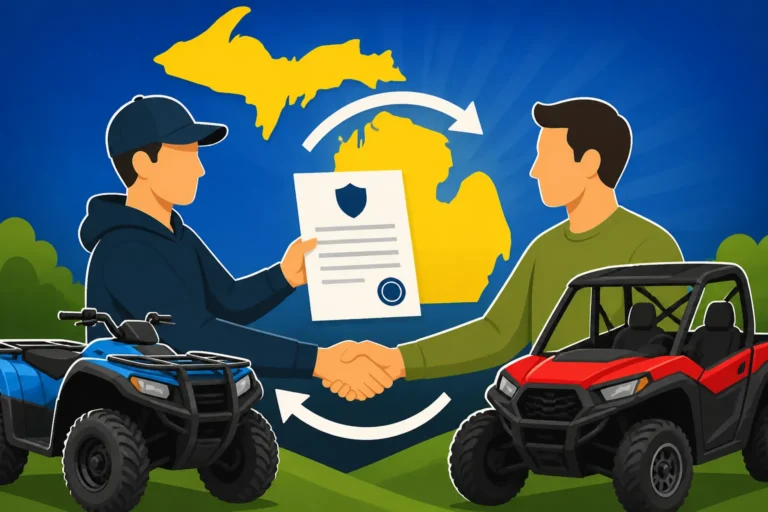
The original, physical title certificate is the absolute cornerstone of gifting an ATV. Without it, the process becomes significantly more complicated, involving steps to get [Replacing a Lost Michigan ORV Title] before you can even begin the gift transfer. The seller (the gift-giver, in this case) needs to locate this document and ensure it's in their name. On the title, there will be designated sections for the seller to sign, print their name, and for the buyer (the recipient) to do the same. Crucially, in the section where the sale price is normally entered, you should clearly write "GIFT" or "NO MONETARY CONSIDERATION." This signals to the Secretary of State that no money was exchanged, triggering the use tax exemption. Make sure all signatures are legible and match the names on the title.
Crafting a Bill of Sale for a Gift
Even for a gift, a bill of sale is highly recommended, though not always strictly required by the state for tax exemption if the title is clearly marked "GIFT." Think of it as an extra layer of protection and clarity for both parties. A bill of sale for a gifted ATV should clearly state that the item is being given as a gift, that no money or other consideration has been exchanged, and it should describe the ATV (make, model, year, VIN). It also establishes the date of the transfer. You can find templates for a bill of sale online, with resources like LawDepot offering customizable forms that specifically address gift transfers. This document can help prevent future disputes and serves as official proof for the recipient that they received the machine as a gift. It can also be critical for the recipient to prove ownership if there are ever any questions about [Proof of Ownership When a Michigan ORV Has No Title].
The Gift Affidavit Form
While not always mandatory, especially if the title is clearly marked "GIFT," a gift affidavit (sometimes referred to as a Statement of Vehicle Transaction or similar form depending on the current iteration from the Secretary of State) can be incredibly helpful, particularly if there’s any doubt or if the title itself isn’t perfectly clear. This document is essentially a sworn statement from the gift-giver that no money or consideration was exchanged for the ATV. It reiterates that the transfer is purely a gift. Having this document, signed by the giver and often notarized, provides undeniable proof for the Secretary of State that the transaction truly qualifies for the use tax exemption. It eliminates any ambiguity and can smooth the process significantly. Always check the Michigan Secretary of State website for the most current forms or ask a representative if a specific gift affidavit is recommended for your situation.
Here's a quick comparison of the key documents:
| Document | Purpose for Gifting an ATV | Key Information Needed | Importance |
|---|---|---|---|
| Original Title | Legal transfer of ownership, indicates "GIFT" in price field. | VIN, make, model, year, seller/buyer signatures, date. | Mandatory |
| Bill of Sale | Written record of transaction, explicitly states "gift," no money. | Seller/buyer names, address, date, VIN, description, price "GIFT". | Highly Recommended |
| Gift Affidavit | Sworn statement confirming no monetary exchange. | Seller/buyer names, VIN, declaration of gift. | Recommended |
Step-by-Step Title Transfer for a Gifted ATV
Once you have all your paperwork in order, the actual transfer process for a gifted ATV at the Michigan Secretary of State (SOS) office is fairly straightforward. It's all about preparation and knowing what to expect when you get there.
Preparing for Your SOS Appointment
First things first: you'll need to visit a Michigan Secretary of State branch office. While many services can be done online, title transfers, especially those involving unique circumstances like gifts, often require an in-person visit. It's usually a good idea to schedule an appointment online beforehand to avoid long wait times. When preparing for your appointment, ensure you have:
- The original ATV title, properly signed by the giver, with "GIFT" written as the sale price.
- The bill of sale (if you created one) that explicitly states it's a gift.
- Any gift affidavit you’ve prepared.
- Proof of identity for both the giver and the recipient (driver's license or state ID). If only one party can go, they should bring proof of identity for both parties and a letter of authorization from the absent party, though it's always best for both to be present.
- Funds for any applicable title fees. While the use tax is waived for gifts, there's still a small fee for the title transfer itself.
- The Vehicle Identification Number (VIN) of the ATV, just in case they need to verify it against your paperwork. Make sure it matches exactly what's on the title. A quick check of the VIN on the machine itself can save you a world of trouble.
Taking the time to gather all these documents and making an appointment will make your visit much smoother.
At the Secretary of State Branch
When you arrive at your scheduled appointment, you’ll present all your documents to the SOS clerk. They will review the title, bill of sale, and any gift affidavit to ensure everything is filled out correctly and that the transfer qualifies as a gift. They'll pay close attention to the "price" section on the title and bill of sale to confirm "GIFT" is clearly indicated. If everything is in order, they will process the title transfer into the recipient’s name. The recipient will then be issued a new title, often mailed to them within a few weeks, though they might receive a temporary paper title on the spot.
This is also the point where the recipient can apply for their [Michigan ORV License and Trail Permit Explained], which is crucial if they plan to ride on designated trails or state-managed areas. Don't forget, even if you’re exempt from sales tax on the gift, you still need to pay the title transfer fee and the ORV license and trail permit fees. Be ready for these costs.
What to Do If the Original Title is Missing
Life happens, and sometimes the original title gets lost, damaged, or simply can’t be found. This adds a layer of complexity to the gifting process. If the person gifting the ATV doesn’t have the title, they will need to apply for a duplicate title in their name first. This involves filling out a form, paying a fee, and waiting for the duplicate to be issued. Only once the duplicate title is in hand can the gift transfer proceed. This could delay the gifting process by several weeks. Make sure to factor this possibility into your timeline if you're planning a surprise gift. You cannot simply use a bill of sale as the sole proof of ownership for title transfer purposes. Remember, the title is king when it comes to ownership proof for Michigan ORVs.
Special Considerations for Gifting to Family or Minors
Gifting an ATV within the family often feels simpler, but there are still specific rules, especially when minors are involved. These details are important to prevent future legal tangles and ensure everyone is riding legally and safely.
Gifting to a Spouse or Child
Gifting an ATV to a spouse or child can be a wonderful gesture. The process for transferring the title generally follows the same steps as any other gift, where "GIFT" is noted as the purchase price to avoid use tax. However, there are nuances, particularly with minors.
- Spouses: When transferring to a spouse, you can choose to put the title solely in their name or, more commonly, add their name to your existing title, creating a co-ownership. If you add them, both names will appear on the title, often joined by "AND" or "OR." "AND" means both signatures are required for future transactions, while "OR" means either owner can sign. Many couples opt for "OR" for convenience, but it's a discussion to have. For a pure gift transfer, you'd transfer the title from your sole name to their sole name, or to both your names, clearly marking "GIFT." The process is the same as [Michigan ORV Title Transfer Between Family Members].
- Children (Minors): Gifting an ATV to a child under the age of 18 requires careful consideration. A minor cannot legally own a titled vehicle in their own name. Therefore, the title must be put in the name of a parent or legal guardian. The parent or guardian is the one who will sign as the "buyer" on the title and will be the legal owner. This is important for liability reasons and future transactions. While the ATV is "for" the child, legally it belongs to the adult. If the child is nearing 18, you might consider waiting until they are of legal age to put the title directly in their name, or plan for a second transfer once they become an adult. This is clearly outlined in guides like [Buying an ATV for a Child: Whose Name Goes on the Title].
Co-Owning a Gifted ATV
Sometimes, a gift is meant for shared enjoyment, leading to co-ownership. Perhaps you're gifting an ATV to your two adult children, or to your spouse and yourself. When co-owning, all owners must be listed on the title. As mentioned, the conjunction "AND" or "OR" dictates how future transactions, like selling the ATV, will be handled.
- "AND" titles: Require all listed owners to sign off on any future sale or transfer. This offers more protection, ensuring no single owner can dispose of the asset without the others' consent.
- "OR" titles: Allow any one of the listed owners to complete a transaction without the others' signatures. This offers convenience but less individual protection.
For a gifted ATV intended for co-ownership, ensure all names are accurately spelled and that the chosen conjunction ("AND" or "OR") is clearly indicated when filling out the title at the Secretary of State. All named owners should ideally be present for the title transfer to verify identity and consent.
Avoiding Common Pitfalls When Gifting an ATV
Even with the best intentions, it's easy to make mistakes when gifting an ATV. These common pitfalls can lead to delays, unexpected costs, or even legal issues down the road. Being aware of them can save you a lot of grief.
Overlooking the Use Tax (If Not a True Gift)
The biggest pitfall is failing to genuinely meet Michigan's definition of a "gift" but still trying to avoid paying use tax. As we discussed, if any money or consideration changes hands – even a handshake deal for future favors – it's no longer a gift in the eyes of the state. If you mark "GIFT" on the title but the Secretary of State suspects a sale (perhaps due to a private bill of sale showing a price, or the stated value of the ORV being suspiciously low for a "gift"), they can assess use tax based on the vehicle's fair market value. This means the recipient could be hit with an unexpected tax bill, possibly with penalties, which definitely dampens the spirit of the gift. Always ensure your transaction genuinely qualifies as a gift if you're claiming the tax exemption.
Incomplete or Incorrect Paperwork
Another frequent issue is incomplete or incorrectly filled-out paperwork. This includes:
- Missing Signatures: Both the gift-giver and the recipient must sign the title in the appropriate places. A missing signature means the transfer cannot be completed. The document [Who Has to Sign a Michigan ORV Title] details this.
- Illegible Information: If names, addresses, or the VIN are hard to read, the SOS clerk may reject the paperwork.
- Incorrect VIN: A common mistake is transposing numbers or letters in the VIN. Double-check the VIN on the title against the actual VIN stamped on the ATV's frame or engine. An incorrect VIN can lead to significant delays and potentially require a [Fixing a Wrong VIN on a Michigan ORV Title].
- Blank Fields: Leaving important fields blank, such as the date of transfer or the stated value (even if it’s "GIFT"), can cause problems.
Always take your time when filling out documents, and consider using a tool like LawDepot for custom bill of sale forms, which often guide you through the necessary fields. A little extra attention to detail upfront can save you a return trip to the Secretary of State.
Notary Requirements for a Gift
Michigan does not typically require a notary for the transfer of an ORV title, even if it's a gift. The signatures of the seller and buyer on the title are usually sufficient. However, if you opt to use a separate gift affidavit for extra clarity and protection, sometimes these forms include a notary section. If a form you choose to use has a notary section, then it must be notarized for that specific document to be legally binding. It's generally a good practice to have any supplemental agreements or affidavits notarized, just to add an extra layer of authenticity. This ensures there's no question about the identity of the signers or the intent of the document. Check if your specific bill of sale or affidavit template, such as one from LawDepot, includes a notary block. For specific guidance, you can refer to [Does a Michigan ATV Bill of Sale Need a Notary?].
By being meticulous with your paperwork, honest about the nature of the transaction, and prepared for the process, you can ensure your gifted ATV brings years of joy without any unforeseen complications.
Disclaimer
This article is for general informational purposes only and does not constitute professional advice. Laws, prices and regulations vary by location and change over time. Consult a qualified professional for guidance on your specific situation.