Youth ATV Size Rules Michigan Parents Should Know
It’s a tale as old as time for Michigan parents: your child sees an ATV or UTV zipping around, eyes light up, and suddenly, they're begging for one. You want to give them the world, or at least a fun, safe way to enjoy Michigan's incredible outdoor trails, but then reality hits. You start looking at machines and realize there's a huge range, and the rules about who can ride what, and at what age, feel like a dense legal thicket. It's truly frustrating to navigate without clear guidance. This comprehensive guide is here to untangle those specific Michigan youth ATV size rules, helping you make informed decisions to keep your young rider safe and legal on the trails.
Understanding Michigan's Core Philosophy for Youth ATV Riding
Michigan isn't just throwing random numbers at parents when it comes to youth ATV and UTV sizes. There's a clear, underlying philosophy guiding these regulations, centered entirely on safety and the developmental stages of young riders. The state understands that an off-road vehicle isn't a toy; it's a powerful piece of machinery that requires skill, judgment, and physical capability to operate safely. For parents, grasping this philosophy can help contextualize why certain rules exist and why they're so important to follow. It’s about more than just avoiding a ticket; it’s about preventing serious accidents.
Why Size and Age Limits Matter So Much in Michigan
Think about it this way: you wouldn't hand the keys to a semi-truck to a 12-year-old, right? While an ATV isn't a semi, the principle is the same. Younger children often lack the physical strength, coordination, and cognitive maturity needed to control larger, faster, or heavier off-road vehicles. Their reaction times might be slower, their ability to judge terrain and hazards less developed, and their impulse control still forming. Michigan's laws are designed to mitigate these risks by matching the machine's capabilities to the rider's. This isn't about stifling fun; it's about safeguarding young lives on the trails.
The state has seen firsthand the tragic consequences when riders are on machines too large or powerful for them. An ATV that fits an adult can easily become a runaway nightmare for a child, leading to rollovers, collisions, and severe injuries. The rules act as a protective barrier, encouraging parents to choose vehicles that are manageable, allowing their children to learn and develop skills incrementally in a safer environment. It's a proactive approach to prevent accidents before they happen, giving everyone peace of mind.
The "Fit" Rule: It's More Than Just Engine Size
While engine displacement (measured in cubic centimeters, or "cc") is a key component of Michigan's rules, it’s crucial to understand that "fit" goes beyond just the numbers. The state also emphasizes the importance of a child physically fitting the machine. This means they should be able to comfortably reach the handlebars, operate the throttle and brake levers, and place their feet securely on the footrests while seated. If a child has to stretch too much, lean too far, or can't easily reach controls, the machine is simply too big, regardless of its engine size.
Imagine a child trying to maneuver a heavy ATV with their arms fully extended, barely able to turn the handlebars, or struggling to press the brake with enough force. This creates a dangerous situation where they have limited control, especially when encountering bumps, turns, or sudden obstacles. The "fit" rule encourages parents to physically test out machines with their children, ensuring proper ergonomics. It's about empowering the rider to be in full command of the vehicle, not just a passenger along for the ride. This holistic view of "fit" is paramount for safety.
Specific Engine Displacement Rules by Age Group in Michigan
Michigan law is quite clear when it comes to matching engine size to a rider's age. These aren't just suggestions; they are legal requirements designed to ensure that young riders are operating machines appropriate for their developmental stage and physical capabilities. Understanding these specific cubic centimeter (cc) limits is step one for any parent considering an ATV or UTV for their child. Deviating from these rules can lead to serious safety risks and legal penalties.
Riders Under 12: Restricted to Tiny Machines
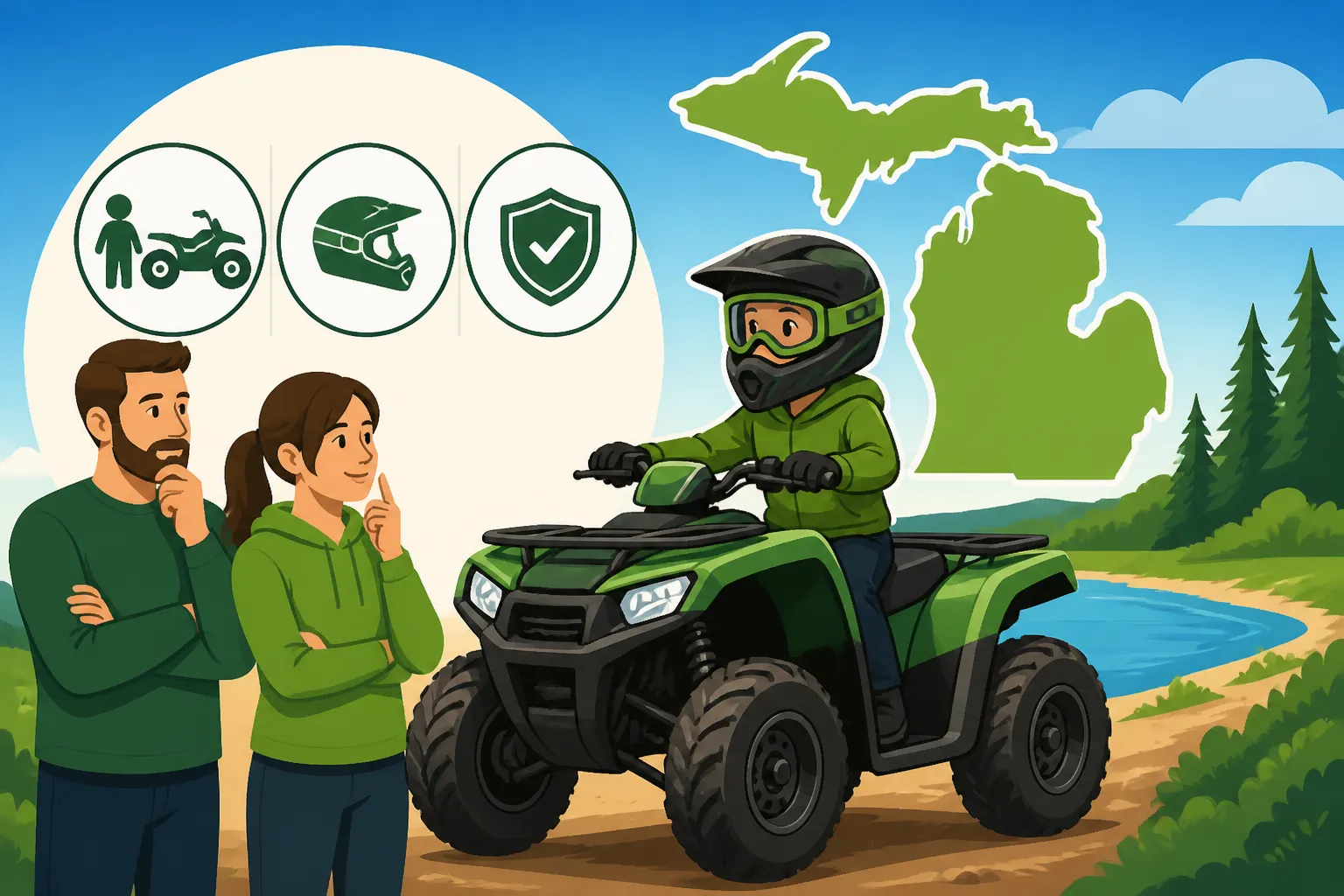
For Michigan's youngest enthusiasts, those under the age of 12, the rules are very strict: they are only permitted to operate ORVs that are 90cc or less. This applies to both ATVs and UTVs. This isn't an arbitrary number; vehicles in this displacement range are typically smaller, lighter, and have throttles that are often limited in speed, making them much more manageable for younger, less experienced riders. The focus here is on learning basic control, throttle management, and steering in a low-risk environment.
It’s important to remember that even with a 90cc machine, direct visual supervision from an adult is absolutely mandatory. This means the supervising adult must be able to see and verbally communicate with the child at all times, ready to intervene if needed. These small machines are fantastic for introducing kids to the joy of off-road riding, allowing them to build confidence and develop fundamental skills without being overwhelmed by excessive power or weight. Many manufacturers offer models specifically designed for this age group, ensuring proper ergonomics and safety features.
The 12- to 15-Year-Old Bracket: A Step Up in Power
As children grow and gain more experience, Michigan allows for a modest increase in engine size. For riders aged 12 to 15, the maximum engine displacement increases to 200cc for ATVs and 400cc for UTVs. This age group has generally developed better physical coordination, stronger problem-solving skills, and a greater understanding of cause and effect, making them more capable of handling slightly more powerful machines. However, the step up still comes with important caveats.
Even with these larger machines, these riders still require direct visual supervision from an adult when operating an ORV. It’s not a free-for-all just because they can handle a bit more power. This transitional period is crucial for honing advanced riding skills, understanding trail etiquette, and developing a keen awareness of their surroundings. Machines in this range are still designed to be approachable for youth, often featuring adjustable speed limiters and other safety mechanisms. Parents should continuously assess their child's individual maturity and skill level, even within these legal limits, to ensure they are truly ready for the increased power and weight of a larger machine. For more on what's appropriate, consider reading [Best First ATV Size for a 12-Year-Old].
Riders 16 and Over: Approaching Adult Machine Privileges
Once a rider turns 16, they are generally permitted to operate ORVs of any engine size, including full-sized adult machines. At this age, Michigan law treats them much like adult operators, recognizing that they have typically achieved the physical and cognitive maturity required to safely handle more powerful vehicles. This means the engine displacement restrictions that applied to younger age groups are lifted.
However, even though they can ride "adult" machines, the requirement for an [Michigan ORV Safety Certificate Requirements] remains crucial for all riders under 16, and highly recommended for all new riders regardless of age. While direct visual supervision from an adult isn't legally mandated for 16-year-olds on private property or designated trails, responsible parents will still encourage safe riding practices and potentially ride with their teens, especially when they are first transitioning to larger machines. Safety gear, common sense, and respecting the machine's capabilities are still paramount. This age group typically qualifies for a standard driver's license if they choose to make a UTV street legal, which is a different set of rules entirely, but the foundation of safe ORV operation starts with appropriate sizing and training.
| Age Group | Maximum ATV Engine Size | Maximum UTV Engine Size | Supervision Required | Safety Certificate Required (if under 16) |
|---|---|---|---|---|
| Under 12 | 90cc | 90cc | Yes (Direct Visual) | Yes |
| 12 to 15 years old | 200cc | 400cc | Yes (Direct Visual) | Yes |
| 16 years and older | No limit | No limit | No (on trails/private land) | No (but recommended for new riders) |
Beyond Engine Size: Other Critical Physical Fit Factors
As important as engine size is, Michigan's emphasis on safety for youth riders extends far beyond just cubic centimeters. A machine might technically meet the engine displacement requirements for your child's age, but if it doesn't physically fit them in other crucial ways, it's still a recipe for disaster. Parents often overlook these subtle but vital ergonomic details, thinking "it's within the cc limit, so it must be fine." This couldn't be further from the truth. Proper physical fit ensures a child can react quickly, maintain balance, and operate controls without strain, significantly reducing the risk of accidents.
The Importance of the "Thumb Throttle" Reach Test
One of the most critical fit tests is for the throttle, especially the common thumb throttle found on most ATVs. A child needs to be able to comfortably reach and operate the thumb throttle throughout its entire range of motion without having to stretch their thumb awkwardly or lose their grip on the handlebar. If their thumb is too short, or the throttle is too stiff for their developing hand strength, they won't have precise control over the machine's speed. This can lead to jerky acceleration, accidental throttling, or the inability to quickly reduce speed, all of which are incredibly dangerous on varied terrain.
To perform this test, have your child sit on the ATV in a natural riding position. Their arms should have a slight bend, and their hands should comfortably grip the handlebars. Then, ask them to operate the thumb throttle through its full range. Watch for any signs of strain, reaching, or awkward hand positioning. If they can’t smoothly and confidently modulate the throttle, the machine is not a good fit. Some smaller youth ATVs have adjustable throttles or speed limiters, which can be a helpful feature, but the core issue of reach and comfort must be addressed first.
Proper Foot Placement and Brake Lever Access
Another often-underestimated aspect of proper fit is a child's ability to place their feet securely on the footrests and easily access the brake levers. When riding an ATV, a child needs to maintain balance and absorb bumps by standing slightly on the footrests. If their feet dangle, or they can only reach the footrests on their tiptoes, they won't have the stability or leverage needed, especially when encountering uneven terrain or making turns. This can lead to them being easily thrown off balance or even falling off the machine.
Similarly, the brake levers—both hand and foot brakes—must be within easy reach and require manageable effort to activate. If a child has to stretch their fingers excessively to reach the hand brake, or struggle to press the foot brake with enough force, their reaction time will be compromised. In an emergency situation, every fraction of a second counts. A child should be able to apply the brakes firmly and smoothly, bringing the machine to a controlled stop without losing their grip or balance. Testing both the foot and hand brake operation is as crucial as the throttle test.
Understanding Machine Weight and Handling for Young Riders
Beyond engine power, the sheer weight of an ATV or UTV plays a significant role in how easily a child can handle it, especially in dynamic situations. A heavier machine requires more physical strength to steer, particularly at lower speeds or when navigating tight turns. It also makes it much harder for a child to recover control if the machine starts to tip or slide. If a child is struggling just to hold the machine upright when stationary, it's definitely too heavy for them to control safely on the move. For more insights on this, refer to [Youth Quad Weight and Rider Fit].
Moreover, the handling characteristics of a machine can vary greatly. Smaller, lighter youth models are typically designed with forgiving suspension and steering that respond well to lighter inputs. Larger, more powerful machines might have stiffer suspension, require more deliberate steering input, and react more aggressively to throttle changes. A child needs to be able to actively maneuver the machine, not just be a passenger along for the ride. If they can't confidently lean into turns, shift their weight, or correct for unexpected trail conditions, the machine is too much for them, regardless of its engine size. This is why a test ride, even a slow one on flat ground, is invaluable before making a purchase.
The Role of Adult Supervision and Training in Michigan
Michigan doesn't just set rules for the machines; it places significant responsibility on the adults supervising young riders. It's not enough to simply buy an appropriately sized ATV; parents and guardians must actively participate in their child's riding journey, from direct supervision to ensuring proper education. This two-pronged approach—matching the machine to the child and providing guidance—is the cornerstone of Michigan's youth ORV safety strategy.
What "Direct Visual Supervision" Truly Means
For riders under 16, Michigan law mandates "direct visual supervision" by an adult. This isn't some vague guideline; it has a very specific meaning. It means the supervising adult must be able to see the child and their ORV at all times, and be close enough to verbally communicate with them. This isn't just watching from a distant porch; it means actively riding with them, or walking alongside them, constantly monitoring their actions and the trail conditions. The intent is for the adult to be immediately available to provide instruction, intervene in a dangerous situation, or assist in the event of a mishap.
Imagine your child riding through a wooded trail. If they round a bend and you can no longer see them, or if they're too far ahead for you to shout instructions, you are no longer providing direct visual supervision. This rule is in place because young riders, especially beginners, can quickly find themselves in trouble, whether it's getting stuck, losing control, or encountering an unexpected obstacle. Having an adult within arm's reach (or at least within clear sight and earshot) is a critical safety net that can prevent minor incidents from becoming major emergencies. This applies to both private property and designated public trails.
The Mandatory Michigan ORV Safety Certificate for Youth
Another non-negotiable requirement in Michigan is the ORV Safety Certificate. Any person under 16 years of age who operates an ORV must possess a valid ORV Safety Certificate. This isn't just a piece of paper; it signifies that the rider has completed an approved safety course, learning critical skills and knowledge about safe operation, laws, and responsibilities. Even if your child is riding an appropriately sized machine under your watchful eye, they still need this certificate. This requirement underscores Michigan's commitment to educated riders, regardless of their age.
The course typically covers a wide range of topics, including pre-ride inspections, safe riding practices, environmental considerations, Michigan's ORV laws, and what to do in an emergency. It instills a sense of responsibility and awareness that simply can't be gained through trial and error. Parents should view this certificate not as a bureaucratic hurdle, but as a vital investment in their child's safety and confidence on the trails. It empowers young riders with the knowledge to make smart decisions, reducing the likelihood of accidents. For detailed information on the certificate, check out [Michigan ORV Safety Certificate Requirements].
Finding Approved Safety Training Courses in Michigan
So, where do you get this all-important ORV Safety Certificate? Michigan offers several avenues for acquiring an approved safety training course. The Michigan Department of Natural Resources (DNR) typically oversees and approves these programs. You can often find courses offered in-person by certified instructors across the state, particularly during warmer months. These hands-on courses can be particularly beneficial as they allow children to practice riding skills under direct supervision in a controlled environment.
Additionally, some approved courses are available online. These online options offer flexibility, allowing families to complete the classroom portion from the comfort of their home. However, many online courses still require a practical, hands-on riding assessment to ensure the child can apply what they've learned. It's crucial to ensure that any course you choose is indeed approved by the Michigan DNR to ensure the certificate is valid. A quick search on the DNR's website for "ORV safety courses" should yield current listings and approved providers. Investing the time and effort to complete this training is arguably one of the most important things a parent can do for their young rider's safety.
Three-Wheeled ATVs and Why Michigan Has Strict Rules
While four-wheeled ATVs (quads) and UTVs are common sights on Michigan trails, three-wheeled ATVs (often called "three-wheelers" or "trikes") represent a different category with a distinct and more restrictive set of rules, especially for youth riders. The history of three-wheelers, coupled with their inherent design characteristics, led to a nationwide reevaluation of their safety, resulting in very specific legislation in Michigan that parents absolutely must understand.
The Ban on New Three-Wheelers for Youth Riders
If you're thinking of buying a brand-new three-wheeled ATV for your child in Michigan, you'll quickly discover it's not possible. The sale of new three-wheeled ATVs in the United States, including Michigan, has been banned for many years. This ban stemmed from significant safety concerns and high accident rates associated with these machines, particularly when operated by inexperienced riders. Their design, with a single wheel at the front and two at the rear, made them inherently unstable, especially during turns or over uneven terrain, leading to a much higher propensity for rollovers compared to four-wheeled vehicles.
For youth riders, these stability issues were compounded by their developing motor skills and judgment. The effort required to counterbalance and shift weight properly on a three-wheeler was often beyond the capabilities of children, making them particularly vulnerable to accidents. Therefore, the ban on new sales effectively ensures that modern youth riders are not being introduced to the inherent risks of three-wheeled ATVs. If you see a new machine advertised as a "three-wheeler," it's likely not an actual ATV but rather some other type of recreational vehicle or a mislabeled product, and it certainly won't be legal for youth use as a new purchase under Michigan's ORV rules.
Legacy Three-Wheelers and the Age Restrictions
Despite the ban on new sales, many legacy three-wheeled ATVs still exist and are occasionally bought and sold on the used market. For parents considering one of these older machines, Michigan law imposes extremely stringent age restrictions. Regardless of engine size, a person must be at least 16 years old to operate a three-wheeled ATV in Michigan. This rule makes it explicitly clear that these machines are considered too dangerous for anyone under 16, even if they meet the engine size limits for a four-wheeled ATV.
This hard age cutoff for three-wheelers is a direct reflection of the heightened safety risks associated with their design. Even a small, low-powered three-wheeler requires significant skill and experience to operate safely, far beyond what a child or young teenager typically possesses. So, while you might find a classic 70cc or 90cc three-wheeler for sale that seems like it would be appropriate for a younger child based on engine size, Michigan law unequivocally states that it is not. Purchasing one for a child under 16, or allowing them to ride it, would be a direct violation of state law, with potentially severe legal consequences and, more importantly, a high risk of injury. For more on these specific age limitations, refer to [Three-Wheelers and the Michigan Age Limit].
Consequences of Non-Compliance: What Parents Need to Know
Ignoring Michigan's youth ATV size and safety rules isn't just about breaking a law; it carries very real, very serious consequences. These aren't minor infractions that can be brushed aside. Parents need to understand that violating these regulations can lead to significant financial penalties, legal liabilities, and, most importantly, puts their child's safety and future at grave risk. Being informed about these potential repercussions can help reinforce the importance of adherence.
Potential Fines and ORV Impoundment
One of the immediate consequences of non-compliance is the potential for fines. Michigan law enforcement, including DNR conservation officers and local sheriff's deputies, regularly patrol ORV trails and areas. If they observe a child operating an ATV or UTV that is too large for their age, or if the child does not have the required safety certificate or adult supervision, they can issue tickets. These fines can be substantial, often ranging into the hundreds of dollars, and can quickly add up if there are multiple violations.
Beyond fines, a more severe consequence can be the impoundment of the ORV. Law enforcement has the authority to seize an improperly operated vehicle, especially if the violation is egregious or poses an immediate danger. Imagine your child's ATV being towed away, leaving you not only with the cost of fines but also impoundment fees, storage fees, and the hassle of retrieving the vehicle. This can be a significant financial burden and a stark reminder that these rules are enforced with serious intent. For a broader look at violations, consider [Michigan ORV Title Fraud Penalties] (though less direct, it highlights the state's seriousness with ORV law).
Insurance Implications and Liability for Accidents
Perhaps even more concerning than fines and impoundment are the potential insurance implications and liability risks. If your child is involved in an accident while operating an ORV in violation of Michigan's age or size rules, your insurance company may deny coverage. Most standard homeowner's policies have exclusions for recreational vehicles, and if you have specific ORV insurance, it often stipulates that the vehicle must be operated legally. Operating an oversized machine for a child would likely fall outside these legal parameters.
This means that if your child causes an accident that results in injury to themselves or others, or damage to property, you could be held personally liable for all medical expenses, property repairs, and pain and suffering. These costs can easily run into hundreds of thousands, if not millions, of dollars, potentially bankrupting a family. The financial and emotional toll of such an event, especially knowing it could have been prevented by simply following the rules, is immense. This emphasizes why obtaining proper [Michigan ORV Insurance and When You Actually Need It] is critical, and why understanding its limitations is equally important.
The Importance of a Bill of Sale and Title When Buying for a Minor
When purchasing an ATV or UTV for a minor, even if it's a youth-sized machine, the paperwork needs to be handled meticulously. In Michigan, all ORVs generally require a title, and while the minor will be the primary rider, the title should typically be in the name of a parent or legal guardian. This ensures that a responsible adult maintains legal ownership and responsibility for the machine, even if the child is the intended operator. A proper [Michigan ATV Bill of Sale: What to Put in It] is also essential, detailing the sale and purchase.
It's wise to consult a legal document service like LawDepot to help ensure that all necessary forms, like a bill of sale or any transfer documents, are correctly drafted and legally sound. When dealing with purchases for minors, having clear documentation protects both the buyer and seller. If you are ever asked to prove ownership or show the chain of custody, especially in a situation involving an accident or legal dispute, having accurately prepared documents will be invaluable. The bill of sale should clearly state who the seller is, who the buyer is (the adult, acting on behalf of the minor), the vehicle's VIN, make, model, and engine size, and the purchase price. This careful documentation can mitigate many future headaches.
Choosing the Right ATV for Your Child: Practical Tips
Selecting an ATV or UTV for your child is a significant decision, blending excitement with the serious responsibility of safety. It's not just about finding the coolest-looking machine; it's about making a practical, informed choice that aligns with Michigan's rules and, more importantly, your child's individual needs and capabilities. Taking the time to do thorough research and consider various factors will pay dividends in safety and enjoyment.
New vs. Used Machines: What to Look For
The decision between a new and a used youth ATV often comes down to budget, but both options have pros and cons. A new machine offers peace of mind with a warranty, the latest safety features, and a guarantee that it hasn't been abused. However, they come with a higher price tag. If you go this route, working with a reputable dealer can ensure you're getting a machine that meets all current safety standards and that the titling process is handled smoothly. They can also often advise on [Dealer Paperwork Checklist for a New UTV].
Used machines, on the other hand, can be much more affordable, allowing you to get a great value for your money. However, they require careful inspection. Always check the machine thoroughly for signs of wear, damage, or neglect. Look at the tires, brakes, suspension, and listen to the engine. Ask about its history and maintenance records. It's also crucial to verify the VIN (Vehicle Identification Number) to ensure it's not stolen and to confirm the actual engine size matches the advertised size. A service like LawDepot can provide a robust bill of sale template, which is vital for any used purchase, especially if you're buying from a private seller. Never hesitate to walk away from a deal if something feels off.
Growth Spurts and Planning for the Next Size Up
Children grow, and sometimes they seem to do it overnight! What fits perfectly this season might be too small next year. When purchasing a youth ATV, it's wise to consider your child's current size, their growth trajectory, and how long the machine might realistically fit them. Buying a machine that's slightly too big with the intention they'll "grow into it" is a dangerous mistake, as we've discussed with the "fit" rule. However, buying one that's just right now might mean you'll be selling it sooner than you expect.
Some parents opt for a smaller, entry-level machine to start, knowing they'll upgrade in a couple of years. This allows the child to gain experience on a truly appropriate vehicle before moving to the next size bracket (e.g., from a 90cc to a 200cc). Others might look for models with some adjustability, such as adjustable handlebars or throttle limiters, which can slightly extend the usable life of the machine. Discussing this with your child can also help manage expectations and ensure they understand the importance of riding a machine that always fits them properly.
Essential Safety Gear Beyond the Machine Itself
Even the most perfectly sized and maintained ATV is only part of the safety equation. The rider's personal protective equipment (PPE) is equally, if not more, critical. This isn't optional; it's mandatory for responsible and safe riding. Investing in high-quality gear is just as important as investing in the machine itself.
Here's a checklist of essential safety gear:
- DOT-Approved Helmet: This is non-negotiable. A helmet protects the most vital part of the body. Ensure it's DOT-approved and fits snugly without being uncomfortable.
- Eye Protection: Goggles or a face shield are essential to protect against dust, debris, insects, and branches.
- Gloves: Protect hands from scrapes, blisters, and provide a better grip on the handlebars.
- Over-the-Ankle Boots: Sturdy boots protect feet and ankles from impacts, scrapes, and prevent them from getting caught in moving parts.
- Long-Sleeved Shirt and Long Pants: Durable clothing provides protection from scrapes, cuts, and minor impacts, as well as sun exposure. Riding gear specifically designed for off-road use often offers additional padding and ventilation.
Never compromise on safety gear. Accidents can happen even to the most experienced riders, and proper gear significantly reduces the severity of injuries. Explain to your child why this gear is important, helping them understand that it’s about protection, not just a fashion statement.
Titling and Ownership for Youth ATVs in Michigan
Navigating the ownership and titling process for an ATV or UTV in Michigan, especially when it's intended for a minor, can feel a bit complex. It's not as straightforward as just putting "Johnny's ATV" on the title. Understanding whose name should be on the official documents and what paperwork is necessary is crucial for legal ownership and smooth operations. Getting this right from the start can prevent headaches down the road, particularly in situations involving sales, gifts, or even legal disputes.
Whose Name Goes on the Title When Buying for a Child
In Michigan, an ORV title is a legal document proving ownership. While the ATV or UTV might be for your child, the title should typically be in the name of an adult – a parent or legal guardian – rather than the minor themselves. Minors generally cannot legally enter into contracts, which includes vehicle ownership and title transfers. Having the title in an adult's name ensures that there is a legally responsible party for the machine. This is a common practice across many states for vehicle ownership involving minors.
This doesn't mean your child doesn't "own" the ATV in a practical sense; it simply means the legal ownership rests with you. When you fill out the application for a Michigan ORV title, you would list your name (or both parents' names, if desired) as the owner. If you eventually sell the ATV, you, as the legal owner, would be the one to sign off on the title transfer. This setup provides clarity and simplifies any future transactions or legal necessities concerning the vehicle. For a more detailed look, consider [Buying an ATV for a Child: Whose Name Goes on the Title].
Michigan ATV Bill of Sale: What to Put in It for a Youth Purchase
When you purchase a youth ATV, especially from a private seller, a robust bill of sale is your best friend. It serves as a crucial record of the transaction and can be essential for proof of ownership until the title arrives. For a youth purchase, the bill of sale should clearly identify the adult (parent/guardian) as the buyer, even though the machine is intended for the child.
A well-drafted [Michigan ATV Bill of Sale: What to Put in It] should include:
- Date of Sale: The exact date the transaction occurred.
- Seller's Information: Full legal name, address, and contact information of the person selling the ATV.
- Buyer's Information: Full legal name, address, and contact information of the parent/guardian purchasing the ATV.
- Vehicle Description: Make, model, year, color, and most importantly, the Vehicle Identification Number (VIN) of the ATV.
- Purchase Price: The agreed-upon selling price.
- "As Is" Clause: Most private sales are "as is," meaning you accept the vehicle in its current condition with no warranties from the seller. This should be stated clearly.
- Signatures: Both the seller and buyer (the adult) should sign and date the bill of sale.
- Witness (Optional but Recommended): A witness signature can add an extra layer of validity.
Having a clear and comprehensive bill of sale, potentially generated using a service like LawDepot, can be invaluable when applying for the title at the Michigan Secretary of State's office, as it provides verifiable proof of your purchase and the details of the transaction.
The Importance of Proper Ownership Documentation (and LawDepot Mention)
Beyond the title and bill of sale, maintaining proper ownership documentation for your child's ATV is critical for several reasons. This includes keeping copies of the bill of sale, the ORV title application, and eventually the actual ORV title once it arrives. These documents are your proof of ownership and can be vital in various scenarios, from registering the vehicle to resolving disputes or even if the machine is stolen.
Imagine you purchase a used ATV from a private seller, and a few months later, the title still hasn't arrived. Having a detailed bill of sale and proof of your title application allows you to follow up effectively with the Secretary of State's office. In the unfortunate event that the ATV is ever stolen, having all your ownership documents readily available will be essential for filing a police report and assisting with recovery efforts. Services like LawDepot offer templates for various legal documents, including comprehensive bills of sale, which can give parents peace of mind that they've covered all their bases when acquiring an ORV for their child. Ensuring these documents are accurate and safely stored is a vital part of responsible ORV ownership in Michigan.
Disclaimer
This article is for general informational purposes only and does not constitute professional advice. Laws, prices and regulations vary by location and change over time. Consult a qualified professional for guidance on your specific situation.