Can a 10-Year-Old Ride an ATV in Michigan?
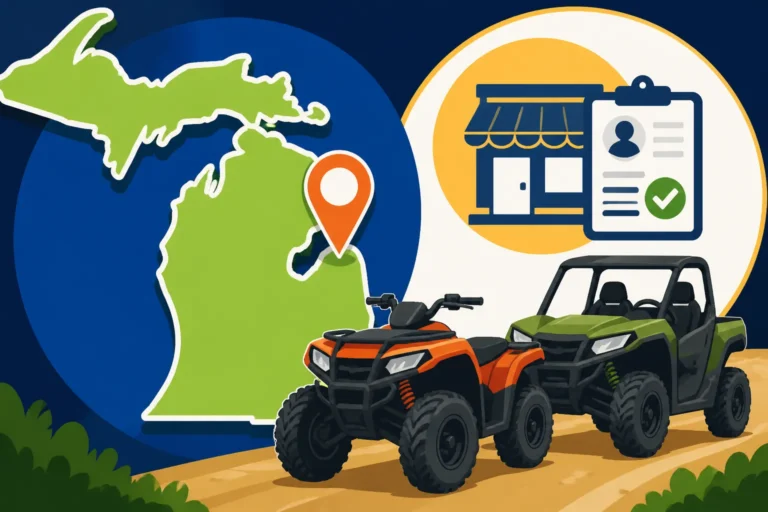
A ten-year-old can ride an ATV in Michigan in some circumstances, but age alone does not make a ride legal or safe. The key questions are where the child will ride, whether they have an approved safety certificate, and whether an adult can supervise them directly. Here’s how to check the rules and prepare before heading out.
Can a 10-year-old ride an ATV in Michigan?
Yes. A ten-year-old may operate an ATV on Michigan public lands if the child has a valid ORV safety certificate and is under the direct visual supervision of an adult, according to the Michigan Department of Natural Resources.
The age restriction is specific: children younger than 10 are prohibited from operating four-wheel ATVs on public lands, according to the Michigan Department of Natural Resources. That means a child who has reached age 10 is no longer covered by that under-10 prohibition, but still has to meet the certificate and supervision requirements that apply to riders under 16.
Those rules concern operation on public lands. They do not, by themselves, answer every question about riding on private property, at a managed recreation area, or on a road designated for ORV use. Check the rules for the specific place and type of riding before you go.
| Situation | What applies |
|---|---|
| A ten-year-old riding an ATV on public lands | The child needs a valid ORV safety certificate and direct visual supervision by an adult, according to the Michigan Department of Natural Resources. |
| A child younger than 10 riding a four-wheel ATV on public lands | The child is prohibited from operating it, according to the Michigan Department of Natural Resources. |
| A rider under 16 on public lands | The rider needs an approved ORV safety course and must carry the certificate, according to the Michigan Department of Natural Resources. |
| A minor riding on a road designated for ORV use | A person under 18 must have a valid driver’s license or be under the direct supervision of a parent or guardian while holding an ORV safety certificate, according to the Michigan Legislature. |
The certificate requirement is more than a formality. Before the trip, make sure the child has completed an approved course and that the certificate is available to carry. For the course and certificate details, see Michigan ORV Safety Certificate for Riders Under 16. The page Michigan ORV Age Rules at 10, 12 and 16 can also help you compare the rules as a child grows.
Safety certificate and adult supervision
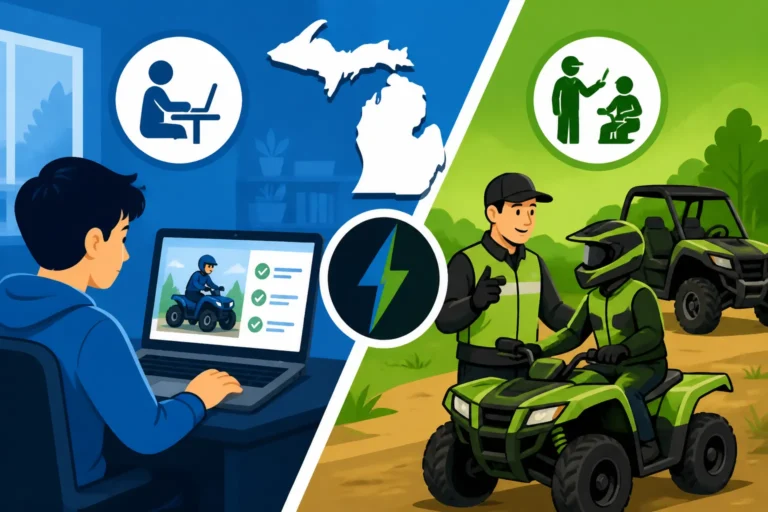
A ten-year-old needs both a valid safety certificate and direct visual supervision to operate an ATV on public lands. According to the Michigan Department of Natural Resources, anyone under 16 operating an ORV on public lands must complete an approved ORV safety course and carry the certificate.
Direct visual supervision means the adult needs to be able to see the rider. It is not the same as being somewhere nearby but out of sight. Choose a route and riding pace that let the supervising adult keep the child in view and respond if the child needs help. For a closer look at what the supervision rule means in practice, read What Direct Visual Supervision Actually Means.
Before riding, take time to check the certificate, explain where the child may ride, and agree on how the child should respond to instructions or a problem. Keep the ride within the adult’s ability to supervise; an unfamiliar route or a group that spreads out can make it harder to maintain visual contact.
A parent or guardian should also think about whether the child can safely control the particular machine. Legal permission does not establish that every ATV is a suitable size or power for every rider. Consider whether the child can reach and operate the controls, steer, brake, and stop reliably. If the child has difficulty managing the machine at a standstill or at a slow pace, choose a more appropriate option rather than relying on supervision to compensate.
Prepare the child and the machine
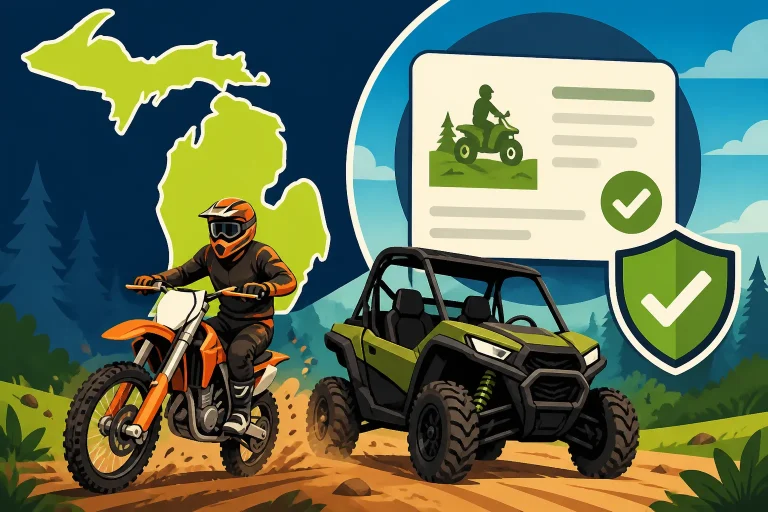
Before setting out, check the vehicle’s passenger design, protective equipment, and condition. Michigan law generally requires ORV operators and passengers to wear a Department of Transportation-approved crash helmet and protective eyewear, according to the Michigan Legislature. The Legislature identifies exceptions under certain conditions, including some UTVs equipped with an approved roof and properly fastened safety belts. For a child riding an ATV, a properly fitted helmet and eye protection are a sensible baseline; do not assume a general exception applies to the machine or situation.
If you’re shopping for protective equipment through Amazon or another retailer, verify that the helmet meets the required standard and fits the child securely. A product listing alone is not proof that an item is approved or suitable. Check the product’s labeling and confirm fit before the ride.
Michigan law also says an ORV may not carry a passenger unless the vehicle’s design or manufacturing standards provide for passengers, according to the Michigan Legislature. A child should not ride as a passenger on a single-rider ATV simply because they can sit on it. Check the manufacturer’s passenger configuration and use the right vehicle for the number of riders.
Before starting, make sure the vehicle is in good working order and that the child knows how to stop. A helmet and certificate do not replace adult supervision, a suitable machine, or a route that matches the rider’s ability.
Where the child rides changes the rules
The public-land age and supervision rules are only part of the picture. Michigan has different requirements for public lands, state-designated trails, and roads designated for ORV use. Confirm the route’s status before riding rather than assuming that a nearby trail, forest road, or road shoulder has the same rules.
For state-designated ORV trails, the Michigan Department of Natural Resources says riders need an ORV license and an additional trail permit. The combined cost is $36.25 as of October 2026, and the annual license and permit expire on March 31 of the following year, regardless of when they were purchased. Check the current requirements with the Department of Natural Resources before buying or riding, since permit details can change.
The certificate and supervision rules still matter when a young rider has the necessary permits. A sticker or permit does not replace the certificate, and an adult’s presence does not replace the certificate either. For information about the youth rules that apply to older children, see Michigan Rules for 12- to 15-Year-Old Riders.
A road designated for ORV use needs particular attention. The Michigan Legislature says a person under 18 must either have a valid driver’s license or be under the direct supervision of a parent or guardian while holding an ORV safety certificate. This road-use rule is distinct from the general public-land requirement for riders under 16 to have direct visual adult supervision. If the ride includes a road, check both the route’s legal status and the conditions that apply to the rider.
Road access is not permission to ride on any road. Confirm that the specific road is open to ORVs and follow posted restrictions. State forest roads, for example, are generally open to ORV use year-round unless they are posted otherwise or seasonally closed, according to the Michigan Department of Natural Resources. Conditions and closures can affect where riding is allowed, so check the location before leaving.
A parent’s pre-ride checklist
A careful check before the ride can prevent confusion at the trailhead and help keep the child within the rules.
- Confirm the child’s age and machine. The Michigan Department of Natural Resources prohibits children younger than 10 from operating four-wheel ATVs on public lands. For a ten-year-old, check that the machine is appropriate for the rider and that the child can control it.
- Verify the safety certificate. A ten-year-old needs a valid ORV safety certificate to ride on public lands, according to the Michigan Department of Natural Resources. The child should carry it while operating there.
- Plan for direct visual supervision. Keep the child in sight and choose a route where the adult can supervise continuously. The explanation in What Direct Visual Supervision Actually Means may help clarify what to plan for.
- Check the location and route. Confirm whether the ride is on public land, a state-designated trail, or a road designated for ORV use. Each setting may involve different requirements.
- Check permits where they apply. For state-designated trails, confirm the required ORV license and trail permit with the Michigan Department of Natural Resources. Do not assume a permit for one type of riding covers another.
- Use the right protective gear. Check the helmet and eye protection, and make sure the equipment fits and is in good condition. If the vehicle is a UTV, check the applicable rules for its roof and safety belts rather than assuming the helmet exception applies.
- Check the passenger setup. Do not carry a passenger on an ATV unless the vehicle is designed to transport one, according to the Michigan Legislature.
- Make a simple riding plan. Agree on where to stop, how the child will stay within sight, and what to do if the group becomes separated or the machine has a problem.
If you cannot verify the route, certificate, or applicable permit, pause and check with the relevant land manager or the Michigan Department of Natural Resources before riding. A ten-year-old can ride an ATV in Michigan under the applicable conditions, but the adult remains responsible for choosing a lawful place and a manageable ride.
Sources
- Michigan Department of Natural Resources — Purchase permit, learn requirements – State of Michigan (checked October 28, 2026)
- Michigan Legislature — MCL – Section 324.81131 (checked October 28, 2026)
Disclaimer
This article is for general informational purposes only and does not constitute professional advice. Laws, prices and regulations vary by location and change over time. Consult a qualified professional for guidance on your specific situation.