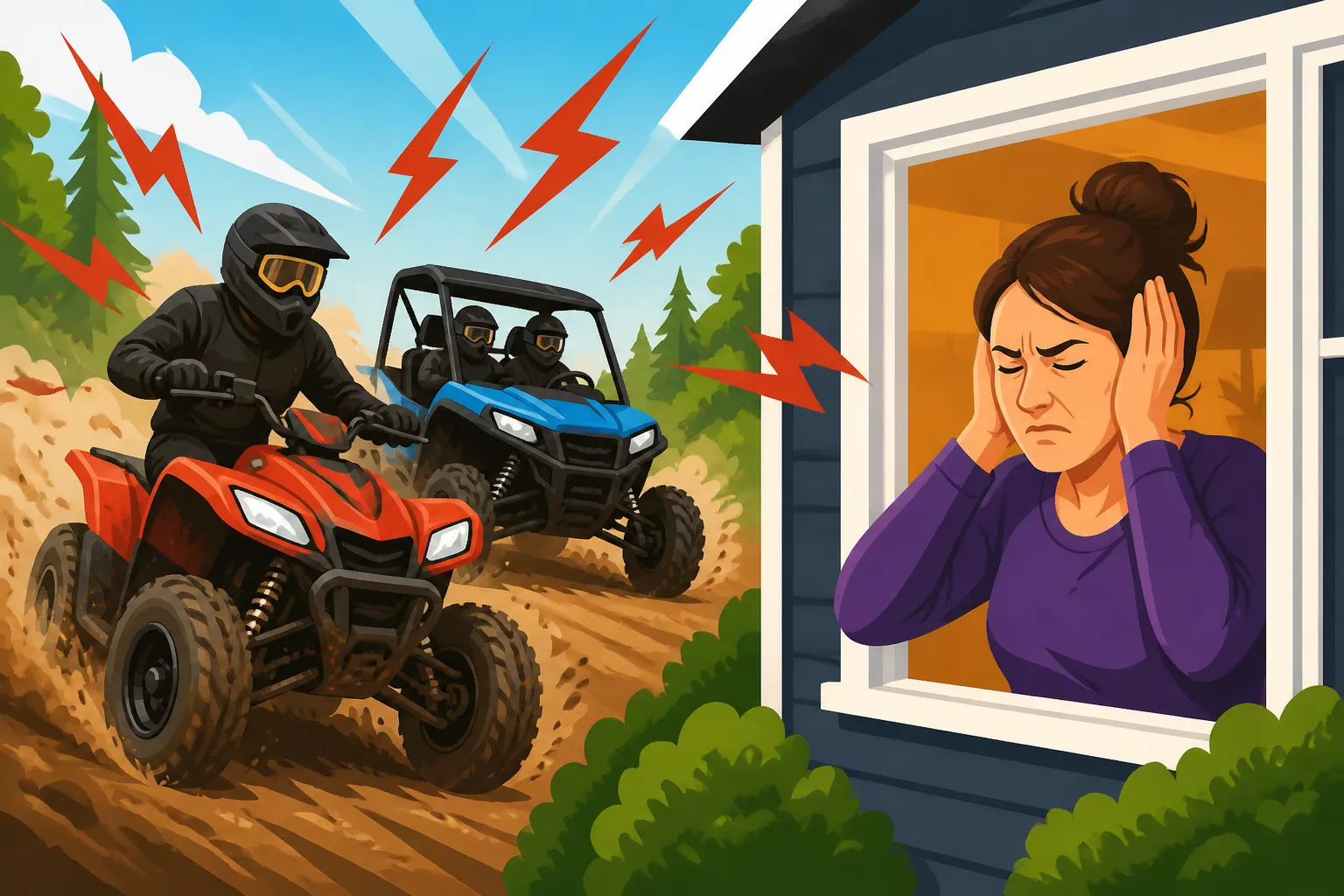
Neighborhood ORV Noise Complaints
There’s nothing quite like the freedom of hopping on your ATV or UTV for a ride, whether it’s for some work around the property or heading out to the trails. But for those living in residential areas, the rumble and roar of an Off-Road Vehicle (ORV) can quickly turn from an exciting sound to a significant source of frustration, leading to neighborhood disputes and noise complaints. This guide is here to break down Michigan's rules and offer practical advice for both ORV owners and residents seeking peace.
Understanding Michigan's ORV Noise Regulations
The sound of a powerful engine is part of the ORV experience, but when that sound spills into a quiet neighborhood, it can quickly become a legal and social problem. Michigan laws, alongside local ordinances, aim to balance the rights of riders with the community's need for tranquility. It’s a delicate line, and understanding where that line sits is the first step for everyone involved.
What is "Excessive" Noise?
Defining "excessive" noise is often where the rubber meets the road, so to speak. For an ORV owner, the sound might seem normal for their machine, but for a neighbor trying to enjoy their backyard barbecue, it can be deafening. Michigan's state laws, much like many other states, tend to use broad language when it comes to ORV noise, focusing on the concept of operating in a "reasonable and prudent manner" and avoiding "unnecessary" noise that "disturbs the peace." This can feel a bit subjective, which is precisely why it often leads to conflict.
While state law doesn't always set specific decibel limits for ORVs operating in residential areas (as it might for, say, motorcycles on highways), the general principle is clear: your ORV shouldn't create a nuisance. This means the noise shouldn't interfere with a person's comfortable enjoyment of their life or property. Think about how a loud stereo might annoy your neighbors – an ORV, with its distinct engine noise, can do the same, sometimes even more so due to its unique sound profile. Often, it's not just the volume, but the duration and the time of day that turn reasonable noise into excessive noise. For more on the specifics of operating ORVs on roads, you might find [Michigan ORV Noise Limits on Roads] helpful.
Local Ordinances and Their Impact
To complicate matters further, Michigan's townships, counties, and even some cities have the authority to enact their own ORV ordinances, which can often be much stricter than state law. This means that what's perfectly legal on a state-designated trail might be a violation in your subdivision. These local rules might specify exact operating hours, prohibit ORV use on certain residential streets entirely, or even impose specific decibel limits.
This patchwork of regulations creates a challenge for both riders and residents. A rider might genuinely believe they are following the law, only to discover a local ordinance they weren't aware of. Conversely, a frustrated resident might not know where to turn because they're unsure which set of rules applies. It's crucial for ORV owners to check with their local municipal offices or sheriff's department to understand the specific rules in their area, especially if they plan to ride near residential zones. Knowing your local rules, as detailed in resources like [Michigan County ORV Ordinances Explained], is your best defense against inadvertently causing a problem.
The Impact of ORV Noise on Neighborhoods
Beyond the letter of the law, the real impact of ORV noise is felt in the day-to-day lives of residents. It's more than just an inconvenience; persistent noise can chip away at the sense of peace and community that people expect in their homes. Understanding this perspective is vital for fostering a harmonious environment for everyone.
Disturbing the Peace
Imagine trying to enjoy a quiet morning coffee on your porch, or perhaps your children are napping, or you’re simply trying to read a book in your living room. The sudden roar of an ORV can be incredibly jarring, pulling you out of your moment of tranquility. This isn't just about a momentary annoyance; consistent, loud ORV noise can significantly disturb the peace of a neighborhood. It can disrupt sleep patterns, especially for shift workers or young children. It makes outdoor conversations difficult, drowns out the sounds of nature, and can generally make people feel like they can't fully relax in their own homes.
For many, their home is their sanctuary, and constant or unexpected loud noises can make it feel like that sanctuary is being invaded. This feeling of intrusion, coupled with the inability to control the noise, can lead to stress, anxiety, and a genuine sense of frustration among neighbors. It's this erosion of everyday peace that often fuels complaints and creates tension within a community.
Property Values and Community Harmony
While it might seem like a stretch, ongoing noise issues can subtly, but surely, affect the desirability of a neighborhood and, in extreme cases, even impact property values. When potential homebuyers are looking at an area, they often prioritize peace and quiet. If a neighborhood is known for persistent ORV noise, it might deter buyers seeking a tranquil environment. This isn't just about the financial aspect; it speaks to the overall quality of life.
More immediately, unresolved noise complaints can severely damage community harmony. When neighbors are constantly at odds over noise, it creates an atmosphere of tension and resentment. Good neighborly relations are built on respect and consideration, and persistent noise can quickly break those bonds. For ORV enthusiasts, it's also important to recognize that the actions of a few loud riders can unfortunately cast a negative light on the entire ORV community, making it harder to gain acceptance for responsible riding. Ultimately, everyone wants to coexist peacefully, and addressing noise concerns head-on is a crucial step in achieving that.
What to Do About ORV Noise Complaints
If you're a resident experiencing ongoing ORV noise issues, it's natural to feel frustrated. However, approaching the situation strategically can lead to better outcomes than immediate confrontation. There are several steps you can take, ranging from direct communication to involving authorities, all aimed at finding a respectful resolution.
Approaching Your Neighbor Directly
The first and often most effective step in resolving a noise complaint is a direct, calm conversation with your neighbor. It might feel uncomfortable, but many people are simply unaware that their actions are causing a disturbance. Choose a time when emotions aren't running high, and the ORV isn't actively making noise. Approach them politely, perhaps by saying something like, "Hi, I'm your neighbor from next door. I wanted to chat with you briefly about your ORV."
When you talk to them, focus on the impact the noise has on you, rather than making accusations. Instead of saying, "Your ORV is way too loud!", try, "I've noticed the ORV riding has been quite loud, especially early in the morning, and it's been difficult for my kids to sleep." Be specific about times and dates if you can. The goal is to open a dialogue and find a compromise, not to pick a fight. They might be willing to adjust their riding times, check their muffler, or even move their riding activities to a different location if they understand the problem. A reasonable neighbor will appreciate being informed directly before more drastic measures are taken.
Documenting the Problem
If a direct conversation doesn't lead to a satisfactory resolution, or if you feel uncomfortable approaching your neighbor, your next step should be to start documenting the problem. This is absolutely crucial if you eventually need to involve law enforcement or other authorities. Keep a detailed log of every incident:
- Date and Time: When did the noise start and stop?
- Duration: How long did it last?
- Description of Noise: Was it constant, intermittent, revving, etc.?
- Impact: What was the specific effect? (e.g., "woke me up," "couldn't hear TV," "kids couldn't play outside").
- Vehicle Description: If you can identify the ORV (color, type, unique features), note it down.
- Witnesses: Did anyone else hear it?
If it's safe and legal to do so, you can also consider taking video or audio recordings. Never trespass on private property to do this, and avoid being confrontational. The goal is to gather objective evidence of the ongoing disturbance. This log helps establish a pattern, demonstrating that it's not just a one-off event, and provides concrete data that authorities will need. This documentation can be incredibly valuable if you ever need to involve law enforcement and might be requested if they issue a [Michigan ORV Ticket Costs by Violation].
Contacting Local Authorities
When all other avenues fail, or if the situation feels unsafe for a direct approach, it's time to contact the appropriate authorities. In Michigan, this could be your local police department, the county sheriff's department, or even the Department of Natural Resources (DNR), depending on where the ORV is being ridden and what specific laws are being violated.
- Local Police/Sheriff: If the ORV is being ridden on residential streets, private property, or otherwise within city or county limits in violation of a local noise ordinance or peace disturbance law, your local police or sheriff's department is the primary contact. Provide them with your detailed log and any recordings you've made.
- DNR: If the ORV is being ridden on state-managed lands, designated ORV trails, or if you suspect broader ORV violations (like operating without proper permits), a DNR conservation officer may be the appropriate contact. They are responsible for enforcing Michigan's ORV laws on state lands. You can learn more about their activities in [Michigan Conservation Officer ORV Stops].
When you call, be calm and factual. Explain the situation, provide your documentation, and be clear about what you've already tried (e.g., "I've tried speaking to my neighbor, but the issue persists"). Understand that law enforcement may not respond immediately, especially for non-emergency noise complaints, but consistent, well-documented reporting increases the likelihood of action. Sometimes, a warning from an officer is all it takes to resolve the issue.
Preventing Noise Issues Before They Start
For ORV owners, being a good neighbor means more than just following the law; it means being mindful of your impact on those around you. Proactive measures can go a long way in preventing noise complaints and fostering positive relationships within your community.
Maintaining Your Machine for Quieter Operation
A well-maintained ORV is often a quieter ORV. If your machine is constantly backfiring, rattling, or just generally sounding rough, it's going to draw more attention – and more complaints. Regular maintenance isn't just good for performance; it’s essential for noise reduction.
Start with your exhaust system. Mufflers can degrade over time due to rust, damage, or simply wear and tear, leading to increased sound output. Make sure your muffler is in good condition and securely attached. Additionally, Michigan requires spark arrestors, and keeping them clean and functional not only prevents fires but can also affect overall sound. If you're using aftermarket exhausts, especially those designed purely for performance, they often push the decibel limits. While that roar might be thrilling on the trail, it's definitely not neighbor-friendly. It’s worth checking if your aftermarket setup, maybe even one from a brand like SuperATV, is compliant with local noise ordinances or if there are quieter options available. You want to make sure your machine isn't just running well, but running quietly. Companies like SuperATV offer a range of replacement parts, from full exhaust systems to smaller components, so if you're looking to maintain or even improve your sound profile, they're a resource to consider. Ensuring your machine is in top condition can also prevent rattles and squeaks that contribute to overall noise. From worn suspension bushings to loose body panels, every little vibration adds up. Brands like SuperATV also provide heavy-duty replacement parts that can actually improve ride quality and potentially reduce mechanical noise.
Choosing When and Where to Ride
Common sense and courtesy go a long way. If you live in a residential area, avoid riding your ORV early in the morning or late in the evening. Respect designated "quiet hours" that many communities observe. A roaring engine at 6 AM on a Sunday is almost guaranteed to generate complaints.
Whenever possible, stick to designated ORV trails or private property where you have explicit permission to ride. Avoid using residential streets as shortcuts or recreational routes unless explicitly allowed by local ordinance, and even then, do so with utmost respect. When riding on roads, pay attention to [Michigan's 25 mph Limit on County Roads] and keep speeds down. Lower speeds generate less engine noise and tire whine, making your presence less intrusive. Think about the impact your riding has on those around you. What might be an exhilarating ride for you could be a disruptive experience for your neighbors. Being a responsible ORV owner means understanding these dynamics and making choices that allow everyone to enjoy their property and community peacefully. If you're unsure about where ORVs are allowed to ride, especially within urban or village limits, reviewing [Michigan ORV Rules Inside City Limits] can provide important clarity.
Here’s a quick summary of approaches to noise complaints:
| Approach | Pros | Cons | Best Used When |
|---|---|---|---|
| Direct Conversation | Builds neighborly relations; quick resolution | Can be uncomfortable; risk of confrontation | First instance; known neighbor; minor nuisance |
| Documentation | Provides evidence; supports official action | Time-consuming; requires consistency | Preparing for official action; repeated incidents |
| Contacting Authorities | Formal intervention; enforcement potential | Slower response; may escalate conflict; outcome not guaranteed | Direct conversation failed; repeated, severe issues |
Disclaimer
This article is for general informational purposes only and does not constitute professional advice. Laws, prices and regulations vary by location and change over time. Consult a qualified professional for guidance on your specific situation.