ATV VIN Decoder: Reading the Model Year Digit
Buying a used ATV or UTV can be a real adventure, but sometimes the biggest mystery isn't the trail ahead – it's figuring out the true age of the machine you're considering. When a seller tells you one thing and the paperwork seems to suggest another, it's easy to feel frustrated and confused. This guide will walk you through the essential process of decoding your ATV's Vehicle Identification Number (VIN), specifically focusing on how to pinpoint the exact model year, so you can buy, sell, or title your machine with absolute confidence here in Michigan.
What Exactly is an ATV VIN and Why Does it Matter?
Think of your ATV's VIN as its unique fingerprint – an individual 17-character code that tells the complete story of that specific machine. This isn't just some random sequence of letters and numbers; it's a globally standardized identifier (following ISO 3779) that every manufacturer uses to track their vehicles from the factory floor to your garage. Unlike a driver's license number or a social security number, which can be shared or changed under specific circumstances, a VIN is permanently etched into the machine and is never duplicated for another vehicle.
When you're dealing with something as significant as an off-road vehicle in Michigan, the VIN becomes the bedrock of its identity. It's how law enforcement can identify stolen machines, how insurance companies determine coverage, and how the Michigan Secretary of State verifies ownership and issues titles. Without an accurate and legible VIN, you're essentially dealing with an anonymous machine, which can lead to a host of headaches down the road.
The Anatomy of a VIN: A Quick Overview
A 17-character VIN is broken down into three main sections, each providing specific details about the vehicle. Understanding this structure helps demystify the code and guides you to the crucial model year digit.
First, you have the World Manufacturer Identifier (WMI), which are the first three characters. This tells you where the vehicle was made and by whom. For example, 1, 4, or 5 typically indicates a US-manufactured vehicle, J often means Japan, and Z points to Italy. The second section is the Vehicle Descriptor Section (VDS), characters four through nine. These characters describe general attributes of the vehicle, such as the engine type, body style, and series. While these are vital for identifying specific features of your machine, they don't directly tell you the model year. Finally, characters 10 through 17 make up the Vehicle Indicator Section (VIS), which is unique to each vehicle and includes the all-important model year and often the sequential production number.
Why the Model Year is So Important for Michigan Riders
Knowing the accurate model year of your ATV or UTV is far more than just trivia; it's critical for several practical reasons, especially for Michigan off-road enthusiasts. For starters, parts compatibility hinges on the model year. Engine components, suspension parts, even certain body panels can change drastically from one year to the next, even within the same make and model. Trying to order parts for a "2015" machine that's actually a 2014 or 2016 can lead to costly returns and frustrating delays.
Beyond maintenance, the model year directly impacts official processes. When you go to title your machine at a Michigan Secretary of State branch, the model year listed on the title application form must match the VIN's decoded year. Discrepancies can flag your application and cause significant delays, potentially holding up your ability to legally ride. Similarly, insurance providers factor the model year into their quotes, as newer machines often have different values and associated risks. This also extends to recalls; manufacturers issue recalls for specific model years, and knowing yours can keep you informed about important safety updates. For parents looking to buy an ATV for a child, the model year can even play a role in understanding [Youth ATV Size Rules Michigan Parents Should Know], as regulations and manufacturer guidelines evolve over time.
Locating and Interpreting Your ATV's VIN
Before you can decode anything, you need to physically find the VIN on your machine and ensure it's legible and hasn't been tampered with. This step is crucial, as any errors or inconsistencies here can lead to major headaches when trying to verify ownership or proceed with a sale or titling. Never rely solely on a bill of sale or previous title; always verify the VIN directly on the vehicle itself.
Sometimes the VIN can be a bit tricky to spot, tucked away in less-than-obvious places. It's often stamped into the metal frame, which means it can accumulate dirt, rust, or even get painted over during the machine's lifetime. A little elbow grease and a flashlight can go a long way in making it clear.
Where to Find the VIN on Your Machine
Manufacturers generally place the VIN in easily accessible, yet protected, locations to ensure it remains intact. The most common spot for an ATV or UTV is on the frame, usually on the front, right-hand side. You'll often find it stamped into the metal near the steering head, where the handlebars connect to the frame. For example, if you're looking for [Where the VIN Sits on a Polaris Ranger Frame], you'll typically find it on the frame rail on the passenger side, often near the front wheel well or under the seat. Similarly, [Where to Find the VIN on a Can-Am Defender] usually leads you to the frame, often under the front hood or near the driver's side front wheel.
Other places to check include the engine casing itself, sometimes on a sticker or plate attached to the engine block. Some older machines might have a VIN plate riveted to the frame in a different location, or even a sticker on the swingarm. Always check multiple spots if the primary location is unclear. It's designed to be permanent, so it won't just rub off, but it can get obscured by debris or paint.
Verifying the VIN for Accuracy and Tampering
Once you've located the VIN, take a moment to carefully inspect it. The characters should be uniformly stamped and clearly legible. Look for any signs of alteration, such as misaligned characters, different fonts, or evidence of grinding and re-stamping. These are major red flags that could indicate a stolen machine or one that has had its identity illegally changed. If you notice anything suspicious, walk away from the sale immediately.
The VIN on the physical machine must match any accompanying documentation, such as a bill of sale, previous title, or insurance cards. If there's a discrepancy, even a single character, it's a problem. A wrong VIN on your title can lead to significant issues, requiring you to go through the process of [Fixing a Wrong VIN on a Michigan ORV Title] with the Secretary of State, which can be time-consuming and complicated. It's far better to catch these issues before you complete a purchase. Take photos of the VIN on the machine for your records, especially when engaging in a private sale.
Cracking the Code: Decoding the Model Year Digit
Now for the exciting part – translating that 17-character string into plain English, specifically to determine the model year. This is where you can definitively confirm what a seller tells you or correct any mistaken information on paperwork. The beauty of the VIN standard is that this digit is almost universally consistent across manufacturers.
It's common for people to get confused between the year a vehicle was manufactured and its model year. Sometimes a manufacturer will produce a "2024 model year" vehicle in late 2023. The VIN decoder will always tell you the model year, which is what matters for titling, parts, and official identification.
The 10th Character Rule: Your Key to the Year
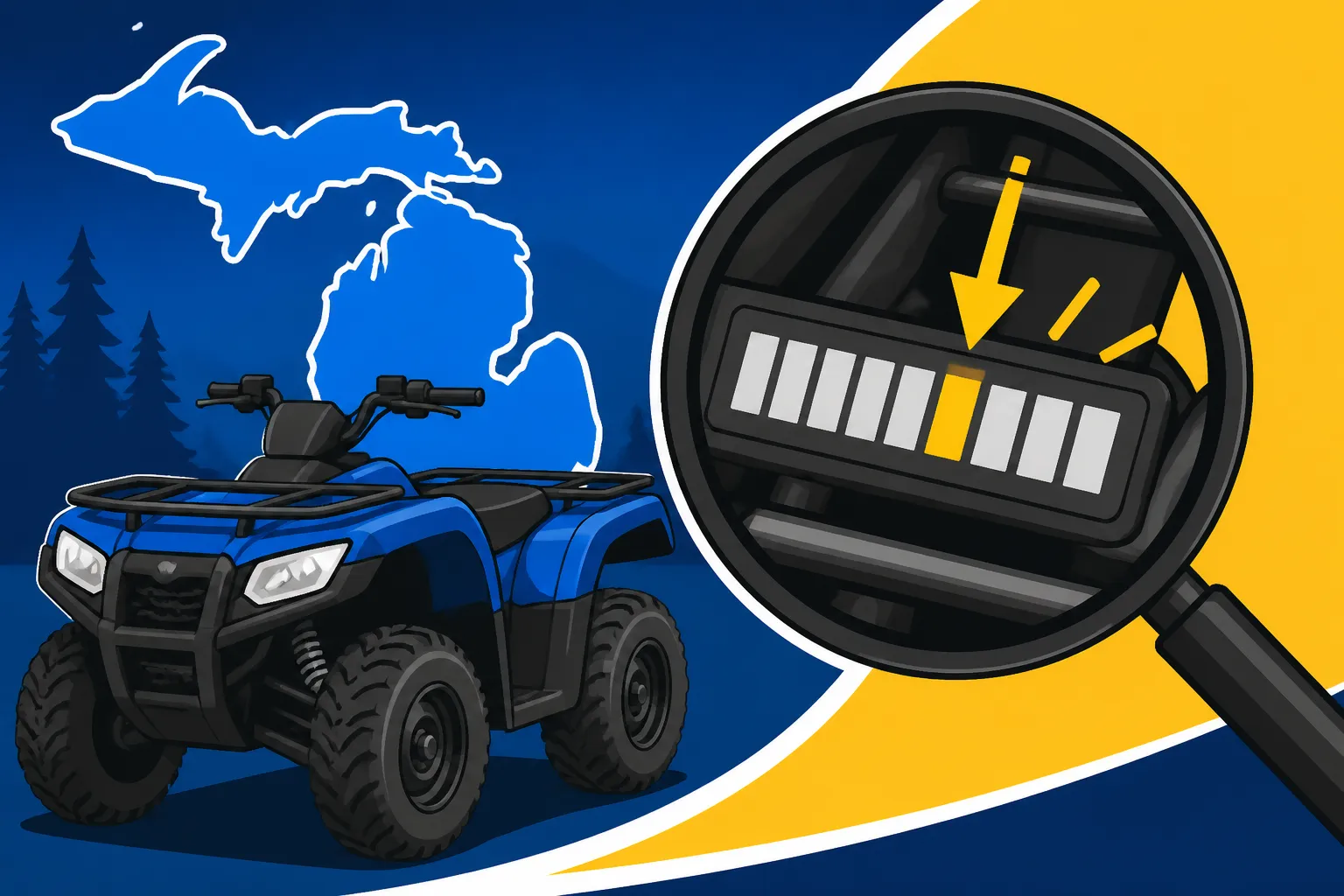
The secret lies in the 10th character of the VIN. This specific digit or letter is dedicated solely to indicating the model year of the vehicle. It's part of the Vehicle Indicator Section (VIS) and follows a standardized sequence established by the Society of Automotive Engineers (SAE). This standardization is incredibly helpful because it means you don't need a different decoder for every manufacturer; the 10th character rule is largely consistent across the board for all vehicles, including ATVs and UTVs.
The sequence works on a repeating cycle, using a combination of numbers and letters. It's designed to avoid confusion with other parts of the VIN, particularly by omitting letters that could be mistaken for numbers (like 'I', 'O', 'Q') to ensure clarity. Understanding this single character is perhaps the most valuable piece of information you can pull from any VIN when quickly assessing a machine.
Common Model Year Codes
Here's a breakdown of the 10th VIN character and the model year it represents. This chart will help you quickly identify the year of many common ATVs and UTVs you might encounter. Remember, this cycle repeats, so for instance, 'A' will represent 1980, 2010, and 2040, but given the typical lifespan of ATVs, you'll usually be concerned with the more recent cycles.
| 10th VIN Character | Model Year |
|---|---|
| A | 1980, 2010 |
| B | 1981, 2011 |
| C | 1982, 2012 |
| D | 1983, 2013 |
| E | 1984, 2014 |
| F | 1985, 2015 |
| G | 1986, 2016 |
| H | 1987, 2017 |
| J | 1988, 2018 |
| K | 1989, 2019 |
| L | 1990, 2020 |
| M | 1991, 2021 |
| N | 1992, 2022 |
| P | 1993, 2023 |
| R | 1994, 2024 |
| S | 1995, 2025 |
| T | 1996, 2026 |
| V | 1997, 2027 |
| W | 1998, 2028 |
| X | 1999, 2029 |
| Y | 2000, 2030 |
| 1 | 2001, 2031 |
| 2 | 2002, 2032 |
| 3 | 2003, 2033 |
| 4 | 2004, 2034 |
| 5 | 2005, 2035 |
| 6 | 2006, 2036 |
| 7 | 2007, 2037 |
| 8 | 2008, 2038 |
| 9 | 2009, 2039 |
Note: This chart covers typical model years you'd encounter. For very old or very new vehicles, the cycle continues. Always verify with manufacturer resources if in doubt.
What to Do If the 10th Digit Isn't Clear
Sometimes, despite your best efforts, the 10th digit on a VIN can be partially obscured, worn down by weather and riding, or simply hard to read. Don't panic! While this digit is key, it's not the only piece of the puzzle. You can often cross-reference information to confirm the year. First, try to decipher any legible part of the character and compare it to the table. Is it definitely a letter or a number?
If it's truly unreadable, you might need to consult other parts of the VIN for clues. The manufacturer's website or an official dealership for that brand can often use the first few characters (WMI) and the other VDS characters to narrow down the model and often confirm the year. There are also many reputable online VIN decoder tools (though be cautious and use well-known, free ones) where you can input the full 17 characters, and they'll generate a comprehensive report about the vehicle, including its model year. Remember, these tools rely on official databases, so they can be quite accurate, but nothing beats the physical VIN check and cross-referencing with official Michigan Secretary of State records if you suspect something is amiss.
Beyond the Year: Why VIN Accuracy is Crucial in Michigan
Understanding the model year from your VIN is just one crucial aspect of dealing with ATVs and UTVs in Michigan. The overall accuracy and integrity of the VIN itself are paramount, influencing everything from preventing fraud to ensuring a smooth titling process and adhering to legal requirements. Neglecting the VIN can turn what should be an exciting purchase or sale into a bureaucratic nightmare.
Whether you're a seasoned rider or new to the off-road scene, having a clear and correct VIN is your best defense against unexpected problems. It's the foundation upon which all other official documentation and legal standing rests. Think of it as the ultimate source of truth for your machine, more reliable than any verbal promise or even a hastily written bill of sale.
Preventing Fraud and Theft with a Valid VIN
In the world of used ATVs and UTVs, unfortunately, theft and fraud are real concerns. A clear, untampered VIN is your most powerful tool in avoiding becoming a victim. When you verify the VIN on the machine against any paperwork, you're not just confirming the model year; you're also performing a critical check for stolen property. If the VIN looks altered, or if it doesn't match the title provided by a seller, it's a huge warning sign.
Before purchasing any used ORV in Michigan, it's always wise to use the VIN to perform a background check. Services like the [NICB VIN Check for a Used ATV] can help you determine if a machine has been reported stolen or salvaged. This simple step can save you countless dollars and heartaches down the line. Remember, if you inadvertently purchase a stolen machine, you stand to lose both the vehicle and the money you paid, as the rightful owner could claim it back. The importance of checking [How to Check If an ATV Is Stolen Before You Buy] cannot be overstated.
Streamlining Michigan Titling and Sales
An accurate VIN is absolutely essential for smooth transactions in Michigan. When you purchase a used ATV or UTV from a private seller, the VIN on the seller's title must precisely match the VIN stamped on the machine. Any discrepancy can stall the [Michigan Title Transfer When You Buy From a Private Seller] process at the Secretary of State, leading to delays and potentially requiring additional documentation to prove ownership.
Similarly, when you're selling your own machine, a clear and correct VIN on your title and on the machine itself makes the sale much smoother for the buyer. It instills confidence and helps them avoid [Michigan ORV Title Problems and How to Clear Them]. When creating a bill of sale, it's crucial to include the full and accurate VIN. Resources like LawDepot can help you generate professional and legally sound documents, such as a Michigan ATV Bill of Sale, which meticulously record the VIN and other key details, protecting both buyer and seller in the transaction.
Legal Compliance and Safety
Finally, maintaining an accurate VIN and understanding its details is vital for legal compliance and safety in Michigan. The model year, derived from the VIN, often dictates which safety regulations apply to your specific machine. For example, some older ATVs may have different requirements for safety equipment or passenger limits compared to newer models. While Michigan has general ORV laws, specific manufacturer guidelines and recall information are tied directly to the VIN and model year.
Ensuring your machine's VIN is correctly documented helps with things like applying for a [Michigan ORV Safety Certificate Requirements] if needed, and ensuring that any inspections (should they be required for special circumstances like [Titling a Rebuilt or Homemade UTV in Michigan]) can proceed without a hitch. By taking the time to understand your ATV's VIN and its implications, you're not just being a responsible owner; you're also protecting yourself and others on the trails.
Disclaimer
This article is for general informational purposes only and does not constitute professional advice. Laws, prices and regulations vary by location and change over time. Consult a qualified professional for guidance on your specific situation.