Michigan ORV Club Trail Rides
Joining a Michigan ORV club trail ride can make an unfamiliar trail system feel less intimidating, but it also means coordinating permits, pace, machine width, fuel, and group expectations. This guide explains how club rides usually work, how to prepare, what to ask before signing up, and how to ride considerately on Michigan’s shared routes and trails.
What to expect on a Michigan ORV club trail ride
Ride formats and group pace
A club ride might be a short afternoon outing near a local staging area, a full-day loop, or part of a weekend trip with camping nearby. Some rides are organized around a particular machine type or trail difficulty; others welcome a mix of ATVs and side-by-sides. The event description should tell you what kind of ride is planned, but it is worth asking about details that can be easy to overlook.
A group ride is not always a single line of machines traveling at one speed. Organizers may divide riders into smaller groups based on experience, machine width, or preferred pace. A beginner-friendly group may stop frequently to check maps, regroup at turns, or help someone handle a tricky section. A faster group may cover more ground, but that does not mean riders should push beyond their skill level to keep up.
Before you commit, ask how long the ride is expected to take, whether the group will stop for fuel or lunch, and what happens if you need to turn back. A novice rider on a new machine may find a rolling, all-day outing more tiring than expected, especially on uneven terrain. Choose a ride that leaves room for breaks and learning rather than treating the advertised mileage as a challenge.
How organizers handle routes and regrouping
Organizers may use a planned loop, a marked trail system, a route shared with the group, or a combination of these. Even when someone knows the area well, conditions can change: a trail may be muddy, crowded, temporarily closed, or harder to follow than expected. In places such as the St. Helen trail system, the Cadillac area, or Drummond Island, riders may encounter different surfaces and route layouts during one outing.
Ask how the group plans to stay together. Some leaders designate a lead rider and a sweep rider at the back. Others pause at intersections or known landmarks so that riders can catch up without feeling pressured to ride faster. A useful group plan also explains what to do if you lose sight of the machine ahead, stop because of a mechanical issue, or reach a junction without seeing the rest of the group.
Do not assume your phone will provide dependable directions everywhere. Before the ride, save or review your route information and understand how the organizer wants riders to navigate. Apps such as onX Offroad can help you review mapped routes and orient yourself, but they should supplement—not replace—group instructions, posted signs, and a backup plan. For more context on route markers, see Michigan ORV Trail Maps and What the Signs Mean.
How to choose a ride that fits you and your machine
Match the outing to your experience
A club’s description may use words such as “easy,” “moderate,” or “challenging,” but those labels can mean different things to different riders. Ask what the terrain is actually like. A ride described as easy could still involve long hours in the saddle, frequent turns, loose sand, or uneven ground. A challenging ride might include technical sections that are a poor fit for a first-time rider, even if the total distance is modest.
If you are new to Michigan trails, look for an outing that identifies itself as beginner-friendly and gives a clear pace description. Ask whether riders can skip an obstacle or take an easier route when one is available. It is completely reasonable to choose a conservative ride while you learn how your machine handles sand, roots, ruts, and changing surfaces. Confidence usually grows faster when you have time to practice than when you feel rushed by a group.
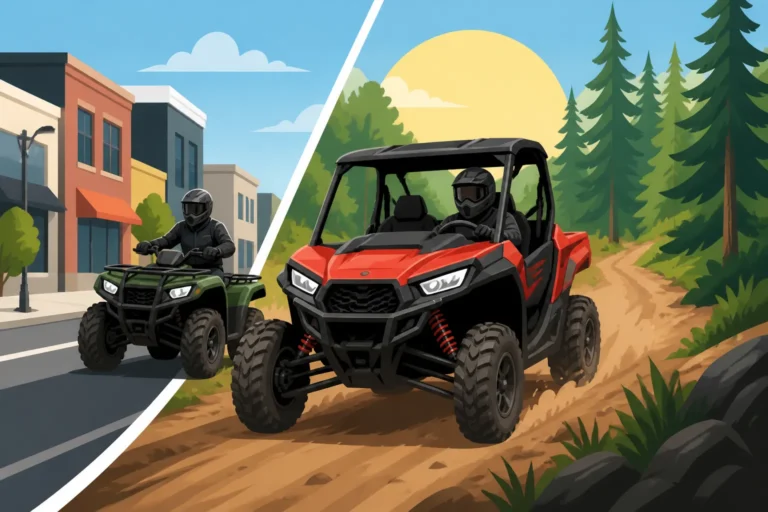
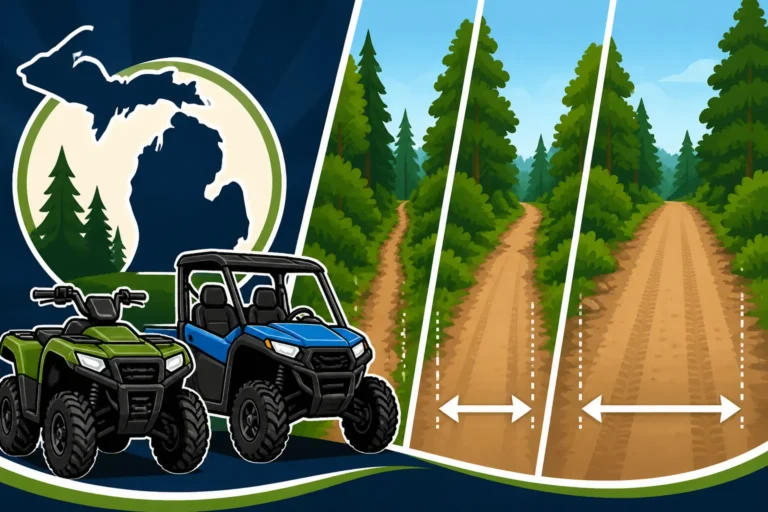
Trail width matters, too. A route suitable for a narrow ATV may not work for every side-by-side. Before registering, share your machine’s width and ask whether the entire planned route is appropriate for it. You can also review Michigan ORV Trail Difficulty Ratings and Michigan ORV Trails That Allow 50-Inch Machines when comparing possible areas.
Check permits, machine requirements, and ride rules
Confirm which licenses or permits apply to your machine and the places on the itinerary. Requirements can vary with where and how you ride, so do not rely on a friend’s sticker or assume that a club event automatically covers your paperwork. Review Michigan ORV License and Trail Permit Explained and check the details for the specific riding area and trip before leaving home.
Ask the organizer what equipment is expected. Depending on the ride, that may include a helmet, eye protection, appropriate footwear, a working light, and basic recovery or repair supplies. Make sure the machine is in good working order: check tires, brakes, throttle, lights, fluids, and any loose cargo. For a side-by-side, confirm that passenger restraints and other safety equipment are ready for every occupant.
Also clarify whether the ride includes roads, trails, or both, and whether the planned route crosses areas with different rules. A club ride is not an exemption from local requirements. If you are unsure about a road segment, route access, or a posted restriction, ask before the group sets out rather than trying to sort it out at a junction.
| Before you sign up | What to confirm |
|---|---|
| Ride style | Beginner-friendly, steady pace, technical, family-oriented, or mixed group |
| Route | General area, expected terrain, distance, and planned stopping points |
| Machine fit | Permitted machine types and any width or equipment limitations |
| Paperwork | Required licenses or permits for the specific route and riding area |
| Group plan | Lead and sweep riders, regrouping locations, and what to do if separated |
| Practical needs | Fuel, food, water, restrooms, parking, and overnight arrangements |
How to prepare for a club ride
Pack for delays and changing trail conditions
Pack for the ride you signed up for, not just the ideal version of it. A mechanical problem, a slow section, or a crowded trail can extend the day. Bring water, food, weather-appropriate layers, and any personal medication you may need. Keep essentials secured so they will not bounce loose, and avoid carrying items in a way that blocks controls or affects the machine’s balance.
A small tool kit and basic repair supplies can help with minor problems, but do not assume you can fix every breakdown on the trail. Ask the organizer whether participants should carry a tow strap, tire-repair gear, or other recovery equipment. If you use a strap, know how your machine should be recovered and follow the group’s instructions. Improvised towing can damage equipment or put people at risk.
Think about communication before you lose cell service. Save the organizer’s contact information and the ride details, and ask whether the group uses radios or another communication method. onX Offroad may help you check your position against a planned route, but a downloaded map or other offline navigation option is useful when coverage is limited. Tell someone at home where you expect to ride and when you plan to return.
Arrive ready to ride with the group
Give yourself enough time to unload, park, check the machine, and hear the safety briefing. Showing up at the last moment can mean missing key instructions about route order, planned stops, or how the group handles a separation. If you are bringing a trailer, confirm where it can be parked and whether overnight parking is allowed; do not assume a trailhead lot is intended for long-term storage.
Be honest about your experience, your machine’s condition, and your comfort level. If you are nervous about a steep or muddy section, say so before the ride begins. A considerate organizer would rather adjust expectations early than discover halfway through the route that someone is struggling to keep up. If the group is not a good fit, it is better to choose another ride than to push past your limits.
If you are riding with children or passengers, check the event’s age and passenger expectations ahead of time. Make sure every rider understands where to sit, how to communicate with the driver, and what to do during stops. For families looking for a more relaxed outing, Family-Friendly ORV Trails in Michigan can help you explore options that may better suit a mixed-experience group.
Trail etiquette and finding the right club
Ride predictably and respect other trail users
A club ride does not own the trail. You may meet other ORV riders, hikers, cyclists, people working in the woods, or residents near a route. Follow posted signs and local rules, ride at a controlled pace, and leave room for others to pass where it is safe and allowed. Avoid cutting corners or creating new tracks to get around mud or congestion; doing so can damage the trail and create problems for everyone who uses it.
Keep a safe following distance and avoid crowding the rider ahead, especially in dust, loose sand, or low visibility. If your group reaches a busy intersection or narrow stretch, follow the organizer’s directions instead of bunching up or blocking access. When the group stops, move out of the way of traffic and trail access points. Small habits like these help keep a large outing from becoming disruptive.
Trail etiquette is also about pace. Do not pressure a slower rider, make risky passes, or treat a group ride as a race. If you need to stop, signal clearly and move to a safe spot when possible. For more practical guidance, read Trail Etiquette on Shared Routes and Michigan ORV Trail Crowding on Holiday Weekends.
Ask thoughtful questions before joining
You do not need to know an organizer personally to ask basic questions. Look for clear information about the meeting place, route style, machine requirements, expected pace, and what participants should bring. If the ride announcement is vague, ask whether it is suitable for first-timers and whether the group has a plan for breakdowns or separated riders. A helpful response is a good sign that the event is organized with participants in mind.
Ask whether guests are welcome, whether you need to register, and whether the ride has a maximum group size. Find out if the organizer expects everyone to stay for the whole route or allows riders to leave at a planned stopping point. For a weekend outing, ask about camping, lodging, fuel access, and the location of the nearest services. These questions are especially useful when riding in unfamiliar areas of the Upper Peninsula or around destinations such as Drummond Island.
You can also look for a local club that regularly rides in the area you want to explore. A club familiar with its region may know where to stage, how to interpret local route connections, and which conditions deserve extra caution. Still, check the details for each individual event: a group’s usual pace or destination may not match every outing. Keep an offline map available, follow the ride leader’s plan, and use onX Offroad as a navigation aid when it helps you understand where the route goes.
Club rides are most enjoyable when the machine, route, and group pace all fit the rider. Prepare your paperwork and equipment, ask questions before the ride, and be willing to choose a slower or shorter outing while you build experience. With those basics in place, a group ride can be a welcoming way to learn Michigan’s trails and discover areas you might not have explored on your own.
Disclaimer
This article is for general informational purposes only and does not constitute professional advice. Laws, prices and regulations vary by location and change over time. Consult a qualified professional for guidance on your specific situation.