Michigan ORV Trailhead Parking Rules
A trailhead can look like a simple place to unload, until you arrive with a truck and trailer and find a narrow lot, a posted restriction, or a line of riders waiting to get out. Michigan ORV parking rules depend on the location and its signs. This guide explains how to choose a legal spot, park and unload safely, and avoid common trailhead mistakes.
Start With the Rules Posted at That Trailhead
Understand what kind of parking area you are using
Michigan trail access points are not all managed the same way. A lot may be a state-managed staging area, part of a state forest, controlled by a local government, or located on private property. The same parking habit that works at one spot may not be welcome or allowed at another.
Before unloading, check the entrance signs and any notices posted around the lot. Look for restrictions on parking, trailer storage, hours, overnight use, and access to nearby roads or trails. If a sign sets a limit or directs drivers to a particular area, follow it even when the lot looks quiet. Rules may differ between trailheads a short distance apart.
It also helps to distinguish a parking area from a place where vehicles can be left indefinitely. A trailhead is usually meant to give riders access to a route, not to serve as long-term storage for a truck, trailer, or ORV. For an overview of how these places work, see Michigan ORV Staging Areas and Parking.
Read signs, barriers, and trail markers before unloading
A gate, bollard, chain, or closed trail marker is not an invitation to find a way around it. It may be there to keep vehicles out of a closed route, protect a sensitive area, or control access during a seasonal closure. Park only where the lot or signs indicate, and do not move barriers to make room for your trailer.
Pay attention to signs that separate vehicle parking from ORV loading or staging areas. If a space is marked for a particular use, avoid occupying it with a truck or trailer unless the sign allows that. Keep clear of entrances, exits, gates, emergency access points, and any route used by other vehicles. A large trailer can make a tight lot difficult to navigate even when it is technically inside the lot.
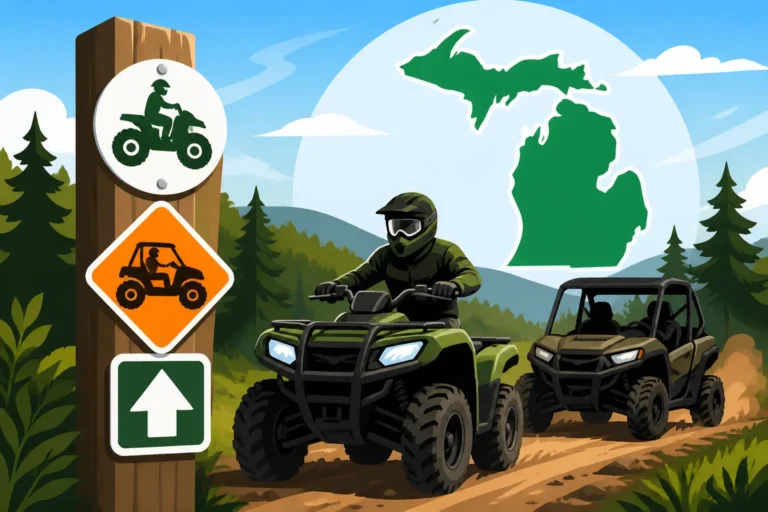
Trail signs can also tell you whether the route you intend to ride is open and what kinds of machines are allowed. Checking Michigan ORV Trail Maps and What the Signs Mean before the trip can help you avoid unloading at a location that does not connect to your planned route or is unsuitable for your machine. Confirm closures and access conditions with Michigan ORV Trail Closure Notices before setting out.
Park and Unload Without Blocking Other Riders
Choose a space that fits your whole setup
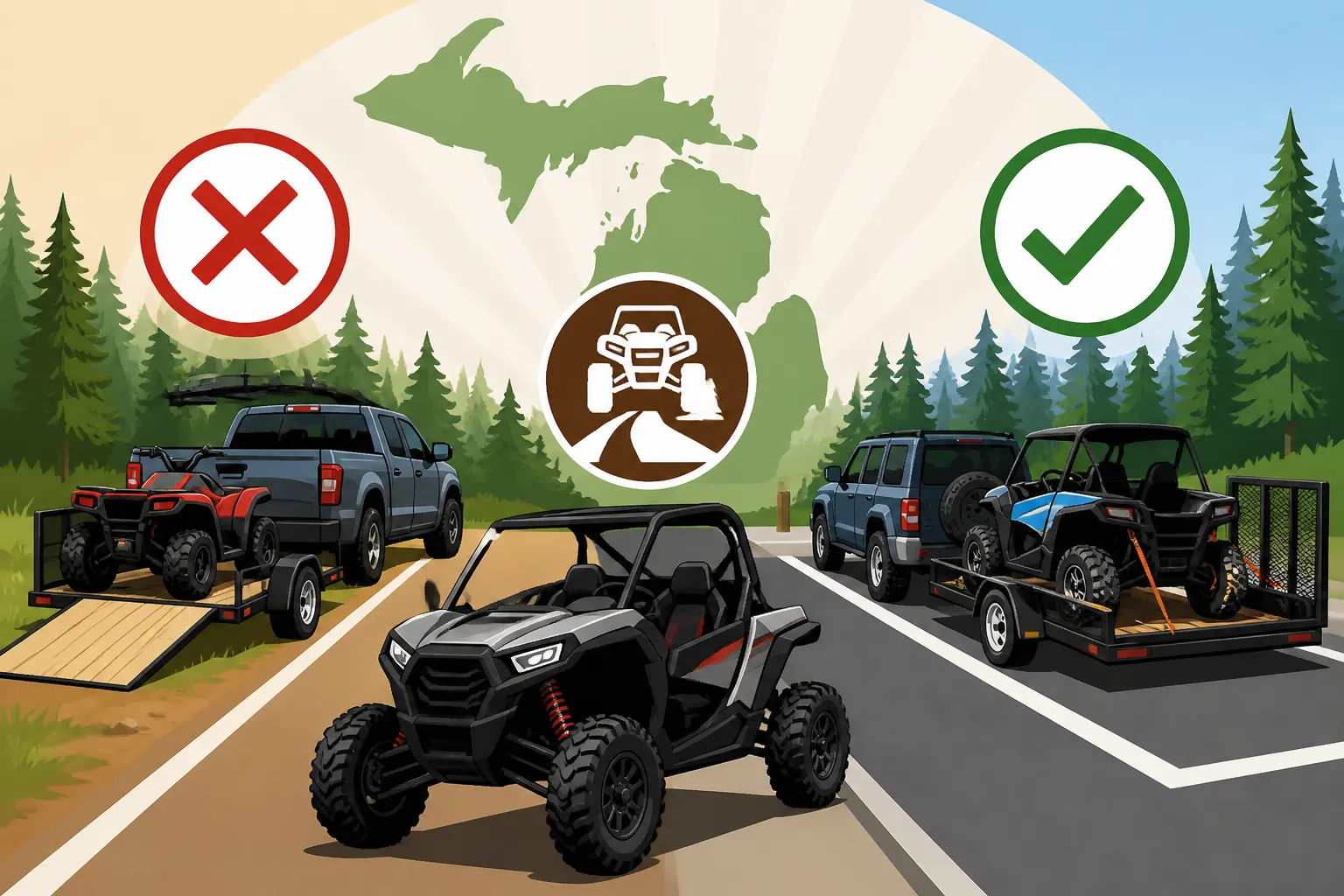
When you tow an ATV or UTV, think about the truck, trailer, and space needed to unload as one unit. A trailer that sticks into the driving lane can block other visitors, make backing difficult, or create a hazard for someone walking through the lot. Choose a space that can accommodate your setup without extending into a travel lane, trail entrance, or neighboring parking space.
If the lot is crowded, do not assume that a small vehicle-sized space is enough just because your truck fits. Look for a designated trailer area or a larger space that lets you park fully within the usable area. If there is no suitable space, consider another approved access point rather than leaving the trailer partly across a roadway or shoulder.
The following checklist can help you make a quick decision before unhooking:
| Before you park | What to check |
|---|---|
| The parking space | Is parking allowed here, and can your truck and trailer fit without obstructing traffic? |
| The lot entrance | Can other vehicles enter and leave without squeezing past your setup? |
| Gates and access routes | Are gates, emergency access, and marked routes fully clear? |
| Trailer storage | Do posted signs allow trailers, and are there specific trailer spaces? |
| Overnight plans | Is overnight parking explicitly allowed, or should you arrange another place to leave the vehicle? |
| The riding route | Is the trail open and appropriate for your machine and permit situation? |
A short walk around the lot before unloading can reveal problems that are easy to miss from the driver’s seat. Check where other vehicles are moving, where riders are unloading, and whether your trailer’s ramp will extend into a shared area.
Unload in a controlled, considerate way
Set up the unloading area so the machine can come off the trailer without rolling toward other vehicles or people. Keep children and passengers out of the path of the ramp, and avoid starting a machine while someone is standing close to it. If you are unloading a UTV, check that doors, ramps, and tie-downs are secured before anyone climbs in.
Try not to treat the lot like a repair shop or riding area. Loading, unloading, and brief equipment checks are part of using a staging area, but prolonged work can take up space and make it harder for others to use the lot. If a machine needs a more involved repair, move it only if you can do so safely and legally; do not ride around the lot or onto a closed route to test it.
A simple courtesy that matters: finish organizing helmets, bags, and tie-downs after you have moved out of the busiest part of the lot, if space allows. This keeps the loading area moving and reduces the chance that someone backs into a person or piece of equipment. For what to keep with the machine once you leave the lot, read Keeping Your ORV Paperwork With the Machine.
Plan for Trailers, Overnight Parking, and Seasonal Access
Treat overnight parking as a separate question
A trailhead that allows daytime parking does not necessarily allow overnight parking. This is one of the easiest details to overlook when planning a weekend trip, especially if you expect to camp nearby or return to the same access point the next morning. Look for explicit overnight rules rather than assuming that an empty lot can be used after hours.
If you are towing, consider where the trailer will be while you ride. Some locations may have designated trailer spaces, while others may have limited capacity or no suitable place for a large rig. Avoid leaving a trailer on a roadside, blocking a gate, or using an adjacent lot unless signs or the property manager permit it. When plans include leaving a vehicle at a trailhead, check the details for that specific location in advance.
For more on this distinction, see Overnight Trailer Parking at Trailheads. If your trip includes camping, check the campground’s own parking arrangements rather than assuming that a nearby trailhead lot can serve as a campsite parking area. Camping Near Michigan ORV Trails can help you think through the access and overnight parts of the plan together.
Account for closures and changing conditions
Parking access can change with seasonal closures, construction, weather, or site-specific management decisions. A trail that appears on a map may not be open from every access point at the time you arrive. A closed gate can also affect access even if the parking area itself remains open.
Before traveling, check the route and the parking location separately. A map can help you plan, but it may not show a temporary restriction or a sign posted at the entrance. Tools such as onX Offroad can be useful for reviewing routes and access points while planning, but use on-the-ground signs and official closure information to confirm what is open when you get there.
It is sensible to have a backup access point, particularly if you are towing a trailer or traveling with a group. If you find a lot closed or full, do not create an improvised parking area in brush, on a trail, or across a gate. Recheck the route before redirecting the group so everyone knows where to go and whether the alternative access point fits their machine and trailer.
Avoid Common Parking Problems Before They Become Fines
Keep permits and trail access questions separate from parking
Finding a legal place to park does not automatically mean you are authorized to ride every nearby route. Michigan ORV license and trail permit requirements are separate from parking rules, and the requirements can depend on where you plan to ride and what kind of machine you have. Review Michigan ORV License and Trail Permit Explained before heading out, especially if you are a nonresident, are riding a rental, or are unfamiliar with the area.
Likewise, trailhead parking does not make a closed route open, and unloading does not permit riding around the lot or along a road where ORVs are not allowed. Get the machine onto an authorized route using the access indicated at the site. If your planned route involves riding on public roads, check the applicable local and state rules instead of treating the parking lot as permission to continue along the roadway.
If an officer or site manager asks about your route or machine, be ready to explain where you are riding and show the relevant paperwork when required. Michigan ORV Paperwork During a DNR Stop offers more detail on the documents riders may need to have available.
Common mistakes to avoid
Most trailhead parking frustrations come from trying to solve a space problem after arriving. A few minutes of planning can prevent a trailer from blocking the lot or a group from having to unload in an unsafe spot.
Common mistakes include:
- Assuming every trailhead has the same rules. Check signs and location-specific information rather than relying on what was allowed somewhere else.
- Leaving a trailer where it narrows a lane. Make sure the whole setup fits without obstructing other vehicles or access points.
- Parking overnight without checking. Confirm overnight permission directly; do not infer it from an open gate or an empty lot.
- Using a closed entrance as a loading area. Barriers and closure signs should remain undisturbed and unobstructed.
- Treating a map as the final word. Use maps for planning, then confirm conditions using posted signs and closure notices.
- Unloading before checking the space. Walk the lot first so ramps, doors, and people do not end up in a traffic path.
- Riding around the parking area. Keep riding to authorized routes and follow posted directions at the site.
A good trailhead parking routine is straightforward: check the signs, fit your entire setup into an appropriate space, keep access routes clear, unload carefully, and confirm that the trail you plan to ride is open. When in doubt, choose a clearly permitted alternative rather than making your own parking arrangement.
Disclaimer
This article is for general informational purposes only and does not constitute professional advice. Laws, prices and regulations vary by location and change over time. Consult a qualified professional for guidance on your specific situation.