Reflective Tape Rules for Night Riding
Riding your ATV or UTV after the sun dips below the horizon in Michigan can be an absolutely breathtaking experience – the quiet hum of the engine, the crisp night air, and the stars blazing overhead. However, the thrill can quickly turn to anxiety if you're not properly set up for visibility. One of the biggest fears for any night rider is the thought of not being seen by other vehicles, whether you're crossing a paved road or navigating a shared trail. This comprehensive guide will illuminate Michigan's reflective tape rules and best practices, ensuring you and your machine are as visible as possible when darkness falls, helping you mitigate those very real safety concerns.
Why Reflective Tape is Crucial for Michigan Night Rides
When you're out on your off-road vehicle (ORV) in Michigan, especially after sunset, visibility isn't just a suggestion; it's absolutely vital for your safety and the safety of everyone else around you. The inherent dangers of operating an ATV or UTV in low light conditions are significant, and reflective tape plays a massive role in mitigating them.
The Dangers of Low Visibility at Night
Picture this: you're cruising down a dark two-track in the Huron-Manistee National Forest, enjoying the peace and quiet. Suddenly, around a blind bend, another ORV approaches without sufficient lighting or reflective markings. Or perhaps you're making a quick hop across a county road and a car doesn't see your machine until the last second. These scenarios are all too common and illustrate the primary danger: the delayed reaction time of other operators. In the dark, distances are harder to judge, and speeds are often underestimated. A driver might see your headlight but not the full width of your UTV, leading to misjudgment. The lack of ambient light means that without proper reflective materials, your machine practically disappears into the background, making it a ghost on the trail or road. This significantly increases the risk of head-on collisions, rear-end accidents, or being struck while attempting to cross a road.
Why Standard Lights Aren't Always Enough
You might be thinking, "But my ATV has headlights and taillights!" And you'd be right, it does. However, these lights, while essential, have limitations. Headlights project light forward, illuminating your path, but they don't necessarily make the sides of your machine visible to others, especially at oblique angles. Taillights are great for being seen from directly behind, but what about someone approaching from the side at an intersection or pulling out of a driveway onto a county road where you might be riding? Even the brightest LED light bars can create glare for oncoming traffic rather than making the vehicle's full outline clear. Reflective tape works differently. It doesn't generate its own light; instead, it bounces back light from external sources – like another vehicle's headlights – directly to the source. This passive illumination creates a distinct silhouette of your machine, making its size and position much clearer to other drivers, even when your own lights might be obscured or simply not positioned to catch their eye. It's a critical backup system, especially in Michigan's often-unlit rural areas.
Protecting Yourself and Other Road Users
Ultimately, good visibility is about mutual protection. By making your ORV highly visible with reflective tape, you're not only safeguarding yourself from potential accidents but also doing your part to ensure the safety of pedestrians, cyclists, and other motorists. Imagine a family out for a walk on a back road, or another ORV rider stopped on the shoulder. If they can clearly see your machine from a distance, they have ample time to react, whether that means moving further off the road, dimming their lights, or simply being more aware. This collective responsibility is a cornerstone of safe riding in Michigan. When you take the extra steps to enhance your visibility, you're contributing to a safer environment for everyone who shares the trails and roads, fostering a more enjoyable experience for the entire community. This is especially important when you're riding on shared routes where [Michigan's Three Road Rules Michigan ORV Riders Must Follow] are in effect.
Michigan's Expectations for ORV Visibility After Dark
Michigan doesn't just suggest you be visible at night; it has clear expectations and rules regarding lighting and, by extension, visibility for ORVs, particularly when operating on roads or designated routes after dark. While there might not be a specific law stating "thou shalt apply 10 square inches of reflective tape," the spirit of the law and best practices strongly lean towards making your machine as conspicuous as possible.
DNR Guidelines and General Best Practices
The Michigan Department of Natural Resources (DNR) oversees much of the state's ORV regulations. While specific reflective tape requirements often fall more under vehicle code for street-legal vehicles or general safety guidelines, the DNR emphasizes operating safely and being seen. When riding on designated ORV trails or routes, especially those that cross or utilize county roads, your machine is expected to have working headlights and taillights. Many riders interpret this as a minimum standard, and wisely choose to exceed it. Best practices, often echoed by seasoned riders and safety courses, strongly recommend adding reflective elements. This isn't just for enforcement; it's about being proactive. Think of it as an extra layer of armor. Many aftermarket companies, including well-known brands like SuperATV, offer a variety of reflective decals and tape kits precisely for this purpose, understanding the need for enhanced safety beyond factory lighting. You can learn more about [Michigan ORV Lighting Rules During Daylight], but night riding presents entirely different challenges.
County Road Ordinances and What They Mean for Reflective Materials
Michigan allows counties to adopt ordinances permitting ORV use on county roads, often with specific requirements. While these ordinances typically focus on speed limits, helmet use, and lighting, they all share a common thread: the need for operators to ensure their machines are safe and visible. If a county ordinance allows ORV use on its roads, it inherently expects that these vehicles will meet certain visibility standards, especially after dark. Even if a specific ordinance doesn't mandate reflective tape, failing to be seen by other road users could lead to citations for unsafe operation or, worse, an accident. Deputies enforcing these rules are looking for common-sense safety. If your machine is barely visible after dark, you're inviting trouble. This is particularly true if you're navigating areas where [Michigan ORV Rules on Private Roads] might abut public ones, creating transitions where visibility is paramount. For example, if you're riding on a county road that becomes a public ORV route, ensuring you're highly visible keeps you compliant and safe.
The Spirit of the Law: Being Seen is Key
Beyond the letter of any specific law, Michigan's approach to ORV safety, particularly on shared roadways, is rooted in the principle that all users must operate responsibly and predictably. For ORV riders at night, "responsibly" absolutely includes making yourself as visible as possible. A conservation officer or a sheriff's deputy, when encountering an ORV after dark, will first and foremost assess its safety. Are the lights working? Is the operator wearing a helmet if required? And critically, is the machine clearly discernible to other traffic? Reflective tape directly contributes to this perception of safety and compliance. It shows you're taking your responsibility seriously. Not only does it help prevent accidents, but it can also influence an officer's decision during a stop. Being well-lit and clearly marked can make a big difference in how an interaction plays out, potentially even helping you avoid [Tickets Deputies Write for Road Riding] that stem from perceived safety violations.
Choosing and Applying Reflective Tape for Maximum Safety
Now that we understand why reflective tape is so important, let's talk about how to choose the right kind and where to put it for the best effect. It's not just about slapping on any old shiny sticker; strategic choice and placement are key to maximizing your safety.
Understanding Reflective Tape Types
Not all reflective tape is created equal. The effectiveness of reflective materials is often measured by their retroreflectivity – how much light they send back to the source. Here are the common types you'll encounter:
- Engineer Grade: This is your basic reflective tape, often found on traffic signs. It uses glass beads embedded in the material. It's good for general visibility but less bright than other options, especially at wider angles.
- High-Intensity Prismatic (HIP) / Diamond Grade: These tapes are significantly more reflective, utilizing microscopic prisms to return light more efficiently, even at sharp angles. They're often seen on emergency vehicles and large trucks. This type offers superior visibility and durability, making it an excellent choice for ORVs. Many quality ORV accessory brands, like SuperATV, will offer high-intensity options designed to withstand harsh off-road conditions.
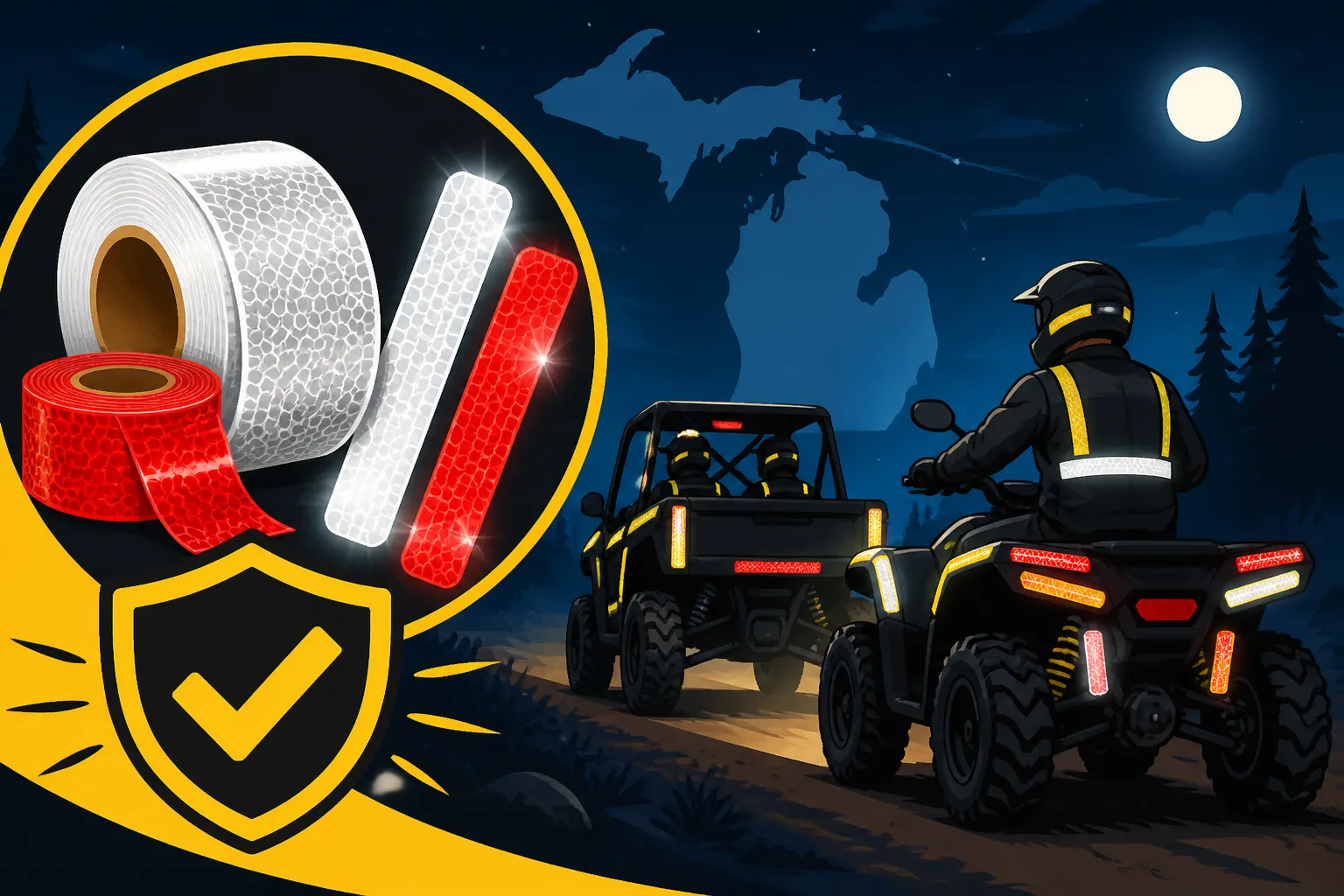
- DOT-C2 Tape: This is a specific type of reflective tape required by the Department of Transportation for commercial vehicles. It’s highly visible, durable, and usually comes in alternating red and white patterns. While not explicitly required for most ORVs, using DOT-C2 tape can provide an exceptional level of conspicuity, especially if you're frequently on county roads.
When choosing, consider durability and weather resistance. Michigan weather can be brutal, from freezing rain to hot sun, so look for tape that's designed to last.
Strategic Placement: Where to Put It for Optimal Effect
The goal of reflective tape is to define the full dimensions of your ORV from all angles. Don't just stick it on the back; think about how a vehicle approaching from the front, side, or even at an angle will see you.
Here's a strategic placement guide:
| Area of Machine | Placement Recommendation | Visibility Benefit |
|---|---|---|
| Front | Leading edges of fenders, bumper, grille, hood sides, mirrors | Defines width and height for oncoming traffic, even if headlights are blinding. |
| Sides | Along the length of the frame/fenders, grab handles, side rails | Crucial for cross-traffic visibility (intersections, driveways). |
| Rear | Trailing edges of fenders, bumper, tailgate, cargo racks | Enhances taillight visibility, outlines machine for following traffic. |
| Wheels/Tires | Small strips on wheel spokes or rim edges (optional) | Adds dynamic visibility; rotating reflections catch the eye. |
| Accessories | Winch, light bars, roof rack, spare tire carrier | Ensures added bulk is visible; avoids creating dark, unseen extensions. |
Remember, the higher you can place some strips, the better for visibility over hills or around mild curves, and to catch the headlights of taller vehicles. Also, consider the specific contours of your machine. A Polaris RZR will have different optimal spots than a quad or an older Yamaha Bear Tracker. Think about where light will hit the tape and bounce back most effectively.
Tips for Application and Maintenance
Applying reflective tape isn't rocket science, but a few tips can make a big difference in its longevity and effectiveness:
- Clean Surface: This is paramount. Wash and thoroughly dry the area where the tape will be applied. Any dirt, grease, or wax will prevent proper adhesion. Use rubbing alcohol for a final wipe.
- Warm Conditions: Apply tape in moderate temperatures. Extreme cold can make the adhesive brittle, while extreme heat can make it too gooey.
- Firm Pressure: Once the tape is in place, apply firm, even pressure to squeeze out any air bubbles and ensure full contact with the surface. A squeegee or even a credit card can help.
- Overlap if Necessary: For longer sections, slight overlaps can create a more continuous reflective surface.
- Check Regularly: Inspect your tape periodically. Off-road riding is tough on everything, and tape can peel, tear, or get caked with mud. Replace damaged sections promptly.
- Avoid High-Heat Areas: Don't apply tape directly to exhaust pipes or engine components that get extremely hot, as the adhesive won't last.
By carefully selecting and applying your reflective tape, you're taking a significant step towards safer night riding in Michigan. It's a small investment of time and money that pays huge dividends in peace of mind.
Beyond Tape: Other Considerations for Night Riding Safety
While reflective tape is an excellent tool for enhancing visibility, it's just one piece of the night riding safety puzzle. A truly comprehensive approach integrates proper lighting, appropriate gear, and smart riding habits.
Essential Lighting Requirements for Night Riding
Michigan's ORV laws mandate certain lighting for night operation. You absolutely must have:
- Headlights: At least one white headlight must be on and visible from 200 feet during night use. Many riders opt for aftermarket LED light bars for superior trail illumination.
- Taillights: At least one red taillight, visible from 200 feet, is also required.
- Brake Lights: While not always a specific ORV requirement, having functional brake lights is a massive safety advantage, signaling your deceleration to anyone behind you.
Many riders, myself included, will go above and beyond these minimums. Consider adding amber or red accessory lights on the sides or rear, especially if your ORV is wide. Forward-facing spotlights or floodlights can greatly improve your ability to see hazards on the trail, but always be mindful of dimming them for oncoming traffic. A well-lit machine combined with well-placed reflective tape creates an almost unmistakable presence in the dark.
Personal Gear and Apparel for Enhanced Visibility
Your ORV isn't the only thing that needs to be seen; you do too! What you wear can significantly impact your visibility to others.
- Reflective Clothing: Invest in a jacket, vest, or even helmet stickers that incorporate reflective materials. Many riding jackets have reflective piping built in. This is especially important if you ever dismount your machine on a trail or road at night.
- Helmet: A light-colored helmet is more visible than a dark one. Adding reflective decals to your helmet is a smart move, as your head is often the highest point and most visible. And always remember to wear a helmet, as Michigan law often requires it, and it's simply smart protection. Check out [Michigan Helmet Law for ATV Riders] for specifics.
- Eyewear: Clear or yellow-tinted goggles are best for night riding to enhance contrast and protect your eyes without reducing light transmission. Dirty or dark lenses are a definite no-go after sunset.
Don't forget that if you're riding with others, especially groups, ensuring everyone in the party has similar visibility enhancements makes the entire group safer and easier to track.
Smart Riding Habits When the Sun Goes Down
Even with the best lighting and reflective gear, nothing replaces good judgment and careful riding practices.
- Reduce Speed: Your reaction time, and that of others, is slower at night. Drive slower than you would during the day, especially on unfamiliar trails or shared roads.
- Increase Following Distance: Give yourself and others more room to stop or react.
- Scan for Hazards: Look for deer, downed trees, potholes, or other obstacles that are harder to spot in the dark. Use your peripheral vision, and don't fixate on just your headlight beam.
- Be Mindful of Dust: Dust can severely reduce visibility for you and those behind you. If it's dusty, slow down and leave plenty of space.
- Respect Others: Be courteous with your high beams. Dim them for oncoming traffic (ORVs or road vehicles) to avoid blinding them.
- Know Your Route: If possible, ride familiar trails at night. New terrain holds too many surprises in the dark.
- Tell Someone Your Plan: Always let someone know where you're going and when you expect to return, especially for solo night rides.
- Carry a Backup Light Source: A headlamp or flashlight can be invaluable if your primary lights fail or if you need to perform trailside repairs.
- Keep Your Paperwork Handy: While not directly visibility-related, ensuring you have your [Michigan ORV Paperwork During a DNR Stop] is always a good practice, whether day or night.
By combining robust lighting, strategically placed reflective tape, appropriate personal gear, and intelligent riding habits, you'll be well-equipped to enjoy Michigan's trails and roads safely, no matter what time of day you choose to ride. And should the unforeseen happen, knowing about [ORV Accident Reporting Requirements] can be crucial.
Disclaimer
This article is for general informational purposes only and does not constitute professional advice. Laws, prices and regulations vary by location and change over time. Consult a qualified professional for guidance on your specific situation.