Gear Ratio Changes for Highway Speeds
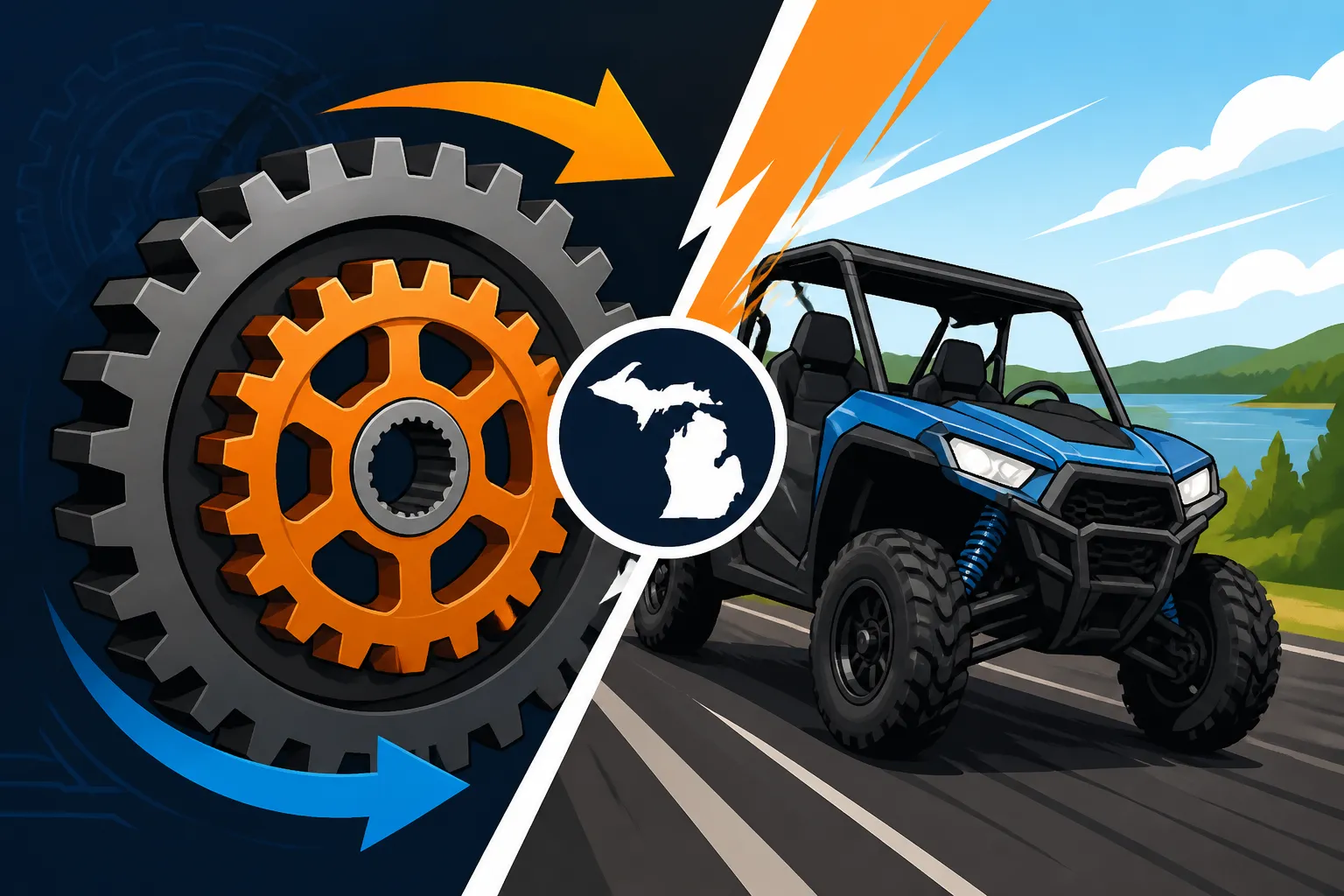
When you’ve finally made the decision to convert your off-road warrior into a street-legal machine here in Michigan, you’re probably picturing cruising down a county road with the wind in your hair. But for many riders, that dream quickly turns into a nightmare of a screaming engine, guzzling gas, and a nagging feeling that something just isn't right. That’s because the gear ratios perfectly designed for crawling over logs or tearing through mud aren't exactly ideal for maintaining a consistent speed on pavement. This guide is here to walk you through why those gear ratios cause problems and what practical steps you can take to make your ATV or UTV much happier, and more efficient, on Michigan's roads.
Why Your Off-Road Gear Ratios Aren't Suited for the Highway
It's a common scenario: you’ve gone through all the trouble of adding lights, a horn, mirrors, and getting your [Michigan Assembled Vehicle Title Application] submitted, only to find your machine sounds like it’s about to explode when you hit 30 mph on a paved road. This isn't just an annoyance; it's a fundamental mismatch between the machine's intended purpose and its new role. Off-road vehicles are built for torque, not sustained speed, and their gearing reflects that.
The Basics of Gear Ratios and RPMs
At its core, a gear ratio describes the relationship between the number of rotations your engine's output shaft makes and the number of rotations your wheels make. In off-road machines, especially ATVs and UTVs, manufacturers typically equip them with "low" (numerically high) gearing. This means the engine turns many times for each rotation of the wheels.
Why? Because this configuration provides maximum torque at low speeds. Think about it: when you're climbing a steep hill, pulling a heavy load, or navigating technical terrain, you need raw power to turn those big tires, even if the wheels are moving slowly. This low gearing amplifies the engine's power, allowing you to conquer obstacles that would stall a higher-geared vehicle. However, the flip side is that when you try to go faster, that same low gearing causes your engine to spin incredibly quickly – measured in RPMs (revolutions per minute) – even at relatively moderate road speeds. It's like trying to ride a bicycle uphill in its lowest gear on flat ground; you pedal furiously but don't cover much distance.
The Downsides of High RPMs on Pavement
Operating your ATV or UTV with off-road gearing at sustained road speeds, even within Michigan's typical ORV road limits, brings a host of problems that can quickly diminish your riding experience and shorten your machine's life. It's a frustration many new street-legal riders encounter, and it’s important to understand why it happens.
One of the most significant issues is accelerated engine wear. When your engine is constantly running at high RPMs, it generates excessive heat and puts immense stress on internal components like pistons, crankshaft bearings, and valves. These parts are designed for periods of high stress, yes, but not for prolonged, sustained operation at their upper limits without adequate cooling or lubrication designed for such conditions. Over time, this constant strain can lead to premature failure, oil breakdown, and costly repairs down the road. It’s like asking a marathon runner to sprint for the entire race; they might manage it for a bit, but they won't last long.
Beyond wear and tear, high RPMs are a notorious fuel economy killer. Every extra revolution the engine makes burns more fuel. While off-road, you might not notice it as much because speeds are lower and operation is intermittent. On the road, however, where you're trying to maintain a steady speed for miles, that fuel gauge will drop alarmingly fast. What might be an hour-long trail ride on one tank could be a fraction of that when cruising paved roads, meaning more stops at the pump and less money in your pocket for other fun stuff. This directly impacts the practical use of your machine for daily tasks or longer connection routes between trails.
Then there's the sheer discomfort. The incessant whine or roar of an engine running at high RPMs is not only annoying for you but also for anyone around you. The noise can be deafening, making conversations difficult and leading to rider fatigue surprisingly quickly. You might also experience increased vibrations throughout the machine, adding to the discomfort. It takes away from the joy of the ride, turning what should be a pleasant cruise into a jarring, noisy experience. Even at Michigan’s standard [Michigan's 25 mph Limit on County Roads], an off-road geared UTV can sound like it's working overtime. Finally, if your engine is already redlining at a modest speed, you've effectively hit your top speed. You can't go any faster without risking severe engine damage, which can be limiting when you need to keep up with traffic or simply want a bit more headroom for passing.
Understanding Your Options for Adjusting Gear Ratios
So, if your current off-road gearing is a drag on the pavement, what can you actually do about it? When looking to make your machine more road-friendly, you're essentially trying to achieve a "taller" gear ratio – meaning the engine spins fewer times for each rotation of the wheels. This reduces RPMs at speed, leading to less noise, better fuel economy, and less engine wear. There are a few primary ways to accomplish this, each with its own level of complexity and cost.
Primary (Transmission/Differential) Gear Changes
When we talk about primary gear changes, we're usually delving into the internal workings of your machine's transmission or differentials. This is where the core gear sets live, dictating how power is distributed and multiplied before it reaches the wheels. For most ATVs and UTVs, especially those not specifically designed for road use from the factory, making internal gear changes is often the most complex and expensive option, sometimes bordering on impractical.
Manufacturers typically don't offer a wide range of aftermarket internal gear sets for street-legal conversions for most popular ORV models. Swapping out entire transmission gear sets or differential ring and pinion gears requires a significant amount of mechanical expertise, specialized tools, and a substantial investment in parts. It means cracking open major drivetrain components, meticulously replacing gears, and ensuring everything is properly shimmed and sealed. This isn't a weekend DIY project for the average owner. For many riders just looking to enjoy their street-legal UTV on [Michigan's Maintained Portion of the Road, Defined], this level of modification is simply overkill and financially prohibitive. While it offers the most "pure" gear ratio change, it's typically reserved for highly specialized builds or competition machines where every ounce of performance is critical, rather than a practical solution for a standard street-legal conversion.
Secondary (External) Gear Changes – Sprockets and Larger Tires
Luckily, for most Michigan riders looking to optimize their street-legal ATV or UTV, external gear changes offer more accessible and practical solutions. These methods modify the final drive ratio without diving into the deep end of transmission teardowns, and they're often the first avenues riders explore.
Sprockets (for chain-driven machines): If your ATV uses a chain drive system, like many sport quads or some older utility models, changing the sprockets is a very effective and relatively straightforward way to adjust your final drive ratio. The principle is simple: a larger front sprocket or a smaller rear sprocket will result in a "taller" gear ratio. This means for every rotation of the engine's output shaft, the wheels turn more, reducing engine RPMs at any given speed.
The pros of sprocket changes are clear: they're relatively inexpensive compared to internal modifications, and many mechanically inclined riders can tackle this as a DIY project. You’ll notice a tangible difference in engine RPMs on the road, making for a much quieter and more comfortable ride. However, there are limitations. The range of adjustment is finite; you can only go so big on the front or so small on the rear before encountering clearance issues or needing to replace your chain with a different length. Going too tall can also reduce your low-end grunt for off-road use, which might be a trade-off you’re willing to make if road performance is your priority. But if you still plan on hitting tough trails, you might feel a noticeable decrease in power and acceleration at very low speeds.
Larger Tires: For many ATVs and UTVs, especially modern side-by-sides, swapping to larger diameter tires is often the simplest and most common way to achieve a numerically lower (taller) effective gear ratio. Think of it this way: a larger tire covers more ground with each full rotation. So, for your machine to travel a certain distance, its wheels (and therefore your engine) need to spin fewer times.
This is a multi-purpose upgrade that many riders consider anyway. Not only does it effectively change your gearing, but larger tires can also give you more ground clearance and a more aggressive look. For street-legal conversions, you'll need [DOT Tires on a Street-Legal Side-by-Side] anyway, so upsizing at the same time makes sense. Many aftermarket brands, including SuperATV, offer a vast selection of larger, DOT-approved tires, often paired with lift kits to accommodate them. The downside is that larger tires are heavier, which can put more strain on your axles, CV joints, and differential, especially if you still ride aggressively off-road. They can also throw off your speedometer accuracy (which we'll discuss later) and may require modifications like lift kits or fender trimming to prevent rubbing, adding to the overall cost and complexity. While it’s a popular modification, it’s not without its own set of considerations.
Overdrive Units and Gear Reducers
While less common for the typical ATV or UTV street-legal conversion, it's worth briefly mentioning overdrive units and gear reducers. These are specialized external gearboxes that are typically added to the drivetrain to modify the final drive ratio.
Overdrive units are designed to increase the final drive ratio, effectively making gears "taller" than the factory setup. They typically sit inline with the driveshaft or sometimes integrate with the transmission. Gear reducers, conversely, lower the final drive ratio, providing more torque but reducing speed. For most stock or lightly modified street-legal UTVs, these units are not a plug-and-play solution. They require significant fabrication and custom installation, making them prohibitively expensive and complex for the vast majority of riders. You're more likely to see these in highly customized rock crawlers or unique industrial applications rather than a side-by-side that's primarily used for connecting trails or running to the store in a Michigan township that allows ORVs. So, while they exist conceptually as a way to change gear ratios, they’re generally not a practical consideration for our purposes here.
The Trade-Offs and Considerations
Making changes to your ATV or UTV's gearing for street legality isn't a one-way street of pure benefits. Like any modification, it involves a series of trade-offs that you'll need to carefully weigh based on your specific riding habits and what you truly expect from your machine. Understanding these compromises is crucial for making informed decisions and avoiding potential disappointments or mechanical issues.
Finding the Sweet Spot: Balancing Performance
Here’s the honest truth about changing your gear ratios for highway speeds: you’re almost always trading some low-end, off-road grunt for better pavement manners. Your machine was engineered to excel in dirt, mud, and rocks, where torque is king. When you install taller gearing (whether through sprockets or larger tires), you inherently reduce the mechanical advantage that made it such a beast off-road. This means you might notice a slight decrease in acceleration, less stump-pulling power, or a bit more clutch slipping required to get moving on steep inclines in very technical terrain.
However, for a street-legal UTV, this trade-off is often well worth it. If your primary goal is to comfortably cruise [Michigan's 25 mph Limit on County Roads] without your engine screaming, and to efficiently travel between trailheads or to your local ice cream shop, then prioritizing road performance makes perfect sense. Most street-legal conversions mean your machine will spend a significant amount of its life on pavement, even if it’s just short stretches. The key is to find that "sweet spot" – a gear ratio that lowers your RPMs enough to be comfortable and efficient on the road, without completely neutering its off-road capabilities if you still plan to hit the trails hard. It's a delicate balance, and often involves a bit of trial and error or consulting with other riders who have similar machines and uses.
Impact on Speedometer and Odometer
One often-overlooked consequence of altering your gear ratios or, more commonly, installing larger tires, is its direct impact on your speedometer and odometer accuracy. Your ATV or UTV's factory speedometer is calibrated based on the original tire size and gear ratios. When you change either of these, that calibration becomes incorrect.
For example, if you install significantly larger tires, your speedometer will read slower than your actual speed, and your odometer will log fewer miles than you’ve truly traveled. This isn't just an inconvenience; it can have legal implications. You could inadvertently be speeding if you rely on an inaccurate speedometer, leading to tickets. Furthermore, an inaccurate odometer can affect resale value by misrepresenting the machine's true mileage. To rectify this, you might need to invest in an aftermarket speedometer calibrator, which electronically corrects the signal from your speed sensor, or even an entirely new GPS-based speedometer. Some riders simply use a GPS app on their phone or a dedicated GPS unit for accurate speed readings, but for official purposes, a properly calibrated speedometer is critical. When you take your machine for a [Michigan Street-Legal UTV Inspection at the Secretary of State], they’ll want to see functional and accurate gauges, so don't overlook this detail.
Drivetrain Stress and Reliability
While lowering your engine's RPMs with taller gearing generally reduces stress on the engine itself, other parts of your drivetrain can experience increased loads, especially if you opt for larger tires. Bigger, heavier tires inherently create more rotational mass and leverage, demanding more from components like your axles, CV joints, and differentials.
If you still plan on aggressive off-road riding after installing larger tires, these components will be under greater strain, potentially leading to premature wear or failure. It’s not uncommon for riders who go with substantially larger tires to also upgrade their axle shafts to more robust aftermarket options, for instance. Brands like SuperATV offer a range of heavy-duty drivetrain components designed to withstand the added stresses of larger tires and demanding off-road conditions. The key is to consider your entire drivetrain as a system. If you change one major component (like tire size), it can have ripple effects throughout the rest of the system. Ensuring you have quality components and that everything is properly installed and maintained will go a long way in preserving your machine's reliability. Always factor in these potential ripple effects when calculating your total [Parts List for a Street-Legal Conversion].
Practical Steps and Recommendations for Michigan Riders
Alright, so you understand the "why" and the "what" of gear ratio changes for street-legal UTVs. Now, let’s talk about the "how." For Michigan riders making the leap to road-legal status, a thoughtful approach to these modifications can save you headaches and ensure your machine performs optimally for its new dual-purpose life. It’s not just about bolting on parts; it’s about making smart choices that align with your riding reality.
Assess Your Riding Habits and Goals
Before you even start looking at parts, sit down and honestly evaluate how you plan to use your street-legal ATV or UTV. This is perhaps the most critical step, as it will dictate the best approach for your gearing. Ask yourself these questions:
- Road vs. Trail Split: Will your machine spend 80% of its time on pavement connecting trails and running errands, and only 20% on aggressive trails? Or is it more of a 50/50 split? If you’re mostly on the road, you can lean more aggressively towards taller gearing. If you still plan on serious trail riding, you’ll need a more balanced approach.
- "Highway" Speed Needs: Remember, you won't be cruising at 70 mph on a street-legal UTV in Michigan. What specific speeds do you actually need to comfortably maintain? Is it 25 mph on county roads, 35 mph on a stretch of pavement to a staging area, or occasionally 45 mph on a specific allowed route? Knowing your actual speed requirements helps in determining how much gearing change you truly need. You might find that a modest change makes a huge difference.
- Type of Off-Road Riding: Are you tackling mud bogs, rock crawling, or mostly cruising maintained gravel trails? Different types of off-road riding demand different levels of low-end torque. If your street-legal UTV will still be a dedicated trail machine, you'll need to be more conservative with gearing changes. For example, a young rider following [Michigan ORV Road Rules for Riders Under 16] might have very different needs than an adult using a UTV for property maintenance and occasional road use.
Research Aftermarket Options for Your Specific Machine
Once you have a clear picture of your usage goals, it’s time to dive into the world of aftermarket parts. The availability of gear ratio solutions can vary wildly depending on your specific ATV or UTV make and model.
For many modern side-by-sides, the most common and accessible solution is often larger tires. Start by researching what maximum tire sizes other owners of your machine have successfully run, especially those who have gone street-legal. Look for forum discussions, owner groups, and product reviews. Brands like SuperATV are a great place to start, as they offer a wide array of lift kits, aftermarket A-arms, and [DOT Tires on a Street-Legal Side-by-Side] specifically designed for popular UTV models. Often, a modest increase of 2-4 inches in tire diameter can provide a noticeable improvement in road RPMs without requiring extreme modifications or sacrificing too much off-road capability.
If you have a chain-driven ATV, research aftermarket sprocket options. Again, owner forums and specialized parts retailers will be your best resource for finding recommended tooth counts for your specific machine. Sometimes, changing just a few teeth on the front or rear sprocket can have a significant impact. Don't forget to consider if you'll need a new chain length to accommodate the new sprocket sizes. While internal transmission or differential gear sets are less common for this type of conversion, if you have a very popular model, there might be niche options available, but always be prepared for the increased cost and complexity.
Professional Installation vs. DIY
Finally, consider who will be doing the work. Some modifications are well within the realm of a confident DIY mechanic, while others are best left to professionals.
- Tire Changes: Swapping to larger tires is often something you can do yourself if you have the right tools, or any local tire shop can handle it relatively quickly and affordably. If you're adding a lift kit, it’s a more involved but still often DIY-friendly project.
- Sprocket Changes: For chain-driven ATVs, changing sprockets is typically a moderate DIY task. You’ll need basic hand tools, a chain breaker/riveter, and the ability to correctly tension your chain. There are plenty of online tutorials to guide you through this process.
- Internal Gearing: As discussed, attempting to swap internal transmission or differential gears yourself without extensive mechanical experience and specialized tools is highly ill-advised. The precision required for proper shimming and assembly is critical for long-term reliability. For these kinds of changes, take your machine to a reputable powersports mechanic. They can ensure the job is done correctly, which is vital for both performance and safety on the road. Remember, any major modifications could impact what [What Fails a Michigan Assembled Vehicle Inspection] so ensure everything is installed professionally and correctly.
Taking the time to plan, research, and execute your gear ratio changes thoughtfully will ensure your street-legal ATV or UTV provides years of enjoyable, efficient, and safe riding on Michigan's diverse roads and trails.
Comparison of Common Gearing Adjustment Methods for Street-Legal UTVs
| Method | Pros | Cons | Typical Cost (Shape) | DIY Difficulty |
|---|---|---|---|---|
| Larger Tires | Simplest, multi-purpose (clearance, looks), readily available aftermarket options, often DIY-friendly. | Speedometer/odometer inaccuracy, increased strain on drivetrain (axles, CVs), may require lift/trimming, heavier tires impact handling/braking. | Moderate to High (tires + potential lift) | Easy to Moderate |
| Sprocket Change | (Chain-driven ATVs only) Inexpensive, noticeable RPM reduction, relatively easy DIY for many riders. | Limited adjustment range, may require new chain, can impact low-end torque for aggressive off-road, not applicable to shaft-driven UTVs. | Low (sprockets) | Moderate |
| Internal Gear Swap | Most precise and "pure" gearing change, maintains external clearances. | Very complex, expensive, requires specialized tools/expertise, limited aftermarket availability for many models, major drivetrain disassembly. | Very High (parts + labor) | Very Hard |
| Overdrive Unit | Significant RPM reduction possible, external to main drivetrain components (can be added/removed). | Not commonly available for ATVs/UTVs, requires custom fabrication/installation, expensive, can introduce new points of failure, may reduce ground clearance. | Very High (parts + custom labor) | Very Hard |
Disclaimer
This article is for general informational purposes only and does not constitute professional advice. Laws, prices and regulations vary by location and change over time. Consult a qualified professional for guidance on your specific situation.