Seat Belt Rules in a Michigan UTV
Navigating the rules and regulations for UTVs in Michigan can feel like trying to untangle a knotted fishing line, especially when it comes to something as fundamental as seat belts. Many riders find themselves scratching their heads, wondering if that factory-installed restraint is truly sufficient, or if they even need to wear it when they're just cruising down a two-track. This guide is here to cut through the confusion and give you a clear, comprehensive understanding of Michigan's seat belt rules for UTVs, whether you're hitting the trails, traversing public roads, or just enjoying your own property.
Understanding Michigan's UTV Seat Belt Laws on and Off-Road
The reality of UTV ownership in Michigan is that the rules change depending on where your tires are touching the ground. What's perfectly acceptable on private land might land you a ticket on a county road, and the nuances of seat belt requirements are a prime example of this fluctuating regulatory landscape. It’s not about making things complicated for the sake of it; it's about matching safety expectations to the environment you're riding in.
The Basics: When Seat Belts Are Required
Let's start with the core of it all: when are seat belts actually required in your UTV in Michigan? For the most part, if your UTV came equipped with seat belts from the manufacturer, it's a good practice, and often a legal requirement, to use them.
When you're out on designated ORV trails, public lands, or even simply operating your UTV on private property, the expectation is that if a seat belt is there, you're buckling up. Michigan's ORV laws emphasize safe operation, and using the manufacturer-installed safety equipment is a big part of that. Think of it this way: the engineers put those belts in for a reason, specifically to keep you contained within the protective cage of your UTV in case of an unexpected bump, jolt, or even a rollover. The forces at play in an off-road environment can be incredibly unpredictable, and being secured means you're less likely to be ejected or slammed against the interior of the machine. It’s not just about avoiding a ticket; it's about protecting yourself and your passengers from severe injury in scenarios that can quickly go sideways.
There's a fundamental difference between the expectations for an off-road machine and a traditional on-road vehicle. While an ORV permit gets you access to trails and certain public roads, it doesn't automatically mean all the same rules apply as if you were driving your car. However, when it comes to basic safety equipment like seat belts, the common-sense approach generally prevails: if it’s designed to keep you safe, use it. This is especially true given the dynamic and often challenging terrain found on Michigan's extensive ORV trail system. [Michigan ORV Paperwork During a DNR Stop] highlights how important it is to have everything in order, and that includes being compliant with safety equipment.
The Street-Legal UTV Exception and What It Means
Now, things get a bit more nuanced if you've gone through the process of making your UTV street legal in Michigan. This is where your UTV effectively transitions from a purely off-road machine to something more akin to a low-speed vehicle or even a car, at least in the eyes of the law on public roads.
If your UTV has been properly titled and equipped to be street legal, meeting all the requirements for things like turn signals, mirrors, and safety glass, then it generally falls under the same seat belt laws as other motor vehicles when operating on a public road. This means that seat belt use for both the driver and all passengers becomes mandatory, just like in your daily driver. [Safety Glass, Mirrors and Horns: Michigan's Street-Legal List] touches on some of these requirements. This isn't just a suggestion; it's a firm legal requirement designed to protect occupants in a traffic environment where speeds are higher and interactions with other vehicles are common. A typical UTV, even when street-legal, still has a different crash profile than a passenger car, making restraint systems even more critical.
The Michigan Vehicle Code dictates that all occupants of a motor vehicle must be properly restrained if the vehicle is equipped with seat belts. For a street-legal UTV, this is no different. The expectation is that you’re treating it like any other vehicle on the road. If you're pondering [Michigan's Assembled Vehicle Route for a UTV], understanding this aspect of seat belt compliance is paramount, as the entire conversion process aims to make your UTV safe and legal for public road use. This means not only having the belts, but ensuring they are in good working order and being used by everyone inside the machine.
Passenger Rules: Who Needs to Buckle Up
When you're out on the trails or even a permitted county road, it's often a family affair, with friends and kids piling into the UTV. This brings up the critical question of passenger seat belt rules. The short answer is: everyone should be buckled up, regardless of age, if a seat is equipped with a restraint.
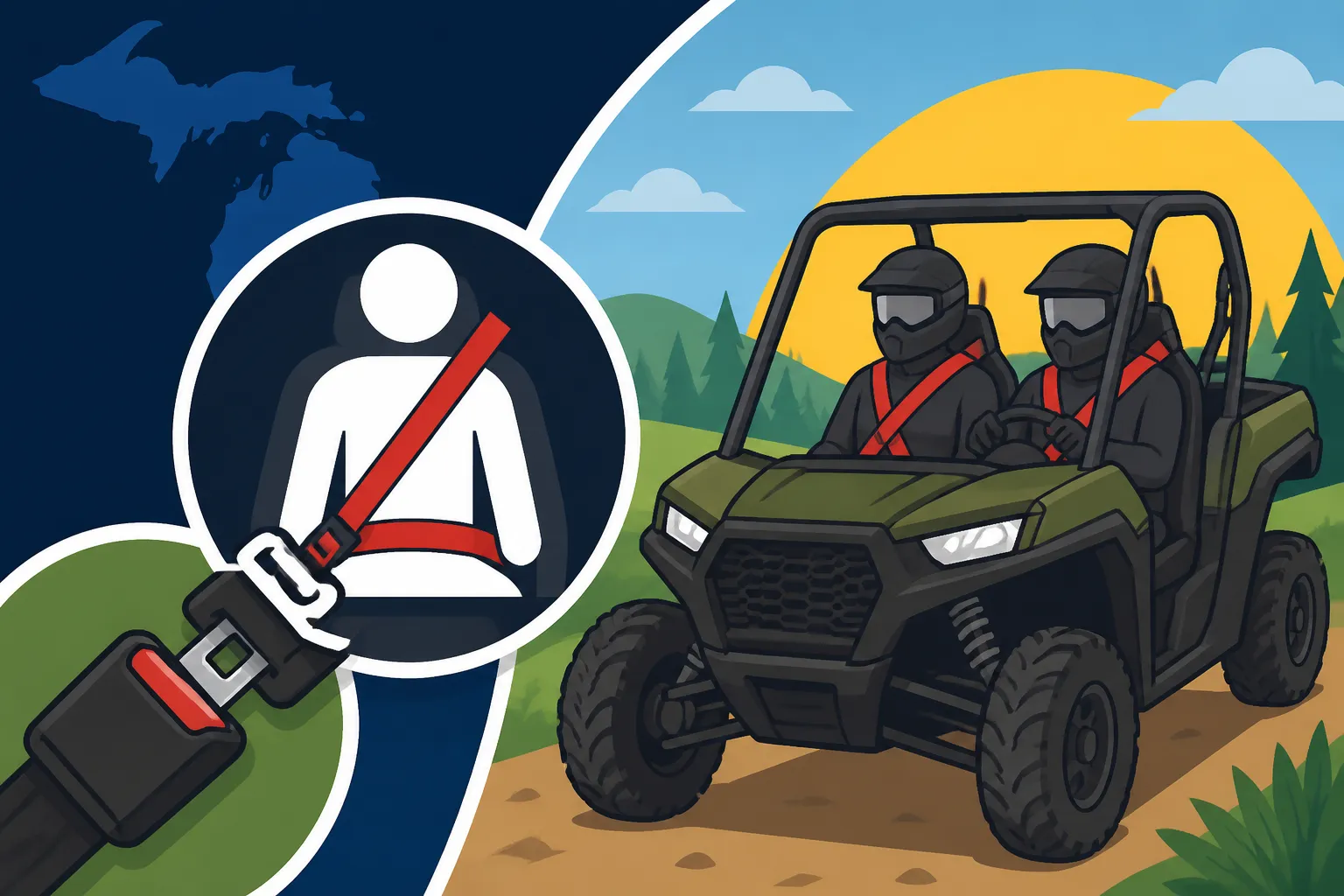
Michigan law states that anyone operating or riding in an ORV that is equipped with a safety belt must wear it. This applies equally to adults and children. While Michigan doesn't have the same specific child car seat laws for UTVs as it does for passenger cars, common sense and manufacturer recommendations absolutely dictate how you should carry younger passengers. Most UTV manufacturers explicitly state that children must be tall enough and old enough to sit properly in the seat and utilize the seat belt as designed. They often provide minimum age and height guidelines. For very young children, who might not fit the factory seat belts correctly, specialized UTV-specific booster seats or harnesses might be available, though these often need to be carefully integrated into the UTV's frame. It’s worth checking the specific owner’s manual for your UTV model for detailed guidelines on child passenger safety.
Consider a scenario where you're bringing your adventurous pre-teen along for a ride. Even if they're excited, it's your responsibility to ensure they're safely buckled in. If your UTV has two seats, and you have two passengers, all three of you (driver included) need to be properly restrained. Overcrowding a UTV, or allowing passengers to ride in areas not designated for seating (like the cargo bed), is not only illegal in many instances but incredibly dangerous, even with seat belts. When thinking about [Michigan ORV Road Riding Age Minimum] for drivers, remember that passenger safety is just as crucial, especially for younger riders. Always prioritize keeping all occupants safely inside the vehicle's protective cage.
The Importance of Proper Seat Belt Use and Maintenance
Beyond just the legal requirements, understanding the 'why' behind seat belt rules is paramount for any responsible UTV owner. We all love the thrill of off-roading, but that thrill comes with inherent risks. Your seat belt is your first, and often most critical, line of defense against serious injury.
Beyond the Law: Why Safety Always Comes First
Let's be frank: no one wants to get hurt. While avoiding a ticket is a motivator, your personal safety, and the safety of your passengers, should always be the absolute top priority. UTVs are powerful machines designed for rough terrain, and they can roll over, collide with obstacles, or throw occupants unexpectedly. Seat belts are specifically designed to keep you within the safety cell of the vehicle during these violent events.
Imagine hitting an unseen ditch or rock while traveling at a moderate speed on a trail. The sudden stop or violent lurch can easily throw an unbelted occupant clear of the vehicle, often into the path of the rolling UTV itself, or against trees and rocks. Even if you're "just going slow," a minor upset can lead to broken bones, head injuries, or worse. The internal cabin of a UTV, while offering some protection, can become a dangerous environment during a rollover, with hard surfaces and structural components that can cause impact injuries if you're not secured.
This isn't about fear-mongering; it's about being realistic. I’ve seen enough situations on the trails to know that things can go wrong in a blink. A seat belt, properly worn, can be the difference between a scary story and a trip to the emergency room. It keeps you planted in your seat, allowing you to maintain control of the vehicle (if possible) and preventing ejection, which is often the cause of the most severe injuries in UTV accidents. This is why [Michigan ORV Accident Reporting Requirements] are so important – understanding what went wrong often highlights the critical role of safety equipment.
Inspecting and Maintaining Your UTV's Restraints
Just like any other critical component on your UTV, your seat belts need regular attention and maintenance. They're not "set it and forget it" items, especially given the harsh environments UTVs often operate in.
Before every ride, or at least as part of your regular pre-ride inspection, take a moment to look over all seat belts in your UTV. What are you looking for?
- Fraying or Cuts: Inspect the webbing material itself. Exposure to sun, mud, and general use can cause the fabric to fray, especially around the edges or where it rubs against other parts of the UTV. Any significant fraying or cuts compromise the integrity of the belt.
- Buckle Function: Ensure the buckles click securely into place and release smoothly when the button is pressed. Test each one. A sticky or unreliable buckle is a serious safety hazard.
- Mounting Points: Check where the seat belts attach to the UTV frame. Make sure all bolts are tight and there's no corrosion or damage to the anchors. These are critical load-bearing points in an impact.
- Retractor Operation: If your UTV has retractable seat belts, pull them all the way out and let them retract. They should spool back smoothly and without resistance. Also, give them a sharp tug; they should lock firmly, just like in a car.
If you find any significant damage, fraying, or malfunction, it’s not something to put off. A compromised seat belt offers compromised protection. Replacement seat belts or harness systems are available, often from the manufacturer or reputable aftermarket companies. Think of it like replacing a worn tire – you wouldn't ride on a bald tire, so don't rely on a faulty seat belt.
Upgrading for Enhanced Safety: Aftermarket Options
While factory seat belts are designed to meet safety standards, many UTV enthusiasts choose to upgrade their restraint systems for enhanced safety, especially those who engage in more aggressive riding or competitive events. This is where aftermarket options really shine.
The most common upgrade is moving from a standard 3-point seat belt (like you find in a car) to a 4-point or even 5-point harness system.
- 4-point harnesses add shoulder straps that come over both shoulders and connect to a central buckle, preventing upper body movement and keeping you firmly planted.
- 5-point harnesses add a fifth strap that comes up between your legs, preventing "submarining" (sliding under the lap belt) in a severe impact.
Brands like SuperATV offer a wide range of aftermarket harnesses and mounting hardware designed specifically for popular UTV models. These systems are often designed for greater comfort and adjustability, allowing for a snugger fit that minimizes movement during aggressive driving. They distribute impact forces over a larger area of the body, potentially reducing injury severity.
However, a word of caution: when upgrading to an aftermarket harness, ensure it's properly installed according to the manufacturer's instructions. Incorrect installation can actually make the system less effective or even dangerous. It's also vital to ensure that the mounting points are secure and can withstand the forces of an impact. While factory seat belts are often sufficient for general trail riding, an upgraded harness provides an extra layer of security and confidence for those pushing their machines harder.
Navigating Common Scenarios and Potential Pitfalls
Even with a clear understanding of the rules, real-world situations can throw curveballs. It's important to anticipate potential issues and know how to avoid common mistakes that could compromise safety or lead to legal trouble.
Rental UTVs and Seat Belt Compliance
Renting a UTV for a day of adventure, perhaps at a place like Silver Lake Sand Dunes or in Michigan's Upper Peninsula, is a fantastic way to experience off-roading without the commitment of ownership. However, it's crucial to understand your responsibilities regarding seat belts with a rental.
Rental companies have a legal obligation to provide machines that are in safe working order, and that absolutely includes functional seat belts. Before you even leave the staging area, perform your own quick inspection of the seat belts, just as you would on your own machine. Check for fraying, ensure buckles click, and test the retractors. If anything seems amiss, do not hesitate to bring it to the attention of the rental staff. They should provide a machine with fully functional restraints.
As the renter and operator, you are responsible for ensuring that all occupants, including yourself, wear the seat belts provided. Rental agreements will almost certainly include clauses stating that you agree to abide by all state laws and operate the vehicle safely, which includes seat belt usage. If you're stopped by a DNR officer or local law enforcement while riding a rental without proper seat belt use, you, the operator, will likely be the one facing the consequences, not the rental company. When [Renting a Side-by-Side in Michigan's Upper Peninsula], always make seat belt checks part of your pre-ride routine.
Enforcement and Penalties for Non-Compliance
So, what happens if you or your passengers aren't buckled up when required? Michigan's law enforcement, including DNR conservation officers and local sheriff departments, are actively patrolling ORV trails and roads. They take safety seriously, and seat belt violations are not overlooked.
If you're caught operating a UTV without the required seat belt use, you can expect to receive a citation. The specific fines can vary, but generally, a seat belt violation in Michigan will come with a monetary penalty. Unlike some other traffic infractions, seat belt violations typically do not add points to your driver's license, but it's still a fine you'd rather avoid. More importantly, if an accident were to occur while you or a passenger were unbelted, it could significantly impact any insurance claims. Your insurance provider might deny or reduce payouts if they can demonstrate that non-compliance with safety laws contributed to the injuries or damages. [Fines for Speeding on an ORV] gives you a sense of how seriously violations are taken.
The goal of enforcement isn't just to issue tickets; it's to promote safer riding habits. An officer pulling you over for an unbuckled passenger isn't just being a stickler for rules; they're potentially preventing a much more serious incident from happening down the line.
Seat Belt Myths and Misconceptions
There are a few persistent myths about seat belts in UTVs that need to be debunked. These misconceptions can lead to dangerous choices on the trail.
- "We're just going slow, we don't need belts." This is perhaps the most dangerous myth. As discussed earlier, even at low speeds, a UTV can hit an unexpected obstacle, drop into a rut, or perform a sudden maneuver that can easily eject occupants. The forces involved in a low-speed rollover can still cause severe injuries.
- "The roll cage will protect us." While a roll cage is a critical safety feature designed to prevent the UTV from collapsing in a rollover, it's effective only if you stay contained within it. Without a seat belt, you can be thrown against the cage, out of the vehicle, or even partially trapped between the cage and the ground. The cage protects the space you're in, but the belt keeps you in that protected space.
- "It's uncomfortable; I need to move around." Modern UTV seat belts and harnesses, especially aftermarket options from companies like SuperATV, are designed to be comfortable and allow for some movement while still providing restraint. If your belts are genuinely uncomfortable, it might be worth adjusting them or looking into an upgrade. A few minutes of discomfort is a small price to pay for safety.
- "I'm an experienced rider, I know how to handle it." Experience helps with vehicle control, but it doesn't make you immune to physics. Accidents happen to experienced riders too, often due to unforeseen circumstances or obstacles. A seat belt protects you when even your skills aren't enough to prevent an incident.
The bottom line is simple: if your UTV has seat belts, use them. Every single time. It’s a habit that can literally save lives and prevent devastating injuries, ensuring that your Michigan UTV adventures remain fun and safe for everyone involved.
| Feature / Scenario | On Designated ORV Trails/Private Land | On Street-Legal County Roads | Rental UTVs | Upgraded Harnesses (e.g., SuperATV) |
|---|---|---|---|---|
| Legal Requirement | If equipped, generally required | Mandatory for all occupants | Mandatory for all occupants | Optional, but highly recommended |
| Primary Goal | Containment during off-road dynamics | Crash protection, traffic safety | Ensure renter compliance and safety | Enhanced containment & impact distribution |
| Passenger Application | All passengers must use available belts | All passengers must use available belts | All passengers must use available belts | All passengers should use available harnesses |
| Maintenance Need | Critical for performance | Critical for performance | Inspection before rental period | Regular checks for wear & proper installation |
| Enforcement | DNR, local law enforcement | Local law enforcement | Rental company, law enforcement | Still subject to basic seat belt laws |
Disclaimer
This article is for general informational purposes only and does not constitute professional advice. Laws, prices and regulations vary by location and change over time. Consult a qualified professional for guidance on your specific situation.