Michigan Helmet Law for ATV Riders
When you're tearing up Michigan's incredible ORV trails or cruising down a permitted county road, the last thing you want is a legal snag or, even worse, a preventable injury. A big point of confusion for many riders, both new and seasoned, revolves around helmet laws. It can feel like a tangled web of rules, exceptions, and "wait, what about my friend's UTV?" scenarios. This guide is here to untangle that web, clearly explaining Michigan's helmet requirements for ATV and UTV riders, highlighting the crucial differences, and helping you ride safely and legally.
Understanding Michigan's Baseline Helmet Law for ORVs
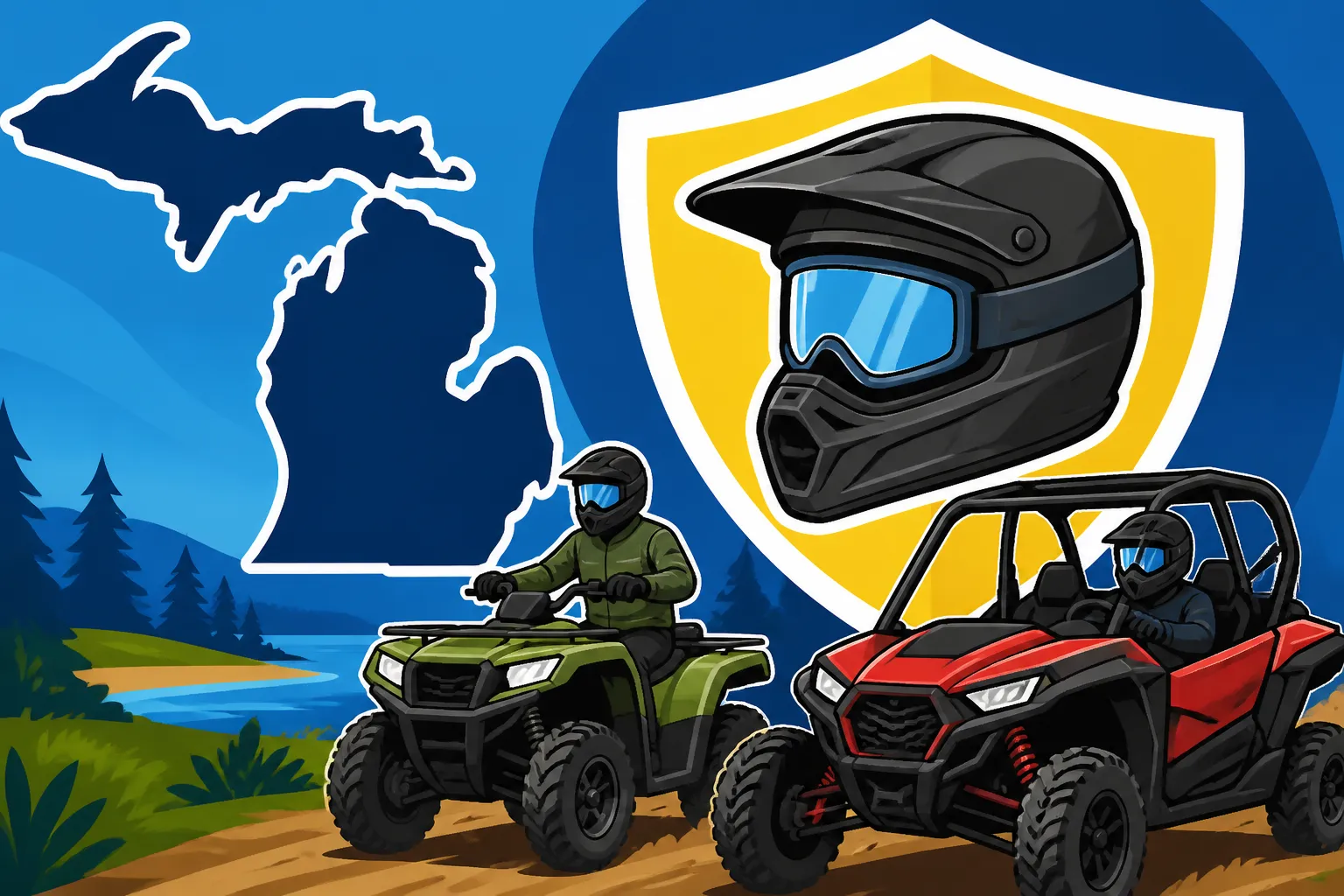
Let's cut right to the chase: for most ATV and UTV riding in Michigan, especially on public land, trails, and designated ORV routes, wearing a helmet isn't just a suggestion—it's the law. This isn't some arbitrary rule dreamed up to inconvenience you; it's rooted in decades of data showing how helmets drastically reduce the severity of head injuries in crashes. The Michigan Department of Natural Resources (DNR) and law enforcement take this very seriously, and for good reason. A helmet can be the difference between a minor tumble and a life-altering incident.
The law is primarily designed to protect riders operating off-road vehicles (ORVs) in environments where falls, collisions, and rollovers are a very real possibility. Whether you're navigating a tight wooded trail, climbing a sandy dune, or even just hitting a surprise bump on a gravel road, your head is vulnerable. This foundational requirement applies broadly to ATVs, quads, and most UTVs when they're used in their traditional off-road capacity. It's the standard operating procedure for staying safe and compliant when you're out enjoying Michigan's natural beauty on your machine.
Who Needs to Buckle Up (Their Head, That Is)
So, who exactly needs to don a helmet under Michigan's ORV laws? The answer is pretty straightforward for the vast majority of situations: every person operating or riding as a passenger on an ORV. This includes you, your riding buddy, and especially any children you bring along. There are no age-based exemptions here for standard ORV operation on public land. If you're on a designated ORV trail, a state forest road open to ORVs, or any public property where your ORV is permitted, a helmet is a must for everyone on board.
Think about a typical Saturday ride in the northern Lower Peninsula. You're exploring the [St. Helen ORV Trails in Michigan] with your family. If your child is riding their own youth ATV or even if they're a passenger in your side-by-side, they absolutely need a helmet. The same goes for you, the operator. This rule aims for universal protection in these often unpredictable off-road environments. It's about creating a blanket of safety for everyone enjoying the sport. Even if you're just putting around a local ORV scramble area, the same rules apply. The law doesn't differentiate between aggressive riding and leisurely puttering when it comes to head protection.
Decoding "DOT Approved": What It Really Means for Your Helmet
When the law says you need a helmet, it's not just any old helmet. It specifically requires a helmet that is Department of Transportation (DOT) compliant. This isn't just a sticker; it's a certification that the helmet meets specific federal safety standards for impact absorption, penetration resistance, and retention. A DOT-approved helmet has undergone rigorous testing to ensure it provides a minimum level of protection in a crash. You'll typically find a "DOT" sticker on the back of any certified helmet.
Choosing a DOT-approved helmet means you're investing in proven safety. There are many styles available—full-face, open-face, modular, and even motocross-style helmets. For ORV riding, full-face or motocross-style helmets (often paired with goggles) are highly recommended because they offer excellent protection for your entire head, including your face and jaw, which are very vulnerable in an ORV accident. When you're shopping, always look for that DOT certification. Beyond that, focus on fit: a helmet should be snug but comfortable, without any pressure points or excessive movement. You can learn more about specific standards in [DOT Helmet Standards for ORV Riding]. A properly fitting, DOT-approved helmet is your first line of defense against serious injury, providing peace of mind as you tackle challenging terrain.
The Curious Case of Street-Legal UTVs and Helmet Exemptions
Now, here's where things get interesting and often lead to confusion. While the general rule for ORVs is "helmets required," Michigan does have specific exemptions, primarily for UTVs that have been legally converted to "street-legal" status. This isn't as simple as adding a horn and turn signals; it involves a rigorous process to reclassify the vehicle.
The idea behind this exemption is that once a UTV meets all the safety and equipment requirements to be considered an "assembled vehicle" or a "low-speed vehicle" and is driven on public roads in the same manner as a car, the helmet requirement can be waived for adult occupants. This mimics the laws for traditional automobiles, where helmets aren't required. However, it’s absolutely critical to understand that this exemption is highly specific and doesn't apply to every UTV, nor does it apply to ATVs. Many riders misunderstand this, thinking that just because their county allows ORVs on roads, they can ditch their helmets. That's a dangerous misconception.
The "Assembled Vehicle" Status: A Game-Changer for UTV Helmets
For an adult to legally operate a UTV on Michigan roads without a helmet, that UTV must typically undergo a conversion process to become a street-legal "assembled vehicle." This is a serious undertaking, not a casual upgrade. It means your UTV needs to meet specific Michigan Vehicle Code requirements that go far beyond what's needed for off-road use. These requirements include, but are not limited to:
- DOT-approved tires: Not just off-road knobbies.
- A full, legitimate windshield: Not a small deflector, and it often needs wipers and a defroster.
- A functional horn: Loud enough to be heard.
- DOT-approved headlights, taillights, brake lights, and turn signals: Front and rear.
- Rearview mirrors: At least one, sometimes two.
- A speedometer and odometer.
- Seatbelts for all occupants.
Once your UTV is equipped with all the necessary components, it must pass an inspection by the Michigan Secretary of State (SOS) and be titled and registered as an "assembled vehicle." This changes its legal classification from an ORV to something closer to a traditional automobile. Only after this entire process is complete, and your UTV holds this new legal status, are adult occupants typically exempt from the helmet law when operating on public roads where such vehicles are allowed. You can dive deeper into this complex process in [Michigan Assembled Vehicle Route for a UTV].
It's also worth noting that many riders turn to reputable brands for these conversion parts. Companies like SuperATV offer a wide range of aftermarket accessories, from DOT-approved windshields and mirrors to turn signal kits, that can help UTV owners meet the stringent requirements for Michigan's assembled vehicle status. When you're serious about making your UTV street-legal, sourcing quality, compliant parts is a critical step.
Common Misconceptions and When Helmets Are Always a Good Idea
The street-legal UTV exemption is often misunderstood, leading to dangerous situations. Here are some common misconceptions:
- "My county allows ORVs on roads, so I don't need a helmet." This is perhaps the most common and dangerous misconception. Many Michigan counties have ordinances allowing ORVs on county roads (often with speed limits like 25 mph), but these ordinances usually still require ORV operators and passengers to wear helmets, as they are still classified as ORVs. The street-legal "assembled vehicle" status is different from simply having a county road access permit.
- "I'm only going a short distance/going slow." Speed and distance don't negate the legal requirement or the risk of injury. Even a low-speed tip-over can result in a serious head injury if you're not wearing a helmet.
- "It's private property, so the law doesn't apply." Generally, state ORV helmet laws apply to public land. On your own private property, or private property with the owner's permission, state helmet laws might not be enforced. However, local ordinances can sometimes apply, and more importantly, the laws of physics certainly still apply. Your safety should always be your top priority, regardless of legal requirements.
- Golf Carts and Low-Speed Vehicles: While these machines might share some similarities with UTVs, they operate under different regulations entirely. You can explore these differences in [Michigan Golf Cart and Low-Speed Vehicle Rules]. The helmet exemptions for street-legal UTVs do not automatically extend to golf carts or other low-speed vehicles.
Even if you have a street-legal UTV and are legally exempt from wearing a helmet as an adult, we, as experienced riders, would still advocate for wearing one. The inherent risks of riding open-air vehicles, even on pavement, are real. A helmet offers crucial protection in an accident, a rollover, or even just from unexpected debris. It's truly cheap insurance for your most valuable asset: your brain.
The Real Cost of Non-Compliance and Prioritizing Your Safety
Ignoring Michigan's helmet laws for ORVs isn't just a minor oversight; it carries both legal and, more importantly, personal safety consequences. The state takes ORV safety seriously, and officers patrolling trails and roads are vigilant about enforcing these rules. It's not uncommon to see DNR conservation officers or county sheriff deputies checking for compliance, especially on busy weekends or popular routes.
Many riders, especially those new to the sport, might underestimate the potential for serious injury in an ORV accident. While these machines are incredibly fun and capable, they can also be unforgiving. A quick stop, a loose gravel turn, or an unseen obstacle can lead to a spill faster than you can react. Without a helmet, your head is directly exposed to impact, which can have devastating, long-lasting effects. Thinking about the cost-benefit, the minor inconvenience of wearing a helmet pales in comparison to the potential medical bills, lost wages, and permanent damage from a head injury.
Legal Repercussions: Fines, Tickets, and Other Headaches
If you're caught operating or riding an ORV without a required helmet in Michigan, you're looking at more than just a stern talking-to. The legal consequences can include:
- Fines: These can vary but are typically a significant monetary penalty.
- Tickets and Points: Depending on the specific violation, you could receive a citation that might result in points on your driver's license, affecting your insurance rates. For an idea of what kinds of tickets deputies issue, you might want to look at [Tickets Deputies Write for Road Riding].
- Machine Impoundment: In some severe or repeat cases, law enforcement has the authority to impound your ORV until the situation is resolved, adding storage fees and a major headache to your ride.
- Insurance Implications: If you're involved in an accident while not complying with helmet laws, your insurance company could potentially deny or reduce your claim, leaving you personally responsible for medical bills and property damage.
Beyond these immediate legal troubles, there's the long-term impact. A history of ORV citations can follow you, potentially affecting future recreational privileges. It's simply not worth the risk, both financially and legally, to forgo a helmet when the law requires it.
Beyond the Law: Why a Helmet is Your Best Riding Partner
Even if you're in a situation where a helmet isn't legally mandated (like an adult in a properly street-legal UTV), wearing one remains one of the smartest choices you can make. Here's why:
- Injury Prevention: This is the big one. Helmets are scientifically proven to reduce the risk of severe head and brain injuries. A good helmet absorbs impact, distributing forces across a wider area and protecting your skull from direct blows and penetration. A minor accident off-road can quickly turn serious without this crucial protection.
- Protection from Debris: Riding exposes you to kicked-up rocks, branches, dust, and even insects. A helmet (especially a full-face or one with goggles) protects your face and eyes from these hazards, allowing you to maintain focus on the trail. This goes hand-in-hand with [Michigan Eye Protection Requirement Without a Windshield].
- Comfort and Focus: A well-fitting helmet can actually enhance your riding experience. It reduces wind noise, keeps your head warm in cooler weather (or ventilated in heat), and provides a secure feeling. This allows you to concentrate on the terrain and your riding technique, rather than being distracted by the elements.
- Insurance and Liability: While not always a legal requirement, wearing a helmet (even if exempt) can strengthen your position in the event of an accident. It demonstrates a commitment to safety, which can be beneficial when dealing with insurance claims or potential liability issues.
Ultimately, your brain is irreplaceable. A helmet is a relatively small investment that offers unparalleled protection. Think of it as an essential piece of safety equipment, just like seatbelts in a car, rather than just a legal burden.
Special Considerations for Passengers and Our Youngest Riders
The Michigan helmet law doesn't just apply to the person with their hands on the handlebars or steering wheel. It extends to everyone aboard the ORV, and there are additional specific rules and recommendations when it comes to children. Michigan is particularly cautious about youth safety in ORV operation, and rightly so.
Introducing young riders to the world of ATVs and UTVs can be a fantastic family experience, fostering a love for the outdoors and responsible recreation. However, it comes with a heightened responsibility to ensure they are properly protected and compliant with all regulations. These machines are powerful, and proper training and gear are non-negotiable for minors.
Passenger Helmet Rules: No Backseat to Safety
If an operator is required to wear a helmet, then any passenger on that ORV is also required to wear a DOT-approved helmet. There are no exceptions for adult passengers on standard ORVs. Whether they're riding behind you on an ATV designed for two or in the passenger seat of your UTV on a public trail, their head needs the same protection as yours.
The only scenario where an adult passenger might be exempt from a helmet is if they are riding in a UTV that has been legally converted to an "assembled vehicle" and is being operated on public roads. Even then, as discussed, while legally exempt, the wisdom of wearing a helmet remains. For any and all off-road use, helmets for passengers are non-negotiable. It's about ensuring everyone comes home safe after a day of riding.
Youthful Exuberance and Helmet Requirements: The Rules for Minors
Michigan has very specific and strict rules regarding minors and ORVs, and helmets are a central component of these regulations. These rules are designed to protect children who, due to their size, developing motor skills, and judgment, are at a higher risk of injury.
Here's a breakdown of the key points for youth riders:
- Universal Helmet Requirement: Any rider under the age of 16, whether operating an ORV or riding as a passenger, must wear a DOT-approved helmet on any land other than land owned by their parent or guardian. This means on public trails, private land where they are guests, or even roads where ORVs are permitted, a helmet is absolutely required.
- Direct Visual Supervision: Children under 16 operating an ORV on public land must be under the direct visual supervision of an adult. This means the supervising adult must be able to see the child at all times, not just be somewhere in the vicinity.
- ORV Safety Certificate: Riders under the age of 16 are generally required to possess an ORV Safety Certificate to operate an ORV on public land. This certificate ensures they've received basic safety training. You can find out more about this in [Michigan ORV Safety Certificate Requirements].
- Age and Engine Size Limits: Michigan also has rules about the size of the ORV a minor can operate, based on their age. For example, children under 10 cannot operate an ATV at all, and there are engine size restrictions for different age groups. Understanding these is crucial for youth safety. Refer to [Youth ATV Size Rules Michigan Parents Should Know] for specific guidelines.
- No Helmet Exemptions for Minors in Street-Legal UTVs: This is a crucial distinction. Even if an adult in a street-legal UTV is exempt from the helmet law, any passenger or operator under the age of 16 in that same street-legal UTV MUST still wear a DOT-approved helmet. The state's priority for youth protection overrides the "assembled vehicle" exemption for minors. So, if you've got your street-legal UTV out and your kids are with you, their helmets are still mandatory. This is often a point of confusion for families.
The intent behind these regulations is clear: to minimize risks for young riders. Parents and guardians have a significant responsibility to know and follow these rules. It's not just about avoiding a ticket; it's about safeguarding the future of our young riders. For more details on age-specific road rules, check out [Michigan ORV Road Riding Age Minimum] and [Michigan ORV Rules for Riders Under 16].
To summarize Michigan's helmet rules for ORVs, here's a helpful table:
| Scenario / Rider Type | Location / Vehicle Type | Helmet Requirement | Key Notes |
|---|---|---|---|
| Adult Operator/Passenger | Public ORV Trails, Routes, State Forest Roads | REQUIRED (DOT-approved) | Applies to ATVs & UTVs. This is the baseline rule. |
| Private Land (Non-Owner) | REQUIRED (DOT-approved) | Unless specific local ordinances or property rules state otherwise, safer to assume required. | |
| Private Land (Owner's Property) | Not legally required by state law (Highly Recommended) | Local ordinances may vary. Personal safety is paramount. | |
| Street-Legal UTV (Assembled Vehicle) on Public Roads | NOT REQUIRED (for adults 16+) | Only applies if UTV is legally titled/registered as an "assembled vehicle" and meets all criteria. | |
| Minor Operator/Passenger (Under 16) | Any Land (Except Parent/Guardian's Own Land) | REQUIRED (DOT-approved) | Regardless of vehicle type (ATV, UTV, street-legal UTV). Also requires direct adult supervision & safety certificate. |
| Parent/Guardian's Own Private Land | Not legally required by state law (Highly Recommended) | Safety certificate & supervision may still apply. Best practice is always a helmet. |
Disclaimer
This article is for general informational purposes only and does not constitute professional advice. Laws, prices and regulations vary by location and change over time. Consult a qualified professional for guidance on your specific situation.