Michigan Road Shoulder vs Maintained Portion
One of the biggest head-scratchers for Michigan ORV and UTV riders who want to responsibly explore our state's incredible trail system and connected roads is understanding exactly where they're allowed to ride. There's often a lot of confusion, and frankly, some anxiety, about what constitutes the "road shoulder" versus the "maintained portion" of a road. Misinterpreting these rules can lead to fines, safety hazards, and a whole lot of frustration, so let's break down these critical distinctions to keep your rides legal and safe.
Understanding Michigan's ORV Road Rules: The Basics
Navigating the rules for riding your off-road vehicle on public roads in Michigan can feel like trying to untangle a fishing line after a big catch – complicated and prone to snags. Many riders just want to get from their cabin to the trailhead, or to the local gas station, without breaking the law or putting themselves or others at risk. It’s a completely valid concern, especially since the rules aren't always crystal clear or consistently applied from one county to the next.
Why the Distinction Matters: Safety and Legality
The difference between the road shoulder and the maintained portion isn't just bureaucratic jargon; it's fundamental to your safety and your legal standing while operating an ORV. When you're out on your quad or side-by-side, sharing space with cars, trucks, and even semi-trucks, every decision about where you position your machine matters. The state of Michigan, through its laws and the DNR, has tried to create a framework that allows ORV access while mitigating the inherent risks of mixing off-road vehicles with on-road traffic. Ignoring these distinctions isn't just a minor infraction; it can put you in harm's way, lead to a hefty ticket, or worse, cause an accident. We've all seen, or perhaps even experienced, those moments of uncertainty when a sheriff's deputy or DNR officer pulls up, and you're left wondering if you're in the right spot. This article aims to arm you with the knowledge to ride with confidence.
Who Makes These Rules?: DNR and Local Ordinances
It’s easy to feel like the rules are a moving target because, to some extent, they are! The Michigan Department of Natural Resources (DNR) sets the overarching state-level regulations for ORV use, including general guidelines for road access. However, a significant portion of the road-riding rules actually comes down to local control. Counties and townships have the authority to pass their own ordinances regarding ORV access on their roads, often choosing to open or restrict certain routes. This creates a patchwork of regulations across the state. What's perfectly legal in Roscommon County might be a ticketable offense just across the border in another county. This regional variation is a major source of confusion for riders, especially those exploring new areas. It’s why staying informed and checking local ordinances before you ride is absolutely essential. For a deeper dive into this, you might find [Michigan County ORV Ordinances Explained] to be a helpful resource.
Defining the "Maintained Portion" of a Michigan Road for ORVs
When Michigan law talks about the "maintained portion" of a road, it's referring to the part of the road that is primarily intended for motor vehicle traffic – the cars, trucks, and other on-road vehicles we all share the roads with. For ORV riders, this area is generally off-limits, with very specific exceptions. Understanding this definition is crucial for avoiding violations and ensuring a safe ride.
What "Maintained Portion" Really Means on Gravel and Paved Roads
Let's get specific. If you're on a paved road, the "maintained portion" is essentially the asphalt or concrete surface itself, from one edge line (or where the pavement ends) to the other. This is the part that’s regularly swept, plowed, and repaired by road crews. On a gravel road, it’s the traveled portion of the roadbed – the packed dirt and gravel that’s graded and maintained for vehicle travel, typically the area between the shoulders where you see tire tracks. This is where drivers expect to operate their vehicles and where speeds are often higher.
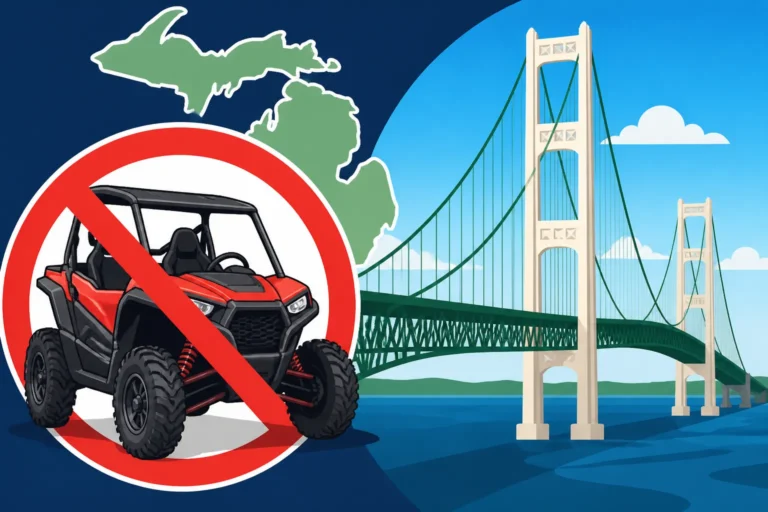
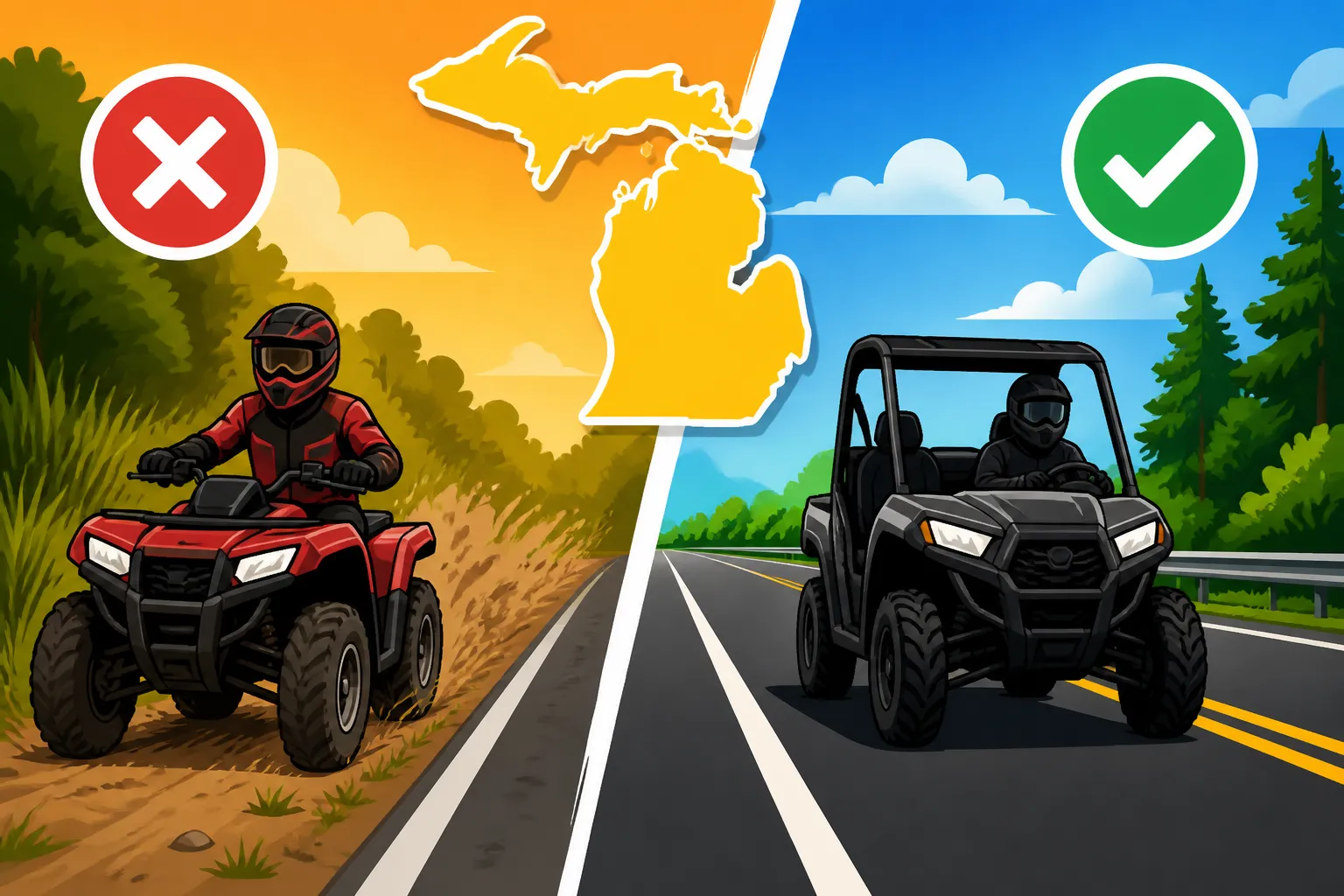
Michigan law generally restricts ORVs from continuous travel on this maintained portion. The rationale is clear: ORVs, by their nature, are designed for off-road conditions. They often have different handling characteristics, lower top speeds, and can be less visible than conventional automobiles. Mixing these vehicles continuously with faster-moving traffic on the main travel lanes significantly increases the risk of accidents. So, unless a specific local ordinance or state law explicitly designates a maintained portion of a road as an ORV route, or you are directly crossing it, you should assume it's off-limits for continuous travel.
The "25 mph Rule" and Maintained Portions
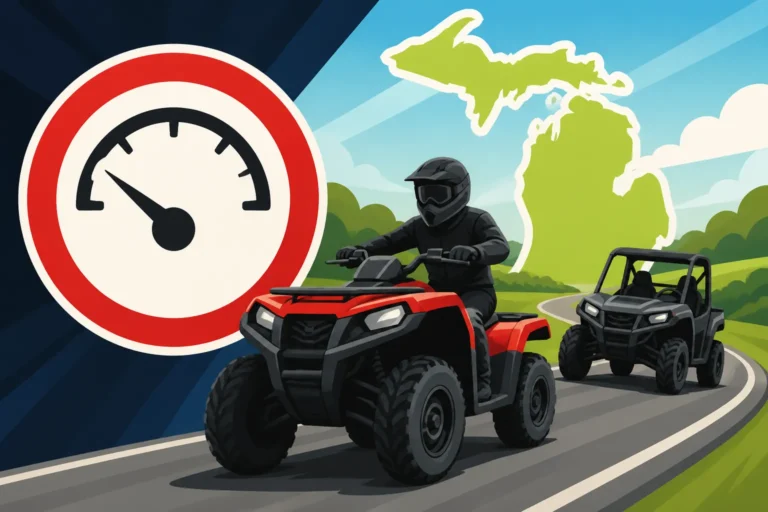
While ORVs are generally prohibited from continuously riding on the maintained portion, there are specific circumstances where they might briefly enter it. The most common is when crossing a road or when a local ordinance specifically opens a maintained portion to ORV traffic, usually for short distances to connect trails or access services. In these instances, a crucial rule often comes into play: the "25 mph rule."
When an ORV is legally allowed to operate on the maintained portion of a road (like for a crossing or on a designated ORV route), Michigan law typically limits the ORV's speed to 25 mph or less, even if the posted speed limit for cars is higher. This lower speed limit is another safety measure, acknowledging the different dynamics of ORVs compared to traditional road vehicles. It's about minimizing the speed differential between your ORV and other traffic to reduce the chance and severity of collisions. Even if you've got a powerful side-by-side with plenty of aftermarket upgrades that give it more capability, like those offered by SuperATV, you still need to respect this speed limit when on a maintained portion. Remember, even if you’re riding through a quaint village where ORVs are allowed, you’ll still need to abide by both the 25 mph ORV speed limit and any lower posted speed limits for the area. For more details on this, take a look at [Michigan's 25 mph Limit on County Roads].
Exploring the "Road Shoulder" for ORV Use in Michigan
The road shoulder is often the ORV rider's safe haven when it comes to road access. It's the area adjacent to the maintained portion, and in many Michigan counties, it's where ORVs are permitted to ride. But just like anything else with ORVs, there are nuances and important safety considerations. It’s not simply "anywhere off the pavement."
Identifying the Road Shoulder: Where Can You Ride?
So, what exactly is the road shoulder? Think of it as the unpaved or less-developed strip of land immediately bordering the "maintained portion" of the road. On a paved road, this is the area of grass, gravel, or loose dirt that starts right where the asphalt or concrete ends. On a gravel road, it’s typically the softer, sometimes grassy or brushy area to the side of the packed, regularly driven track. It's not usually graded as frequently as the main travel lanes, and it might have more bumps, loose material, or vegetation.
The purpose of allowing ORVs on the shoulder in many areas is to provide a designated space for these vehicles to travel without directly interfering with the flow of automotive traffic. This helps enhance safety for everyone on the road. The key is to stay on the shoulder and off the maintained portion. This means if you're riding your ATV or UTV and you hit a stretch where the shoulder completely disappears, you need to understand that your legal path might end there. For a comprehensive list of where this applies, you might want to check out [Michigan Counties That Allow ORVs on Road Shoulders].
Safety Considerations When Riding the Shoulder
While the shoulder offers a safer, more legal option for ORV travel, it's not without its own hazards. Riders need to be incredibly vigilant. Shoulders can hide all sorts of obstacles: deep potholes, drainage culverts, soft sandy patches, rocky sections, mailboxes, and driveway approaches. These can appear suddenly and present significant dangers, especially if you're not paying close attention to the terrain directly in front of you. It's critical to maintain a safe speed that allows you to react to unexpected changes in the surface.
Visibility is another major concern. Even on the shoulder, you're still sharing the roadside with cars traveling at higher speeds. Ensure your ORV is highly visible. This means having your headlights and taillights on, even during daylight hours. Consider adding additional lighting or reflective tape, especially if you plan to be out near dusk or dawn. Aftermarket light bars and auxiliary lights can be purchased from places like SuperATV to significantly boost your visibility. Don't forget, other drivers might not expect to see an ORV on the shoulder, so assume they haven't seen you and ride defensively. Always make sure your equipment meets requirements; [Michigan ORV Lighting Rules During Daylight] offers more guidance.
When the Shoulder Isn't an Option
Unfortunately, not every road in Michigan has a clearly defined or safe shoulder suitable for ORV travel. In some areas, particularly in more urban or residential settings, roads might be bordered directly by ditches, fences, or buildings, leaving no shoulder at all. In other places, the shoulder might be too narrow, too steep, or too unstable to ride safely.
When you encounter a situation where there is no safe or legal shoulder, you must understand that your ORV access on that particular stretch of road might be cut off. This isn't the time to push your luck and venture onto the maintained portion hoping no one sees you. Doing so is not only illegal but also extremely dangerous. It means you'll need to find an alternative route, perhaps using a designated ORV trail or another road that does have a safe shoulder or is specifically opened to ORV traffic. Always prioritize safety and legality over convenience.
Practical Scenarios and Common Misconceptions
It's one thing to read the definitions, and another to apply them on the trail or road. The real world throws all sorts of curveballs, and there are many common misunderstandings that can lead riders astray. Let's tackle some of these practical scenarios to help you navigate Michigan's ORV road rules with greater confidence.
Crossing Roads vs. Riding Along Them
This is probably one of the most frequently misunderstood aspects of Michigan ORV laws. There's a fundamental difference between crossing a maintained road and riding along its maintained portion. Generally, ORVs are allowed to make direct crossings of public roads and highways, even state highways, provided it's done safely, yields to all traffic, and adheres to any specific rules (like stopping before crossing). The goal of a crossing is to get from one side to the other as directly and quickly as possible, minimizing exposure to faster-moving traffic.
However, this permission to cross does not translate into permission for continuous travel along the maintained portion of that same road. Unless a local ordinance specifically allows it, riding your ORV down the center of a paved county road or even a well-traveled gravel road for any significant distance is typically illegal and unsafe. Always remember, a quick dash across to connect two trail sections is very different from cruising down the highway. For specific details on this, refer to [Crossing a State Highway on an ORV in Michigan].
Navigating Local Ordinances: The Patchwork of Rules
As we've touched on, Michigan's ORV road access rules are not uniform across the state. This "patchwork" of county and township ordinances can be incredibly frustrating, but it's the reality. What's allowed in one corner of the state might be prohibited just a few miles away. This means that merely knowing the state-level rules isn't enough; you must also be aware of the local regulations in any area you plan to ride.
Before heading out on a trip to a new area, make it a habit to check the local county sheriff's department website, the county clerk's office, or even the township's website for their specific ORV ordinances. Many counties have maps or lists of roads that are open or closed to ORV traffic. Ignorance of the local law is not a valid defense if you're stopped. It's a small investment of your time that can save you a big headache (and potential fine) later. A good place to start your research is [How to Find Your Michigan County's ORV Ordinance].
Equipment and Preparation for Road Riding
Even when riding legally on a shoulder or an approved road section, your ORV needs to be equipped for the task. While full "street legal" conversions have their own specific requirements, simply being on a shoulder means you're still sharing the general vicinity with other vehicles. Essential safety equipment includes working headlights, taillights, and functional brakes. Many riders also choose to add a rearview mirror (or a set of side mirrors) for better situational awareness, especially useful when merging or pulling over.
Consider a horn for signaling, and always ensure your tires are in good condition for the varied terrain you might encounter, from loose gravel on the shoulder to brief paved crossings. Companies like SuperATV offer a wide range of accessories, from mirrors to full turn signal kits, that can enhance your ORV's road readiness and visibility, even if you're not going for a full street-legal conversion. Remember, being prepared means being safe and responsible.
Road Shoulder vs. Maintained Portion: A Quick Comparison
To help clarify the differences, here's a quick table summarizing the key aspects of the road shoulder versus the maintained portion for ORV use in Michigan:
| Feature | Road Shoulder | Maintained Portion |
|---|---|---|
| Definition | Unpaved/less-maintained area adjacent to main road | Paved or packed gravel section for primary vehicle use |
| Typical ORV Access | Generally permitted (where ordinances allow) | Generally prohibited (except for specific crossings/routes) |
| Speed Limit for ORV | Varies by local ordinance; often 25 mph if allowed | 25 mph when permitted (e.g., crossing, designated route) |
| Surface | Gravel, grass, loose dirt, uneven | Asphalt, concrete, packed gravel, smooth |
| Primary Use | Emergency stopping, pedestrian access, ORV travel | Main vehicular traffic flow |
| Safety Concerns | Hidden obstacles, ditches, less visibility | High-speed traffic, direct vehicle conflict |
Disclaimer
This article is for general informational purposes only and does not constitute professional advice. Laws, prices and regulations vary by location and change over time. Consult a qualified professional for guidance on your specific situation.