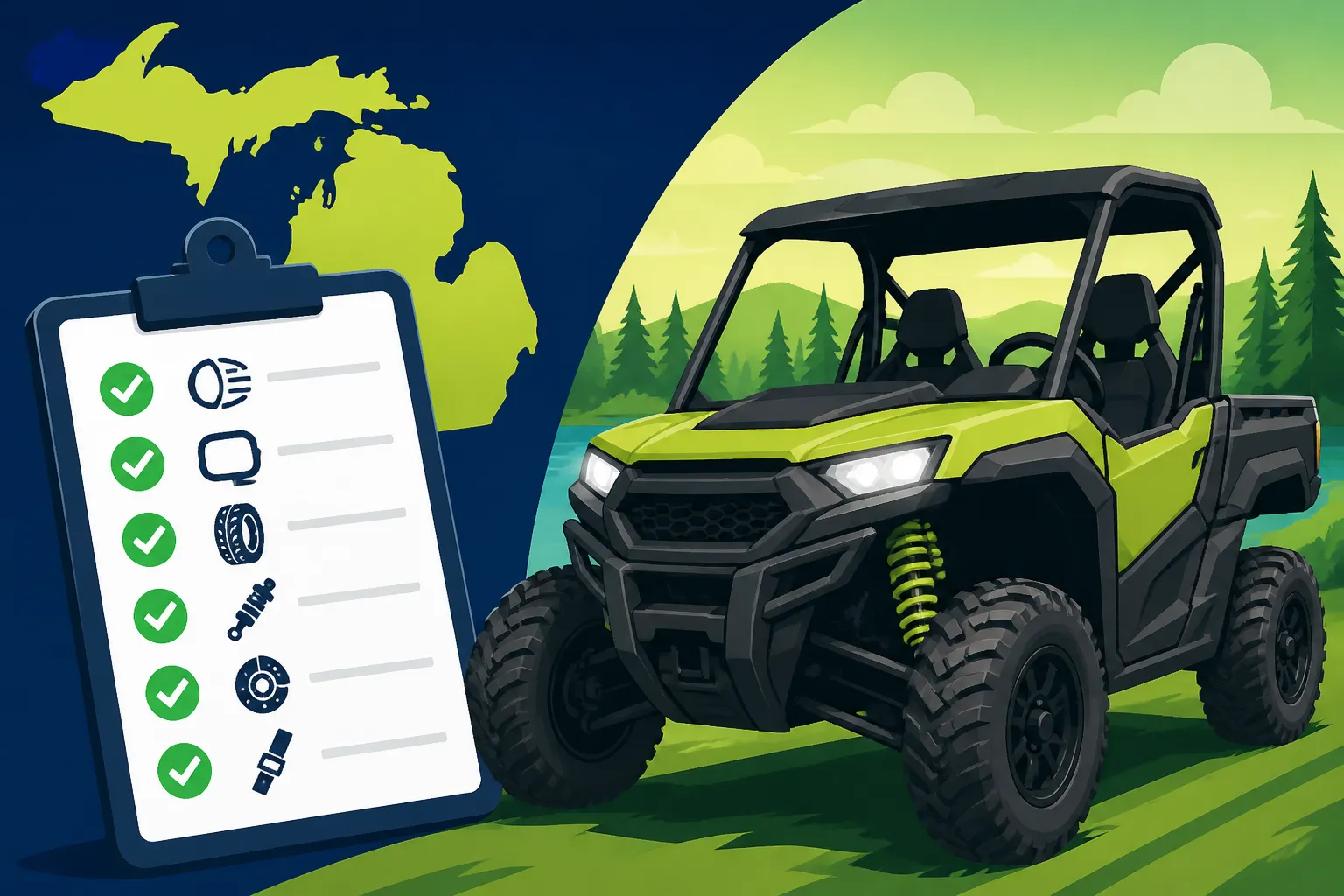
Michigan Street-Legal UTV Inspection Checklist
So, you've decided to take the plunge and make your UTV street legal here in Michigan. It's an exciting prospect, opening up a whole new world of riding, but let's be real – navigating the inspection process can feel like trying to find a needle in a haystack, or maybe like riding a two-wheel drive machine through a deep mud pit. This comprehensive guide is here to untangle the Michigan Secretary of State's street-legal UTV inspection checklist, helping you understand what's required to get your side-by-side ready for county roads.
What Makes a UTV "Street Legal" in Michigan Anyway?
Before you even think about showing up for an inspection, it's crucial to understand the fundamental difference between an off-road vehicle (ORV) and a true street-legal UTV in Michigan. Many folks mistakenly believe that simply adding a few lights makes their side-by-side ready for public roads, and that's a fast track to disappointment – and potentially a ticket. Michigan has specific, stringent requirements that transform your off-road warrior into a vehicle capable of sharing asphalt with cars and trucks.
Understanding Michigan's Assembled Vehicle Rules
In Michigan, making an ORV street legal isn't about registering it as an ORV for road use (that's generally quite limited and specific). Instead, you're essentially reclassifying and re-titling your machine as an "assembled vehicle." This designation is typically used for things like kit cars or custom builds, and it subjects your UTV to a whole new set of rules designed for on-road safety. It's not just about meeting ORV regulations; it's about meeting motor vehicle regulations, which are far more comprehensive. This is the pathway outlined in [Michigan's Assembled Vehicle Route for a UTV].
This conversion process is detailed for a reason: public safety. When your UTV leaves the dirt trails and starts cruising down M-22, it needs to be as predictable and safe as any other vehicle on the road. This means more robust braking, specific lighting, proper tires, and more. It's a significant undertaking, often requiring substantial modifications to your stock UTV, and it's essential to approach it with a clear understanding of the regulatory framework, not just a wish and a prayer. Many aftermarket companies like SuperATV specialize in providing these street-legal conversion kits, simplifying the process for DIY enthusiasts, but the fundamental requirements remain.
The Difference Between an ORV and a Street-Legal UTV
Think of an ORV as a specialized tool for specific environments – dirt, mud, sand, snow. It's designed for maximum performance and durability off the beaten path. A street-legal UTV, on the other hand, is a hybrid. It retains some of its off-road DNA but has been modified and equipped to meet the safety and operational standards of a conventional road vehicle. This isn't just a philosophical difference; it dictates everything from your tires to your insurance. An ORV might be allowed to cross certain county roads under specific conditions, often at low speeds and only on the shoulder, as detailed in [Michigan's 25 mph Limit on County Roads]. A street-legal UTV, however, is intended to function as a regular vehicle on most county and secondary roads, subject to local ordinances.
The key distinction lies in the ability to obtain a standard motor vehicle license plate and title, rather than just an ORV sticker. This transformation involves rigorous inspections and ensuring all components meet Department of Transportation (DOT) standards, not just basic ORV trail requirements. It's about being able to drive to the grocery store, not just from your camp to the trailhead. Without successfully navigating this conversion, your UTV remains an ORV, with limited and often frustrating road access.
The Michigan Secretary of State Inspection: What to Expect
The actual inspection at the Michigan Secretary of State is the culmination of all your hard work and preparation. It's not just a quick glance; the agent will go through a detailed checklist to ensure your UTV meets all the requirements to be titled and registered as an assembled vehicle. Walking in unprepared is a common mistake that leads to frustration and wasted trips, so understanding the process beforehand is critical. [Michigan Street-Legal UTV Inspection at the Secretary of State] is not a process to take lightly.
Pre-Inspection Preparations: Your DIY Checklist
Before you even book an appointment, you should have your own pre-inspection checklist that mirrors what the state will be looking for. This means going over your UTV with a fine-tooth comb. Every component must be DOT compliant where required. This includes:
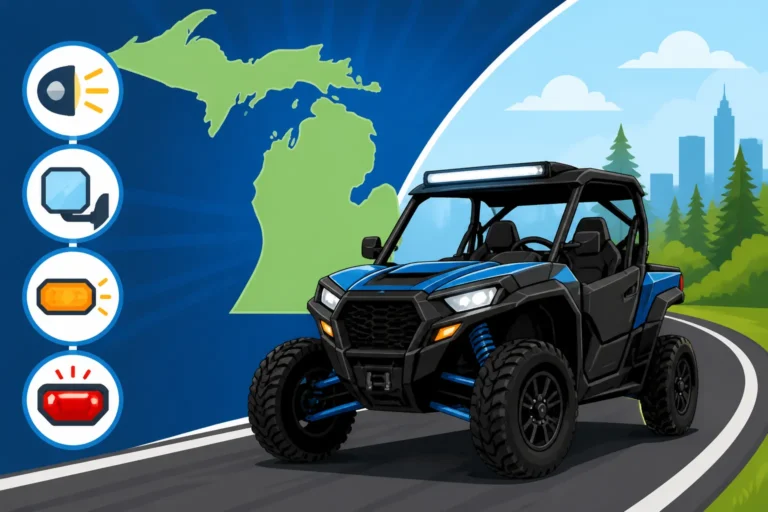
- Headlights: Must be DOT-approved, white, and capable of high and low beams.
- Taillights: Must be DOT-approved, red, and visible from 500 feet.
- Brake Lights: Red, activating when the brake pedal is pressed, and visible from 500 feet.
- Turn Signals: Amber or red, front and rear, clearly visible, and operating correctly (left, right, and hazard). Many riders opt for a complete lighting kit, often from brands like SuperATV, to ensure all these components are properly integrated.
- Horn: An audible warning device capable of being heard from at least 200 feet away.
- Windshield: Made of safety glass (not plexiglass or Lexan) and equipped with a functional windshield wiper.
- Mirrors: At least two mirrors, one on the left side and one on the right side, providing a clear view of the rear. A single rearview mirror is also usually acceptable if it provides sufficient visibility.
- Tires: All tires must be DOT-approved. This is non-negotiable. Your knobby off-road tires, while great for mud, are usually not DOT rated. [DOT Tires on a Street-Legal Side-by-Side] explains why this is so important.
- Seat Belts: All seating positions must have functional seat belts.
- Fenders/Mudguards: Must cover the full width of the tire to prevent debris from being thrown up.
- Brakes: Must be in good working order, capable of stopping the vehicle safely.
- Steering: Must be tight and responsive, with no excessive play.
- Exhaust: Must have a muffler and meet noise requirements, preventing excessive noise.
- Speedometer: A functioning speedometer is required to ensure you can observe posted speed limits.
- VIN Plate: The Vehicle Identification Number (VIN) must be clearly visible and match your documentation.
It's a good idea to test everything thoroughly. Drive your UTV around your private property or a closed course to ensure all the lights work, the horn honks, and the brakes grab. Don't assume anything is working just because you installed it. Check wiring connections, bulb functionality, and fuse integrity.
The Actual Inspection: What the Agent Looks For
When you arrive for your scheduled "assembled vehicle" inspection, a Secretary of State agent, or sometimes a specially trained law enforcement officer, will meticulously go through a checklist. They're not looking to fail you, but they are there to ensure compliance with Michigan vehicle code. They will physically check each item on the list above, testing the lights, listening to the horn, and scrutinizing the windshield and tires for DOT markings. They’ll also verify that the VIN on the machine matches the paperwork you provide. They might even check for proper [Turn Signals and Hazard Lights on a Street-Legal Build] functionality, ensuring they blink at the correct rate.
The inspector will also be assessing the overall build quality and safety of your UTV. If anything looks jerry-rigged or unsafe, they have the discretion to deny the street-legal designation. This isn't just a rubber stamp process; it's a safety check. They'll also confirm that your UTV is stable and roadworthy. Think of it as a mini-vehicle safety inspection. If your UTV has any significant fluid leaks, exposed wiring, or structural compromises, it will likely be rejected until those issues are addressed.
Documentation You Must Bring
Beyond the physical inspection of your UTV, you absolutely must have the correct paperwork in order. This is where many people get tripped up. You'll need:
- Original Certificate of Origin or Title: For the UTV itself. If you built it from a kit, you'll need the manufacturer's statement of origin for the frame. If it's an existing ORV, you'll bring its ORV title.
- Bills of Sale: For all major components used in the conversion (e.g., engine, frame if separate, major kits). This proves legitimate ownership of the parts that went into your assembled vehicle.
- Proof of Identity: Your Michigan driver's license or state ID.
- Proof of Insurance: You will need to show proof of no-fault insurance, as this is now considered a motor vehicle. [Insurance a Michigan Street-Legal UTV Needs] is a vital consideration here.
- Form TR-54, Application for Michigan Vehicle Title: This is the standard title application form where you will indicate it's an assembled vehicle.
- Form TR-11B, Certification of Assembled Vehicle: This form is where you detail the major components and affirm that the vehicle meets Michigan requirements.
- Odometer/Hour Meter Reading: Be prepared to provide the current reading of your UTV's odometer or hour meter.
Gathering all this documentation before your appointment is crucial. Missing even one piece of paper can lead to a delay and another trip, which nobody wants. Double-check all forms for accuracy and completeness.
| Requirement | Description | Inspector Check |
|---|---|---|
| Headlights | DOT-approved, white, high/low beams | Function, color, beam, DOT stamp |
| Taillights/Brake | DOT-approved, red, visible 500ft, brake activated | Function, color, visibility, DOT stamp |
| Turn Signals | Amber/red, front/rear, visible, operational, hazard lights | Function, color, visibility |
| Horn | Audible, heard 200ft away | Function |
| Windshield | Safety glass, wiper | Material, function of wiper, visibility |
| Mirrors | Left and right side, or single rearview for adequate visibility | Placement, visibility |
| Tires | All DOT-approved | DOT stamp presence, condition |
| Seat Belts | For all seating positions | Presence, function, condition |
| Fenders/Mudguards | Covers tire width to prevent debris spray | Presence, coverage |
| Brakes | Functional and safe | Pedal feel, visual inspection |
| Steering | Tight, responsive, no excessive play | Play in steering wheel, feel |
| Exhaust System | Muffler, meets noise requirements | Presence of muffler, excessive noise |
| Speedometer | Functional | Function |
| VIN Plate | Clearly visible, matches documents | Location, legibility, match to paperwork |
| No Fluid Leaks | Engine, transmission, brake fluids | Visual inspection |
| Proper Wiring | No exposed or frayed wires | Visual inspection |
Beyond the Checklist: Maintaining Road Legality
Getting your UTV titled and plated is a huge step, but it's not the end of the journey. Maintaining its street-legal status and operating it responsibly on Michigan roads requires ongoing attention to both your machine and your driving habits. Just like any other vehicle, a street-legal UTV is subject to regular maintenance, specific laws, and driver accountability.
Ongoing Maintenance and Compliance
Once your UTV is street legal, you are responsible for keeping it in that condition. This means regular checks of all the components that were part of your inspection. Headlights can burn out, turn signals can get damaged, and tires can wear down. If you swap out components for off-road use, remember that they must be re-converted and re-checked to be road legal before you hit the pavement again. For instance, if you decide to put aggressive non-DOT tires back on for a mudding trip, you’ll need to reinstall your DOT-approved tires before driving on public roads. It's a cyclical process for many riders who enjoy both road and trail.
Furthermore, ensure your insurance remains active and appropriate for a street-legal vehicle. [Does Motorcycle Insurance Cover a Street-Legal UTV?] might be a question you ask, but often a specific policy for a street-legal UTV, covering no-fault liability, is required. Don't let your coverage lapse, as operating any vehicle without proper insurance in Michigan can lead to severe penalties. Keeping your registration up-to-date and renewing your plates annually are also non-negotiable aspects of maintaining compliance.
Driver Responsibilities on Public Roads
Operating a street-legal UTV on Michigan roads comes with the same responsibilities as driving a car or truck. This includes obeying all traffic laws – speed limits, stop signs, traffic signals, and right-of-way rules. You must have a valid driver's license, as specified in [Driver's License Rules for Michigan ORV Road Riding]. While some ORV trail rules might differ, on the road, you are part of the regular traffic flow. This means being predictable, using your signals, and being aware of other vehicles, which might not be expecting a UTV.
Michigan's helmet law for street-legal UTVs is often a point of confusion. Generally, if your UTV meets the definition of an "assembled vehicle" and has a windshield and seat belts, adult drivers and passengers are typically not required to wear helmets, similar to a car. However, there are nuances, and [Michigan Helmet Exemptions for Street-Legal Vehicles] details these specific conditions. It's always best to err on the side of caution or consult the latest regulations, as safety is paramount. And remember, even if not legally required, a helmet and eye protection offer significant safety benefits.
Common Pitfalls and How to Avoid Them
Converting a UTV to be street legal is a project that comes with its own set of challenges. Understanding these common pitfalls can help you navigate the process more smoothly, saving you time, money, and a lot of headaches. Many riders jump into the conversion without fully grasping the scope of work or the specific requirements, leading to frustration.
Why Conversions Get Rejected
The most frequent reasons for a UTV street-legal conversion being rejected at the Secretary of State are typically related to non-DOT compliant parts or incomplete documentation. Forgetting a bill of sale for a major component, having a cracked windshield made of non-safety glass, or sporting off-road-only tires are common culprits. For example, a common issue is having a [Plexiglass Windshields and Why Michigan Rejects Them] instead of true automotive safety glass. The inspector isn't looking to be difficult; they are simply following the law that ensures the vehicle is safe for public roads.
Another reason for rejection can be the quality of the installation. If wires are exposed, lights are not securely mounted, or structural modifications appear weak or poorly executed, the agent might deem the vehicle unsafe. Even if you sourced high-quality parts from a vendor like SuperATV, a shoddy installation can still lead to a failed inspection. Take your time, do the job right, and consider professional help if you're unsure about any aspect of the build. It’s better to spend a little more upfront than to be turned away multiple times.
Cost and Time: Setting Realistic Expectations
Converting a UTV to be street legal is not a cheap or quick endeavor. Beyond the initial purchase price of your UTV, you'll be investing in new DOT-compliant tires, safety glass windshields, turn signal kits, mirrors, a horn, and potentially other modifications to meet specific standards. These parts alone can add up significantly. For instance, a quality [Safety Glass Windshield Cost for a Side-by-Side] can be a substantial part of the budget. Don't forget the cost of your time for research, purchasing, and installation.
The time commitment is also considerable. Researching parts, ordering them, installing them, and then navigating the Secretary of State appointment system can take weeks or even months. Inspections might require multiple visits if items are missed. Be patient and plan accordingly. Don't expect to decide on a Monday that you want your UTV street legal and be cruising down the road by Friday. Set realistic expectations for both the financial outlay and the timeline involved, and you'll find the process far less stressful. And always remember to pay the [Michigan Assembled Vehicle Title Cost] when you finally get to that point.
Disclaimer
This article is for general informational purposes only and does not constitute professional advice. Laws, prices and regulations vary by location and change over time. Consult a qualified professional for guidance on your specific situation.