Safety Glass Windshield Cost for a Side-by-Side
Thinking about making your trusty side-by-side street legal in Michigan can feel like navigating a maze, and one of the biggest roadblocks folks run into is figuring out the deal with the windshield. Specifically, the requirement for safety glass can throw a real wrench in the budget and planning, leaving many wondering what that's actually going to set them back. This guide is here to help you understand why safety glass is necessary, what factors play into its cost, and what you can expect when upgrading your UTV for Michigan's roads.
Why Safety Glass Is a Non-Negotiable for Michigan Street-Legal UTVs
When you start down the path of making your UTV street-legal in Michigan, you'll quickly discover that the state isn't messing around with certain safety features. Unlike some off-road scenarios where a simple polycarbonate or acrylic windshield might suffice, hitting the public roads with your side-by-side means stepping up to automotive-grade standards. And that absolutely includes safety glass for your windshield.
This isn't just an arbitrary rule; it's about occupant safety in the event of an impact or accident. Regular acrylic or even some polycarbonate materials, while incredibly tough against impacts from branches or rocks on the trail, can splinter, shatter, or distort in a way that poses a greater risk to occupants during a collision on pavement. Automotive safety glass, specifically laminated safety glass, is designed to crack in a way that holds together, preventing shards from flying into the cabin and reducing the risk of serious injury. It's a critical distinction that often catches new street-legal UTV owners by surprise, especially if they've already invested in a non-safety glass option.
The frustration is understandable. You might already have a perfectly good windshield on your UTV that's been serving you well on the trails. But when it comes to shared public roads, Michigan's Vehicle Code treats your street-legal UTV more like a car or truck, and that means it has to meet similar construction and safety standards. This is where the cost implications really start to sink in, as safety glass is inherently a more expensive material and often requires a more robust mounting system. You simply cannot cut corners here if your goal is to legally cruise down Michigan's county roads. This strict requirement is part of Michigan’s guidelines outlined in [Safety Glass, Mirrors and Horns: Michigan's Street-Legal List].
The Difference Between Off-Road and Road-Legal Windshields
Let's break down why your existing off-road windshield likely won't cut it. Most off-road UTVs come from the factory, or are equipped by owners, with windshields made from polycarbonate or acrylic. These materials are fantastic for protecting against trail debris – branches, mud, roost from other riders. They're lightweight, flexible, and highly impact-resistant against blunt forces.
However, their optical clarity can sometimes be an issue, and they are prone to scratching from wipers or abrasive cleaning. More importantly, they don't meet the specific shatter-proof and structural integrity standards required for vehicles operating at road speeds. Laminated safety glass, on the other hand, consists of two layers of glass with a clear plastic interlayer. When struck, the glass may crack, but the plastic interlayer holds the fragments in place, maintaining visibility (albeit compromised) and preventing the glass from turning into dangerous projectiles. This is the same type of glass you'll find in the front windshield of almost any passenger vehicle. The difference is stark, and while it's a financial pill to swallow, it's a crucial one for safety and legal compliance.
The Michigan Mandate and Your Wallet
Understanding that safety glass isn't optional for your Michigan street-legal side-by-side helps frame the budget discussion. The state's assembled vehicle inspection, which is a necessary step in the [Michigan's Assembled Vehicle Route for a UTV], will specifically check for DOT-approved safety glass. If your windshield doesn't have the proper marking, usually etched into a corner of the glass, your machine won't pass the inspection. This means any money spent on a non-compliant windshield is essentially wasted for the purpose of making your UTV street-legal.
The cost implication starts here: you're not just buying a windshield; you're buying a specific type of windshield. This often means looking at aftermarket options designed specifically to meet these standards. While a basic off-road polycarbonate windshield might run you a few hundred dollars, a true safety glass windshield designed for road use will typically be in a higher price bracket, reflecting the material cost, manufacturing process, and certification. It's an investment, not just an accessory, and it's important to budget for it upfront.
Breaking Down the Cost: Factors Influencing Safety Glass Windshield Prices
Alright, so we've established that safety glass is a must-have. Now, let's talk about what actually drives the price tag for these essential upgrades. It's rarely a one-size-fits-all cost, as several elements come into play, from the make and model of your side-by-side to the features you desire and even who does the installation.
UTV Make and Model Specifics
The first and often biggest factor is your specific UTV's make and model. Just like with cars, a windshield for a Polaris RZR might have a different price point than one for a Can-Am Defender or a Honda Pioneer. This is due to variations in size, curvature, and mounting points. Custom shapes or larger windshields generally command a higher price simply because they require more material and more complex manufacturing processes. If you own a less common or older model, sometimes the availability of off-the-shelf safety glass options might be limited, potentially leading to higher costs if a specialized fit is needed. Mainstream models often benefit from higher production volumes, which can sometimes translate to slightly more competitive pricing for aftermarket accessories. You'll find a lot of options out there, from manufacturers specifically catering to popular models.
Brand and Quality Variations
Just like with any product, the brand behind the safety glass windshield can influence its cost. Established brands with a reputation for quality, durability, and precise fitment might have a higher price tag than lesser-known manufacturers. These brands often invest heavily in R&D, testing, and use premium components for frames and seals, which contributes to a superior product. For example, a company like SuperATV offers a wide range of UTV accessories, including safety glass windshields, that are known for their robust construction and thoughtful features.
The quality of the glass itself, the robustness of the frame (often powder-coated aluminum or steel), and the sealing mechanisms (like automotive-grade gaskets) all factor into the overall cost. A higher-quality unit will often provide better sealing against the elements, less vibration, and a longer lifespan, potentially justifying a higher initial outlay. It's often a balance between budget and the desire for a product that will last and perform flawlessly on the road.
Features and Design Choices
Beyond the basic safety glass, many aftermarket windshields offer additional features that can push the price up. These might include:
- Vented Windshields: Designed with adjustable vents or louvers to allow airflow into the cab, which is incredibly useful for defogging or cooling on warmer days. This adds complexity and parts to the design.
- Flip-Up or Tilting Windshields: These allow you to open the windshield for maximum airflow, or simply to clean the inside more easily. The hinges, latches, and gas struts required for such functionality add significantly to the manufacturing cost.
- Wiper and Washer Systems: While some safety glass windshields come "wiper ready," having an integrated electric wiper and washer system will definitely add to the price. For Michigan road legality, an operational wiper system is often expected or required, so this is a functional upgrade you'll want to consider from the start.
Each of these features enhances comfort and utility but comes at an additional cost. When comparing options, consider what truly matters for your riding style and the specific demands of Michigan's weather and road conditions. Sometimes, a simpler, fixed safety glass windshield might be the most budget-friendly compliant option, and you can always add a manual wiper later if needed.
Here’s a quick overview of how different windshield materials stack up for UTVs, focusing on legality for street use in Michigan:
| Feature/Material | Polycarbonate | Acrylic | Laminated Safety Glass |
|---|---|---|---|
| Impact Strength | Excellent (nearly unbreakable) | Good (can crack) | Good (cracks but holds together) |
| Scratch Resistance | Low (scratches easily) | Moderate | High (automotive-grade) |
| Optical Clarity | Good to Excellent (can distort over time) | Good | Excellent |
| Cost Range | More Budget-Friendly | Budget-Friendly | Higher Investment |
| Michigan Street Legal | No (unless specifically DOT-approved as safety glass) | No | Yes (DOT-approved essential) |
| Maintenance | Requires careful cleaning | Careful cleaning | Standard automotive cleaning |
| Typical Use | Off-road, racing | Light off-road | Road legal, heavy-duty off-road |
This table clearly illustrates why laminated safety glass, despite its higher cost, is the only viable option for street legality in Michigan.
DIY vs. Professional Installation: Weighing the Costs and Benefits
Once you've picked out the perfect safety glass windshield for your UTV, the next big question mark on the cost front is who's going to install it. This is where you have a choice: roll up your sleeves and do it yourself, or hand it over to the pros. Both options come with their own set of financial implications and potential headaches.
The DIY Route: Saving Labor, Investing Time (and Patience)
Opting for a do-it-yourself installation can seem like the most budget-friendly choice, as you're cutting out the labor costs entirely. Many UTV accessory manufacturers, including popular brands like SuperATV, design their windshields with DIY installation in mind, often providing detailed instructions and all necessary hardware. For someone with a decent set of tools, some mechanical aptitude, and a good amount of patience, this is a completely achievable task.
However, the "cost" here isn't just financial. It's also measured in time and potential frustration. Installing a large, heavy safety glass windshield – especially one with complex features like a flip-up mechanism or a wiper system – can be tricky. You'll need extra hands to maneuver the glass without damaging it or your UTV. Proper alignment is crucial for a good seal against the elements and to prevent rattling or whistling at speed. Misaligning or improperly sealing a windshield can lead to water leaks, excessive wind noise, or even compromise its structural integrity. Furthermore, if you encounter any issues or break a component during the installation, the cost of replacement parts or having a professional fix your mistake could quickly erase any initial savings. Think about watching those how-to videos ahead of time, reading through the instructions multiple times, and making sure you have all the specific tools required before you even unbox the windshield. This proactive approach can save you a lot of grief. For a smoother install, check out guides on [Wiring Turn Signals on a Polaris Ranger] if you're also adding electrical components.
Professional Installation: Paying for Expertise and Peace of Mind
On the other hand, hiring a professional shop to install your safety glass windshield offers a significant advantage: peace of mind. These shops, whether they specialize in UTV customization or general auto glass, have the experience, specialized tools, and multiple sets of skilled hands to get the job done right the first time. They understand the nuances of proper sealing, alignment, and wiring for any integrated features.
The cost of professional installation will vary widely based on your location, the complexity of the windshield (a simple fixed panel versus a full flip-up with a wiper), and the hourly labor rates of the shop. You can expect to pay anywhere from a couple of hours to half a day's worth of labor, potentially more for very intricate setups. While this is an added expense on top of the windshield itself, it can be a wise investment. A professionally installed windshield is less likely to leak, rattle, or cause issues down the road, and many shops offer a warranty on their workmanship. This is especially valuable if you're concerned about passing the rigorous [Michigan Street-Legal UTV Inspection at the Secretary of State]. For more complex builds that include a variety of electrical components, having a professional ensure everything is up to code can be invaluable, especially when looking at the entire [Michigan's Assembled Vehicle Route for a UTV]. Before committing, always get a clear quote that breaks down parts and labor.
Beyond the Windshield: Other Costs for Michigan Street-Legal UTVs
It's easy to get laser-focused on the windshield, but it's important to remember that making your side-by-side fully street legal in Michigan is a multi-faceted process. The cost of your safety glass windshield, while significant, is just one piece of a larger financial puzzle. Understanding these other requirements and their associated costs will help you budget more realistically for your entire conversion project.
Required Lighting and Signals
Michigan's rules for street-legal UTVs demand a comprehensive lighting package that goes far beyond what most machines have stock. You'll need:
- Headlights: Low and high beam.
- Taillights: Standard tail and brake lights.
- Turn Signals: Both front and rear. This often means installing a complete kit that includes a turn signal switch, flasher, and wiring. This can be a substantial cost if your UTV isn't already equipped, and the components and complexity vary greatly. For example, installing a [Street-Legal Light Kit for a Can-Am Defender] might differ from another brand.
- Hazard Lights: Often integrated with the turn signal system.
- License Plate Light: To illuminate your [Michigan Plate for an Assembled Vehicle UTV].
These lighting components, along with the necessary wiring and switches, can add a notable amount to your overall budget. While many universal kits are available, ensure they are DOT compliant and designed to withstand the elements.
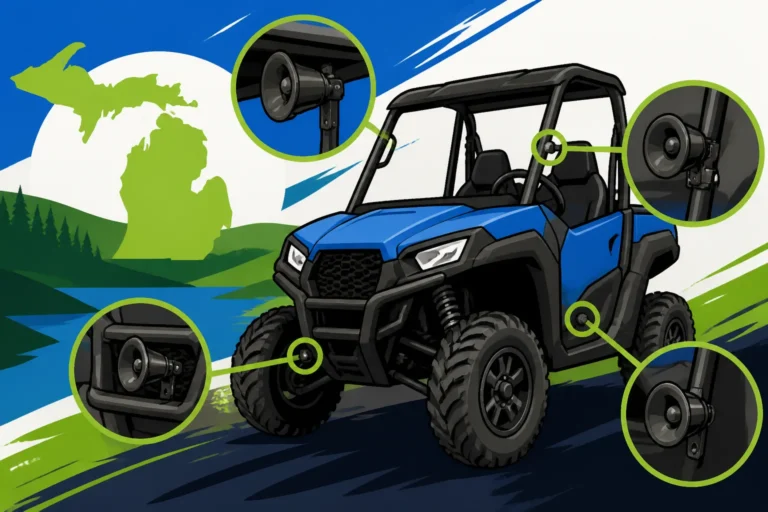
Mirrors and Horn
No street-legal vehicle is complete without mirrors and a horn. For your UTV, this means:
- Side Mirrors: At least one, typically two, mounted on the sides of the roll cage to give you clear rearward visibility. These need to be robust enough to handle road vibrations and potentially some trail abuse if you still plan to hit the dirt.
- Rearview Mirror: A center-mounted rearview mirror is also usually required.
- Horn: An audible warning device is mandatory. This is often a relatively inexpensive component, but you'll need to consider [Where to Mount a Horn on a Side-by-Side] and how to wire it into your electrical system.
These items are often bundled into "street-legal kits" that aim to cover many of the basic requirements beyond the windshield. However, ensure that any kit you purchase specifically meets Michigan's standards and that the quality is sufficient for reliable road use.
Tires, Fenders, and Other Miscellaneous Items
Depending on your UTV's current setup, you might also need to consider:
- DOT-Approved Tires: While not always explicitly required for all road use scenarios for ORVs, if you're building a dedicated street-legal machine, DOT-rated tires are a smart and often expected upgrade. They are designed for pavement wear and stability at higher speeds, unlike aggressive mud tires.
- Fenders/Mud Flaps: To prevent road spray from flying up onto other vehicles or your own windshield.
- Speedometer: A functional speedometer is essential for maintaining legal road speeds. Many UTVs have one, but ensure it's accurate.
- Seatbelts: If your UTV isn't already equipped with automotive-style three-point seatbelts, you might need to upgrade them, as some assembled vehicle inspections may look for this.
- Insurance: Don't forget the added cost of [Insurance a Michigan Street-Legal UTV Needs]. Road use typically requires different coverage than off-road riding.
Each of these components adds to the total cost of ownership and conversion. It's crucial to approach the project with a holistic view, researching all the requirements for [Michigan's Assembled Vehicle Route for a UTV] and budgeting for each step. While the safety glass windshield might be one of the more expensive single items, it's just one part of ensuring your side-by-side is truly ready and legal for Michigan's diverse roads.
Disclaimer
This article is for general informational purposes only and does not constitute professional advice. Laws, prices and regulations vary by location and change over time. Consult a qualified professional for guidance on your specific situation.