Cheapest Way to Make a UTV Street Legal in Michigan
Oh, the dream of cruising your UTV down a Michigan county road, heading to the gas station, or just exploring beyond the confines of the trail system! It's a fantastic idea, but then the reality sets in: converting your off-road machine to be street legal often comes with a sticker shock. Many riders get frustrated, thinking it's an expensive, complicated process designed to drain their wallets. This guide is all about cutting through that noise and showing you the most budget-friendly ways to make your UTV street legal in Michigan, focusing on the absolute essentials to get you on the blacktop without breaking the bank.
Understanding Michigan's Minimum Street-Legal Requirements
Before you even start thinking about parts, you need to understand precisely what Michigan demands for a UTV to be considered street-legal. This isn't about what's "nice to have" or what some aftermarket company tries to sell you as a premium package; it's about the bare minimum set by law. If you over-engineer or add components you don't strictly need, you're immediately adding to your costs. The key here is adherence, not extravagance. Michigan treats these conversions as "assembled vehicles," which means they have a specific checklist you must meet.
Essential Lighting and Signaling Components
Your UTV needs to be visible and capable of communicating your intentions to other drivers, just like any other vehicle on the road. This is non-negotiable for safety and legal compliance.
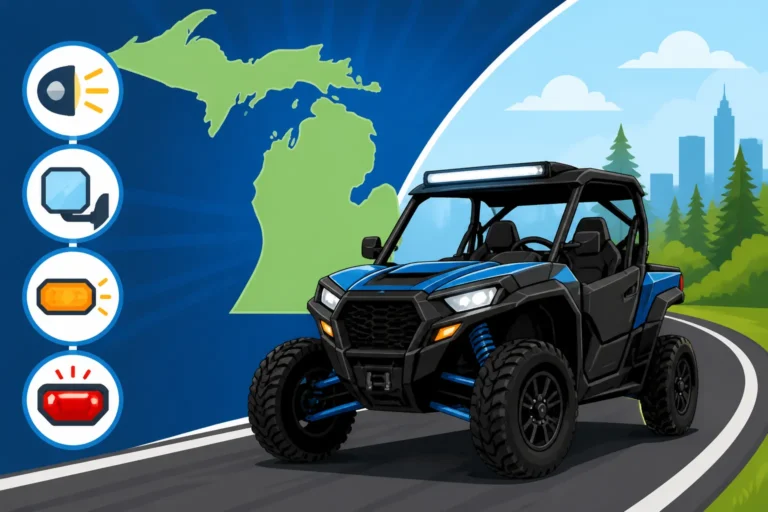
First up, you'll need working headlights and taillights. Most UTVs come with these from the factory, but you need to ensure they're functional and meet brightness requirements. If your factory lights are busted or dim, look for affordable LED replacements. Often, simple, universal LED pods can provide ample forward illumination without costing an arm and a leg. Next, brake lights are crucial; again, often factory standard, but confirm they activate reliably.
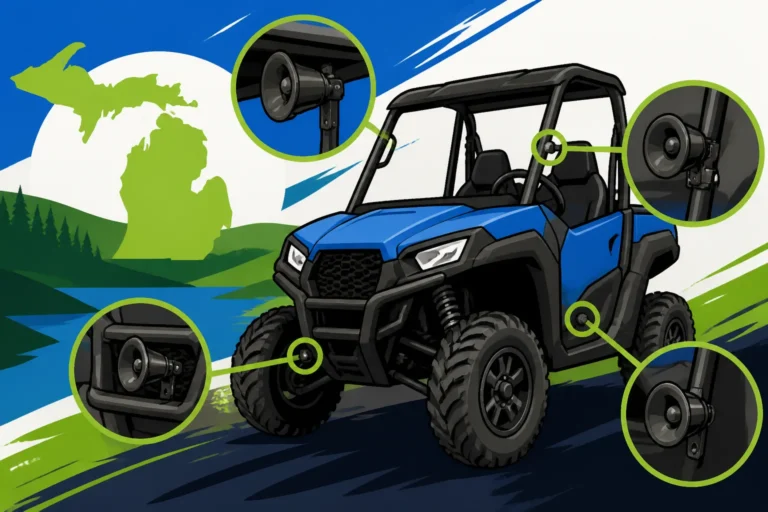
Now, for the additions: turn signals. This is where many off-road machines fall short. You'll need amber signals in the front and rear, wired to a switch that indicates your turns. Basic, universal motorcycle-style LED turn signals are incredibly inexpensive and can be mounted with simple brackets. You don't need fancy sequential signals or integrated mirror signals if you're on a budget. A simple two-way toggle switch for left/right is perfectly fine. Finally, a horn is required. You can find tiny, electric horns designed for motorcycles or scooters for very little money. They don't need to be loud enough to wake the dead; they just need to produce an audible warning.
Mirrors, Windshield, and Wiper Requirements
Visibility is paramount on public roads, and Michigan mandates specific equipment to ensure you can see and be seen. This is where some costs can unexpectedly climb if you're not careful.
You'll need at least one rearview mirror mounted to give the driver a clear view of the road behind them. For the absolute cheapest route, a single clamp-on convex mirror that mounts to your roll cage will usually suffice. Many riders opt for a center rearview mirror, but a single driver-side mirror is often the legal minimum. Some regulations might ask for both side mirrors, so always double-check the latest rules with the Secretary of State or a local law enforcement agency that handles ORV enforcement. For components like DOT-approved mirrors or a basic horn, you might find budget-friendly options from online retailers or specialized aftermarket suppliers like SuperATV.
The windshield is often the trickiest and most expensive component. Michigan explicitly requires a windshield made of safety glass. This is a crucial detail that often catches people off guard. Plexiglass or polycarbonate (Lexan), while durable for off-roading, is generally not considered safety glass for street-legal purposes and will cause you to fail inspection. [Plexiglass Windshields and Why Michigan Rejects Them] goes into more detail on why. Sourcing a safety glass windshield and having it properly installed can be a significant expense. For the absolute cheapest option, some resourceful DIYers have adapted universal automotive safety glass panes into custom frames, but this requires skill and patience. Manual windshield wipers are also required if you have a windshield, and a simple hand-operated wiper kit is far cheaper than an electric one.
Tires, Speedometer, and Other Necessities
Beyond visibility and communication, your UTV needs to be road-ready in other critical ways.
Your tires must be DOT (Department of Transportation) approved. This means they have a "DOT" stamp on the sidewall, indicating they meet specific safety standards for highway use. Many aggressive off-road tires, while great for mud, are not DOT rated and will need to be replaced. Shop around for entry-level DOT-approved tires. Sometimes, you can find lightly used sets on local marketplaces. Be mindful of tire size and fitment, as buying the wrong size can lead to more expense.
A speedometer is also required. Most modern UTVs already have one integrated into the dashboard display. If yours doesn't, or if it's broken, a simple aftermarket GPS speedometer can be a very affordable solution. These often just plug into a 12V outlet and require minimal installation. You'll also need working headlights, taillights, and brake lights, which we touched on earlier, but also a license plate light to illuminate your plate after dark. Simple LED bolt lights or a small strip light can handle this cheaply. While your UTV likely has seatbelts, ensure they are functional and in good condition. Michigan generally doesn't specify a particular type beyond "safety belts," so your factory ones should be fine.
Finally, remember that your UTV will need a license plate issued by the Secretary of State, which requires a proper mounting location.
DIY vs. Aftermarket Kits: Where the Savings Lie
When it comes to putting all these parts together, you essentially have two paths: building it yourself from individual components or buying an all-inclusive kit. The choice here is absolutely critical for keeping costs down.
The Budget-Friendly DIY Approach
If your primary goal is the cheapest way to make your UTV street legal, the do-it-yourself (DIY) approach is almost always the victor. This means sourcing each required component individually, often from different suppliers, and then tackling the installation yourself.
The biggest advantage of DIY is control over cost. You can actively seek out the most affordable versions of each part. For example, instead of a premium, plug-and-play turn signal kit, you can buy universal LED turn signals, some wiring, a toggle switch, and a flasher relay separately. This often involves more wiring and fabrication work, but if you have basic mechanical and electrical skills (or are willing to learn), the monetary savings can be substantial. You might find a generic horn for a few dollars, or simple clamp-on side mirrors for less than twenty. When it comes to sourcing individual parts, companies like SuperATV offer a wide range of components from turn signal kits to basic rearview mirrors that can help keep your budget in check. They might not be the absolute cheapest everywhere, but they offer a good balance of availability and competitive pricing for various parts.
Another area where DIY shines is adapting existing components. Perhaps your UTV's stock taillights can be modified to also function as turn signals with the right wiring and a multi-function LED bulb, saving you from buying separate units. The windshield, as discussed, is a major cost. A DIY approach might involve finding a salvaged safety glass pane and fabricating a simple frame for it, though this is a significant undertaking. The trade-off for these savings is time, effort, and potentially a steeper learning curve if you're not experienced with vehicle modifications. However, the satisfaction of doing it yourself and saving hundreds of dollars is a huge payoff.
Understanding Aftermarket Kit Costs
Aftermarket kits, while convenient, are generally not the cheapest option. These kits are designed for ease of installation, often being plug-and-play or having very detailed instructions, which adds to their price. They bundle many of the required components—turn signals, horn, mirrors, wiring harnesses, and switches—into one package.
The primary benefit of a kit is time saving and peace of mind. You get all (or most) of the parts designed to work together, often with vehicle-specific fitments that simplify installation. This is great for those who are less mechanically inclined or simply don't have the time to hunt for individual components and figure out the wiring from scratch. However, that convenience comes at a premium. A street-legal kit might cost several hundred dollars, and that's often before you even consider the safety glass windshield, which is rarely included in basic kits due to shipping complexities and vehicle-specific sizing.
If you opt for a kit, even as a "cheaper" path, be sure to read the fine print. Does it include DOT-approved mirrors? Does it include a horn? What about a license plate bracket and light? Many kits are comprehensive for signaling, but not for all Michigan requirements. You'll almost certainly still need to budget separately for the safety glass windshield and potentially DOT tires. While a SuperATV kit might simplify the electrical work with a pre-made harness, you're paying for that convenience. For the absolute cheapest way, breaking down the kit into individual components and buying them à la carte will save you money, even if it adds to your labor.
Smart Shopping for Components: Where to Really Save Money
This is where the rubber meets the road (literally, if you're shopping for tires!). To truly go the cheapest route, you need to be a savvy shopper, looking beyond the dedicated UTV parts catalog for alternatives that still meet the legal standards.
Bargain Hunting for Lights, Horns, and Mirrors
Your lighting and signaling are essential but don't need to be fancy. Think basic.
For turn signals, instead of buying an expensive UTV-specific kit, look for universal motorcycle or trailer LED turn signals. You can find simple amber LED lights that bolt on for just a few dollars each at automotive parts stores, online marketplaces, or even discount retailers. Combine these with an inexpensive universal flasher relay and a basic toggle switch, and you've got a functional, legal setup for a fraction of the cost of a UTV kit. Similarly, a horn can be any audible device. A compact 12-volt motorcycle horn or even one designed for a golf cart will work and costs minimal.
Mirrors are another area for savings. As mentioned, a single, clamp-on universal convex mirror that attaches to your roll cage can often meet the minimum requirement. Look for options designed for tractors, golf carts, or even specific UTV models from a few years back that might be on clearance. Sometimes, even simple bicycle mirrors, if they're sturdy enough and offer adequate rear visibility, can be a temporary solution for inspection, though a larger mirror is always safer. Just make sure whatever you choose offers a clear, unobstructed view and stays put on rough roads.
Finding Affordable Safety Glass and DOT Tires
These two components often represent the largest chunk of the street-legal conversion budget, so finding savings here is paramount.
When it comes to safety glass, this is non-negotiable for Michigan. You cannot skimp on this. Aftermarket UTV windshields made from safety glass can be very pricey. For the absolute cheapest route, you might explore local auto glass shops. Sometimes, they can cut and temper a piece of safety glass to fit your UTV's windshield opening. This requires precise measurements and potentially fabricating a simple frame or mounting system yourself. It's a DIY project for sure, but it bypasses the high markup of pre-made UTV-specific glass. Don't be afraid to call around and get quotes; an independent auto glass shop might offer better pricing than a national chain. Remember, [Safety Glass Windshield Cost for a Side-by-Side] can be a real eye-opener, so plan accordingly.
DOT-approved tires are another big one. If your current tires aren't DOT-rated, you're looking at a full set of new rubber. The cheapest way to acquire these is often by checking local online marketplaces (like Facebook Marketplace or Craigslist) for used tires. People often upgrade or sell off sets with good tread that are still DOT-compliant. Be wary of dry rot or excessive wear, but a good used set can save you hundreds. Alternatively, shop for entry-level, less aggressive, and often less expensive DOT-rated ATV/UTV tires from budget brands. You might sacrifice some off-road prowess, but you'll gain street legality. Compare prices across various online retailers, and don't forget to factor in mounting and balancing if you're not doing it yourself.
The True Cost Beyond Parts: Fees and Inspections
It's easy to get caught up in the excitement of buying parts, but remember that the state of Michigan has its own set of costs and hurdles for transforming your ORV into a road-legal machine. These administrative fees and the inspection process are non-negotiable parts of the "cheapest way" equation.
Secretary of State Fees and Paperwork
Once your UTV is equipped with all the necessary street-legal components, your journey isn't quite over. You'll need to head to a Michigan Secretary of State branch to apply for a new title. Since you're converting an ORV into a street-legal "assembled vehicle," you won't just be doing a simple title transfer. You'll be applying for a new type of title and potentially a license plate.
The first step usually involves filling out the appropriate paperwork for an assembled vehicle. This is often the Michigan Department of State form TR-54, the Application for Michigan Title – Assembled Vehicle. This form requires you to list all the major components of your UTV (frame, engine, etc.) and where they came from. You'll also need to surrender your existing ORV title. There will be a title fee and potentially a registration fee for your new license plate. These are fixed costs that don't vary based on how cheaply you sourced your parts. [Michigan Assembled Vehicle Title Application] outlines the forms you'll need.
It's also worth noting that you'll be paying sales tax on the declared value of your UTV, even if you’ve owned it for a while and are just converting it. If it was already titled as an ORV, you might have already paid tax on the initial purchase. However, sometimes there can be nuances when converting to an "assembled vehicle" title, so clarify this with the Secretary of State directly to avoid surprises. Budget for these fees as they are an unavoidable part of the process.
Navigating the Michigan Street-Legal Inspection
This is perhaps the most nerve-wracking part for many DIYers trying to save money: the inspection. Before Michigan will issue an assembled vehicle title and license plate, your UTV must pass a safety inspection to ensure it meets all the requirements. This inspection is typically conducted by a designated law enforcement officer or a specialized agent through the Secretary of State's office.
During the inspection, the officer will meticulously go through a checklist, verifying that every single mandated component is present and fully functional. This includes:
- Checking your VIN (Vehicle Identification Number) to ensure it's valid and matches your paperwork.
- Testing your headlights, taillights, brake lights, and turn signals for proper operation and visibility.
- Ensuring your horn works and is audible.
- Verifying that your windshield is safety glass and your wipers are functional.
- Inspecting your mirrors for adequate rearward visibility.
- Confirming your DOT-approved tires have the proper markings.
- Checking your speedometer and ensuring all essential gauges are functional.
- Verifying seatbelts are present and working.
- Checking for proper fenders/mudguards and a secure license plate mount with illumination.
The key here is perfection. If even one item is missing or not working correctly, your UTV will fail the inspection. [Michigan Street-Legal UTV Inspection Checklist] provides a more detailed look at what they'll be checking. A failed inspection means you'll have to fix the issue(s) and then schedule and pay for a re-inspection, adding more time and potentially more cost to your budget. To avoid this, be incredibly thorough in your DIY installation and double-check every single requirement before you even think about setting an appointment. Have a friend go through the checklist with you as a mock inspection.
By focusing on the absolute minimum requirements, sourcing parts smartly, and being meticulous with your installation, you can indeed make your UTV street legal in Michigan without emptying your bank account. It takes effort and patience, but the reward of legal road access for your off-road machine is well worth it. Just remember to always check the most current regulations with the Michigan Secretary of State, as rules can occasionally be updated.
Disclaimer
This article is for general informational purposes only and does not constitute professional advice. Laws, prices and regulations vary by location and change over time. Consult a qualified professional for guidance on your specific situation.