Keeping an ATV at a Northern Cabin Year-Round
It's a common dream for many of us in Michigan: having a trusty ATV or UTV parked up north at the cabin, ready for adventure whenever we escape the grind. But owning an off-road vehicle that lives permanently in a remote location comes with its own unique set of questions and worries, from what paperwork you need to keep on hand to how to protect it from the elements and opportunistic thieves. This guide is all about helping you understand the rules, best practices, and peace of mind you need to keep your northern Michigan ORV ready for action year-round.
Understanding Michigan's ATV/UTV Rules for Permanent Cabin Machines
Just because your ATV or UTV spends most of its life at your northern Michigan cabin doesn't mean it operates outside the state's rules. In fact, some critical regulations apply whether your machine is cruising the trails daily or just waiting patiently in the pole barn for your next visit. Understanding these foundational requirements is key to avoiding headaches down the road.
Titling Your ORV in Michigan Even If It Stays Put
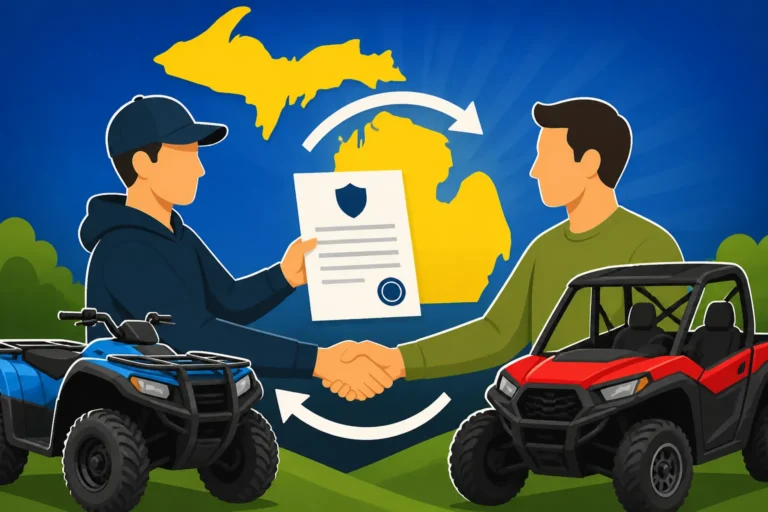
The very first piece of the puzzle, and arguably the most important, is ensuring your Off-Road Vehicle (ORV) has a proper Michigan title. Many folks mistakenly think that if their machine is only used on private land or never hits a public trail, a title isn't really necessary. However, the title is your official proof of ownership, just like with a car or truck. It protects your investment and proves you're the rightful owner if there's ever a dispute, a theft, or if you decide to sell it. Without a title, you’ll run into a wall of complications, even for a machine that rarely moves.
When you purchase an ATV or UTV in Michigan, whether it's brand new from a dealership or a used gem from a private seller, you have a limited window to get that title transferred into your name. Michigan law gives you [Michigan Gives You 15 Days to Title an ORV] from the date of purchase. Missing this deadline can lead to late fees and unnecessary hassle, which nobody wants after a fun weekend of buying a new machine. The process generally involves a visit to the Secretary of State, filling out the [Michigan ORV Title Application and What It Costs], and paying the applicable fees. It’s a straightforward process, but one that’s easy to overlook if you think your cabin machine is somehow exempt.
Imagine this scenario: you've owned your trusty quad for years, using it exclusively on your private hunting land up near Gaylord. One day, you decide to upgrade or sell it to a friend. If you don't have a title in your name, selling it legally becomes incredibly difficult, and the buyer will face significant hurdles proving they own it. Even worse, if it's stolen, trying to report it to the authorities and get it back without that official title can turn into a bureaucratic nightmare. The title isn't just about road use; it's about establishing clear, legal ownership of your valuable asset. For a comprehensive overview, check out [How to Title an ATV in Michigan].
The Importance of a Michigan ORV License and Trail Permit
Beyond the title, Michigan has specific requirements for an ORV license and a trail permit. These are often confused, but they serve different purposes. The ORV license essentially authorizes your machine to be operated in Michigan, and the trail permit grants you access to Michigan's expansive system of designated ORV trails, routes, and scramble areas. If your machine ever leaves your private property and operates on public land, county roads where ORVs are permitted, or any designated trail, you need both.
Even if you primarily use your machine on private land around your cabin, think about those little excursions. Do you ever ride it down the two-track to the state land behind your property to access a hunting blind? Do you take it across a small stretch of county road to get to a local store or another piece of private land? Do you use it to access snowmobile trails during the summer ORV season? If the answer to any of these is yes, then that ORV license and trail permit are non-negotiable. Many rural areas in Michigan have opened up county roads to ORV use, but even on those roads, your machine needs to be properly licensed and permitted. [Michigan ORV License and Trail Permit Explained] covers all the details.
A common scenario is the "I only use it to get to my deer blind" excuse. While you might be operating on private land for the majority of your journey, if that journey involves even a few feet of public right-of-way, state forest roads, or designated ORV routes, you're technically required to have these permits. Conservation Officers and local law enforcement frequently patrol these areas, and the fines for operating without the proper paperwork can quickly put a damper on your cabin getaway. The ORV license and trail permit typically run from [Michigan ORV Permit Year: April 1 to March 31], so it's a yearly check-up you should plan for.
Essential Paperwork and Ownership Proof for Your Cabin ORV
Managing the paperwork for an ORV that largely stays at a remote cabin requires a bit of foresight. You want to have essential documents readily available, but also protect against loss or theft of critical originals. It's a balance between accessibility and security.
Keeping Your Title and Other Documents Safe
One of the biggest mistakes many ORV owners make is keeping their original title and other important documents, like the bill of sale or insurance cards, tucked away on the machine itself. While it might seem convenient to have everything right there in the glove box or under the seat, this is a huge security risk. If your machine is stolen, those thieves now have all the paperwork needed to try and fraudulently transfer the title or otherwise complicate its recovery. Your original title is a legal document, like the deed to your house, and should be treated with the same level of care.
Instead, the original title and any critical purchase agreements should be stored securely at your primary residence, perhaps in a fireproof safe or a secure filing cabinet. For your cabin, it's a good idea to keep a photocopy of the title, your ORV license, and your trail permit with the machine, or in a secure spot within the cabin itself. This way, if you're ever stopped by a DNR officer for a routine check, you have something to present. They can usually verify your permits electronically, but having a physical copy can smooth things over. [Michigan ORV Paperwork During a DNR Stop] emphasizes the importance of having these documents readily available.
When you buy or sell a used ATV, a comprehensive bill of sale is also incredibly important. Even if you're buying from a friend or family member, a clear, written record of the transaction protects both parties. It should include the vehicle's make, model, year, purchase price, and crucially, the Vehicle Identification Number (VIN). Services like LawDepot offer easy-to-use templates that help you create a professional and legally sound bill of sale, ensuring all the necessary details are covered. This document serves as a strong secondary proof of ownership, especially useful when buying from a private seller where the existing title might not be immediately available for transfer. Make sure you understand [Michigan ATV Bill of Sale: What to Put in It] and [Michigan ATV Bill of Sale Template Requirements].
Proof of Ownership Without a Title: When It Matters
There are situations, particularly with older or vintage ORVs, where a machine might not have a traditional Michigan title. Perhaps it was bought many years ago when titling wasn't as strictly enforced, or it was passed down through generations without formal paperwork. If you find yourself in this situation with your cabin machine, it doesn't mean you're out of luck, but it does mean you need to be very diligent about establishing proof of ownership.
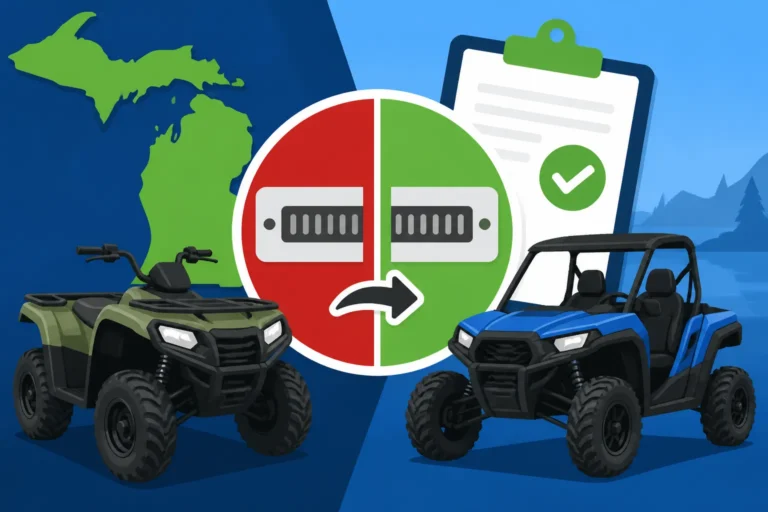
In the absence of a title, a detailed bill of sale is your absolute best friend. This is where those well-crafted documents from resources like LawDepot really shine. A bill of sale signed by both the buyer and seller, ideally witnessed, and containing all relevant vehicle information (especially the VIN – remember to check [Where the VIN Is Stamped on an ATV or UTV]!) can often serve as foundational proof of ownership. Other supporting documents might include old registration cards, insurance policies in your name, or even photographs of you with the machine over many years.
If you eventually want to get an official title for an untitled machine, the Michigan Secretary of State has processes in place, but they require substantial proof. This often involves presenting a robust bill of sale, possibly needing a VIN inspection, and sometimes even requiring a surety bond or a court order if ownership is unclear. This can be a complex and time-consuming process. The article [Proof of Ownership When a Michigan ORV Has No Title] goes into much greater detail on these specific scenarios and steps, so it's a must-read if you're dealing with an untitled machine at your cabin.
Securing Your Investment: Theft Prevention and Insurance Considerations
Keeping an ATV or UTV at a northern Michigan cabin, especially if it's not occupied year-round, presents unique security challenges. These machines are valuable, relatively easy to move, and often targeted by thieves. Protecting your investment requires a multi-layered approach to security and proper insurance coverage.
Layered Security for Remote Cabin ORVs
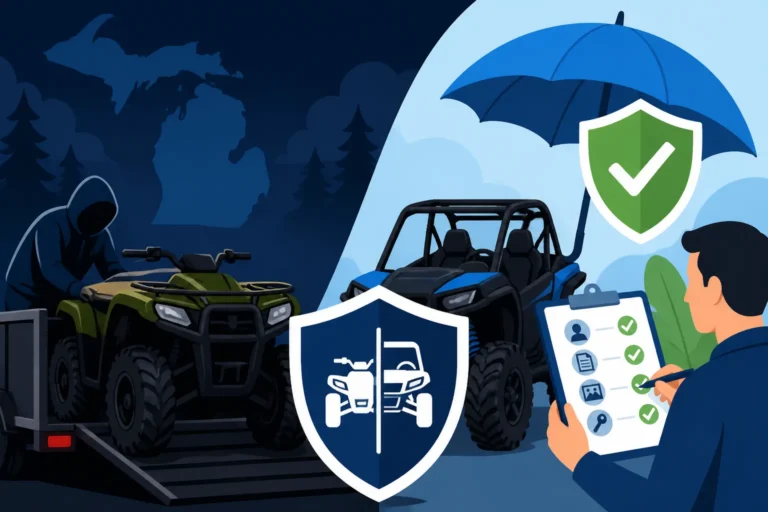
When your cabin is empty for weeks or months, your ORV becomes a prime target. The "out of sight, out of mind" mentality of a remote location can make it seem like a safe haven, but unfortunately, it often makes it an easier target for those looking to steal. Relying on a single lock or just parking it in an unlocked shed is simply not enough.
Think about layering your security measures. Start with robust physical deterrents:
- Strong Locks: Use heavy-duty chains and disc locks to secure the machine to an immovable object (like a concrete-filled post or a substantial structure within a garage/shed). Wheel clamps can also deter thieves from simply rolling it away.
- Kill Switches: Installing a hidden kill switch that interrupts the ignition or fuel system can prevent an easy start. This is a relatively inexpensive modification that can make a huge difference.
- Secured Storage: Ideally, your ORV should be stored inside a locked garage, pole barn, or shed. Reinforce doors and windows on these structures. If the building has an alarm system, ensure it covers the area where the ORV is stored.
- Visibility: While sometimes counterintuitive, keeping your ORV out of plain sight from a road or common access point can help. However, if your property allows for motion-activated lights or security cameras, sometimes making the ORV visible to surveillance can be a deterrent.
For an added layer of protection, consider modern technology. GPS trackers can be discretely installed on your ORV, allowing you to track its location if it's stolen. Many trackers now offer geofencing capabilities, sending you an alert if the machine moves outside a predefined area. Combine this with security cameras that can send alerts to your phone, and you've created a formidable defense. If the worst happens, having a tracker can significantly increase the chances of [Stolen ATV Recovery and the Title Trail].
Insuring Your Year-Round Cabin ORV
Just like with your title, many cabin owners make assumptions about insurance that could lead to financial heartache. A common misconception is that your homeowner's insurance policy will automatically cover your ATV or UTV if it's stolen from your property or damaged in a fire at the cabin. Unfortunately, this is rarely the case, or coverage is severely limited. Standard homeowner's policies are primarily designed for your home and its contents, not specialized vehicles like ORVs, especially when they're operated off your property.
To truly protect your investment, you need dedicated ORV insurance. This typically includes:
- Liability Coverage: Essential for any machine that might operate on public roads or trails. This covers damages or injuries you might cause to others while operating your ORV.
- Collision Coverage: This pays for damages to your ORV if it's involved in an accident with another vehicle or object.
- Comprehensive Coverage: This is crucial for cabin ORVs. It covers theft, vandalism, fire, and other non-collision damages. This is the coverage that would kick in if your machine is stolen from your locked pole barn or damaged by a falling tree while you're away.
Before your next trip up north, contact your insurance agent. Discuss your specific usage – whether it's solely on private land, occasionally on county roads, or frequently on designated trails. Be upfront about where it's stored and how often the cabin is unoccupied. They can help you tailor a policy that provides adequate coverage for your specific situation. Don't assume anything; verify every detail to ensure you're fully protected. [Michigan ORV Insurance and When You Actually Need It] is a great resource to dive deeper into the nuances of ORV insurance in our state.
Maintenance and Winter Storage Tips for Michigan's Seasons
Michigan's weather is famously fickle, and our northern cabin areas experience some serious seasonal shifts. Leaving an ATV or UTV exposed to these elements, or just neglecting it for months on end, is a surefire way to shorten its lifespan and invite expensive repairs. Proper preparation for long-term storage, especially over the winter, is critical.
Preparing Your ORV for the Long Off-Season
When you're packing up the cabin for the winter, your ORV needs just as much attention as closing up the water pipes. Simply parking it in a shed and walking away can lead to a host of problems when you return in the spring.
Here's a checklist for long-term storage, especially over Michigan's cold winters:
- Clean it Thoroughly: Wash away all dirt, mud, and debris. Pay special attention to the underside, suspension, and engine bay. Moisture trapped with dirt can lead to rust and corrosion over time.
- Fuel Stabilization: This is non-negotiable. Modern gasoline can degrade and gum up your fuel system in just a few months. Add a quality fuel stabilizer to the tank, then run the engine for 5-10 minutes to ensure the stabilized fuel circulates through the carburetor or fuel injectors. Top off the fuel tank to minimize condensation.
- Battery Care: Remove the battery and store it in a warm, dry place (not on a concrete floor, which can drain it). Connect it to a trickle charger or battery tender to maintain its charge throughout the winter. If removing it isn't feasible, at least disconnect the negative terminal.
- Tire Pressure: Inflate tires to their recommended pressure. This helps prevent flat spots during long periods of sitting. If possible, consider putting the machine up on stands to take the weight off the tires and suspension.
- Critter Prevention: Rodents love to make nests in air boxes, exhaust pipes, and wiring harnesses, often chewing through crucial components. Block exhaust pipes with steel wool and stuff rags into air intake openings. Check for any other access points for small animals.
- Lubrication: Grease all zerks, lubricate cables, and spray exposed metal components with a corrosion preventative or light oil.
- Cover: Use a breathable cover to protect the ORV from dust, dirt, and condensation. Avoid tarps that trap moisture underneath.
Imagine leaving your UTV in the pole barn near Grayling all winter. Without fuel stabilizer, you might return to a clogged carburetor or fuel injectors, leading to a no-start situation or rough running. A dead battery means you're stranded before you even start. And finding a mouse nest in your air box, along with chewed wires, is a miserable way to begin your spring riding season. Taking an hour or two to properly prep your machine for storage is an investment in future fun and reliability.
Seasonal Checks and Getting Ready for Spring Rides
When spring finally rolls around, and you're heading back up to the cabin, resist the urge to just hop on your ORV and go. A machine that's been dormant for months needs a thorough awakening. This pre-ride inspection is essential for both the machine's longevity and your safety.
Here's what to check before your first spring ride:
- Battery Reconnection/Check: If you removed the battery, reinstall it and ensure connections are clean and tight. If you left it in with a tender, confirm it's fully charged.
- Fluid Levels: Check engine oil, coolant, brake fluid, and differential fluids. Top off any low levels and look for any signs of leaks that might have developed during storage.
- Tire Pressure: Re-check all tire pressures and adjust to the manufacturer's recommendations. Inspect tires for cracks, dry rot, or other damage.
- Brakes: Test the front and rear brakes. Ensure they feel firm and provide adequate stopping power. Check brake pads for wear.
- Lights and Electrics: Test all headlights, taillights, brake lights, and turn signals (if equipped). Confirm the horn works.
- Suspension and Steering: Check for any play in the steering or suspension components. Look for worn bushings or loose bolts.
- Fuel System: Inspect fuel lines for cracks or leaks. Open the petcock (if applicable) and check for any fuel blockages or stale fuel odor.
- Critter Check (Again!): Even with precautions, critters can be persistent. Before starting, visually inspect the engine bay, exhaust, and air box for any signs of nests or damage.
Taking a slow, easy test ride on your property before hitting any trails or roads is also a smart move. Listen for unusual noises, feel for vibrations, and generally ensure everything feels right. This methodical approach will help ensure your year-round cabin ORV is ready to provide reliable fun for another Michigan season, minimizing the chances of breakdowns or safety issues when you're far from home.
| Document Type | Purpose | Location for Originals | Location for Copies (With Machine/Cabin) | Importance for Cabin ORV |
|---|---|---|---|---|
| Michigan ORV Title | Proof of ownership; required for legal sale/transfer. | Secure home safe/filing cabinet | Yes (photocopy) | High (Theft, Sale) |
| Bill of Sale | Records purchase details, VIN; critical for untitled machines. | Secure home safe/filing cabinet | Yes (photocopy) | High (Ownership proof) |
| Michigan ORV License | Authorizes ORV operation on public land/trails. | N/A (Sticker on machine) | Yes (photocopy or digital record) | High (Legal operation) |
| Michigan Trail Permit | Grants access to designated ORV trails/routes. | N/A (Sticker on machine) | Yes (photocopy or digital record) | High (Legal trail use) |
| Insurance Card | Proof of ORV insurance coverage. | Secure home safe/filing cabinet | Yes (photocopy) | High (Liability, Theft) |
| Safety Certificate | Required for youth riders; proof of safety course completion. | Secure home safe/filing cabinet | Yes (photocopy for rider) | Medium (Youth operation) |
Disclaimer
This article is for general informational purposes only and does not constitute professional advice. Laws, prices and regulations vary by location and change over time. Consult a qualified professional for guidance on your specific situation.