Where to Find the VIN on a Can-Am Defender
It's an all-too-common scenario for Michigan riders: you need your Can-Am Defender's Vehicle Identification Number (VIN) for something important – maybe you're titling it, getting an insurance quote, or selling it – and then you spend 20 minutes crawling around on your hands and knees, wiping away mud and cursing under your breath because you just can't find it. Trust me, you're not alone in this frustration. Finding that tiny string of characters on a complex machine can feel like a genuine treasure hunt, especially when it's covered in a season's worth of Michigan trail dust. This guide is going to walk you through exactly where to find that elusive 17-digit code on your Can-Am Defender, explain why it's so vital, and what to do if you run into problems.
Why Your Can-Am Defender's VIN Is So Crucial
Think of your Can-Am Defender's VIN like its DNA – it's a completely unique identifier that tells the entire story of your specific machine. It's a mandatory piece of information for countless legal, financial, and practical reasons, and without it, you can hit some serious roadblocks in Michigan. Many riders don't think about their VIN until they absolutely need it, and that's often when the panic sets in.
The VIN as Your Machine's Fingerprint
The Vehicle Identification Number (VIN) is a 17-character alpha-numeric code that serves as the definitive identifier for your off-road vehicle. Every single Can-Am Defender that rolls off the assembly line has its own unique VIN, distinct from all others. This code isn't just a random string of numbers and letters; it's a meticulously structured sequence that encodes crucial information about your Defender, including its manufacturer, brand, engine type, model year, and sequential production number. It's essentially the legal fingerprint of your machine, differentiating it from every other ORV out on the trails or in a dealership.
This unique identifier is what allows authorities, insurers, and even parts suppliers to pinpoint your specific machine. If you've ever had to deal with a recall or track down a specific part, you know how critical having the exact VIN can be. It prevents mix-ups, helps verify authenticity, and is the backbone of all official records related to your Defender. Without it, your machine is essentially anonymous in the official system, which can create a mountain of headaches down the road. It's the one thing that ties your physical machine to all its paperwork and history.
Common Scenarios Requiring the VIN
You might be surprised just how often you'll need to reference your Can-Am Defender's VIN. It's not just for those rare "big" moments; it pops up in everyday ownership situations too. Knowing where it is and having it readily available can save you a ton of time and stress when you're under pressure.
For starters, any time you interact with the Michigan Secretary of State's office regarding your UTV, the VIN is paramount. This includes the initial process of getting your machine titled, a crucial step for legal ownership in Michigan. You'll need it on the application form and for any subsequent title transfers. Don't forget, there are costs associated with this, and the VIN ensures those payments are correctly tied to your machine. For more on this, check out [Michigan ORV Title Application and What It Costs] and [Michigan ORV Sales Tax at a Secretary of State Branch]. Even if you're gifting a machine to a family member, the VIN is a non-negotiable part of the paperwork.
Beyond titling, your VIN is essential for insurance purposes. When you're getting quotes or filing a claim after an unfortunate incident, the insurance company needs that VIN to accurately identify your Defender and its specifications. Without it, they can't provide proper coverage or process your claim efficiently, potentially leaving you in a lurch. Understanding your insurance needs is key, and you can learn more here: [Michigan ORV Insurance and When You Actually Need It]. Imagine trying to get your UTV covered after a fender-bender only to realize you can't quickly find the VIN – it's a special kind of stress you want to avoid.
If you're buying or selling a used Can-Am Defender, the VIN becomes the central pillar of the transaction. As a buyer, you must verify the VIN on the machine matches the title and any bill of sale. This is your first line of defense against purchasing a stolen vehicle or one with a dubious history. A quick VIN check can reveal a lot of red flags and save you from a very expensive mistake. Learn more about protecting yourself when buying: [How to Check If an ATV Is Stolen Before You Buy]. As a seller, accurately recording the VIN on the [Michigan ATV Bill of Sale: What to Put in It] is vital for a smooth transfer of ownership and protecting yourself legally from future claims. Finally, if you ever get stopped by a Michigan Department of Natural Resources (DNR) officer on the trail, they'll likely ask for proof of ownership, and having your VIN readily accessible will make the encounter much smoother. See [Michigan ORV Paperwork During a DNR Stop] for more on what to carry.
Where to Look First: The Most Common VIN Locations on a Can-Am Defender
Alright, let's get down to brass tacks. You've got your flashlight, maybe a rag, and a determination to find that 17-digit code. While exact placement can sometimes vary slightly by model year or specific Defender variant (like a Max, XT, or Limited), there are definitely a few primary spots where Can-Am almost always puts the VIN on their Defender side-by-sides. Knowing these typical locations will save you a lot of crawling around.
The Frame Stamping: Your Primary Source
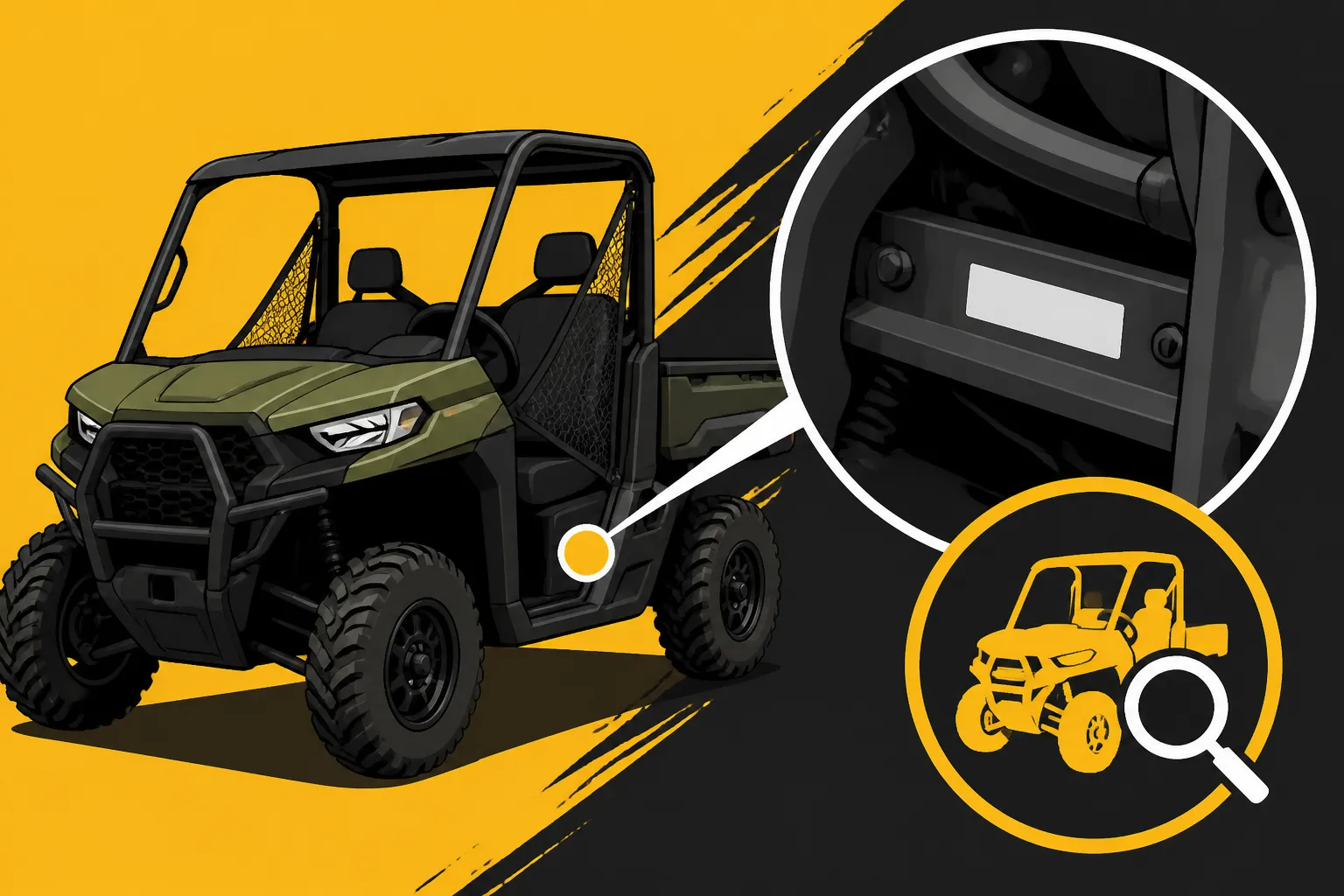
For any Can-Am Defender, the absolute most reliable place to find the VIN is stamped directly into the metal frame. This is the official, permanent identifier and it’s the one that Michigan’s Secretary of State will always prioritize during title inspections. This stamping is designed to be durable and difficult to alter, making it the gold standard for VIN verification. If there's any doubt, this is the one to trust.
You'll want to focus your search on the right-hand side of the vehicle (the passenger side). Get down low and look closely at the frame rail, specifically around the front wheel well area. Often, it's located on the frame just behind or slightly above the front right tire, or sometimes a bit further back towards the firewall area where the frame tubes come together. It might be on a vertical or horizontal section of the main frame rail, depending on the specific model and year. This isn't a sticker, remember, it's etched or punched right into the metal of the frame itself.
Sometimes this area can be obscured by mud, dirt, or even light surface rust, especially if your Defender sees a lot of action on Michigan's glorious (and often muddy) trails. Don't be afraid to use a rag or a soft brush to clear away any grime. A good flashlight, held at an angle, can also help the stamped numbers and letters stand out against the metal, making them easier to read. Take your time, really scrutinize that area. It might be smaller than you expect, and sometimes the stamping isn't perfectly deep or uniform across all digits. This is the VIN that must match your title, so make absolutely sure you're reading it correctly and recording it accurately.
The Chassis Sticker: A Secondary Location
While the frame stamping is the definitive source, Can-Am Defenders also typically come with a VIN sticker somewhere on the chassis. This sticker is often easier to read at a glance, making it convenient for quick checks. However, it's important to remember that stickers can be damaged, faded, or even removed – intentionally or unintentionally – which is why you should always prioritize the frame stamping for official purposes. A sticker is not considered the primary, unalterable identifier.
Common places to find this sticker include:
- Under the hood/front storage compartment: Pop open the front storage area, sometimes referred to as the "frunk." The sticker might be on the underside of the lid, on the plastic inner wall, or near the frame components visible within that compartment. It’s usually placed in a spot that's somewhat protected from the elements.
- Inside the glove box: Open up the glove compartment on the passenger side. The sticker could be adhered to the inside of the door or the rear wall of the compartment, keeping it safe from direct exposure.
- Near the driver's seat base or under a seat: Occasionally, manufacturers place these stickers in more out-of-the-way spots to keep them protected but accessible. Check the plastic trim around the driver's seat, or even lift the seat itself to look underneath the seat base.
The sticker is usually a metallic silver or white label with black print. It will clearly state "VIN" followed by the 17-digit code. While convenient, rely on this sticker primarily for quick reference or for informal checks. When it comes to legally binding documents like a bill of sale, always cross-reference with the frame-stamped VIN. For example, if you're using a template from a service like LawDepot to prepare your [Michigan ATV Bill of Sale Template Requirements], it's critical to ensure the VIN you enter exactly matches the physical stamping on the machine to avoid potential [Michigan ORV Title Problems and How to Clear Them] down the road. Accuracy is key to a smooth transaction.
Other Potential Spots and the Owner's Manual
Occasionally, you might find other component serial numbers on parts like the engine block, transmission, or differentials. However, these are component serial numbers and are not the main VIN of the vehicle itself. While useful for parts ordering or tracking specific component histories, they won't help you with titling or registration. It's easy to confuse these with the all-important 17-digit VIN, so be sure you're looking for the full, standardized code.
Perhaps the single most overlooked resource for finding your VIN is the owner's manual. Seriously, crack it open! Can-Am's owner's manuals are typically very comprehensive, and they almost always have a dedicated section (often in the "Specifications" or "Identification" chapter) that clearly points out the VIN location, sometimes even with diagrams or illustrations specific to your model year. If you can't find your physical manual, check Can-Am's official website; they often have digital versions available for download by model year, which you can easily search.
Finally, remember that your original purchase paperwork from the dealer or your existing title document will also have the VIN printed on it. If you've just bought the machine, this is a great place to start for quick reference. If you've lost your title, you'll need the VIN to apply for a replacement, so hopefully, you've got it noted somewhere safe, separate from the UTV itself. More on this here: [Replacing a Lost Michigan ORV Title]. Having a photo of your title with the VIN clearly visible stored on your phone can also be a lifesaver in a pinch.
Reading and Verifying Your Can-Am Defender's VIN
Once you've located that VIN, whether stamped on the frame or printed on a sticker, the job isn't quite done. You need to ensure you're reading it correctly, understanding its parts, and, most importantly, verifying its authenticity. A mismatched or unreadable VIN can lead to significant headaches, especially when dealing with the Michigan Secretary of State or buying/selling. Don't rush this final, crucial step.
Decoding the 17 Digits
The 17-digit VIN isn't just a random string of characters; it's a globally recognized standard that breaks down into several key sections, each telling you something important about your Can-Am Defender. While you don't need to be a VIN decoding expert to ride the trails, understanding the basics can be really helpful for verifying information or simply learning more about your machine.
Here's a simplified breakdown of what each segment generally represents:
| VIN Segment | Digits | What it Tells You |
|---|---|---|
| WMI | 1-3 | World Manufacturer Identifier: Who made it (e.g., 3JB for Can-Am, though this can vary by specific manufacturing plant or division). |
| VDS | 4-9 | Vehicle Descriptor Section: Details about the vehicle itself, such as model, engine type, body style, and gross vehicle weight rating. This helps differentiate models within the Can-Am lineup. |
| Check Digit | 9 | A security digit used to verify the VIN's authenticity. This digit is generated through a mathematical calculation of the other VIN characters, helping to prevent errors or fraudulent VINs. |
| VIS | 10-17 | Vehicle Identifier Section: This section includes the model year (10th digit), assembly plant (11th digit), and the unique sequential production number (the last 6 digits). These last digits make your specific Defender truly one-of-a-kind. |
The 10th digit is often the one people care about most, as it denotes the model year of your Defender. This is crucial for parts lookup, confirming the year listed on a title, and understanding the machine's age. The last six digits are the sequential production number, which is your Defender's specific serial number. Take your time when writing down the VIN. A single transposed digit can cause all sorts of problems down the line, from ordering the wrong part to invalidating a title transfer.
What to Do If the VIN Is Unreadable or Missing
This is where things can get tricky, and it's a red flag you absolutely need to address immediately. If the VIN stamped on the frame of your Can-Am Defender is heavily corroded, obscured by damage, or appears to be tampered with (e.g., ground down, re-stamped), you have a serious problem. First, try cleaning the area meticulously. Sometimes, a stiff brush and some degreaser can reveal what looked like a missing digit, or make faint stampings legible. However, if after all your efforts, it's still unreadable or legitimately missing, proceed with extreme caution.
Buying a machine with an unreadable or missing VIN is a huge gamble in Michigan. It can make titling nearly impossible and often indicates a stolen vehicle or one with a highly suspicious past. The Secretary of State won't issue a title without a verifiable VIN, and you could be looking at significant hurdles, potentially requiring a [VIN Inspection Requirements for a Michigan ORV Title] or even a specialized process like applying for a [Bonded Title for an ATV in Michigan]. These are not quick, easy, or inexpensive fixes, and can lead to you owning a machine you can't legally operate or sell.
If you're already the owner and your VIN has become unreadable due to legitimate wear and tear or minor damage, you'll need to contact the Michigan Secretary of State's office. They have specific procedures for inspections and verification, but it will involve some paperwork and likely a trip to a branch office. The key is to be proactive and address the issue before it causes bigger problems, like trying to sell it. If you're documenting a private sale and the VIN is questionable, strongly consider adding a clause to your bill of sale from a platform like LawDepot, outlining how the sale would be voided if the VIN cannot be verified for titling. This protects both parties.
Comparing VINs for Consistency
One of the most critical steps in verifying your Can-Am Defender's identity is to ensure the VIN stamped on the frame matches all other documentation you have for the machine. This includes:
- The existing title certificate from the previous owner (if buying used).
- The bill of sale (if you're buying or selling).
- Any insurance paperwork you've received or applied for.
- The VIN on any chassis stickers (though, as mentioned, the frame is primary).
If there's any discrepancy – even a single character – between the VIN on the physical machine and your paperwork, stop immediately and investigate. A mismatched VIN can be a sign of a simple clerical error by a previous owner or the Secretary of State, but it could also point to more serious issues like a stolen machine that has had its identity swapped, or a "cut-and-shut" job where parts from different vehicles were used to create a fraudulent one. Never proceed with a purchase or title transfer if the VINs don't perfectly align. Addressing issues like [Fixing a Wrong VIN on a Michigan ORV Title] can be a complex and time-consuming process, so it’s always best to catch these problems early, before you've invested money or time.
As a seller, providing accurate documentation is your responsibility and helps build trust with potential buyers. When you're using a [Michigan ATV Bill of Sale: What to Put in It] to transfer ownership, ensure the VIN you write down is confirmed against the frame, not just memorized or pulled from an old document. Many people find robust templates from services like LawDepot helpful for ensuring all critical information, including the VIN, is accurately and legally recorded, safeguarding both parties in the transaction. This level of detail protects everyone involved and ensures a clean transfer of ownership.
Tips for Maintaining VIN Visibility and Security
Finding your Can-Am Defender's VIN shouldn't be a one-time scavenger hunt you dread. As a responsible ORV owner in Michigan, it's a good practice to know where it is, keep it legible, and secure its information. This helps prevent future headaches, ensures compliance with state regulations, and ultimately protects your valuable investment. A little proactive care now can save a lot of frustration later.
Keeping Your VIN Clean and Protected
Since the primary VIN is stamped on the frame, it's particularly susceptible to dirt, mud, and corrosion – especially with the kind of riding we love to do across Michigan's diverse terrain! Make it a habit to periodically clean the area where the VIN is located. After a particularly muddy or dusty ride, a quick spray with a hose and a wipe-down with a rag can prevent grime from building up and obscuring the numbers and letters. You want to make sure you can easily read it whenever needed.
For added protection against rust and the elements, you can consider applying a clear coat or a rust-preventative wax to the stamped VIN area. Just be sure to use products that are truly transparent and won't obscure the numbers or make them harder to read. The goal is protection, not camouflage. Avoid harsh abrasive cleaners or wire brushes directly on the VIN stamping itself, as these could potentially damage the etching over time, making it even harder to decipher. A little preventative maintenance goes a long, long way in keeping that crucial identifier clear and ready for when you or a Michigan DNR officer needs to see it.
Securing Your Machine's Identity
Beyond just keeping the VIN clean, it's wise to take steps to secure this vital piece of information. The first and simplest step is to record your VIN in multiple, safe places. Jot it down in your phone, email it to yourself, keep a copy in your physical paperwork file, and even write it on the inside cover of your owner's manual. Having it readily accessible, separate from the machine itself, is invaluable if your Defender is stolen or if you ever lose your title. Imagine trying to file a stolen vehicle report without that critical number!
Consider discreetly engraving a partial VIN or a unique identifier on other non-essential parts of your Defender. This can provide an additional layer of security and assist law enforcement in identifying your machine if it's recovered after theft, even if the primary VIN is somehow compromised. Always keep your original title certificate and bill of sale (if applicable) in a secure location, such as a fireproof safe at home, separate from where your Defender is stored. Never leave these original documents on or in the machine itself, as they could be lost or stolen. For more advice on this, see [Storing Your ATV Title Somewhere Safe]. When you engage in any legal transactions or agreements concerning your Can-Am Defender, whether it's a lease, a loan, or even just documenting shared ownership, utilizing official documents generated through platforms like LawDepot can help ensure the VIN is accurately integrated into all records, providing robust legal protection for you and your asset.
Disclaimer
This article is for general informational purposes only and does not constitute professional advice. Laws, prices and regulations vary by location and change over time. Consult a qualified professional for guidance on your specific situation.