ORV Title With a Missing Seller Signature
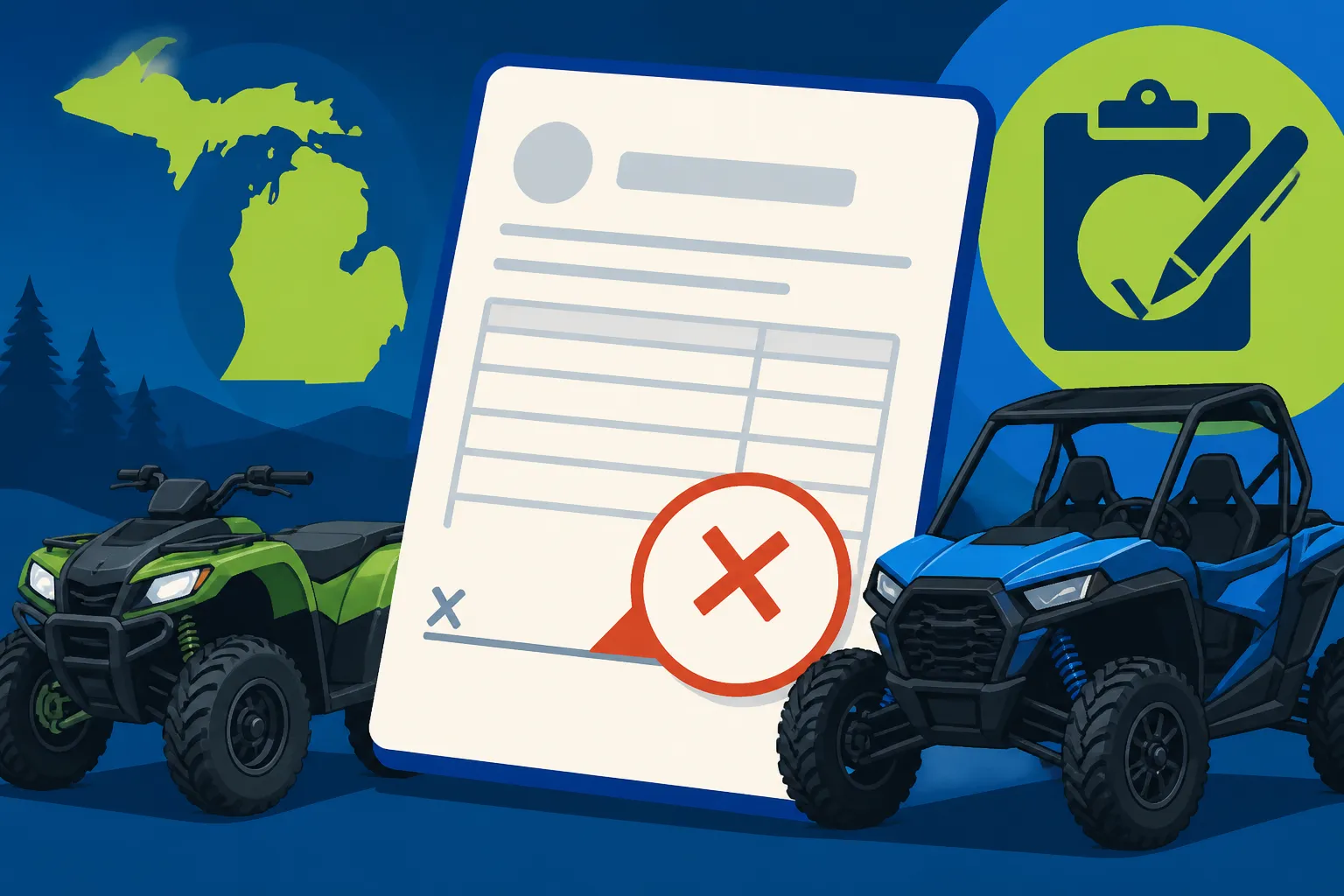
There are few things more frustrating than buying an awesome ATV or UTV, getting it home, and then realizing the previous owner forgot to sign the title. You've got your dream machine, but suddenly, you're stuck in a bureaucratic nightmare trying to prove it's actually yours. This guide is here to help Michigan ORV owners navigate the tricky waters of a missing seller signature on a title, offering actionable steps to get your machine legally titled and ready for the trails.
The Headache of a Missing Signature: Why It Matters in Michigan
You’ve shaken hands, handed over cash, and loaded up your new-to-you off-road vehicle. Everything feels right until you look at the ORV title a little closer and see that crucial line where the seller should have signed… is blank. It’s a gut punch, and immediately you know you’ve got a problem. This isn't just a minor oversight; in Michigan, a missing signature on the title can grind your title transfer process to a halt.
Why a Signature Is So Crucial for ORV Titles
Think of an ORV title as the official handshake for your vehicle. It’s a legal document issued by the state, proving who the rightful owner is. When you buy an ORV, the seller signs over their ownership rights to you by endorsing the title. This signature acts as the legal transfer of the machine from them to you. Without it, the Michigan Secretary of State simply cannot acknowledge that the change of ownership has occurred. It's like trying to deposit a check without an endorsement – the bank won't accept it, and the state won't accept an unsigned title.
This signature is critical for a few reasons. First, it prevents fraud. Imagine if anyone could just write their name on a title and claim ownership; chaos would ensue! Second, it protects both buyer and seller. The seller's signature releases them from liability once the sale is complete, and your acquisition of a properly signed title protects you as the new legal owner. Without it, you could face significant issues if the previous owner ever tried to claim the machine was stolen, or if there were any legal disputes regarding its past. For instance, if you get pulled over by a DNR officer while out on the trails, and your paperwork isn't in order, you might find yourself facing questions about [Penalty for Operating an Untitled ORV in Michigan].
The Secretary of State's Stance on Incomplete Titles
The Michigan Secretary of State (SOS) offices are the gatekeepers for all vehicle titles in our state, including ORVs. Their rules are pretty clear-cut: for an ORV title transfer to be processed, the title must be properly completed, and that absolutely includes the seller's signature. When you head into your local SOS branch, ready to pay your sales tax and transfer fees, the clerk will meticulously check the document. If that signature line is blank, they will, unfortunately, turn you away. It doesn’t matter how polite you are or how convincing your story is; without that signature, the transfer simply cannot proceed.
This strict policy is in place to maintain accurate ownership records and prevent potential legal headaches down the road. They're not trying to be difficult; they're following established protocols to protect everyone involved. A missing signature immediately flags the title as incomplete and potentially invalid for transfer purposes. This can be incredibly frustrating, especially if you've already paid for the machine and are eager to hit the trails. You might have all the other necessary documents, like a bill of sale or proof of insurance, but the title itself is the paramount document for proving legal ownership. Without it, you can't even get your [Michigan ORV License and Trail Permit Explained].
What to Do When the Seller's Signature is Missing
Okay, so you've discovered the missing signature. Don't panic just yet! While it's a definite roadblock, there are steps you can take to try and resolve the issue. Your primary goal here is to either get that signature or gather enough alternative documentation to satisfy the Secretary of State.
Immediate Steps: Contacting the Seller (If Possible)
The first and most straightforward solution is to reach out to the seller. This might seem obvious, but sometimes, in the excitement of a sale, things get overlooked. A friendly phone call or text explaining the situation is often all it takes. Many sellers are simply unaware they missed a signature and will be happy to meet up with you to properly endorse the title.
When you contact them, clearly explain that you tried to transfer the title at the Secretary of State and were turned away due to the missing signature. Suggest meeting at a convenient location, maybe even a public place for safety, to get the title signed. If possible, bring the title along with you, and double-check all the required signature lines and information fields before parting ways again. It's also a good idea to confirm if the previous owner needs to be present for any other aspect of the title transfer, such as the [Michigan Title Transfer When You Buy From a Private Seller]. This is the ideal scenario, and if the seller is cooperative, it’s the quickest path to resolving the problem.
Documenting Everything: The Importance of a Strong Paper Trail
What if the seller isn't responding, or they're dragging their feet? This is where good documentation becomes your best friend. From the moment you realize there’s a problem, start keeping a detailed record of every attempt you make to contact the seller. This includes:
- Dates and times of calls: Note who you spoke with, if anyone.
- Copies of text messages or emails: Screenshot conversations.
- Registered mail receipts: If you send a formal letter requesting their signature, get proof it was sent and received.
- Any witnesses: If someone was present during the sale or when you tried to contact the seller, note their name and contact information.
This paper trail isn't just for your peace of mind; it's crucial evidence if you have to pursue more drastic measures. If you eventually need to involve legal aid or pursue a bonded title, showing the state that you made a good-faith effort to resolve the issue with the seller is paramount. It demonstrates that you're not trying to bypass procedures but genuinely trying to fix an oversight. Even if you have a solid [Michigan ATV Bill of Sale: What to Put in It], the title remains the primary document.
Options When the Seller Is Unavailable or Uncooperative
Unfortunately, sometimes the seller vanishes, or they just aren't willing to cooperate. This is where things get tougher, but you still have a few avenues to explore, although they might require more effort and time.
Using a Bill of Sale as Alternative Proof of Ownership
A robust bill of sale can be a lifesaver in these situations. While it won't replace a signed title for the Secretary of State, it can serve as strong evidence of your purchase. The Michigan SOS generally requires a properly completed title for transfer, but in cases where a title is lost or was never issued, a detailed bill of sale can establish a chain of ownership.
Your bill of sale should ideally include:
- The full names and addresses of both buyer and seller.
- The make, model, year, and crucially, the Vehicle Identification Number (VIN) of the ORV. [Where the VIN Is Stamped on an ATV or UTV] can help you verify this.
- The purchase price.
- The date of sale.
- A clear statement that the seller is transferring all ownership rights to the buyer.
- Both the buyer's and seller's signatures. (Yes, ironically, if the seller signed the bill of sale but not the title, it strengthens your case!)
If you have a strong bill of sale signed by the seller, along with proof you paid, and can demonstrate you've exhausted attempts to get the title signed, the SOS might consider allowing you to apply for a title as if it were a lost title situation. This isn't guaranteed and often requires escalating the issue to a supervisor at the SOS or submitting additional forms, but it’s worth trying. Tools like LawDepot can help you generate comprehensive, legally sound bill of sale documents that cover all the necessary information, which can make your case much stronger if the original title is flawed. Remember, the more detailed your bill of sale, the better.
Exploring a Bonded Title or Court Order (Last Resorts)
When all else fails, and you absolutely cannot get that missing signature, Michigan does offer last-resort options for proving ownership and getting a title: a bonded title or a court order.
A bonded title is essentially a title issued by the state backed by a surety bond. This bond acts as an insurance policy, protecting previous owners or lienholders if they later come forward to claim ownership of the vehicle. It's a way for the state to issue you a title when the normal paperwork (like a properly signed title) is missing, but there's a risk of a dispute. To get a bonded title in Michigan, you typically need to:
- Apply for a title with the Secretary of State and be rejected due to the missing signature.
- Provide evidence of ownership (like your bill of sale and proof of attempts to contact the seller).
- Have the vehicle appraised.
- Purchase a surety bond, usually for a value significantly higher than the ORV's appraised value. This bond usually lasts for a few years.
- Submit all documentation to the Secretary of State for review.
The process for a bonded title can be complex and involve additional fees beyond the bond itself. It’s certainly not a quick fix, but it's a legitimate pathway if you're stuck. For detailed steps, you would need to look into [Bonded Title for an ATV in Michigan].
Alternatively, if the situation is particularly contentious, or if you suspect foul play, you might need to seek a court order. This involves filing a petition with a district court, asking a judge to declare you the legal owner of the ORV and order the Secretary of State to issue you a title. This is the most costly and time-consuming option, requiring legal representation and navigating the judicial system. It's generally reserved for situations where there's a significant dispute, the previous owner is actively refusing to cooperate, or the ORV was acquired under unusual circumstances. However, it's a definitive way to establish legal ownership if all other options are exhausted, and you can explore this option under [Getting a Court Order to Title an ORV].
| Action Taken | Effort Level | Cost | Timeframe | Ideal Scenario | Outcome |
|---|---|---|---|---|---|
| Contact Seller | Low | Minimal (comm.) | Days | Seller is cooperative, responsive, nearby. | Title signed, transfer completed. |
| Document Attempts & Use Bill of Sale | Medium | Low (paperwork) | Weeks | Seller unreachable but you have strong proof of purchase. | SOS might accept, or it builds case for bonded title. |
| Bonded Title | High | Moderate (bond) | Weeks-Months | Seller uncooperative/gone, good proof of purchase. | State issues title, bond protects previous owner/lienholder. |
| Court Order | Very High | High (legal fees) | Months-Years | Seller refuses, dispute, complex ownership issues. | Judge declares ownership, SOS ordered to issue title. |
The Risk of Operating an Untitled ORV
It might be tempting to just throw caution to the wind and ride your ORV without a properly transferred title, especially if the machine itself looks great and runs perfectly. But let me tell you, this is a risky gamble in Michigan. Operating an ORV that isn't legally titled in your name can lead to a heap of trouble.
Firstly, if you're stopped by a Michigan Department of Natural Resources (DNR) officer or local law enforcement, they're going to ask for your paperwork. This includes your ORV title, [Michigan ORV License and Trail Permit Explained], and potentially proof of insurance. If you can't produce a title that's in your name, you could face fines, penalties, or even have your ORV impounded. It makes proving legitimate ownership very difficult and can look suspicious. You do not want to be in a situation where you're explaining away a missing signature to an officer who might suspect [Michigan ORV Title Fraud Penalties].
Secondly, you can't legally sell the ORV to someone else without a valid title in your name. If you sell it without a proper title, you're just passing the problem on, and that could open you up to legal action from the new buyer. [Selling an ATV in Michigan Without a Title: What Goes Wrong] can illustrate the complexities. Thirdly, issues can arise with insurance claims. If your ORV is stolen or involved in an accident, your insurance company might deny a claim if you can't prove legal ownership with a properly titled document. It's simply not worth the stress and potential legal and financial repercussions to ride an ORV with an unresolved title issue.
Preventing This Problem in the Future: Best Practices for Buyers
The best way to deal with a missing seller signature is to prevent it from happening in the first place! Buying a used ORV can be exciting, but a little vigilance upfront can save you a lot of grief down the road.
Essential Checks Before the Purchase
Before you hand over any cash or sign a single document, take a few critical steps to protect yourself:
- Inspect the Title Carefully: Always ask to see the physical ORV title before the sale. Don't just glance at it; examine it thoroughly. Check for any alterations, erasures, or smudges. Make sure the VIN on the title matches the VIN stamped on the ORV itself (often found on the frame near the front wheel or engine, or under the seat). A great resource for this is [Where the VIN Is Stamped on an ATV or UTV] or [ATV VIN Decoder: Reading the Model Year Digit]. Confirm the seller's name on the title matches their ID.
- Confirm Lien Status: Look for any indication of a lienholder on the title. If there's a lien, it means the seller still owes money on the ORV, and you'll need a [Lien Release on a Paid-Off UTV] from the lienholder along with the signed title. Buying a vehicle with an outstanding lien can mean the lienholder has a claim to your new machine!
- Perform a VIN Check: Run the VIN through a service like the NICB (National Insurance Crime Bureau) database or a commercial vehicle history report service. This can tell you if the ORV has been reported stolen, has a salvage title, or has been involved in major accidents. Learning [What a Salvage Title Means for an ATV Buyer] before you buy is crucial.
- Meet at a Public Place or Even the SOS: If possible, consider meeting the seller at your local Michigan Secretary of State office. You can then complete the title transfer on the spot. While this might be an inconvenience, it absolutely guarantees that the title is properly signed and that the SOS will accept it. This also provides peace of mind that you're transferring the title within Michigan's [Michigan Gives You 15 Days to Title an ORV] deadline.
The Power of a Comprehensive Bill of Sale
Even with a perfectly signed title, a detailed bill of sale is still a critical document. It serves as your receipt and a secondary record of the transaction. A comprehensive bill of sale can include:
- "As-Is" Clause: Clearly state that the ORV is being sold "as-is," with no warranties expressed or implied. This protects the seller from future mechanical claims and outlines buyer responsibility.
- Signatures and Dates: Ensure both buyer and seller sign and date the bill of sale. If there are two sellers on the title (e.g., [Putting an ORV Title in Two Names]), make sure both sign the bill of sale and the title.
- Witness Signatures: If possible, have a neutral third party witness the sale and sign the bill of sale. This adds another layer of verification.
- Contact Information: Include phone numbers and email addresses for both parties, in case follow-up is needed (like for a missing signature!).
Using a template from a reputable source like LawDepot can ensure you don't miss any critical clauses or information. They provide customizable templates that can be tailored to an ORV sale, giving you a robust legal document. A good bill of sale can make all the difference if you encounter problems with the title down the road, acting as vital [Bill of Sale vs Title as Proof of Ownership]. Don't underestimate its importance; it’s not just a formality, but a key piece of your ownership puzzle.
Disclaimer
This article is for general informational purposes only and does not constitute professional advice. Laws, prices and regulations vary by location and change over time. Consult a qualified professional for guidance on your specific situation.