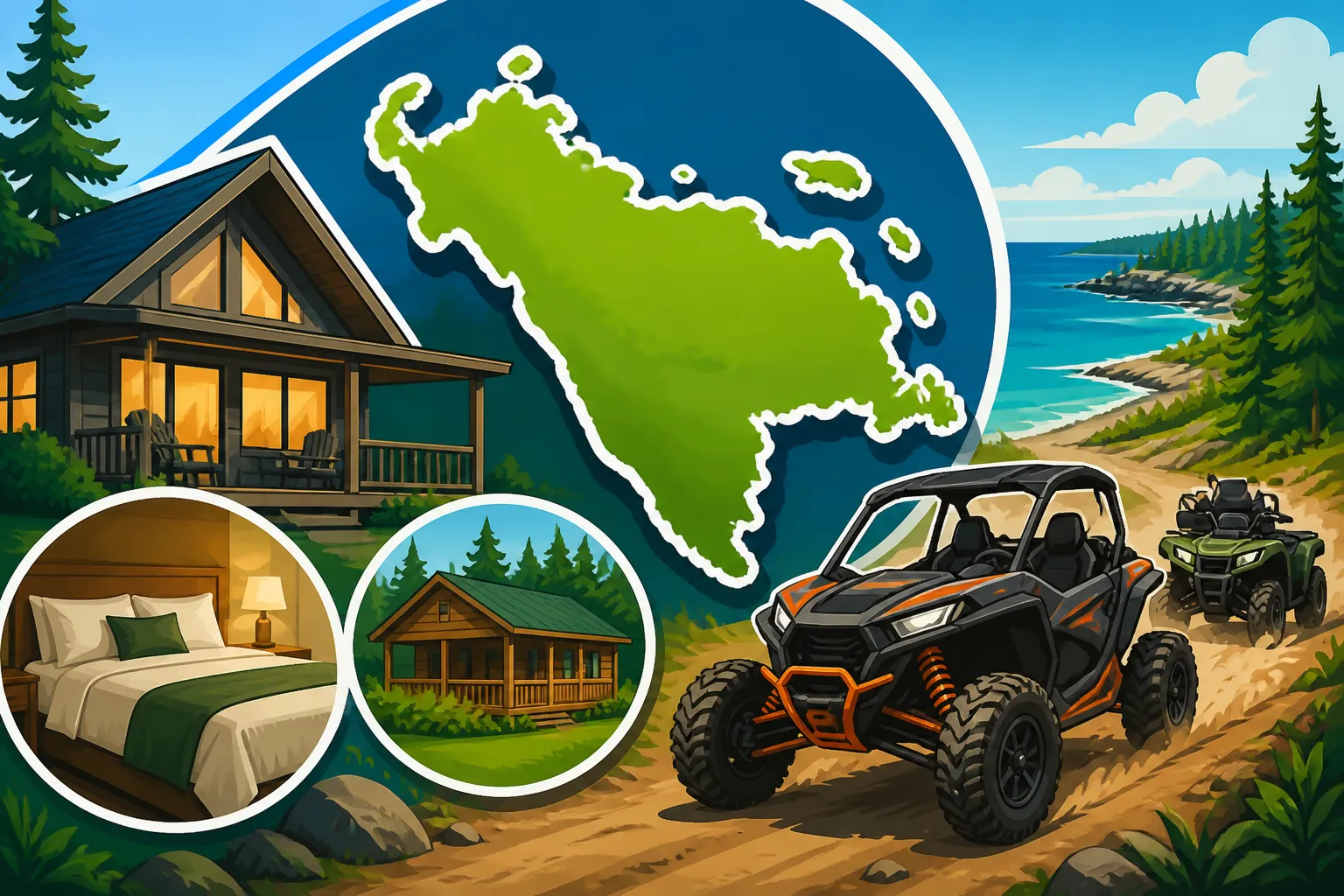
Where to Stay When Riding Drummond Island
A Drummond Island riding trip can go sideways before you even unload the ATV if your lodging is far from your riding plans, doesn’t have room for a trailer, or isn’t open when you arrive. The best place to stay depends on whether you want quick trail access, a comfortable base for exploring the island, or an easier mainland overnight before taking the ferry.
Choose your lodging area around the kind of trip you want
Stay on Drummond Island for a trail-focused trip
If riding is the main event, staying on Drummond Island can make the trip feel less rushed. You’ll be able to settle in near your riding area, avoid repeating the ferry crossing just to reach your bed, and build in time for meals, machine checks, and changing weather. This can matter when a trail day runs longer than expected or the group wants a slower start the next morning.
The island has a mix of lodging styles, including cabins, vacation rentals, campgrounds, and other visitor accommodations. The right fit depends less on the label and more on practical details: how many people can sleep comfortably, whether there is parking for your truck and trailer, and whether the property allows the kind of machine-related activity you have in mind. Confirm these details directly before booking, especially if you are bringing a side-by-side or several machines.
Staying on the island doesn’t automatically mean you can ride straight from your door to every trail. Ask the lodging host where riders typically stage, whether machines may be parked at the property, and what roads or routes connect to the trail system. Drummond Island has a substantial trail network, but access depends on route rules, machine width, current conditions, and where you’re starting. For a closer look at routes and terrain, see [Drummond Island ATV Trail Mileage] and [Turtle Ridge Trail Difficulty].
Use DeTour Village or another mainland stop for a split itinerary
A mainland stay can work well if you’re breaking up a long drive, arriving late, or leaving early. DeTour Village is the ferry departure point for Drummond Island, so staying nearby can reduce the pressure to make a tight connection after hours on the road. It can also be a sensible option if you’re touring several parts of the eastern Upper Peninsula rather than spending the whole trip riding on the island.
The trade-off is that mainland lodging means planning around the ferry. You’ll need to allow time for the crossing and any wait, and you’ll want to check the operating schedule and current conditions before building your ride day around it. If your group is hauling a trailer, ask how the ferry handles your vehicle-and-trailer setup and whether you need to arrive earlier than passengers in a regular car. Don’t assume that a late check-in or a delayed return will be easy to solve without advance planning.
A split stay can be a good compromise: spend the first night near DeTour Village, cross the next day, then stay on the island for the riding portion of the trip. That arrangement can make sense for families, first-time visitors, or groups that want a little flexibility before committing to several nights in one place. For help planning the crossing and arrival, see [Getting to Drummond Island With an ATV] and [Drummond Island Ferry Cost With a Trailer].
Compare lodging by the details that affect a riding trip
Match the accommodation to your group and gear
A regular vacation rental may have enough beds but not enough space for a long truck-and-trailer combination. A campground may offer a convenient outdoor base but require more work to handle meals, wet riding gear, and muddy equipment. Before booking, compare the lodging options against your actual group setup rather than choosing based only on photos or a headline description.
| Lodging type | Often suits | Confirm before booking |
|---|---|---|
| Cabin or vacation rental | Families, small groups, or riders who want a kitchen and indoor space | Trailer parking, machine storage, occupancy limits, and rules for muddy gear |
| Campground | Riders comfortable with a simpler outdoor setup | Site size, vehicle and trailer arrangements, available facilities, and seasonal operation |
| Hotel or motel-style stay | Short visits, couples, or a mainland overnight | Parking for a trailer, check-in timing, and how far you’ll travel to the ferry or staging area |
| Larger group rental | Several households or a club ride | Bed configuration, maximum occupancy, parking capacity, and noise or outdoor-use rules |
Ask specific questions instead of relying on a general “ATV-friendly” description. For example: “Can we park a truck and a trailer on the property overnight?” is more useful than “Is there room for our ATV?” If you’re bringing more than one machine, explain how many vehicles and trailers you’ll have. A host may be happy to accommodate one machine but not a convoy taking up the driveway.
Also ask where riding equipment can be cleaned or stored. Mud, dust, and wet clothing can be hard on floors and furniture, and some properties have restrictions about washing machines or parking machines near the building. Knowing the rules before arrival keeps a minor cleanup problem from becoming an awkward conversation at checkout.
Check dates, access, and cancellation details carefully
Availability on the island can be limited during popular riding periods, so start by checking your exact travel dates and the length of your stay. Ask whether the property is open for your planned season and whether the listed facilities will be available then. A seasonal campground, for instance, may not have the same services outside its main operating period. Don’t assume a booking calendar tells the whole story; confirm details with the property.
Next, compare the cancellation policy and arrival instructions. A ferry delay, bad weather, or a mechanical issue can shift your arrival time. Find out how late check-in works, who to contact if plans change, and whether the reservation can be adjusted if travel is disrupted. This is especially useful when your itinerary depends on a particular crossing or when everyone is driving separately.
Finally, confirm the full cost structure directly with the lodging provider. The total may depend on the number of guests, length of stay, cleaning arrangements, deposits, or optional services. Check the provider’s own booking information for current figures and terms, and save a copy of the confirmation. For a deeper look at places to ride once you’ve settled in, see [Drummond Island Limestone Trails After Rain] and [Where to Stay When Riding Drummond Island].
Plan your base, trail access, and daily routine
Don’t confuse nearby lodging with legal ride-out access
One of the most frustrating surprises for visitors is learning that “close to the trails” doesn’t necessarily mean “ride directly from the property.” A road that looks like a convenient connector on a map may not be open to your machine, or it may have restrictions that differ from the trail you plan to ride. Ask the host for a clear description of access, then check the applicable rules before heading out.
Use a current map and verify your route rather than relying on a vague verbal direction. onX Offroad can help you review mapped routes and plan where your group intends to ride, but map information should be checked against posted signs and official rules on the ground. Keep the device charged, download any map information you’ll need before you lose reliable cell service, and carry a backup plan for navigation.
The right lodging choice may be a short drive from a staging area rather than a direct ride from the door. That can be a better option than booking a property that appears closer but leaves you uncertain about road access. Read [Drummond Island ATV Trail Mileage] alongside [Michigan ORV Trail Maps and What the Signs Mean] when you’re deciding how to connect your stay to a ride plan.
Build a realistic schedule for the group
Give your first day room to breathe. After checking in, confirm where each vehicle and trailer will go, unload safely, and review the route plan with the whole group. If someone is unfamiliar with the island, use that first evening to agree on meeting points, fuel stops, and what to do if riders become separated. A little planning at the lodging can prevent rushed decisions once everyone is geared up.
Plan for a full day to include more than riding time. Riders may need breaks, fuel, food, and time to deal with dust, rain, or a machine issue. Leave enough daylight and flexibility to return without pushing the group to keep riding simply because the accommodation is booked for another night. If you’re renting, check the rental provider’s return rules and the location where the machine must be left. [Drummond Island ATV Rentals and Tours] can help you think through whether bringing your own machine or arranging a rental better fits your stay.
Before departure, organize a simple property checklist: pack personal gear, remove trash, follow the host’s directions for muddy clothing or equipment, and make sure the trailer is ready before checkout. If the group is using a campground, confirm site rules and checkout expectations. If you rented a cabin, check the instructions for keys, appliances, and any outdoor equipment. These small steps make a smoother end to the trip and leave more time for the drive home.
Make your booking decision with a simple checklist
Questions to ask before you reserve
A few direct questions can quickly reveal whether a property suits an ATV or UTV trip. Contact the host or lodging provider before paying a deposit, and give an accurate description of your group and equipment. If you’re travelling with a long trailer, several machines, or children, say so plainly rather than hoping the property can accommodate it.
Use this checklist:
- Is the property open for the dates we need?
- How many people can stay, and how are the beds arranged?
- Is there space for our truck, trailer, and machines?
- Are machines allowed on the property, and where may they be parked?
- Is there a legal and practical route to our planned staging area?
- What is the check-in process if the ferry or drive is delayed?
- What are the cancellation, deposit, and cleaning terms?
- Are there quiet hours, outdoor-use rules, or restrictions on washing equipment?
- What should we bring because it is not provided?
- Who should we contact if access or arrival plans change?
Keep the answers together with your reservation confirmation. If different members of the group are arriving separately, share the lodging address, check-in directions, parking plan, and emergency contact details before anyone sets out. That avoids last-minute calls from a spot with weak service or confusion about where to leave a trailer.
Choose the base that gives your trip room to work
For a trip centered on riding, an island stay is often the most convenient starting point if the accommodation fits your group and equipment. A mainland stay near DeTour Village can be useful for an overnight stop, a late arrival, or an itinerary that includes other destinations. Neither option is automatically best: the deciding factors are your ferry plan, trail access, parking needs, dates, and how much time you want to spend travelling between lodging and riding.
Before you book, compare the property’s location with your planned routes using onX Offroad and confirm access independently. Check the ferry plan, ask the lodging provider about trailer parking, and leave a little slack in your schedule. With those pieces settled, you can spend less of the trip solving logistics and more time enjoying Drummond Island’s trails. For broader trip preparation, see [Camping Near Michigan ORV Trails] and [Packing List for a Full Trail Day].
Disclaimer
This article is for general informational purposes only and does not constitute professional advice. Laws, prices and regulations vary by location and change over time. Consult a qualified professional for guidance on your specific situation.