Michigan State Forest Campgrounds for Riders
Michigan’s state forest campgrounds can make an ATV or UTV trip simpler: you camp near the riding area, avoid a long drive to the trailhead, and have somewhere to rest between outings. The tricky part is that “near a trail” does not always mean “connected to a trail.” This guide explains how to choose a campground, plan access, and avoid common surprises.
How to choose a Michigan state forest campground for riding
Start with the trail system, not the campsite
A campground may be close to an ORV trail on a map but still require you to load your machine onto a trailer to reach it. Roads between the two may be closed to ORVs, or the connection may cross private land. Before booking, identify the exact trail or route you want to ride, then check how you can legally get from camp to it.
Mack Lake State Forest Campground near Mio is one example riders may consider when planning around the Mio area. Leota and Ambrose Lake are other campground names to investigate when looking at riding in their respective regions. Treat these as starting points for research, not a guarantee that a particular campground has a rideable connection to your chosen route. Confirm access and current conditions before you travel.
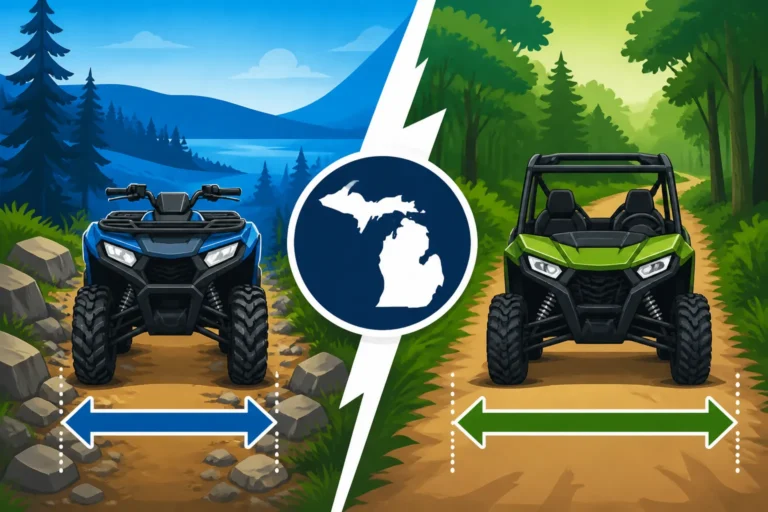
It also helps to distinguish between a trail and an ORV route. In Michigan, trails and routes can have different machine-width limits and riding conditions. A wide side-by-side may not be allowed on a narrow trail that an ATV can use. Review Michigan ORV Trail Widths Explained and Michigan ORV Trail Maps and What the Signs Mean before settling on a campground based on a nearby line on a map.
Compare the campgrounds by the trip you want
The best base camp depends on what you value most. Some riders want a quiet place to sleep after long trail days. Others need easy trailer parking, room for a group, or access to a mix of trails and fuel stops. A rustic state forest site can be a good fit if you are comfortable with fewer amenities; it may be frustrating if your group expects services that are more typical of a developed campground.
| Campground or area to research | Why riders may consider it | What to confirm before booking |
|---|---|---|
| Mack Lake State Forest Campground near Mio | A possible base for exploring the Mio riding area | Current campground access, legal route to riding areas, site and trailer fit |
| Leota area campgrounds | A location to investigate when planning around the Gladwin region | Which nearby trails or routes allow your machine, and whether a legal connection exists |
| Ambrose Lake area campgrounds | A possible starting point for researching riding in the surrounding region | Road and trail access, seasonal conditions, and campground facilities |
| Other state forest campgrounds near your chosen route | May offer a quieter or more convenient overnight stop | Whether the riding area is genuinely reachable without trailering |
Before choosing, compare the campground’s facilities with your group’s needs. A listing may describe a rustic site, but you should still confirm practical details such as water availability, toilets, fire rules, site dimensions, and whether there is room to park your tow vehicle and trailer. If the camping spot is tight, arriving with a large trailer late in the day can turn a relaxing start into a stressful puzzle.
For a wider search, Camping Near Michigan ORV Trails can help you think beyond a single campground and compare overnight options around the riding area.
Plan campground-to-trail access before you leave
Confirm the legal connection
The key planning question is not just “How close is camp?” It is “Can I ride from camp to the place where I’m allowed to ride?” A campground entrance road, forest road, county road, and designated ORV route may each have different rules. Do not assume that a road is open to ORVs because it is unpaved or because other riders appear to use it.
Check the signs and current maps for the whole connection, not only the main trail. If you cannot confirm a legal route from camp, plan to haul the machines to a designated staging area instead. That can add time, but it is often easier than discovering the access problem after you have unloaded.
Michigan ORV rules and permit requirements depend on where you ride and what machine you use. Review Michigan ORV License and Trail Permit Explained before the trip, and check whether your planned routes require a trail permit in addition to an ORV license. Out-of-state visitors should check the applicable permit rules too rather than assuming their home-state paperwork covers every Michigan riding area.
Use maps as planning tools, then follow signs on the ground
A digital map is helpful for comparing campground locations, estimating distances, and spotting possible trail connections. onX Offroad can be one planning tool for reviewing routes and terrain, but treat any digital map as a supplement to official information and signs. Layers, route details, and conditions can change, and a screen view cannot tell you that a trail entrance is temporarily closed.
Download or save the maps you may need before you leave reliable cell service. In parts of northern Michigan and the Upper Peninsula, coverage can be inconsistent, and a route that loads easily at home may be difficult to retrieve at a trailhead. Carry a backup plan, such as an offline map or a printed copy of relevant official information.
Once you arrive, follow posted signs even if they differ from what you expected to see on your phone. If a gate is closed or a route is marked as restricted, do not ride around it. Check Michigan ORV Trail Closures and Seasonal Dates as part of your planning, and look for local notices before setting out each day.
Make camp work for an ATV or UTV trip
Think through trailers, loading, and campsite layout
A campsite that works for a tent and passenger car may not be comfortable for a truck, trailer, and one or more ORVs. Check whether the site has enough usable space to park without blocking the road or spilling into neighboring campsites. If you are traveling with friends, decide ahead of time who is bringing the trailer, where the machines will be unloaded, and how you will keep the access lane clear.
Bring the practical gear that makes setup easier: tie-downs, wheel chocks, a basic tool kit, and a way to secure helmets and riding gear when they are not in use. If you need to unload near the campground entrance or at a separate staging area, make sure your plan follows the posted rules. Michigan ORV Trailhead Parking Rules is useful when you are deciding where to leave a tow vehicle and trailer for the day.
Be considerate about noise and movement around other campers. A campground is a place where families may be sleeping, cooking, or walking between sites, so do not treat its internal roads as a practice area. Ride only where rules allow, keep speeds appropriate, and avoid unnecessary engine warm-ups or late-night loading.
Pack for both camp and the trail
Campground amenities vary. Some sites may be rustic, and services that seem routine at home may be limited or unavailable at your destination. Check what the campground provides and pack accordingly, especially if your group needs drinking water, a way to manage waste, or a reliable power source for essential equipment.
For the ride itself, prepare for changing weather, dust, mud, and longer stretches between services. A reasonable day kit might include water, snacks, a first-aid kit, basic recovery supplies, a charged phone, and the tools needed for simple repairs. Use Packing List for a Full Trail Day to build a checklist that matches the length and difficulty of your planned ride.
Fuel planning is just as important. Do not assume a gas station is directly beside the campground or open when you need it. Estimate the range of your machine, identify fuel options before setting out, and leave room for detours or slow riding. Fuel Stops Along Michigan ORV Trails can help you think through that part of the route. onX Offroad may also help you visualize distances, but confirm fuel availability separately before relying on a stop.
Avoid the problems that can derail a camping ride
Check conditions, closures, and machine suitability
Trail conditions can change after heavy rain, seasonal closures, or maintenance work. A route that looked manageable on a previous visit may be muddy, rutted, or restricted when you arrive. If conditions are poor, turning around is often the better choice: riding around a muddy section can widen damage and create a hazard for the next rider.
Confirm that your machine fits the trail system you plan to use. Pay attention to posted width limits and route designations, especially if your group includes both ATVs and side-by-sides. If a group has different machine sizes, build the day around routes that all machines are permitted to use rather than splitting up unexpectedly at a junction.
onX Offroad can support route planning, but it should not replace current local notices or posted restrictions. Check official trail information before leaving camp, and be prepared to change plans. Flexibility matters: an alternate route or a campground-based rest day is better than forcing a ride on a closed or unsuitable trail.
Respect the campground and the surrounding land
State forest camping does not mean every nearby patch of woods is open for riding. Stay on routes where ORV use is allowed, respect private property, and avoid cutting across unmarked land to save time. A short detour can prevent a trespass problem and help protect the trail network that makes these trips possible.
Follow the campground’s rules for fires, waste, quiet hours, and site use. Keep machines secure when parked, and do not leave fuel or other hazardous supplies where children or wildlife can reach them. If you notice a closure, damaged sign, or unsafe trail condition, report it through the appropriate channel rather than trying to fix or bypass it yourself.
A good state forest campground trip comes down to matching the campsite to the route, confirming the legal connection, and arriving prepared for rustic conditions. Check the campground details and riding rules close to departure, keep an alternate plan in mind, and let posted signs guide decisions once you are on the ground.
Disclaimer
This article is for general informational purposes only and does not constitute professional advice. Laws, prices and regulations vary by location and change over time. Consult a qualified professional for guidance on your specific situation.