ORV Trails Within Two Hours of Detroit
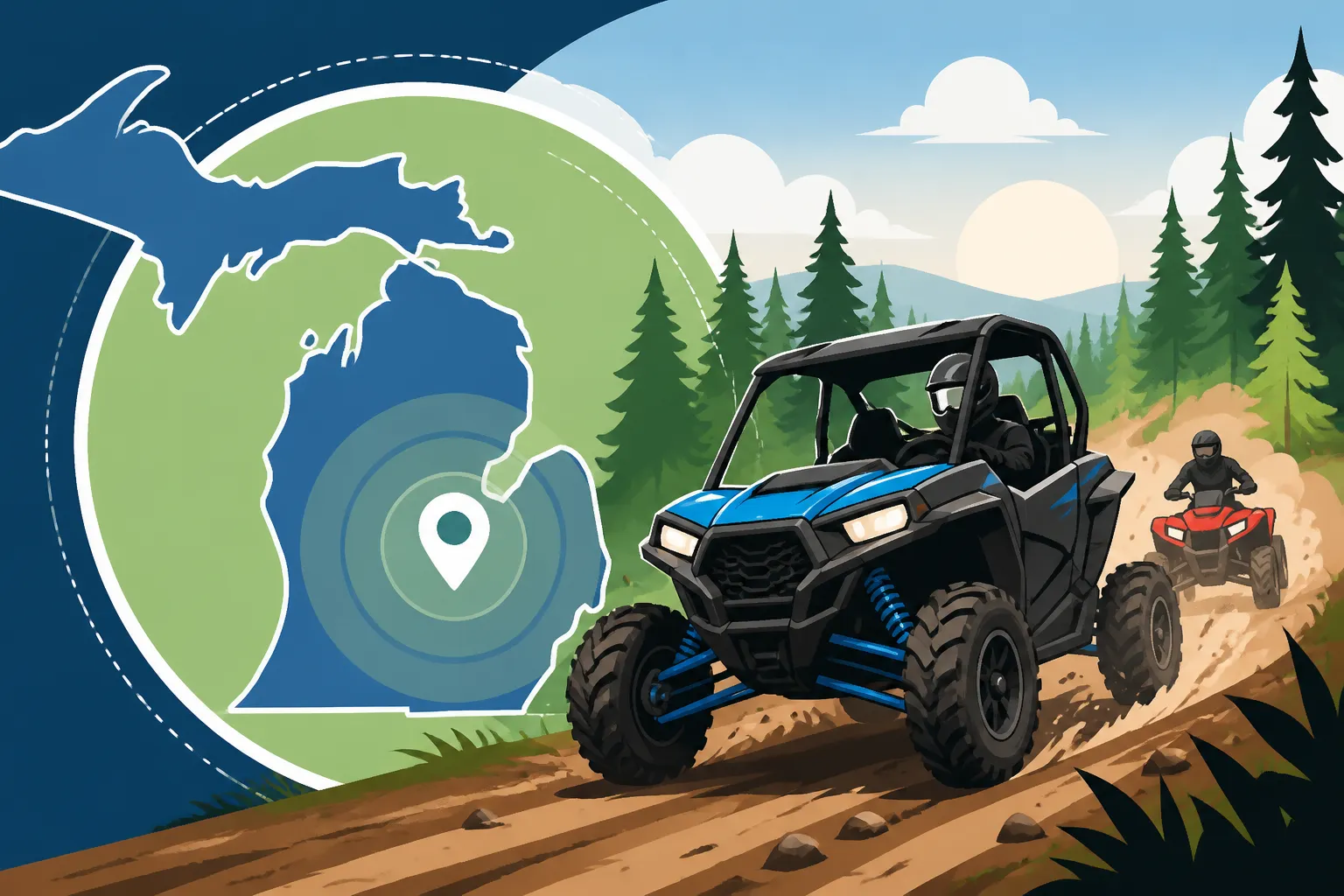
Finding an ATV or UTV ride close to Detroit can take more planning than it seems: many of Michigan’s long trail networks are several hours north, and a park is not always the same thing as a public trail. This guide compares nearby riding options, explains what to check before loading up, and helps you choose a practical day trip.
The closest ATV and UTV riding options from Detroit
Within roughly two hours of Detroit, the clearest choices are off-road parks rather than extensive state trail networks. Holly Oaks ORV Park is the obvious first place to investigate for a close-to-home ride. The Mounds and Bundy Hill may also fit the day-trip range, depending on where you start and road conditions.
Drive times are estimates, not promises. A trip from downtown Detroit can look different from one starting in Ann Arbor, Sterling Heights, or Monroe, and weekend traffic can make a short drive feel much longer. Check each location’s current access, operating schedule, machine requirements, and admission details before leaving.
Holly Oaks ORV Park near Holly
Holly Oaks is a managed off-road park in the Holly area, northwest of Detroit. Its proximity makes it a convenient option for riders who want to spend more time driving than towing. It’s a particularly useful place to consider if your group has different skill levels or wants to explore varied riding terrain in one outing.
A park environment differs from a traditional trail ride. Instead of following a long, point-to-point route through public land, riders use an established riding area and follow its posted rules. That can make the day easier to plan, but it also means you should check which types of ATVs and UTVs are allowed, what equipment is required, and whether there are restrictions on particular areas.
Before you go, confirm opening days, entry procedures, parking arrangements, and any required permits or passes. Do not assume that a Michigan trail permit automatically covers a private or managed park, or that a park pass replaces any state requirements that apply to your machine. The park’s current instructions are the best guide. For park-specific planning, see Holly Oaks ORV Park Terrain and Obstacles.
The Mounds ORV Park near Mount Morris
The Mounds is another park option to look into for a ride from the Detroit area. It is near Mount Morris in Genesee County, northwest of the city. For many riders, it can work as a day trip, though the actual drive depends on the starting point and traffic.
As with any riding park, confirm that the facility is open to your vehicle type and that its current rules suit your group. A compact ATV and a full-size side-by-side may not have the same access, route choices, or equipment requirements. If you are riding with a passenger, check both the vehicle’s seating capacity and the park’s passenger rules rather than assuming a passenger can ride on any machine.
Look closely at the park’s terrain description before choosing it for a first ride. “Off-road park” can mean a mix of trails, open riding areas, obstacles, or other terrain features, and the experience can be very different from a mellow forest route. If your group includes new riders, agree on a conservative plan and stay within areas that match their ability.
Bundy Hill Offroad Park near Jerome
Bundy Hill Offroad Park, near Jerome, may also be within reach for a longer day trip from the Detroit region. It can be a useful alternative if you have already explored the closest park or want to compare riding environments. Check the route and expected travel time from your own driveway; a location that is manageable from western metro Detroit may feel less convenient from the eastern suburbs.
Before heading out, check the park’s current vehicle rules, schedule, access conditions, and any requirements for riders or machines. Confirm how the facility handles permits and entry, and ask whether any specific safety equipment is expected. It is also worth checking whether the type of riding you want to do is available that day, especially if your group is traveling with a particular machine or skill level in mind.
Quick comparison of nearby riding choices
| Riding option | General location from Detroit | Best fit | What to verify first |
|---|---|---|---|
| Holly Oaks ORV Park | Holly area, northwest of Detroit | A close day trip with managed park terrain | Current schedule, eligible machines, admission, and riding rules |
| The Mounds ORV Park | Mount Morris area, northwest of Detroit | Riders looking for another managed park option | Vehicle access, terrain rules, passenger rules, and entry requirements |
| Bundy Hill Offroad Park | Jerome area, west of Detroit | Riders willing to make a longer drive for a park day | Travel time, operating schedule, machine requirements, and current conditions |
These are starting points for planning, not a guarantee that every facility will suit every machine or rider. Check details directly with the location before you tow.
How to choose the right ride for your group
The nearest option is not automatically the best one. A short drive can be a poor fit if the park does not allow your machine, the terrain is too challenging for a beginner, or the day’s conditions do not match what your group enjoys. A few minutes of planning can prevent the familiar frustration of arriving with a trailer only to discover an important rule you missed.
Match the terrain to rider experience
Think about what your least-experienced rider can comfortably handle, not just what the most confident driver wants to ride. Someone new to an ATV may be happier on a predictable route or open area than on steep, uneven, or technical terrain. A UTV driver who is used to property roads may also need time to adjust to obstacles, loose surfaces, or narrow passages.
Review the park’s description and ask questions if its terrain information is unclear. A map or list of features can help, but it may not tell you how difficult the riding feels in practice. If the group has mixed experience, agree ahead of time to take easier routes first and regroup regularly. Riders can always build confidence as the day goes on; it is harder to undo a stressful start.
You can also compare trail classifications before a trip using Michigan ORV Trail Difficulty Ratings. Difficulty descriptions are most useful when you treat them as a planning aid rather than a guarantee. Weather, recent use, and the condition of a particular section can all affect how it feels under your tires.
Check the machine rules before you leave home
Do not assume that every ORV park accepts every kind of ATV or UTV. Check the park’s current rules for machine type, size, passenger seating, safety equipment, and any restrictions that apply to modified vehicles. If you are borrowing or renting a machine, confirm that it is allowed at the destination and that you have the required paperwork.
For public riding areas, understand the difference between a state ORV license and a trail permit. Requirements depend on where you ride, and private or managed parks may have their own entry rules. Review Michigan ORV License and Trail Permit Explained before your trip, then verify the specific requirements for the location you plan to visit.
Keep the documents and information you may need easy to find. That includes any required permits, your park confirmation, emergency contacts, and details about the machine. If you are unsure whether your machine qualifies, ask the facility before you hook up the trailer rather than relying on a guess.
Choose the day with traffic and conditions in mind
A Saturday or holiday weekend can turn a manageable drive into a slow one and may mean more riders at the park. If your schedule is flexible, consider a weekday or a less crowded time. More space can make it easier for beginners to get comfortable and for a group to move at its own pace. For another planning perspective, read Michigan ORV Trail Crowding on Holiday Weekends.
Weather can change the experience, too. Rain may affect traction, visibility, and the condition of some terrain; dry weather can mean more dust. Check the park’s updates before you leave, especially if there has been heavy rain or a sudden weather change. If a facility closes or limits access, do not assume a nearby public route is an automatic substitute. Public riding has its own boundaries and rules.
Planning a legal and low-stress day trip
A smooth ride starts before the trailer is hitched. Confirm the destination, check your machine, and make sure everyone understands the plan. This is especially important when your group is traveling from the Detroit area, where a last-minute change can add a substantial amount of driving.
Confirm access, maps, and parking
Check the facility’s official information for its current hours, entry process, parking arrangements, and any restrictions on trailers. Some locations use designated staging or parking areas, and parking outside approved areas can create problems for you and other visitors. If you plan to arrive with a large trailer, confirm that there is room for your setup.
For public ORV routes, map-reading matters. Signs and markers help riders identify route types and access rules, but they do not make every nearby road or trail legal to ride. Use an up-to-date map and follow posted signs. Michigan ORV Trail Maps and What the Signs Mean is a useful companion for understanding route information before you set off.
A mapping app such as onX Offroad can help you review an area and organize your route before a ride. Treat any digital map as a planning tool, not permission to ride. Confirm public access, current closures, and posted restrictions through the relevant land manager or facility. Download maps or save essential details ahead of time if you expect limited cell service.
Prepare your ATV or UTV for the trip
Do a basic machine check before loading. Inspect tires, brakes, lights, steering, belts or chains as appropriate, and look for loose hardware or visible damage. Bring the owner’s manual if you are unfamiliar with the machine, and make sure the vehicle is suitable for the terrain and passenger load you have planned.
Pack practical items rather than relying on a nearby store. Bring water, weather-appropriate clothing, eye protection, gloves, and a way to contact the rest of your group. For a UTV, check seat belts and passenger seating before the ride; for an ATV, do not carry a passenger unless the machine is designed for one and the rules allow it. Packing List for a Full Trail Day can help you catch the small items that are easy to forget.
Tell someone who is not riding where you are going and when you expect to return. Agree on a meeting point in case riders become separated, and decide what the group will do if a machine breaks down. Even on a managed property, a simple plan can reduce stress when something unexpected happens.
Follow park rules and ride with consideration
Read the rules at the entrance and follow them even if you have ridden elsewhere in Michigan. Speed limits, route access, noise expectations, passenger requirements, and permitted riding areas can differ from one location to another. Keep to marked routes and avoid creating a new path around a muddy or blocked section.
Give other riders room, especially when passing or approaching a blind spot. Slow down around people, parked machines, and trail intersections. If someone in your group needs a break, pull over only where it is safe and allowed. Good habits make the day more enjoyable for everyone and help protect access to riding areas. For shared-route basics, see Trail Etiquette on Shared Routes.
When a nearby park is not the right fit
Sometimes a park close to Detroit is not what you had in mind. You might want a longer forest-trail ride, a particular type of route, or a trip that includes a cabin or campground. In that case, look beyond the nearest options and plan for a full-day excursion or overnight stay instead of trying to squeeze a distant trail system into a rushed outing.
Look farther toward Lansing or northern Michigan
If you are willing to drive farther, use trail maps to compare areas and identify routes that fit your machine. Michigan ORV Trails Near Lansing may help you explore another region, while Michigan’s 4,000 Miles of ORV Trails Explained offers broader context about the state’s riding network.
Do not judge a destination only by the distance to its town or trailhead. A trail system may have multiple access points, and the drive from the highway to a usable staging area can add time. Check where you can park, whether the routes accommodate your machine’s width, and whether the area has the kind of riding you want. A longer drive is often worthwhile when you can pair it with a full day or a night nearby.
If you are planning around a public trail, review seasonal access and closures. Conditions and access can change, and a route shown on a map may not be open for riding on the day you arrive. Check Michigan ORV Trail Closures and Seasonal Dates before setting out.
Decide between a park visit and a trail trip
A managed park usually offers a defined riding area, facility-specific rules, and an entry process to check in advance. It can be a straightforward choice for a short day trip, especially when you want to ride without planning a long route between towns.
A public trail outing may offer a different sense of distance and scenery, but it takes more preparation. You may need to plan fuel, route connections, staging, and stops, and you must stay within routes open to your vehicle. It can also make sense to build the ride around nearby lodging or camping rather than trying to drive north, ride for several hours, and return home in one exhausting day.
Check for changes before every trip
Before leaving, recheck the location’s schedule, access rules, weather, and any closure notices. Confirm that the machine you are bringing remains eligible and that every rider understands the safety plan. If you have questions, contact the facility or land manager rather than relying on an old post, a saved screenshot, or a friend’s memory.
A little advance checking helps avoid the most common day-trip disappointments: a closed gate, a machine that is not allowed, a full parking area, or an unsuitable route. Once the basics are confirmed, you can focus on enjoying the ride instead of solving preventable problems in the parking lot.
Disclaimer
This article is for general informational purposes only and does not constitute professional advice. Laws, prices and regulations vary by location and change over time. Consult a qualified professional for guidance on your specific situation.