Driving to Holly Oaks From Detroit
If you’re leaving Detroit for Holly Oaks ORV Park, the ride itself is only part of the plan: traffic, trailer handling, park access and required riding paperwork can all affect your day. This guide explains how to plan the drive, what to check before setting out and how to arrive ready to ride rather than sorting out avoidable surprises in the parking area.
Plan the drive from Detroit to Holly Oaks
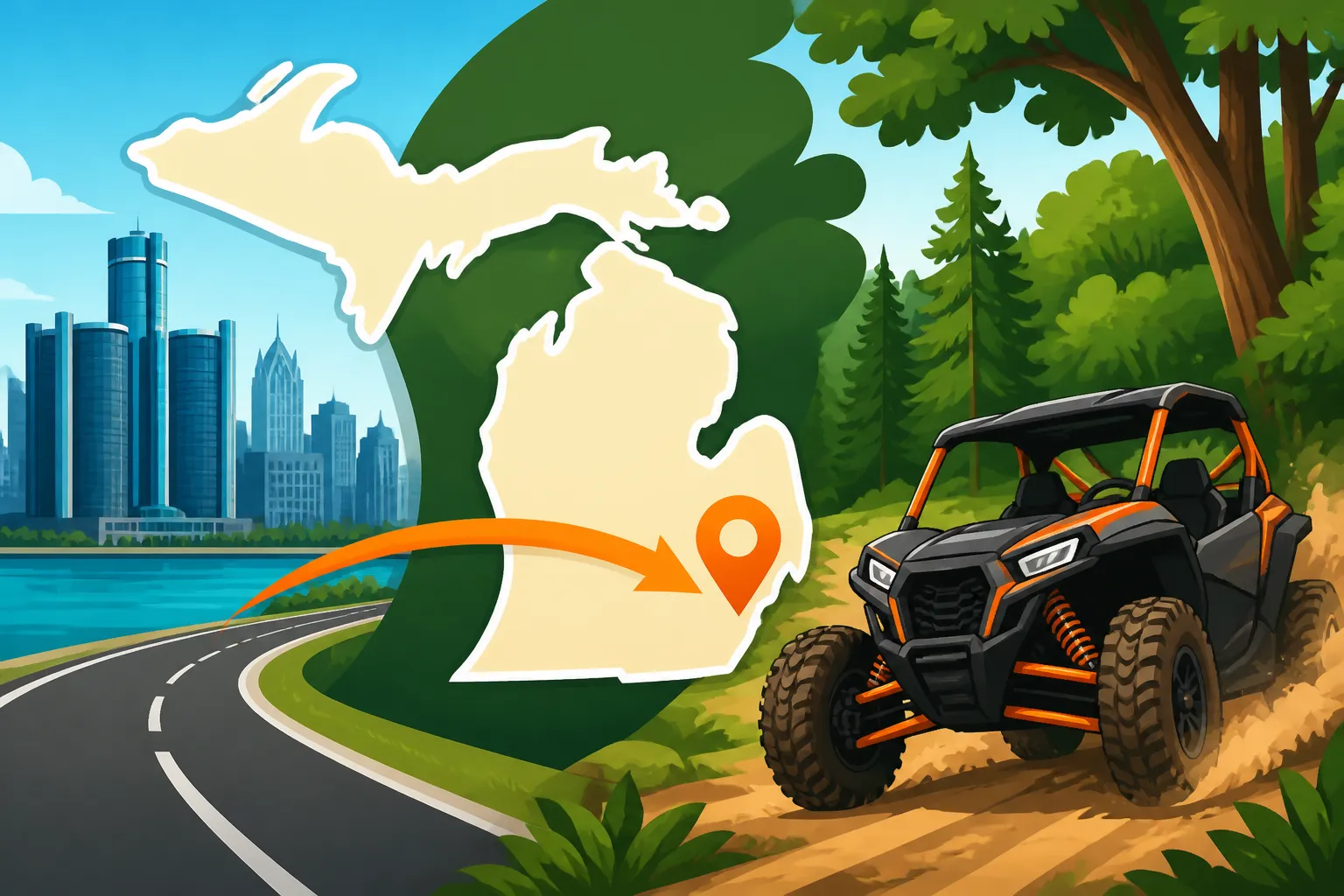
Holly Oaks ORV Park is in Holly, northwest of Detroit. The usual broad approach is to head north from the Detroit area toward Holly, with I-75 and local roads forming a common route. Your best turn-by-turn directions depend on where you start, traffic and any road work, so enter the park’s current address in your navigation app before leaving and confirm that it routes you to the visitor entrance.
| Trip-planning item | What to keep in mind |
|---|---|
| General direction | Travel northwest from Detroit toward Holly |
| Common highway approach | I-75 north, followed by local roads toward the park |
| Final destination | Use the park’s current official address and entrance details |
| Vehicle setup | Allow extra room and time if towing an ATV or UTV |
| Before departure | Check park access, operating information, closures and riding requirements |
Choose a route that suits your starting point
“Detroit” can mean downtown, a neighborhood farther north, or a suburb on the edge of the metro area. That difference matters. A route that makes sense from downtown may be less convenient if you’re starting in Dearborn, Warren or Royal Oak, and rush-hour traffic can change which approach feels easiest. Use a navigation app for the actual trip rather than relying on a saved set of turns from someone else’s starting point.
I-75 is a familiar northbound option for many metro Detroit trips toward Holly, but it isn’t a promise of a clear or quickest drive. Before you leave, check the route for delays, closures and detours, then review the last few turns on the map. The final approach through Holly may include local roads where a trailer requires more patience than a car. If you’re driving a large truck or towing, favor a straightforward route over a shortcut that saves a few minutes but adds tight turns or unfamiliar roads.
If your trip includes a stop in town, plan it before you get close to the park. A quick fuel or snack stop is easier when you’ve already considered where you can safely park a trailer. For a broader look at destinations in the area, see [Holly Oaks ORV Park Near Detroit] and [Michigan ORV Trails Near Detroit].
Build in time for traffic and a trailer
A trip can feel simple on the map and still take longer than expected. Traffic on the way out of the metro area, slowdowns near highway exits, road work and a stop to check a trailer can all add time. If you’re meeting friends at the park, agree on a realistic arrival window rather than expecting every vehicle to arrive at the exact same minute.
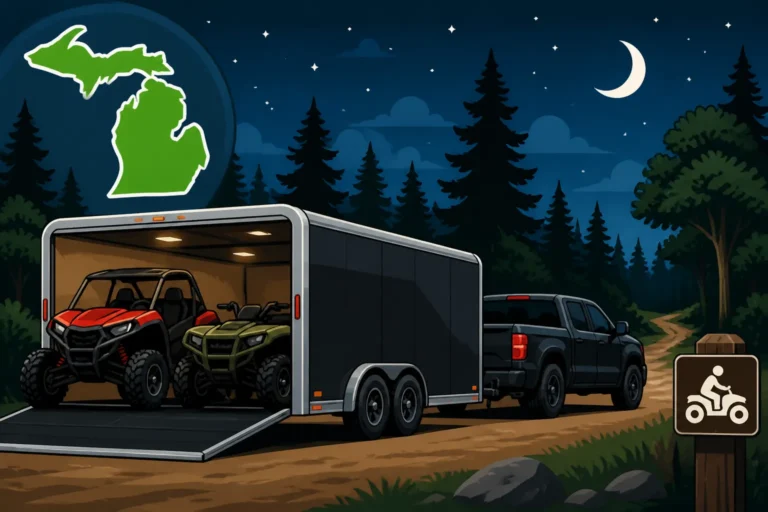
Towing changes the rhythm of the drive. Give yourself extra space for braking, avoid last-second lane changes and take turns wide enough to keep the trailer clear of curbs and other vehicles. Before moving, check that the trailer is properly connected, lights work, tie-downs are secure and loose riding gear can’t shift around. A brief walk-around at home and another check after your first stop are much easier than discovering a problem at the park entrance.
If you’re using onX Offroad to help prepare, review your route before departure and keep your road-navigation directions easy to access. It can be useful to have the driving route and any riding-area information you need ready before you leave, rather than trying to set everything up while parked in a busy arrival area. For park access and terrain context, Holly Oaks ORV Park Terrain and Obstacles can help you think through what kind of riding day you’re planning.
Get the park details and riding requirements sorted out
Getting to Holly Oaks is only one part of the outing. Park access, operating information, day-use requirements and machine-specific rules are details worth checking before you load up. Requirements can vary with the place you plan to ride and the kind of machine you bring, so don’t assume that paperwork or permits you use on another Michigan ride automatically cover this visit.
Confirm access, operating information and closures
Before leaving Detroit, confirm that the park is open to visitors on your intended day and check for event information, access changes or closures. That small check can save a frustrating drive, especially if you’re coordinating several riders or hauling machines. For details to review, start with Holly Oaks Hours and Event Days and Michigan ORV Trail Closures and Seasonal Dates.
Give particular attention to special events and scheduled activities. A park day may not look the same when an event is taking place, and parking, access or the areas available to ride may be affected. If you’re unsure whether a notice applies to your visit, contact the park directly rather than trying to interpret an old social media post or a map pin.
Also confirm where visitors should enter and park. A navigation app can route you to a location near the property without making it obvious whether you’ve reached the correct visitor access point. Follow current park directions and signs as you approach, and don’t assume that an unmarked gate or nearby track is an authorized entrance.
Check permits and machine requirements before loading
Michigan riding requirements can depend on where you ride, the type of machine and whether you’re using designated trails or a scramble area. Review the rules for the specific location and your situation before departure. [Michigan ORV License and Trail Permit Explained] is a helpful starting point for understanding the difference between an ORV license and a trail permit, while [Permits Michigan Requires at Scramble Areas] focuses on permits associated with scramble-area riding.
Don’t leave the permit check until you’re standing beside the machine at the park. If a rider in your group is responsible for paperwork, ask them to confirm it before the trip and make sure everyone knows what applies to their own machine. Riders arriving from out of state should check their requirements separately rather than assuming their home-state documents automatically satisfy Michigan rules.
For general ride planning, onX Offroad can help you keep relevant map information organized alongside your trip notes. Treat any app as a planning aid, not a substitute for current park guidance, posted rules or required permits. If you download maps for offline use, do so before you leave an area with a reliable connection and make sure you know how to reopen them.
Prepare your vehicle, trailer and arrival plan
The most stressful part of a group trip is often the arrival: a driver is trying to follow directions, someone else is looking for the entrance, and the trailer is suddenly in the way of traffic. A little coordination at home makes the last mile calmer. Decide who is navigating, where the group will meet and what you’ll do if one vehicle gets separated.
Make a trailer-friendly arrival plan
If you’re towing, check your route with the full vehicle in mind. A route that works for a car may include a narrow turn, a tight parking lot or a stop where there isn’t enough room to maneuver. Avoid making an unplanned turn into a small business lot just to regroup. Instead, choose a safe meeting point before you get close, and have each driver use the same park entrance details.
At the park, follow signs and staff directions for parking and unloading. Don’t block an entrance, access lane or roadway while you unstrap a machine. If the group has several trailers, coordinate who unloads first and where machines should be staged. Michigan ORV Staging Areas and Parking offers useful context for thinking ahead about parking and staging during a riding trip.
Before unloading, do a quick check of the tie-downs, ramps and surrounding space. Make sure your trailer is stable, keep people clear of moving machines, and avoid leaving ramps or equipment where other visitors need to walk or drive. If you’re new to unloading in a busy area, let the driver and one helper handle the process while everyone else stays out of the immediate work zone.
Pack for a full day rather than just the drive
Bring the essentials you’ll need for both travel and riding: machine keys, required paperwork, protective gear, water, snacks and a way to keep your phone charged. Keep documents and small items in a secure spot where they won’t disappear under helmets or muddy gloves. If different people are carrying gear, agree in advance who has the items the group needs to access at the park.
Save the park’s location and any relevant driving directions before leaving. When using onX Offroad, it may help to review the map in advance so you’re not trying to learn its controls while managing arrival logistics. Keep a separate road-navigation option available as well; riding maps and road directions serve different purposes, and neither should be assumed to replace current signs or instructions at the park.
A simple pre-departure checklist can prevent last-minute scrambling:
- Confirm the park’s current access information and operating details.
- Check your route and traffic before leaving.
- Verify permits and required documents for each rider and machine.
- Inspect the tow vehicle, trailer connection, lights and tie-downs.
- Pack riding gear, water, food, charging equipment and basic supplies.
- Share the meeting point and backup plan with the group.
Make the trip easier for first-time visitors
If this is your first visit, expect to spend a little time getting oriented before riding. The park’s terrain and riding areas may feel different from a marked trail route, and your group may need to review posted instructions, choose an appropriate area and get familiar with where it can travel. Check Holly Oaks ORV Park Terrain and Obstacles before the trip so riders can arrive with a better sense of what to expect.
Set expectations with your group
Talk about experience levels before anyone unloads. A confident driver may want to explore challenging terrain, while a newer rider may prefer time to get comfortable. Agree on a regrouping plan and make sure no one feels pressured to follow a route or attempt an obstacle beyond their comfort level. The most enjoyable day is usually the one where the group can ride at a pace that works for everyone.
For families or mixed-skill groups, decide who will stay with newer riders and where to meet if people choose different areas. Keep phones charged, but don’t rely on a phone call as the only way to reconnect. Review the park map and posted directions together when you arrive, and follow the instructions provided on site.
Keep the return drive in mind
The end of the ride deserves as much attention as the beginning. Allow time to load machines carefully, secure ramps and gear, and check the trailer before pulling out. Mud, sand or debris can make equipment slippery or difficult to handle, so don’t rush the loading process just because the group is eager to get back on the road.
Before leaving the park, confirm that all vehicles are ready and that drivers know the planned route back toward Detroit. If the group is separating, choose a safe place to regroup rather than trying to coordinate in traffic. A final walk-around can catch a loose strap or open latch before it becomes a roadside problem. With the route, park details and equipment handled in advance, the drive from Detroit to Holly Oaks can be a manageable part of the day instead of a source of stress.
Disclaimer
This article is for general informational purposes only and does not constitute professional advice. Laws, prices and regulations vary by location and change over time. Consult a qualified professional for guidance on your specific situation.