Paddle Tires for Silver Lake Riding
Paddle tires can make a big difference in loose sand, but the wrong setup can make a Silver Lake ride harder to control, harder on your machine, or less enjoyable once you leave the dunes. This guide explains how paddle tires work, how to choose and prepare a setup, and what to consider before riding at Silver Lake.
How paddle tires work in Silver Lake sand
Rear paddles create drive
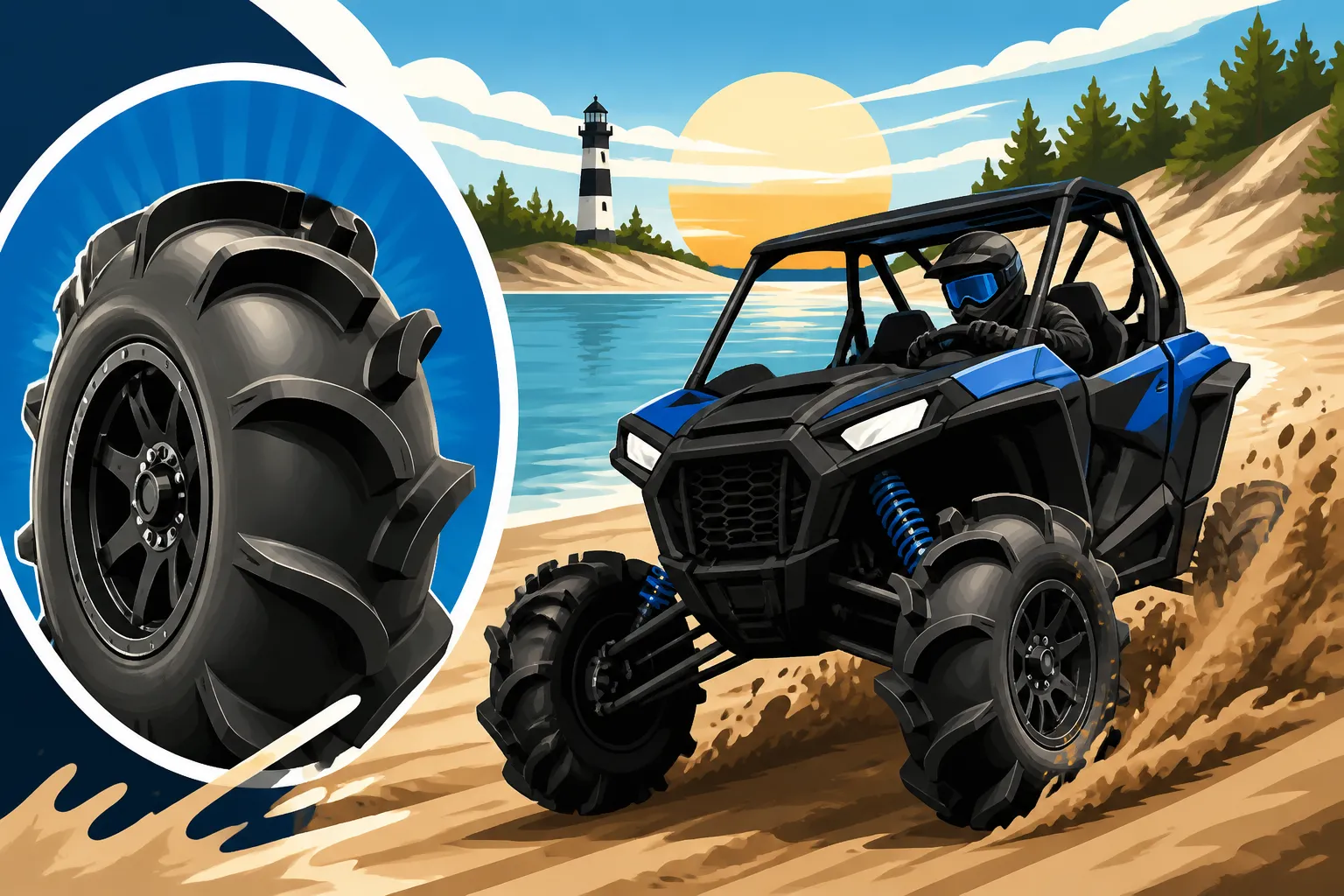
A paddle tire has raised bars, or paddles, across its tread. In loose sand, those paddles scoop and push against the surface to help move the ATV or UTV forward. That extra bite can help when a standard trail tire spins instead of driving the machine ahead.
The tradeoff is that paddles are specialized equipment, not an all-purpose upgrade. They’re intended for soft sand, and they can feel awkward or wear quickly on pavement, gravel, and hard-packed trails. If your trip includes driving from a staging area or along mixed surfaces, think through how much of the day will actually be spent in sand.
Paddles also change how power reaches the ground. A machine may climb or accelerate differently than it does on its usual tires, so don’t assume that your familiar throttle habits will feel the same. Ease into the controls in a clear area and give yourself time to learn how the setup responds.
Front tires are about steering
Many sand setups use paddles on the rear and a ribbed or otherwise sand-oriented tire on the front. The front tires need to guide the machine, not simply dig in. A front tire that bites too aggressively can make steering feel unpredictable, while a tire that floats and tracks smoothly can help you hold a line.
The right front tire depends on your machine, the rear paddle setup, and your riding style. Check manufacturer guidance and ask an experienced tire shop or sand-riding specialist about compatible sizes and construction. A tire that fits the rim is not necessarily the right tire for your suspension, fenders, or intended terrain.
If you’re new to sand, don’t treat a tire change as a substitute for practice. Steering and braking can feel different on soft dunes than they do on packed trail. Start with gradual turns and gentle inputs, and avoid following too closely behind another machine where visibility is limited by dust or thrown sand.
Paddles are not a universal Silver Lake requirement
Paddle tires can be useful in loose sand, but they aren’t automatically necessary for every rider or every machine. A recreational rider making a cautious visit may prefer a familiar all-terrain setup, particularly if the trip includes other riding surfaces. A rider who spends substantial time in deep, loose sand may value the added drive from paddles.
Before buying, check the vehicle and equipment requirements for the Silver Lake ORV area. Requirements and operating conditions can matter as much as tire choice. Start with [What You Need to Ride the Silver Lake Dunes] and [Silver Lake Dune Vehicle Requirements Checklist] so you can evaluate the whole setup rather than planning around tires alone.
Choosing a paddle tire for your ATV or UTV
Match the tire to the machine
Start with the exact tire size and wheel specifications recommended for your ATV or UTV. Then check the tire maker’s fitment guidance for the machine’s weight, power, and intended use. A tire that is too large or too heavy can affect clearance and handling; a setup that is poorly matched can also put extra strain on components.
For a UTV, pay particular attention to the machine’s weight and available power. A heavier side-by-side can need a different tire setup from a lightweight ATV, and a tire that works well on one model may not suit another. Verify clearance at full steering lock and through suspension travel, not just while the vehicle is parked on level ground.
Also consider the complete wheel-and-tire package. Check that the rim width and tire construction are compatible, that the tire does not contact nearby parts, and that the setup is appropriate for how you plan to ride. If you’re unsure, bring the vehicle’s year, make, model, and current tire specifications to a qualified tire shop.
Consider paddle shape and front-tire balance
Paddles vary in height, spacing, and shape. In general, more aggressive tread is designed to move more sand, but it can also change the way a machine accelerates, turns, and feels under load. Don’t choose a design based only on how dramatic it looks; consider your machine and your experience.
The front and rear tires need to work together. A rear tire with strong drive and a front tire that tracks consistently can be easier to manage than a mismatched combination. Ask about a complete sand setup for your vehicle, rather than selecting rear paddles without considering how the front tires will steer.
It can help to describe your actual plans when comparing options: a short visit to the dunes, regular sand riding, a heavier UTV carrying passengers, or a mixed trip with trail and road sections. That context gives a tire professional a better basis for recommending a setup than a general request for “the best paddles.”
Compare the practical tradeoffs
| Setup | Potential advantage | Main tradeoff | Usually worth considering when |
|---|---|---|---|
| Standard all-terrain tires | Familiar handling across mixed surfaces | May spin more readily in loose sand | Your ride includes varied terrain or occasional sand |
| Rear paddles with sand-oriented front tires | More drive in loose sand while retaining a steering-focused front setup | Specialized tires may be less suitable for hard surfaces | Sand riding is a major part of the trip |
| Aggressive paddles front and rear | A specialized option for particular machines and conditions | Steering behavior may be harder to predict; fitment matters | A knowledgeable tire specialist recommends it for your machine |
| Sand-oriented tires with a different tread design | Can offer a compromise for some riders | Performance depends heavily on the tire and conditions | You need a setup tailored to a specific vehicle and use |
This table is a starting point, not a fitment prescription. The right choice can change with machine weight, power, tire dimensions, sand conditions, and the rider’s experience. For a broader look at how surface and equipment choices interact, see [Tire Pressure for Riding Silver Lake Sand].
Preparing your machine before riding
Check pressure and inspect the setup
Tire pressure affects how a tire contacts the sand, but there isn’t one pressure setting that works for every machine and tire. Follow the tire and vehicle manufacturers’ guidance, and don’t use an internet number as a substitute for checking your own equipment. Pressure that is too low can increase the risk of tire damage or bead problems; pressure that is too high may make the tire behave differently than intended.
Before heading out, inspect each tire for cuts, punctures, damaged sidewalls, and loose or missing hardware. Check that the tires are mounted in the correct direction if the manufacturer specifies one. Make sure the wheels are secure, and look for rubbing around suspension parts and bodywork.
Bring a suitable pressure gauge and the tools you would reasonably need for basic checks. If you change pressure for sand, record what you did so you can return to a known starting point later. Recheck the tires after riding, especially if you notice a sudden change in handling or hear an unusual sound.
Think beyond tires
Paddle tires don’t replace the other preparation a dune ride requires. Check your machine, fuel, protective gear, visibility equipment, and required permits before leaving. A vehicle that is mechanically ready but missing an essential piece of riding equipment can still turn into a frustrating day at the staging area.
Plan for heat, dust, and changing visibility. Wear appropriate eye protection and protective clothing, and keep enough distance from other machines to avoid following through a cloud of sand. Make sure any flag or other required equipment is properly attached and visible, and confirm the current rules before riding. The checklist in [What You Need to Ride the Silver Lake Dunes] is a useful companion to your tire preparation.
If you’re unfamiliar with the area, learn the access points and where you can ride before unloading. The onX Offroad app can help you review route information and orient yourself, but don’t treat a mapping app as a substitute for posted signs, official notices, or local operating rules. Dune access and conditions can change, so check the appropriate official information before you go.
Practice before heading into demanding terrain
On your first ride with paddles, take time to get used to the setup in an open, appropriate area. Use smooth throttle inputs and gradual turns. Avoid sharp steering movements at speed, and don’t assume the machine will stop or turn exactly as it does on a packed trail.
If you’re carrying passengers, explain that the ride may feel different and agree on basic signals before setting out. Keep passengers seated as the vehicle manufacturer specifies, and don’t add passengers or cargo beyond the machine’s limits. A heavy load can change how the vehicle responds, particularly when climbing or turning on soft sand.
New to the dunes? Give yourself time to learn how the terrain changes across the riding area. [Silver Lake Dune Riding for First-Timers] offers a useful starting point for planning a less stressful first outing. For help thinking through conditions that can make traction and recovery more difficult, read [Getting Stuck in the Dunes at Silver Lake].
Using paddle tires responsibly at Silver Lake
Keep specialized tires on suitable terrain
Paddle tires are built for sand, not for a long ride over pavement or hard, abrasive surfaces. Those surfaces can wear the paddles and may make the tires feel less predictable. If you need to travel over mixed terrain, understand the limits of your tires and plan your route accordingly.
Don’t assume a sand setup makes every slope or dune safe to climb. Choose terrain that matches your experience, the machine’s capability, and current conditions. Avoid riding close behind another vehicle on a climb, and don’t stop where you could block other riders or create a hazard. If visibility is poor or the route is beyond your comfort level, turn back rather than trying to prove the tires can handle it.
It’s also wise to consider the return trip. A setup that works well in loose sand may not be the best choice if your journey includes substantial hard-packed travel. Think through where you will ride, how you will transport the machine, and whether you need to change tires before using it elsewhere.
Check conditions and local information
Sand conditions can change with weather, temperature, and traffic. A setup that feels manageable one day may respond differently when the surface is especially soft, rutted, or churned up. Check local notices before setting out, and pay attention to closures and posted restrictions once you arrive.
The onX Offroad app can be helpful for planning and orientation, especially if you want to review an area before your trip. Use it alongside current official information, signs, and directions from authorized staff. Avoid relying on a saved route alone if conditions or access have changed since you last rode.
Timing can also shape the experience. Crowds, visibility, and surface conditions may vary through the day, so it’s worth reviewing [Best Time of Day to Ride Silver Lake Dunes] and [Silver Lake Dune Closures for Weather] as part of your planning. Checking in advance is much easier than arriving with a specialized tire setup only to find that your intended riding plan doesn’t fit current conditions.
Decide whether the upgrade makes sense for your trip
Before purchasing paddles, ask yourself how often you’ll ride in loose sand, whether the machine will be used on other surfaces, and how comfortable you are adjusting to different handling. If Silver Lake is a rare trip, renting or borrowing a suitable machine may be worth comparing with buying a dedicated tire setup. If you already ride sand regularly, dedicated tires may make more sense.
A practical decision process looks like this:
- Confirm that your machine is permitted and suitable for the riding area.
- Check the vehicle manufacturer’s tire and wheel specifications.
- Decide how much of your planned riding will be in loose sand.
- Compare a full front-and-rear setup rather than choosing rear paddles in isolation.
- Ask a knowledgeable tire professional about fitment, clearance, and pressure guidance.
- Review current site rules, weather notices, and access information before you travel.
The onX Offroad app can support route planning, but your final decision should also account for official rules, machine capability, and the conditions you encounter. For a first visit, focus on a setup you can control confidently—not simply the most aggressive tire available.
Disclaimer
This article is for general informational purposes only and does not constitute professional advice. Laws, prices and regulations vary by location and change over time. Consult a qualified professional for guidance on your specific situation.